Why Do People Wear Safety Pin Necklaces? Material & Style Guide
Discover why do people wear safety pin necklaces, from punk roots to modern minimalism, plus a deep dive into metal grades, gauges, and clasp mechanics.

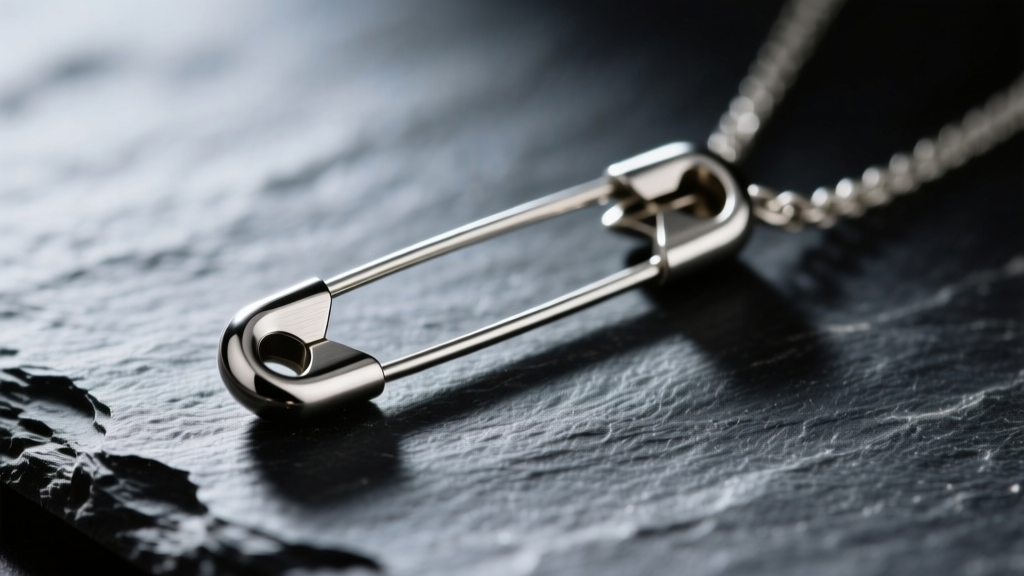
The safety pin is one of the most enduring, shape-shifting symbols in the history of adornment. What began as a utilitarian fastener invented in 1849 by Walter Hunt has evolved into a potent piece of jewelry. But beyond its rebellious aesthetics, the modern safety pin necklace is a fascinating study in metallurgy, structural engineering, and cultural signaling. As we navigate the jewelry landscape of 2026, understanding the material properties of these pieces is essential for anyone looking to invest in high-quality, everyday wear.
The Cultural Catalyst: Why Do People Wear Safety Pin Necklaces?
To understand the material evolution of the safety pin necklace, we must first answer the core question: why do people wear safety pin necklaces in the first place? The answer is layered, shifting dramatically across different decades and subcultures.
Punk Rebellion and Anti-Fashion
In the mid-1970s, the safety pin was weaponized against traditional fashion. Pioneers of the punk movement, notably Vivienne Westwood and Malcolm McLaren, utilized everyday hardware to challenge societal norms. According to cultural historians at Britannica, punk fashion was intentionally aggressive, using safety pins not just as jewelry, but as a means to hold together intentionally ripped clothing. Wearing a safety pin necklace was a visual rejection of precious metals and traditional gemstones.
90s Grunge and 2016 Solidarity
The 1990s grunge era softened the safety pin's aggressive edge, turning it into a symbol of apathy and DIY aesthetics. Fast forward to 2016, and the safety pin experienced a massive cultural resurgence as a symbol of solidarity and safe-space allyship. During this period, jewelry designers began elevating the safety pin from a cheap hardware store item to a crafted pendant, necessitating a shift toward higher-quality, skin-safe materials.
High Jewelry and 2026 Minimalism
Today, the safety pin has been fully integrated into high jewelry and luxury streetwear. Brands like Tiffany & Co. and Balenciaga have reimagined the silhouette using precious metals and pavé diamonds. The modern wearer chooses the safety pin necklace for its juxtaposition of industrial brutality and refined elegance.
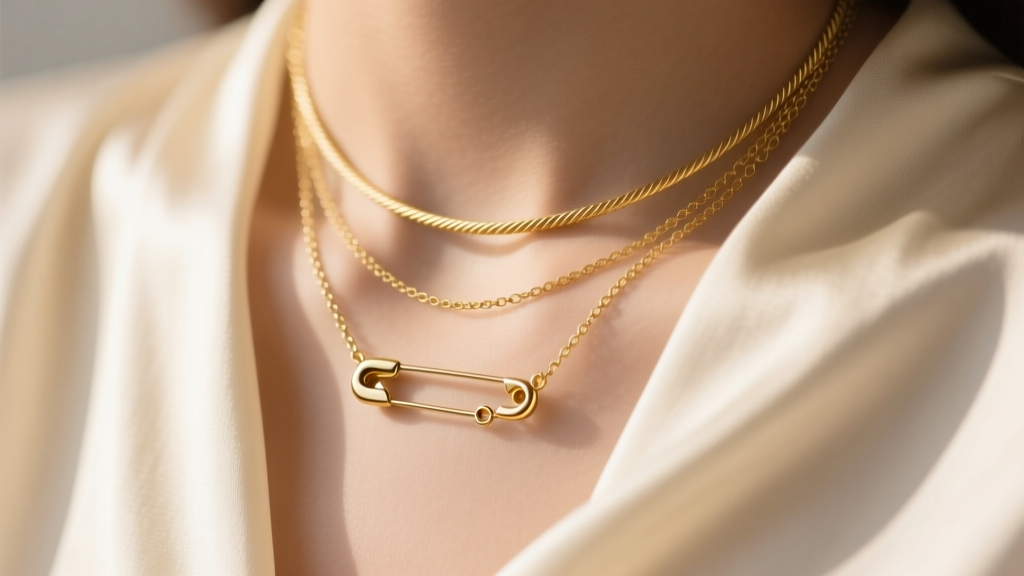
Material Breakdown: Choosing the Right Metal
The longevity, weight, and skin-compatibility of a safety pin necklace depend entirely on its metallurgical composition. Because the pin mechanism involves friction, tension, and repeated movement, the metal must possess specific mechanical properties.
316L Surgical Stainless Steel
For everyday grunge and streetwear aesthetics, 316L stainless steel is the undisputed champion. The "L" stands for Low Carbon, which prevents chromium carbide precipitation during the welding or soldering processes used in jewelry manufacturing. More importantly, 316L contains 2-3% molybdenum, which drastically increases its resistance to chlorides and industrial solvents. This means a 316L safety pin necklace will not rust or pit, even when exposed to sweat and humidity. However, those with severe nickel allergies should exercise caution, as 316L still contains trace amounts of nickel.
925 Sterling Silver
Sterling silver offers a brighter, more precious luster but comes with mechanical drawbacks. Composed of 92.5% pure silver and 7.5% copper, this alloy is relatively soft. The copper content makes it highly susceptible to silver sulfide tarnish when exposed to atmospheric hydrogen sulfide, a reaction well-documented by the Gemological Institute of America (GIA). Furthermore, the repeated friction of the pin sliding in and out of the clasp can wear down the silver over time, leading to a loose fit.
14k and 18k Gold Vermeil
Gold vermeil (a thick layer of gold electroplated over a sterling silver base) provides the look of solid gold at a fraction of the cost. However, the friction point where the pin enters the clasp is a high-wear area. Over time, the gold plating at the tip of the pin and the inner rim of the clasp will inevitably wear away, exposing the silver beneath. For long-term wear, solid 14k gold is vastly superior to vermeil for moving mechanical parts.
ASTM F136 Titanium (Grade 23)
For the ultimate combination of hypoallergenic properties and structural integrity, Grade 23 Titanium (Ti-6Al-4V ELI) is unmatched. Originally developed for aerospace and medical implants, this alloy has a remarkably high strength-to-weight ratio. Unlike steel, titanium has a lower modulus of elasticity, meaning if the pin is accidentally bent, it is less likely to snap back with dangerous force. It is completely nickel-free and impervious to tarnish.
Gauge Sizes and Structural Integrity
The thickness of the wire used to form the safety pin dictates both its aesthetic profile and its tensile strength. Jewelry wire is measured using the American Wire Gauge (AWG) system, where a lower number indicates a thicker wire.
- 14 AWG (1.6mm): Heavy, brutalist, and highly structural. Often used in solid gold or steel statement pieces. The pin is virtually unbendable by hand, making it a permanent, fixed aesthetic choice rather than a functional fastener.
- 18 AWG (1.0mm): The industry standard for high-quality safety pin pendants. It offers a perfect balance between durability and the classic safety pin silhouette. It can withstand the tension of the spring coil without suffering from metal fatigue.
- 22 AWG (0.64mm): Delicate and minimalist. While visually elegant for layering, 22-gauge wire is highly prone to permanent deformation. If a 22-gauge safety pin pendant catches on a heavy wool sweater, the wire will likely bend or snap at the stress point near the coil.
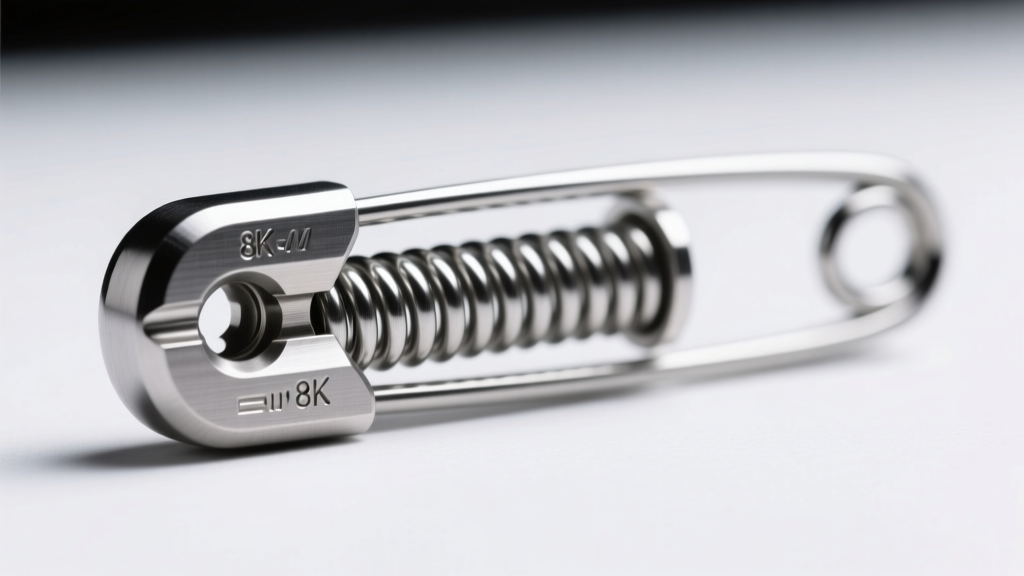
Clasp Mechanisms and Failure Modes
The most critical failure point of any safety pin necklace is the clasp—the small cap that receives the sharp end of the pin. Understanding how these mechanisms work is vital for avoiding lost pendants.
Friction Fit Clasps
The most common and affordable design relies on a simple friction fit. The pin is pushed into a hollow metal tube, held in place by a small internal ridge. Failure Mode: Over time, the metal of the pin or the clasp wears down, reducing the friction. The pin can easily slip out if the necklace is pulled, leading to lost jewelry or scratched skin.
Threaded Locking Caps
Premium safety pin necklaces utilize a threaded locking mechanism. The pin features microscopic threading at the tip, and the clasp cap screws onto it, locking the pin securely in place. This completely eliminates the risk of accidental unclasping and is highly recommended for heavy pendants or active wearers.
Fixed-Pin (Soldered) Designs
To bypass mechanical failure entirely, many luxury jewelers now create "fixed" safety pins. The pin is permanently soldered into the closed position within the clasp. While this sacrifices the novelty of a functioning pin, it ensures absolute structural integrity and prevents the sharp tip from ever becoming exposed.
Price vs. Longevity: A Comparative Matrix
When investing in a safety pin necklace, balancing your budget with the expected lifespan of the material is crucial. The table below outlines what you can expect across different metal categories in the current market.
| Material | Avg. Price Range | Tarnish Resistance | Mechanical Durability | Best Use Case |
|---|---|---|---|---|
| 316L Surgical Steel | $25 - $80 | Excellent | High | Daily streetwear, shower/swim safe |
| 925 Sterling Silver | $60 - $250 | Poor (Requires polishing) | Medium (Prone to bending) | Occasional wear, layered styling |
| 14k Solid Gold | $350 - $1,200+ | Excellent | Medium-High | Luxury everyday wear, heirloom pieces |
| Grade 23 Titanium | $40 - $150 | Excellent | Very High | Sensitive skin, active lifestyles |
Styling and Chain Pairings for 2026
The industrial nature of the safety pin pendant demands careful consideration when selecting a chain. The juxtaposition of the pendant and the chain is where the true styling magic happens.
"The safety pin is an exercise in contrast. Pairing a brutalist steel pin with a delicate, shimmering chain creates a visual tension that is the hallmark of modern jewelry styling."
Chain Recommendations
Avoid pairing heavy safety pin pendants with fragile chains like snake chains or fine herringbones; the weight and sharp edges of the pin will quickly kink or snap them. Instead, opt for box chains or rope chains in the 1.5mm to 2.5mm width range. These chains offer the tensile strength required to support the pendant while maintaining a refined look.
Length and Neckline Matching
For a modern, editorial look, wear an 18-inch or 20-inch safety pin necklace over a crewneck t-shirt or a structured blazer. The pendant should rest squarely on the sternum. If you prefer a 16-inch choker length, ensure the safety pin is a smaller, 20-gauge minimalist design to prevent the sharp ends from digging into your collarbone when you look down.
Ultimately, the safety pin necklace transcends its punk origins. By understanding the material science, gauge thicknesses, and clasp mechanics, you can select a piece that is not only culturally resonant but engineered to last a lifetime.


