The Complete Care and Cleaning Guide for a Sam Necklace
Learn expert care, cleaning, and storage tips for your Sam necklace. Protect the vermeil finish and prevent delicate letter breakage.

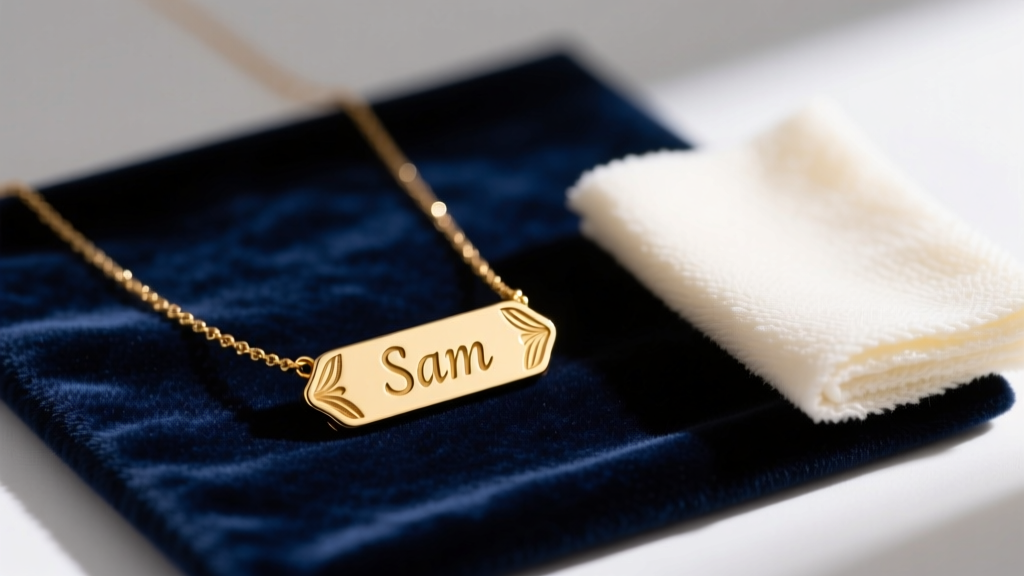
Understanding the Anatomy and Vulnerabilities of a Sam Necklace
Nameplate necklaces are iconic wardrobe staples, but the specific typography of a custom or classic "Sam necklace" introduces unique structural vulnerabilities that require specialized attention. Whether your piece is crafted from solid 14k gold, 925 sterling silver, or 18k gold vermeil, the cursive connections between the 'S', 'a', and 'm' rely on microscopic solder joints. Unlike solid bar pendants or simple geometric shapes, the continuous script font means that physical stress on the chain is directly transferred to the thinnest points of the letters—usually the top loop of the capital 'S' and the final sweeping tail of the 'm'.
Furthermore, if your Sam necklace features gold vermeil, the high-friction edges of the cursive letters are highly prone to accelerated wear. The Federal Trade Commission (FTC) mandates that genuine gold vermeil must have a sterling silver base and a gold layer of at least 2.5 microns thick, according to official jewelry guidelines. However, daily friction against clothing collars and seatbelts can wear down the gold layer on the outer curves of the 'S' in as little as six months if the piece is not properly maintained and stored.
Daily Wear Rules: Preventing Vermeil Wear and Solder Fatigue
To maximize the lifespan of your Sam necklace, you must adopt a strict "Last On, First Off" protocol. Lotions, perfumes, and hairsprays contain alcohols and emulsifiers that degrade the protective rhodium plating often applied over sterling silver cores to prevent tarnish. More critically, exposure to chlorine—whether in a swimming pool or household cleaning supplies—causes a metallurgical reaction known as stress corrosion cracking. This insidious reaction makes the 925 silver solder joints brittle, significantly increasing the risk of the 'S' snapping off the pendant under minimal tension.
Always remove your necklace before showering, swimming, or applying cosmetics. When putting the necklace on, ensure the clasp is securely fastened before dropping the chain down your neck. This prevents the delicate nameplate from catching on your collarbone or snagging on clothing threads, which is the leading cause of bent cursive loops.
Step-by-Step Cleaning Protocol for Nameplate Pendants
Many jewelry owners mistakenly use ultrasonic cleaners or harsh silver dip solutions on their nameplate necklaces. Never use an ultrasonic cleaner on a Sam necklace. The high-frequency acoustic vibrations can easily shake loose the delicate laser solder joints connecting the cursive letters. Similarly, abrasive toothpaste or baking soda pastes will strip the gold vermeil finish and leave micro-scratches on high-polish silver.
Instead, follow this gentle, expert-approved cleaning method recommended by professionals at the Jewelers of America:
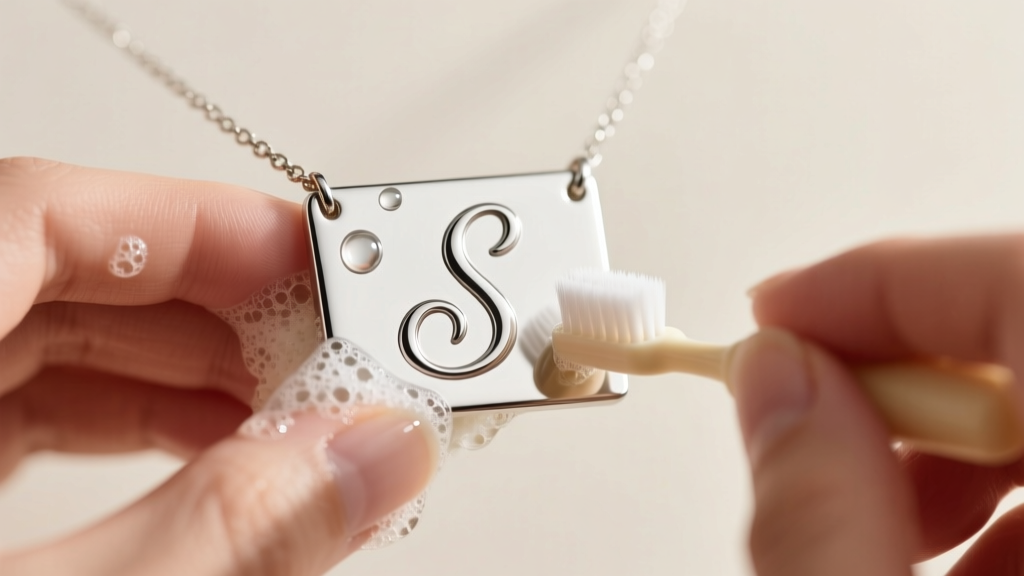
- Prepare the Solution: Mix three drops of mild, phosphate-free dish soap (like Dawn Platinum) into a bowl of lukewarm distilled water. Avoid tap water, as the dissolved minerals and chloramines can leave microscopic hard water spots on the metal.
- Soak Briefly: Submerge the Sam necklace for exactly three to five minutes. This loosens body oils and cosmetic residue trapped in the tight inner loops of the 'a' and 'm'.
- Agitate Gently: Using an extra-soft baby toothbrush, lightly brush the pendant. Always brush along the curve of the letters, never aggressively scrubbing back and forth across the solder joints where the chain connects.
- Rinse and Dry: Rinse thoroughly under a gentle stream of lukewarm distilled water. Pat dry with a lint-free microfiber cloth. Crucially, use a hair dryer on the "cool" setting to blow out any trapped moisture inside the closed loops of the letters, which can otherwise cause localized tarnishing.
Polishing High-Friction Edges Safely
When dealing with high-friction edges on a Sam necklace, particularly the outer curves of the capital 'S', you must be incredibly cautious with polishing cloths. Standard silver polishing cloths are impregnated with micro-abrasives. While these are excellent for solid sterling silver, using them aggressively on gold vermeil will strip the gold layer down to the silver base in a matter of minutes. If your Sam necklace is solid gold or solid silver, you can gently buff the high points using a dedicated, untreated jeweler's rouge cloth to restore a mirror finish. Always buff in small, circular motions, taking care not to snag the cloth on the sharp terminals of the script font.
Storage Solutions to Prevent Chain Tangling and Tarnish
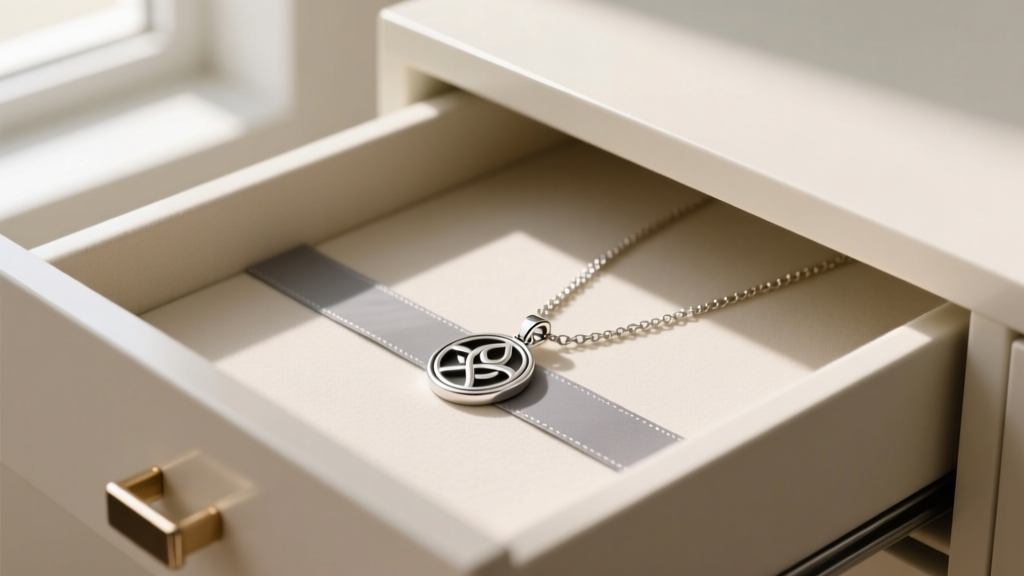
The most common complaint with script nameplate necklaces is the chain hopelessly tangling within the cursive loops. To prevent this, never toss your Sam necklace loosely into a jewelry box or drawer. Utilize the "Straw Method" or a dedicated jewelry pouch. If storing flat, unclasp the chain, thread one end through a standard plastic drinking straw, and re-clasp it. This keeps the chain rigid and entirely separate from the nameplate.
For long-term storage, place the necklace inside a polyethylene zip-lock bag along with a 3M anti-tarnish strip. Polyethylene is chemically inert and will not trap moisture, while the anti-tarnish strip absorbs airborne sulfur compounds that cause sterling silver to turn black. Avoid PVC or vinyl jewelry boxes, as the plasticizers in these materials emit gases that accelerate tarnishing and degrade vermeil finishes over time.
Troubleshooting Common Sam Necklace Issues
| Issue | Root Cause | Actionable Solution |
|---|---|---|
| Fading gold on 'S' edge | Friction from clothing and seatbelts | Professional electroplating to restore 2.5-micron vermeil layer (approx. $40-$60). |
| Chain permanently tangled in 'a' loop | Improper loose storage | Use a straightened safety pin or specialized jewelry detangler tool; never pull forcefully. |
| Micro-crack near 'm' connection | Chlorine exposure causing brittle solder | Take to a bench jeweler for laser welding; avoid traditional torch soldering. |
| Dull, cloudy appearance on silver | Hard water spots and lotion buildup | Soak in distilled water and mild dish soap; avoid abrasive polishing pastes. |
When to Seek Professional Jeweler Intervention
While home maintenance covers daily care and superficial cleaning, certain structural issues require a professional bench jeweler. If you notice a micro-crack forming near the jump ring connecting to the 'S', do not attempt to glue, bend, or ignore it. Take it to a jeweler who specializes in laser welding. Laser soldering uses a highly focused beam to fuse the metal without exposing the surrounding gold vermeil or delicate cursive connections to the high, widespread heat of a traditional jeweler's torch, which could easily melt or warp the thin script font.
Expect to pay between $45 and $85 for a laser solder repair on a nameplate pendant. If the gold finish on the edges of the 'm' has completely worn away to reveal the bright silver underneath, a professional electroplating service can re-apply a fresh 2.5-micron layer of 18k gold, restoring the necklace to its original factory condition and ensuring it remains a timeless staple in your collection for years to come.


