Sam's Club Viral Necklace Troubleshooting: 2026 Care & Repair Guide
Fix your Sam's Club viral necklace with our 2026 troubleshooting guide. Learn how to stop tarnishing, repair clasps, and restore diamond sparkle.

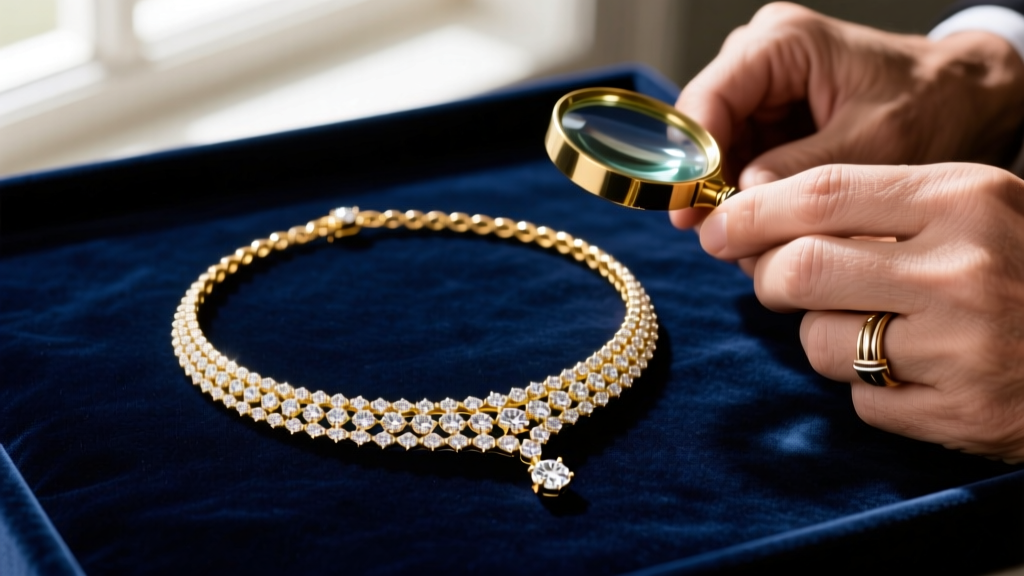
When a piece of jewelry blows up on TikTok, it usually falls into one of two categories: cheap fast-fashion that turns your skin green, or high-end luxury that requires a trust fund. The Sam's Club viral necklace phenomenon broke the internet by offering a rare middle ground—genuine 14k gold and diamond tennis chains or moissanite pendants priced between $299 and $599. Compared to the $1,500+ price tags at traditional mall jewelers, these wholesale club finds are undeniable steals.
However, mass-produced jewelry at this price point often involves manufacturing compromises. Lightweight chains (often 1.2mm to 1.5mm), standard spring-ring clasps, and commercial-grade alloys mean that after six months of daily wear, you might encounter kinks, clouding, or clasp failures. As jewelry experts tracking 2026 wholesale trends, we have compiled the ultimate troubleshooting matrix to help you diagnose, repair, and maintain your viral club-store investment.
The "Green Neck" Dilemma: Alloy Breakdown & Tarnish Troubleshooting
The most common complaint with any viral 14k gold necklace is unexpected tarnishing or skin discoloration. Pure 24k gold does not tarnish, but the 14k gold used in Sam's Club tennis necklaces is an alloy containing 58.5% gold and 41.5% secondary metals (usually a mix of copper, silver, and zinc). According to the Gemological Institute of America (GIA), it is the copper content that reacts with sweat, lotions, and environmental sulfur to create copper chloride—the green residue left on your collarbone.
Troubleshooting Matrix: Diagnosing Your Tarnish
| Symptom | Root Cause | Actionable Solution |
|---|---|---|
| Dull, dark smudges on the gold | Sulfur exposure (cosmetics, hot springs) | Polish gently with a treated sunshine cloth. Do not use liquid dips, which can strip the alloy's natural luster. |
| Green skin beneath the chain | Copper oxidation reacting to acidic sweat | Clean the chain daily with mild dish soap. Coat the back of the chain with a microscopic layer of clear nail polish as a barrier. |
| White or gray chalky spots | Mercury exposure (found in some older cosmetics or thermometers) | This forms an amalgam on the gold surface. It must be removed by a professional jeweler using a high-heat torch. |
Pro-Tip for White Gold Buyers: If your viral pendant is white gold, the "tarnish" you see is actually the rhodium plating wearing off (usually at the 0.1 to 0.3-micron thickness used in wholesale manufacturing), revealing the slightly yellowish 14k white gold underneath. The only fix is a professional rhodium re-plating, which costs around $45-$75 at a local bench jeweler.
Clasp Failures: Fixing the Lobster & Spring Ring Weak Points
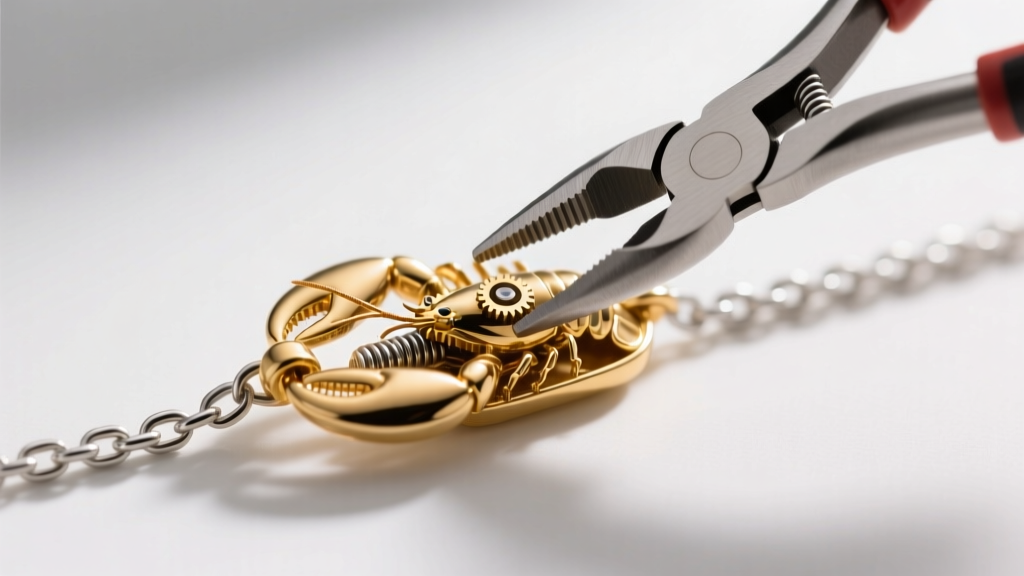
To keep the retail price under $400, wholesale manufacturers often pair heavy diamond pendants with lightweight, mass-produced clasps. The standard 5mm or 7mm spring ring and lobster clasps are notorious for two specific failure modes: the lever becomes stiff, or the internal spring loses tension.
Step-by-Step Clasp Repair
- The Stiff Lever: If the lobster clasp thumb-piece is hard to push, do not force it. The hinge is likely clogged with hardened lotion or soap scum. Dip a wooden toothpick in 91% isopropyl alcohol and carefully scrape the hinge crevice. Follow up with a single drop of synthetic watch oil on a pinhead to lubricate the mechanism.
- The Gap Issue: If the clasp closes but leaves a visible gap where the jump ring can slip out, the internal tension spring is failing. Using a pair of smooth-jawed flat-nose pliers, very gently squeeze the body of the clasp (not the lever) to realign the housing. If the gap persists, the spring is permanently deformed and the clasp must be soldered or replaced by a jeweler (a $20-$30 repair).
- The Jump Ring Split: The thin wire circle connecting the clasp to the chain often pulls apart. Never try to push the ends back together laterally. Use two pairs of chain-nose pliers to twist the jump ring open and closed along its vertical axis to maintain its perfect circular shape.
Stone Clouding: Reviving the "Viral Sparkle"
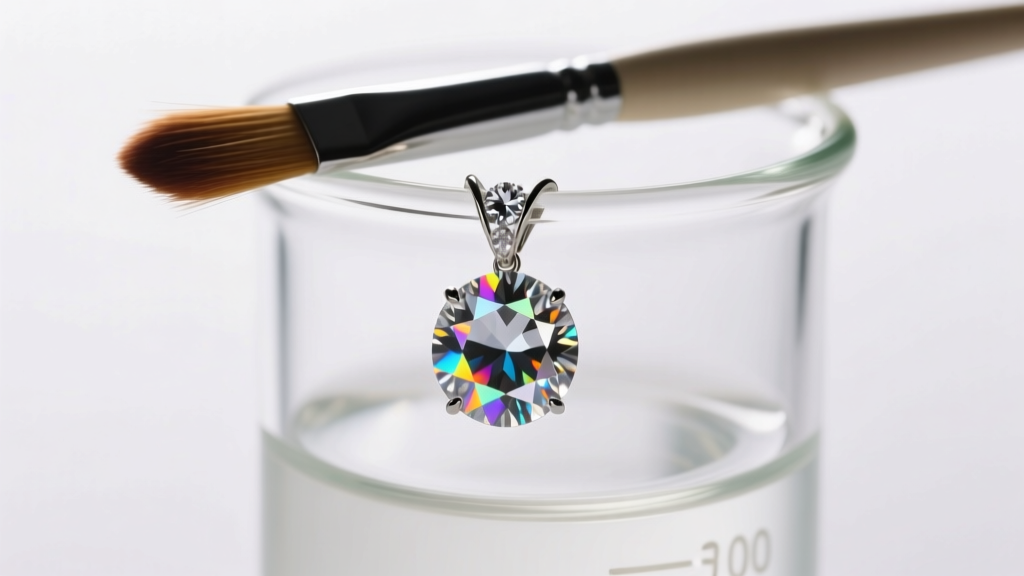
Whether your Sam's Club necklace features I1-I2 clarity natural diamonds or lab-grown moissanite, both stones are highly lipophilic—meaning they naturally attract and hold onto oils. The "cloudy" look that viral reviewers complain about after a few months is rarely damage to the stone; it is a microscopic film of sebum, body lotion, and silicone from hair products.
According to GIA diamond care guidelines, harsh chemicals can damage the metal settings even if they clean the stone. Here is the safest, most effective deep-cleaning framework for club-store jewelry:
- The Soak: Mix 1 cup of very warm (not boiling) water with 3 drops of ammonia-free, degreasing dish soap (like Dawn). Let the necklace soak for exactly 15 minutes. Do not exceed 20 minutes, as prolonged water exposure can weaken the adhesive in certain cluster settings.
- The Agitation: Use a baby toothbrush (the softest bristles available) to gently brush the back of the stones (the pavilion). This is where 90% of the light-blocking grime accumulates.
- The Rinse & Dry: Rinse under lukewarm running water. Crucially, do not air dry, which leaves hard water spots. Use a lint-free microfiber cloth or a blast of compressed air to dry the setting completely.
Warning: Never use ultrasonic cleaners on fracture-filled diamonds (common in lower-priced wholesale jewelry) or porous gems like opals and pearls. The high-frequency vibrations can shatter treated stones.
Chain Kinking: Rescuing Herringbone and Snake Chains
Some of the most viral Sam's Club pendants are paired with herringbone or snake chains because they offer a liquid, mirror-like reflection that maximizes the necklace's visual weight. The trade-off? These flat, interlocking link structures are incredibly prone to kinking if bent at a sharp angle.
If your chain has developed a kink, stop wearing it immediately. Pulling on a kinked herringbone chain will cause the links to fold over each other, leading to a permanent structural break.
The Jewelry Roller Technique
To fix a minor kink at home, lay the necklace completely flat on a hard, smooth surface like a glass cutting board. Take a smooth, cylindrical object—a specialized jewelry roller, a clean glass spice bottle, or a smooth metal pen—and gently roll it back and forth over the kinked area. Apply light, even downward pressure. This forces the interlocking links back into their flat, horizontal alignment. For severe, folded kinks, the chain must be sent to a bench jeweler to be carefully un-folded with agate burnishers.
Authenticity Checks: Verifying Your Club Store Investment
Because viral jewelry is often resold on secondary markets like Poshmark or eBay, verifying the authenticity of a Sam's Club necklace is a vital troubleshooting step for second-hand buyers. The Federal Trade Commission (FTC) strictly regulates metal stamping in the United States.
Look closely at the clasp and the nearest jump ring using a 10x jeweler's loupe. A genuine piece will feature a "14K" or "585" stamp. More importantly, US law requires that the purity stamp be accompanied by a registered maker's mark (a trademarked symbol or initials of the manufacturer). If your necklace has a 14K stamp but absolutely no maker's mark, it may be a counterfeit piece imported outside of FTC compliance channels. Furthermore, genuine Sam's Club diamond jewelry will typically come with a proprietary appraisal card detailing the exact carat weight, color, and clarity grades—always demand this documentation when buying the viral necklace second-hand.
Final Maintenance Verdict
The Sam's Club viral necklace remains one of the best value propositions in 2026 for accessible luxury, provided you treat it with the mechanical respect it requires. By keeping the chain free of cosmetic oils, addressing clasp stiffness before the spring fails, and storing the piece flat in an anti-tarnish pouch, you can easily extend the lifespan of your wholesale jewelry from a single season to a lifetime of daily wear.


