Santo Domingo Thunderbird Necklace: The 2026 Gift Guide
Discover the perfect Santo Domingo thunderbird necklace for every occasion. Our 2026 gift guide covers authenticity, materials, and styling.

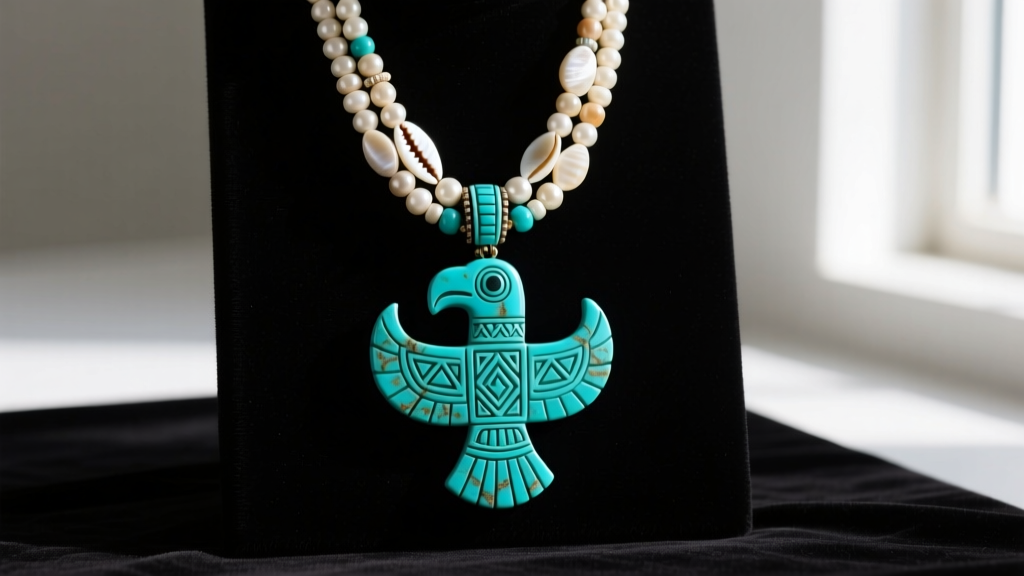
Gifting fine Native American jewelry is an exercise in cultural appreciation, artistic patronage, and profound personal meaning. Among the most striking and spiritually significant pieces you can bestow is the Santo Domingo thunderbird necklace. Crafted by the Kewa Pueblo (historically known as Santo Domingo) in New Mexico, these necklaces represent centuries of lapidary mastery. As we navigate the 2026 vintage and contemporary jewelry market, understanding the nuances of materials, beadwork, and authenticity is crucial for selecting a piece that honors the artisan and delights the recipient.
The Enduring Legacy of Kewa Pueblo Lapidary Art
Before selecting a necklace based on aesthetics alone, it is vital to understand the cultural weight the thunderbird carries. In Pueblo mythology, the Thunderbird is a powerful supernatural entity responsible for bringing rain, controlling storms, and ensuring the survival of crops in the arid Southwest. Carving a thunderbird is not merely a decorative choice; it is a visual prayer for moisture and protection. When you gift a Santo Domingo thunderbird necklace, you are offering a talisman of life-giving energy and resilience. The Kewa people are globally renowned for their heishi (pronounced hee-shee) beadwork and intricate stone inlay, making their interpretation of the thunderbird motif highly coveted by serious collectors and heritage enthusiasts alike.
Anatomy of an Authentic Thunderbird Necklace
A genuine Santo Domingo thunderbird necklace is a masterclass in natural materials. Unlike Navajo or Zuni pieces that often feature heavy sterling silver settings, Kewa jewelry traditionally lets the stone and shell take center stage, strung on natural fibers or wire.
The Stones and Shells of the Southwest
The thunderbird pendant itself is typically hand-carved from a single piece of stone or assembled via meticulous channel inlay. Look for these specific materials when evaluating a piece:
- Turquoise: The most prized medium. High-grade Kingman turquoise (known for its deep blue color and pyrite matrix) or the robin's-egg blue of Sleeping Beauty turquoise are hallmarks of premium contemporary pieces. Vintage pieces from the mid-20th century may feature softer, chalky turquoise that has been stabilized.
- Spiny Oyster Shell: Harvested from the Sea of Cortez, this shell provides brilliant hues of orange, purple, and red. It is often used in inlay work alongside turquoise to create striking contrast.
- Jet and Pipestone: Jet (a fossilized wood with a Mohs hardness of 2.5 to 4) offers a deep, glossy black, while pipestone provides a rich, earthy red. Both are traditional materials used to carve the intricate wings and eyes of the thunderbird.
The Heishi Foundation
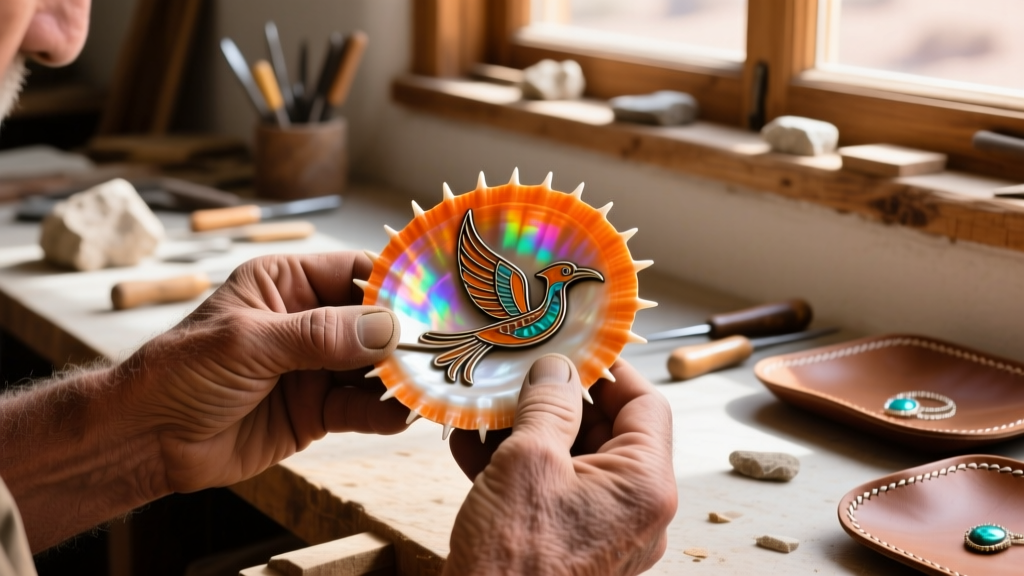
The word heishi translates to "shell" in the Keresan language. Traditionally, heishi beads are made from shell, turquoise, or lapis lazuli. The authentic process is incredibly labor-intensive: the artisan drills holes into flat discs, strings them tightly, and then rolls the strand against a sandstone wheel to grind them into uniform, smooth cylinders. A high-quality, hand-ground heishi strand will feel like liquid silk when draped over the skin. Machine-cut imitations will have sharp edges and uniform perfection that lacks the subtle, organic warmth of hand-crafted beads. Expect to pay a premium for micro-heishi (beads measuring 1.5mm to 2mm in diameter), as the grinding process results in significant material loss and requires immense patience.
Occasion Matching: A 2026 Gifting Matrix
Because Santo Domingo thunderbird necklaces range from simple, single-strand pendants to elaborate, multi-strand masterworks, they can be matched to virtually any gifting occasion. Use this matrix to align your budget and the recipient's lifestyle with the right configuration.
| Occasion | Recipient Profile | Ideal Configuration | 2026 Market Price Range |
|---|---|---|---|
| Milestone Anniversary | Art Collector / Heritage Lover | 3-to-5 Strand Hand-Ground Heishi with Large Carved Turquoise Bird | $1,200 - $3,500+ |
| Graduation / New Chapter | Young Professional / Creative | Single Inlaid Shell & Jet Thunderbird on 2mm Turquoise Heishi | $350 - $650 |
| Birthday / Holiday | Native Art Enthusiast | Small Turquoise Fetish Bird on Leather Cord or Single Shell Strand | $120 - $280 |
| Retirement | Executive / Traveler | Vintage 1970s Multi-Strand Turquoise with Silver-Wrapped Bird | $800 - $2,000 |
Styling, Sizing, and Layering Techniques
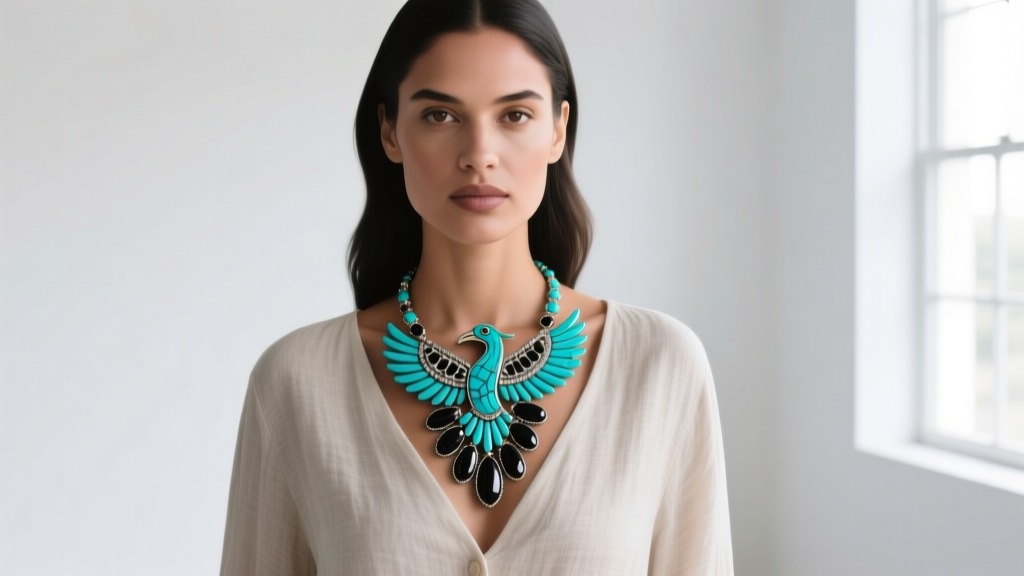
The versatility of the thunderbird necklace lies in its length and strand count. For a modern, sophisticated look, gifting a choker-length (14 to 16 inches) single-strand heishi necklace with a modest thunderbird pendant allows the piece to sit perfectly above the collarbone, pairing beautifully with V-neck blouses or open-collar linen shirts.
For the bold fashionista, a princess-length (18 inches) multi-strand necklace creates a stunning bib effect. In 2026, the prevailing styling trend involves layering a Santo Domingo heishi thunderbird necklace with a simple, matte-finish sterling silver chain or a strand of dark lapis lazuli. This mixes the organic, earthy textures of the Pueblo lapidary work with contemporary metallic elements, bridging the gap between traditional heritage jewelry and modern high fashion.
Preserving Porous Masterpieces
Gifting a piece of Native American jewelry also means gifting the responsibility of its care. Turquoise, jet, and spiny oyster shell are all highly porous and relatively soft materials. Including a care guide with your gift is a thoughtful touch that demonstrates deep respect for the artwork.
- Avoid Chemicals: Perfumes, lotions, and hairsprays can permanently alter the color of natural turquoise and degrade the polish of shell inlay. The necklace should always be the last thing put on and the first thing taken off.
- No Ultrasonic Cleaners: Never use ultrasonic jewelry cleaners or harsh commercial dips. The vibrations can shatter fragile inlay work, and the chemicals will strip the natural oils from the stones.
- Proper Storage: Store the necklace flat in a soft cloth pouch. Hanging heavy multi-strand heishi necklaces for long periods can stretch the internal nylon or silk threading, leading to structural failure over time.
Verifying Authenticity and Sourcing
The market is unfortunately flooded with imported imitations that falsely claim Native American origins. When purchasing a Santo Domingo thunderbird necklace, you are protected by the Indian Arts and Crafts Act of 1990, which makes it illegal to offer or display for sale any art or craft product in a manner that falsely suggests it is Indian-produced.
To ensure your gift is authentic, purchase only from established, reputable galleries that provide a written certificate of authenticity detailing the artist's name, their tribal affiliation (Kewa/Santo Domingo Pueblo), and the specific materials used. For those interested in the historical context and evolution of these pieces, institutions like the Wheelwright Museum of the American Indian offer incredible insights into the preservation and significance of Southwest jewelry. By prioritizing ethical sourcing, your gift not only celebrates the recipient but also directly supports the economic sovereignty and artistic continuity of the Kewa Pueblo artisans.


