Sapphire Choker Necklace Troubleshooting and Care Guide
Expert troubleshooting for your sapphire choker necklace. Learn how to fix broken clasps, clean dull gems, prevent skin irritation, and verify authenticity.

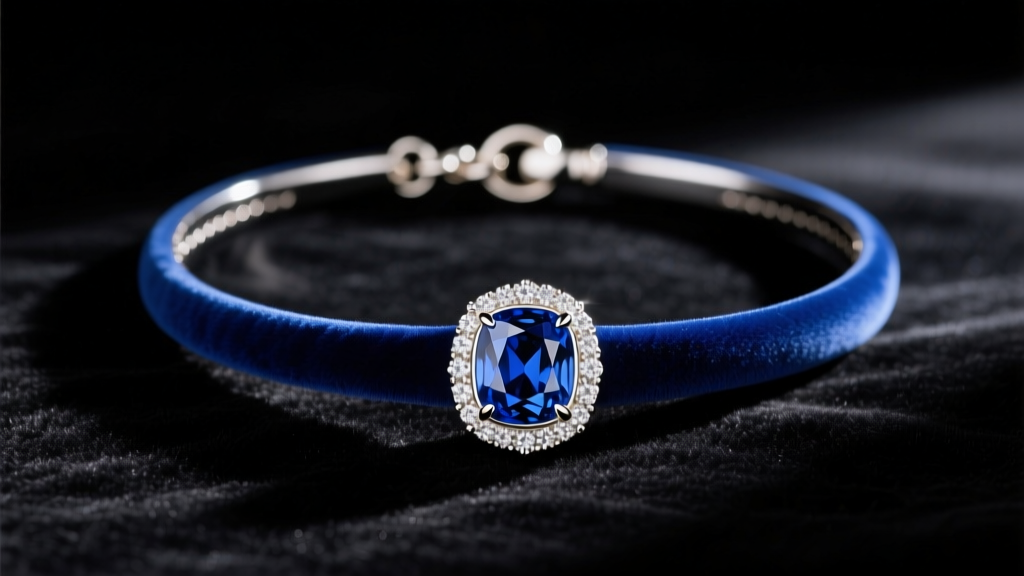
The sapphire choker necklace is a masterclass in high-impact elegance. Sitting precisely at the base of the throat, it draws the eye immediately. However, this prime real estate also happens to be one of the most hostile environments for fine jewelry. The neck is a high-friction, high-moisture zone exposed to perfumes, sweat, and constant kinetic movement. As we navigate the jewelry landscape in 2026, estate pieces and modern bespoke designs alike require meticulous, expert-level troubleshooting to maintain their structural integrity and optical brilliance.
If your sapphire choker is looking dull, snapping at the clasp, or causing skin irritation, you are not alone. This comprehensive diagnostic guide will help you identify the root causes of these failures and provide actionable, metallurgical, and gemological solutions.
The Unique Vulnerabilities of Sapphire Chokers
Sapphires are a variety of corundum, ranking at a formidable 9 on the Mohs hardness scale. While they are exceptionally resistant to scratching, the setting and the chain of a choker necklace bear the brunt of physical stress. A standard necklace hangs freely at 18 or 20 inches, absorbing movement. A choker, typically measuring 14 to 16 inches, is anchored tightly against the collarbone and throat. Every time you turn your head, swallow, or look down, the chain experiences micro-tension spikes, and the central gemstone is pressed against the skin, trapping sebum and cosmetic residues.
Troubleshooting Gemstone Dullness and Damage
A common complaint among sapphire choker owners is a sudden cloudiness or loss of brilliance in the center stone. Because corundum is naturally oleophilic (oil-attracting), it readily accumulates a film of lotions and skin oils that drastically reduces light return.
Identifying Fracture-Filled Sapphires
Before attempting any deep cleaning, you must verify if your sapphire has been fracture-filled. Many lower-cost or vintage sapphires are treated with lead-glass to mask surface-reaching fissures. If you place a fracture-filled sapphire in an ultrasonic cleaner or expose it to acidic jewelry dips, the glass filling will dissolve or fracture, permanently ruining the stone. According to the Gemological Institute of America (GIA), fracture-filled stones require only mild, lukewarm soapy water and a soft baby-bristle brush for safe cleaning.
Safe Cleaning Protocols for Natural Stones
If you have confirmed your sapphire is untreated or only heat-treated (the industry standard), you can restore its brilliance using a specialized approach:
- Step 1: Soak the choker in a solution of warm distilled water and two drops of ammonia-free dish soap for 15 minutes.
- Step 2: Gently agitate the sapphire bezel with a lint-free microfiber swab to dislodge trapped cosmetic powders.
- Step 3: Rinse with distilled water (tap water leaves hard water calcium spots) and dry immediately with compressed air to prevent water spotting in the prongs.

Chain and Clasp Failures: A Diagnostic Guide
The hardware of a choker necklace fails at a much higher rate than standard pendants due to the aforementioned tension spikes. If your chain is kinking or your clasp is popping open, consult the diagnostic table below.
| Symptom | Probable Cause | Expert Solution |
|---|---|---|
| Chain kinking or permanent bending | Use of a box or snake chain under 1.2mm; these structures lack lateral flexibility. | Upgrade to a 1.5mm to 2.0mm wheat or cable chain, which distributes torsional stress evenly across multiple interlocking links. |
| Lobster clasp failing to snap shut | Sebum and dead skin cells have calcified inside the microscopic spring mechanism. | Soak the clasp in isopropyl alcohol for 5 minutes, then cycle the lever 20 times with a toothpick to dislodge debris. |
| Clasp popping open during wear | The lever clearance is too tight, catching on high-neck clothing fabrics. | Replace the lobster clasp with a neodymium magnetic slide clasp equipped with a secondary figure-8 safety catch. |
Solving the "Choker Choke": Fit and Skin Irritation
Nothing ruins the experience of wearing a sapphire choker faster than contact dermatitis. If you are experiencing redness, itching, or a green/black tarnish on your skin beneath the chain, you are likely dealing with a metallurgical mismatch or a sizing error.
Nickel Allergies and Metal Upgrades
Many 14k white gold chains are alloyed with nickel to achieve their silvery-white color before being rhodium-plated. When a choker sits tightly against the pulse points, sweat breaks down the rhodium plating over time, exposing the nickel alloy to your skin. The American Academy of Dermatology identifies nickel as the leading cause of allergic contact dermatitis. If you have a known sensitivity, you must have the chain replaced with 18k yellow gold (which uses copper and silver instead of nickel) or solid platinum.
The Sizing Imperative
A true choker should allow for exactly one finger's width of clearance between the metal and your neck. If your neck measures 14.5 inches and you are forcing a 14-inch estate choker, the constant friction will cause galvanic corrosion of the metal alloys and severe skin chafing. Invest in a custom 1-inch 18k gold extender chain to provide necessary breathing room without compromising the choker silhouette.
Authenticity Verification for Estate Pieces
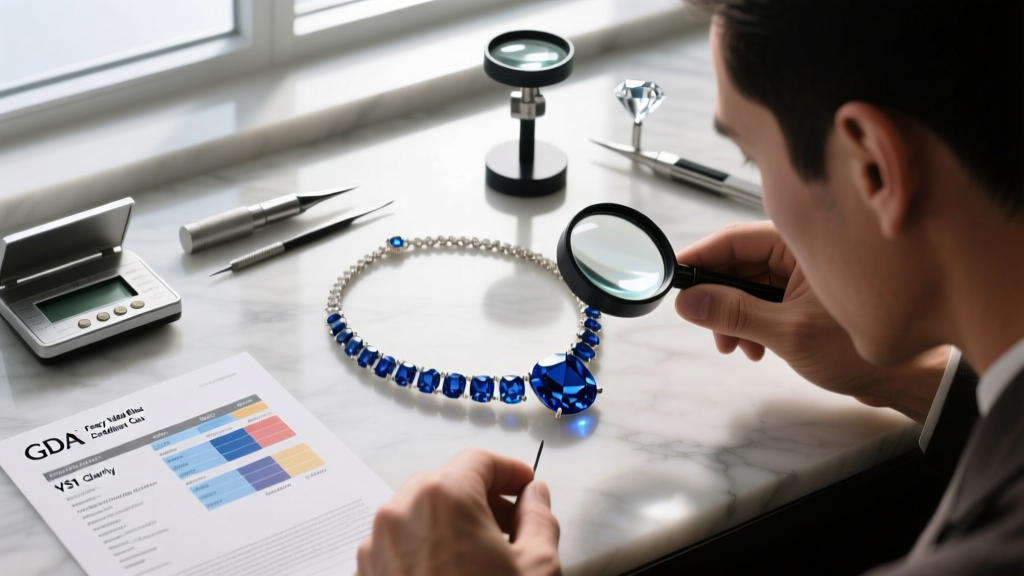
The secondary market for vintage sapphire chokers is booming, but it is rife with synthetic stones passed off as natural. If you are troubleshooting a newly acquired estate piece to verify its value, look for the telltale signs of the Verneuil (flame fusion) process.
Using a 10x triplet loupe, examine the sapphire under direct LED lighting. Natural sapphires will exhibit angular color zoning and straight, hexagonal crystal growth lines. Conversely, synthetic Verneuil sapphires will display curved striae—microscopic, curved bands of color that mimic the shape of the boule from which they were cut. If you spot curved striae or perfectly spherical gas bubbles trapped inside the stone, you are looking at a lab-created sapphire. For definitive proof, always request a spectroscopic analysis from a certified gemological laboratory.
Preventative Maintenance Schedule
To ensure your sapphire choker necklace remains a flawless staple in your wardrobe, implement this strict maintenance protocol:
- Daily: Always put your choker on after applying perfumes, hairsprays, and lotions. Wipe the sapphire with a dry microfiber cloth before storing it to remove acidic skin oils.
- Monthly: Inspect the bezel or prongs under magnification. The tight fit of a choker means the stone is frequently bumped against collarbones and zippers; ensure the metal is still flush against the gemstone's girdle.
- Annually: Take the piece to a credentialed jeweler for a professional ultrasonic cleaning (if the stone is verified untreated) and a structural stress-test of the chain links and clasp solder joints.
By understanding the unique mechanical and chemical challenges faced by a sapphire choker necklace, you can troubleshoot issues before they become permanent damage, ensuring your investment retains its breathtaking brilliance for decades to come.


