The Beginner's Guide to Choosing a Saturn Planet Necklace
Discover how to choose, style, and care for a Saturn planet necklace. Explore metal grades, chain gauges, and celestial layering tips in our guide.

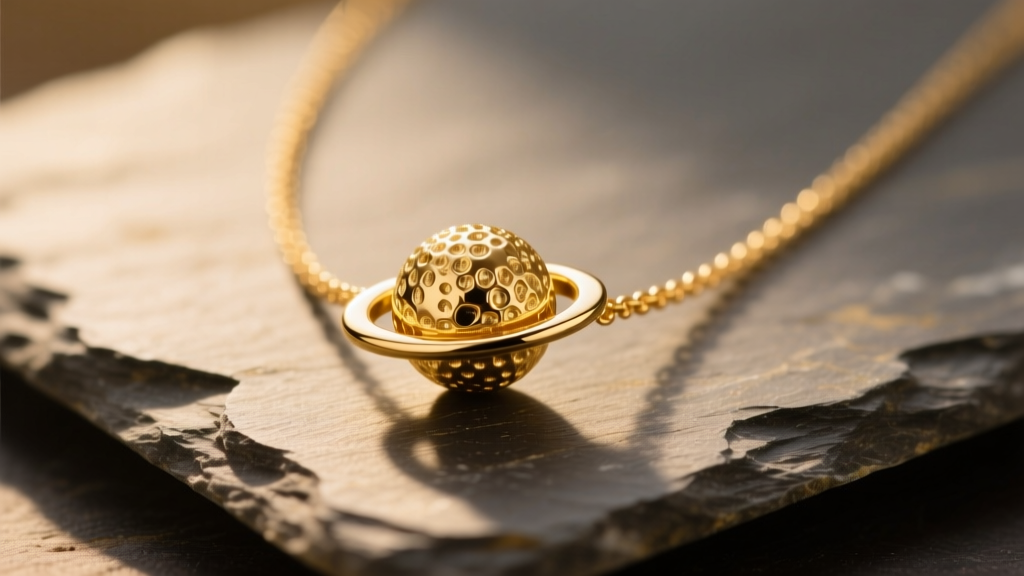
The Anatomy of a Saturn Planet Necklace
Celestial jewelry has dominated the accessories market for years, but the saturn planet necklace remains a standout piece for its unique three-dimensional architecture. Unlike flat star or moon pendants, a Saturn necklace features a central sphere encircled by an orbiting ring. This dynamic design introduces specific structural challenges and styling opportunities that beginners must understand before making a purchase.
At its core, the pendant consists of two main components: the planetary sphere and the halo ring. The sphere is typically cast in solid metal, sometimes featuring textured detailing to mimic the planet's gaseous bands, or it may be inlaid with gemstones like lapis lazuli or black onyx. The halo ring, which represents Saturn's iconic icy rings, is either soldered securely to the sphere or designed to spin freely. While free-spinning rings offer a captivating kinetic effect, they require a higher level of craftsmanship to prevent the ring from warping or snapping off during daily wear.
Planet-to-Ring Proportions
A common mistake beginners make is overlooking the proportional geometry of the pendant. For the design to be visually balanced and structurally sound, the inner diameter of the orbiting ring should be exactly 1.5 to 1.8 times the diameter of the central sphere. For example, if the planet sphere measures 10mm across, the halo ring should have an inner diameter of 15mm to 18mm. If the gap is too tight, the pendant looks cramped and the ring is prone to friction damage. If the gap is too wide, the delicate halo ring becomes a major snag hazard that can easily catch on clothing and bend out of shape.
Decoding Metals: What Should Your Necklace Be Made Of?
The metal composition of your saturn planet necklace dictates its longevity, skin compatibility, and price point. Because the orbiting ring is a high-friction area that rubs against the central sphere and your clothing, choosing a durable metal is critical. According to the Blue Nile Metal Education Guide, understanding the difference between solid gold, vermeil, and plated silver is essential for any jewelry buyer.
| Metal Type | Composition & Standards | Durability & Maintenance | Average Price Range |
|---|---|---|---|
| 925 Sterling Silver | 92.5% pure silver, 7.5% copper alloy. Often rhodium-plated. | Prone to tarnish. Requires regular polishing. Rhodium plating will eventually wear off the high-friction ring. | $35 - $75 |
| Gold Vermeil | Must be a sterling silver base with at least 2.5 microns of gold plating, per FTC Jewelry Guidelines. | Moderate durability. The thick gold layer resists tarnish but can wear thin on the orbiting ring over 1-2 years of daily wear. | $60 - $130 |
| Solid 14k Gold | 58.5% pure gold mixed with durable alloys like zinc and copper. | Excellent for everyday wear. Will not tarnish or flake. Can be polished indefinitely to remove micro-scratches. | $180 - $350+ |
Expert Tip: If you are buying a gold-tone Saturn necklace for daily wear, avoid standard 'gold-plated' brass or copper bases. The friction from the spinning ring will expose the base metal within months, leading to green skin discoloration and irreversible tarnish.
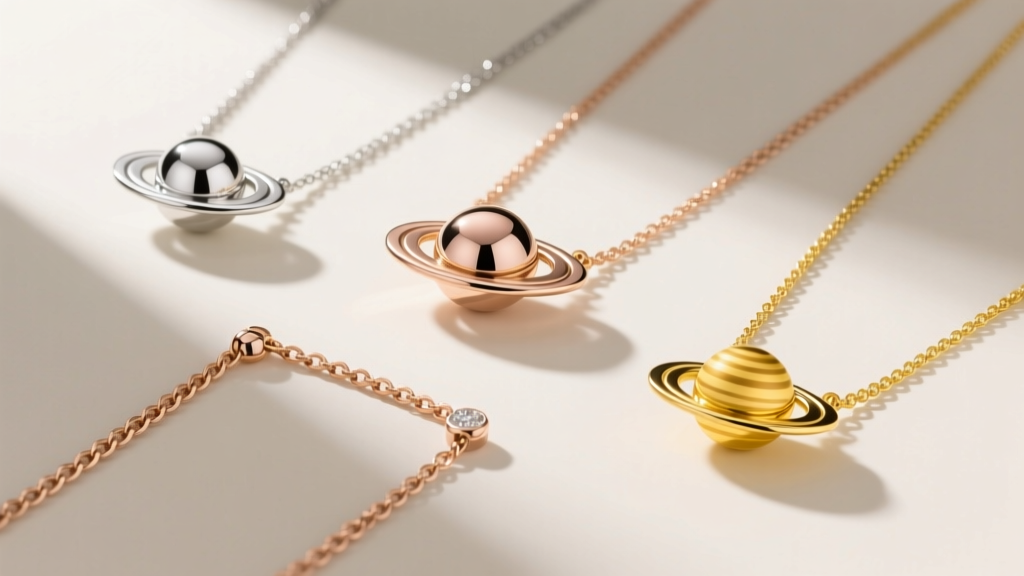
Chain Selection: Gauges and Styles That Work
The pendant is only half the equation; the chain you pair it with can make or break the functionality of a saturn planet necklace. Because the halo ring protrudes outward, it is highly susceptible to tangling. Choosing the wrong chain style will result in a frustrating experience where the pendant constantly flips upside down or gets hopelessly knotted.
The Best Chain Types for Celestial Pendants
- Box Chains (0.9mm - 1.2mm): This is the gold standard for Saturn pendants. The smooth, flat, geometric links glide effortlessly through the pendant's bail and do not have protruding edges for the orbiting ring to catch on. A 1.0mm box chain offers the perfect balance of delicate aesthetics and tensile strength.
- Cable Chains (Avoid): While classic, the oval links of a standard cable chain create tiny gaps and raised edges. The halo ring of the Saturn pendant will frequently slip into these gaps, causing the pendant to jam and flip over.
- Snake Chains (1.5mm+): These offer a sleek, modern look and are completely tangle-free. However, they are stiff and do not drape as fluidly around the collarbone, which can prevent the Saturn pendant from laying perfectly flat against the chest.
Always check the bail size (the loop connecting the pendant to the chain) before purchasing. Saturn pendants often feature a slightly larger, reinforced bail to accommodate the spatial volume of the orbiting ring. Ensure your chosen chain's clasp and end-links can pass through the bail without forcing it.
Styling and Layering Your Saturn Pendant
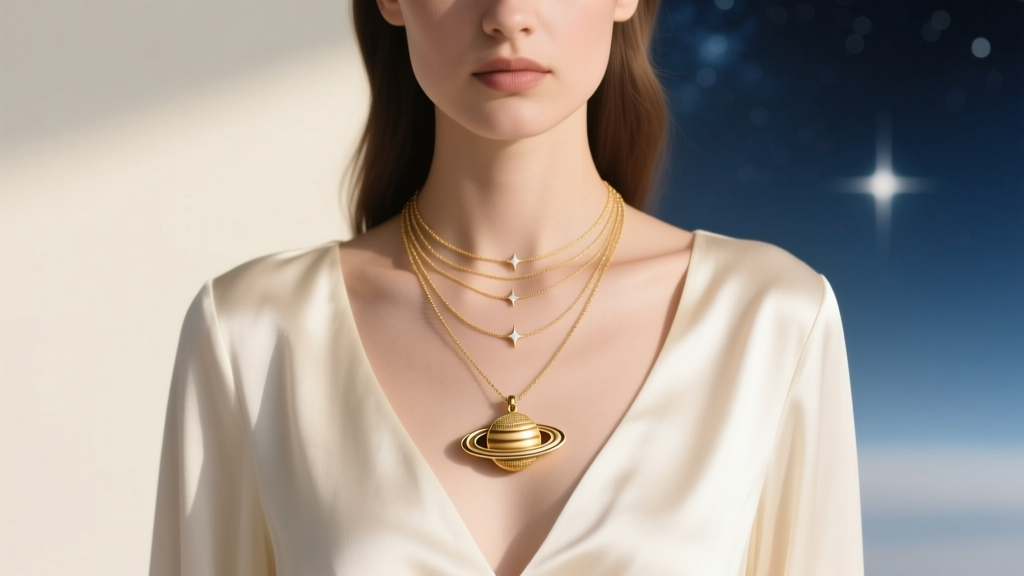
Styling a saturn planet necklace requires an understanding of visual weight. Because the pendant is three-dimensional and casts tiny shadows, it naturally draws the eye. It serves best as the anchor piece in a celestial-themed necklace stack.
When layering celestial jewelry, follow the 'Rule of Three Lengths'. Pair your 18-inch Saturn pendant with a 14-inch minimalist choker (like a simple herringbone chain) and a 22-inch pendant featuring a complementary motif, such as a crescent moon or a solitary star. This prevents the orbiting rings from clashing and tangling with adjacent pendants.
For necklines, the Saturn necklace shines against V-necks and scoop necks, which frame the pendant and allow the halo ring to lay flat against the skin. Avoid high crew necks or chunky knit turtlenecks; the heavy fabric will constantly push against the orbiting ring, bending it out of its circular alignment and potentially snapping the solder joints.
Care and Maintenance: Keeping Your Rings Bright
The unique architecture of the Saturn necklace demands specific care protocols. The Gemological Institute of America (GIA) emphasizes that intricate jewelry with moving parts or inlaid stones requires gentle, manual cleaning rather than aggressive automated methods.
- Skip the Ultrasonic Cleaners: If your Saturn sphere features inlaid gemstones (like crushed opal or turquoise) held in place by jeweler's epoxy, the high-frequency vibrations of an ultrasonic cleaner will shatter the inlay or dissolve the adhesive. Stick to a soft-bristled baby toothbrush and mild dish soap.
- Manage the Snag Hazard: Always remove your Saturn necklace before sleeping, exercising, or putting on tight clothing. The orbiting ring is a prime target for catching on sweater threads and bedsheets, which is the number one cause of structural failure for this specific pendant style.
- Storage is Key: Never toss a Saturn necklace loosely into a jewelry box. The halo ring will inevitably wrap around other chains. Store it flat in a dedicated anti-tarnish pouch or hang it on a velvet-lined jewelry stand to maintain the ring's perfect circular geometry.
Where to Buy: Pricing Tiers and What to Expect
When shopping for a saturn planet necklace, pricing is heavily dictated by the metal purity and the complexity of the ring's articulation. Here is a breakdown of what you should expect to pay in the current market:
Budget vs. Investment Pieces
The Entry-Level Tier ($25 - $50): At this price point, you are looking at sterling silver or gold-plated brass. The rings are almost always soldered (fixed) rather than free-spinning to reduce manufacturing costs. These are excellent for occasional wear or testing out the celestial trend, but expect to replace them every 12 to 18 months due to plating wear or tarnish.
The Mid-Range Tier ($80 - $150): This tier features high-quality gold vermeil and 925 sterling silver with rhodium plating. You will start seeing free-spinning rings with reinforced micro-hinges, as well as pave-set cubic zirconia accents along the halo ring. This is the sweet spot for everyday fashion jewelry.
The Investment Tier ($250 - $600+): Solid 14k or 18k gold necklaces live here. These pieces feature precision-engineered free-spinning rings that will never tarnish or flake. Many jewelers in this tier will also offer custom engraving on the central sphere or upgrade the planet to a solid cabochon gemstone, like a lapis lazuli sphere, turning the necklace into a lifelong heirloom piece.


