How to Style a Scarf Necklace with Pendant: A Beginner Guide
Learn how to choose, tie, and style a scarf necklace with pendant. Our beginner guide covers materials, draping techniques, and neckline pairings.


As fluid, tactile jewelry continues to dominate 2026 styling trends, the scarf necklace has evolved from a niche vintage accessory into a modern wardrobe staple. Unlike traditional rigid chains, a scarf necklace mimics the soft drape and movement of fabric, offering unparalleled versatility. When you pair this fluid foundation with a focal pendant, you create a dynamic piece that bridges the gap between fine jewelry and high-fashion accessories. However, threading a pendant onto a mesh or cord scarf necklace requires specific mechanical knowledge to avoid damaging the chain or ruining the drape.
This beginner-friendly explainer will walk you through the anatomy of scarf necklaces, the exact bail mechanics required for pendants, and professional draping techniques for every neckline.
What Exactly Is a Scarf Necklace?
In jewelry terminology, a "scarf necklace" does not refer to a literal winter scarf. Instead, it describes a highly flexible, continuous-length necklace (typically 36 to 48 inches) that drapes with the fluidity of silk. There are two primary categories you will encounter:
1. Tubular Mesh Chains
Often referred to as foxtail or woven snake chains, these are constructed from tightly interlocked micro-wires of 316L stainless steel, 925 sterling silver, or 14k gold. They usually range from 3mm to 8mm in width. Because they lack a rigid memory, they knot and drape exactly like a silk scarf. According to metal standards outlined by CIBJO (The World Jewellery Confederation), high-quality mesh should be finished with secure, soldered end-caps rather than glued fittings to withstand the tension of knotting.
2. Braided Silk and Suede Cords
For a more bohemian or lightweight aesthetic, mulberry silk or microfiber suede cords (usually 2mm to 4mm thick) are used. These require specialized glue-in or crimp-tube end-caps with jump rings. While they offer beautiful color variety, they are highly susceptible to degradation from alcohol-based perfumes and skin oils.
The Mechanics of Pairing a Pendant
The most common mistake beginners make is attempting to thread a standard pendant onto a scarf necklace. A traditional jump-ring bail (often 2mm to 3mm wide) will simply not fit over the end-caps or the 5mm+ width of a tubular mesh chain. To successfully style a scarf necklace with pendant, you must understand bail mechanics and weight distribution.
Selecting the Right Bail
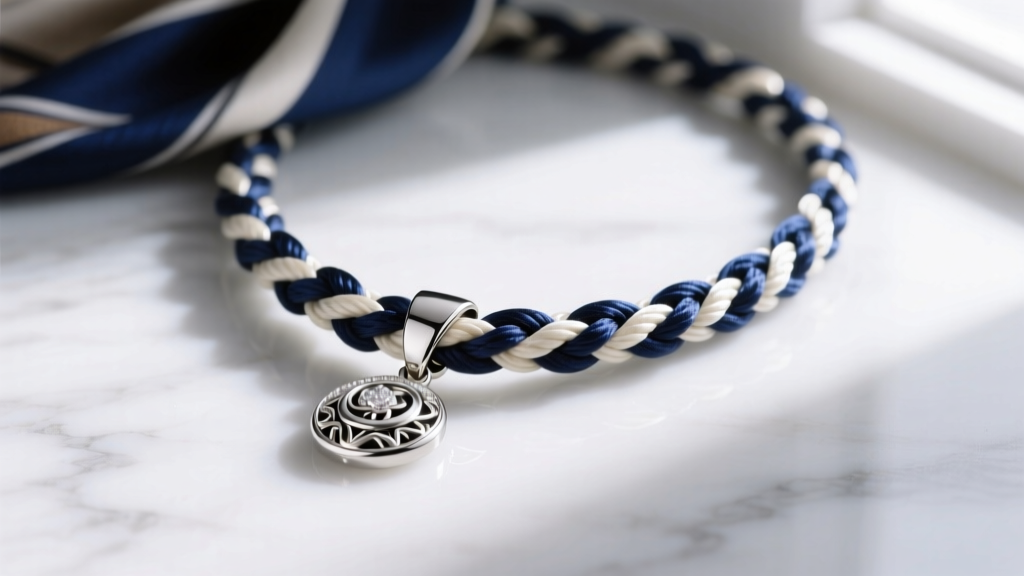
- Slide Bails (Euro Bails): Ideal for 3mm to 6mm cords and mesh. The pendant slides onto a hidden horizontal tube. Always measure the inner diameter of the tube, not the outer width.
- Tube Bails: Specifically designed for thicker 6mm to 8mm tubular mesh chains. They feature a wide, horizontal hollow cylinder that the entire chain threads through.
- Wrap Bails: Best for raw gemstone pendants, where a wire is manually wrapped around the thick cord of a silk scarf necklace.
The Weight Ratio Rule
A 36-inch, 4mm stainless steel mesh necklace weighs approximately 45 grams. To prevent permanent stretching or "bald spots" (where the mesh pulls apart, exposing the inner nylon core), your pendant should not exceed 15 grams (roughly 75 carats). If you prefer heavy, statement gemstones, the Gemological Institute of America (GIA) recommends setting them in lightweight aluminum or hollowed 10k gold mounts to reduce overall gravitational drag on the flexible chain.
4 Essential Draping and Knotting Techniques
The true magic of a scarf necklace with pendant lies in its styling versatility. Because the chain is exceptionally long, it can be manipulated to suit any neckline. Here is a structural guide to the most effective draping methods:
| Draping Technique | Best Neckline Pairing | Required Length | How to Execute |
|---|---|---|---|
| The Lariat Drop | Deep V-Neck or Wrap Dresses | 36 - 40 inches | Fold the necklace in half, drape around the neck, and pull the loose ends (with the pendant) through the folded loop. |
| Asymmetric Cowl | Off-Shoulder or Boatneck | 42 - 48 inches | Drape unevenly so the pendant rests on one side of the collarbone. Tie a loose, single overhand knot at the shoulder. |
| Double-Wrap Choker | Crew Neck or Button-Down | 48+ inches | Wrap the chain twice tightly around the neck, letting the pendant hang in the center. Secure with a discreet magnetic clasp. |
| The Tuxedo Loop | Blazers and Lapels | 36 inches | Thread the pendant to the center, drape behind the neck, cross the ends in the front, and pin them discreetly inside the blazer lapel. |
Material Care and Troubleshooting
Because scarf necklaces are manipulated, knotted, and wrapped, they endure more physical stress than standard chains. Proper maintenance is non-negotiable to preserve their fluid drape.
Fixing Kinked Tubular Mesh
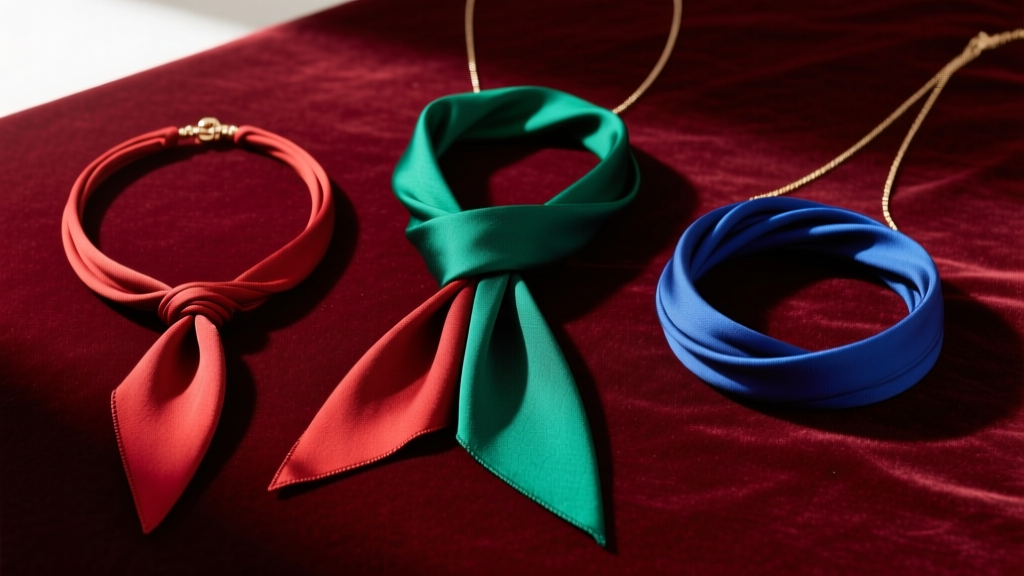
If you accidentally fold a tubular mesh necklace backward, the micro-wires can crimp, creating a permanent-looking "kink" that ruins the fluid drape. Do not pull or yank the chain. Instead, lay the necklace flat on a smooth glass or marble surface. Using the convex back of a smooth metal spoon, apply gentle, even pressure and roll the spoon over the kinked area. This realigns the woven metal wires back into their tubular formation without snapping them.
Silk Cord Degradation
Mulberry silk is a natural protein fiber. Exposure to ethanol (found in most perfumes and hand sanitizers) will cause the fibers to become brittle and snap under the weight of a pendant. Always apply fragrance to your pulse points and wait 60 seconds for the alcohol to evaporate before putting on a silk cord scarf necklace. Store silk cords coiled loosely in a breathable cotton pouch; never hang them, as gravity will stretch the fibers over time.
Final Styling Takeaways
Mastering the scarf necklace with pendant is about understanding the relationship between fluid metal and focal weight. By selecting the correct slide bail, respecting the 15-gram weight limit, and utilizing strategic knotting techniques, you can transform a single piece of jewelry into a dozen different silhouettes.
The Golden Rule of Fluid Jewelry: A scarf necklace should move like water. If your pendant is so heavy that it pulls the mesh taut and rigid, you have broken the visual illusion. Always prioritize the drape over the size of the stone.
Whether you are threading a raw amethyst slice onto a braided suede cord for a weekend market, or sliding a geometric 18k gold vermeil pendant onto a 5mm silver mesh for the office, the scarf necklace remains one of the most adaptable, beginner-friendly canvases in modern jewelry styling.


