Scene Necklaces in 2026: The Alt-Fashion Revival Trend Guide
Discover the 2026 scene necklaces trend. Explore material upgrades, layering blueprints, and how high-fashion is redefining alt subculture jewelry.


The mid-2000s alt-subculture aesthetic has officially completed its twenty-year nostalgia cycle, but the 2026 iteration is far from a mere copy-paste of the MySpace era. Today, scene necklaces have been elevated from fragile, mass-produced mall kiosk accessories into highly engineered, high-fashion statement pieces. Driven by the broader Y2K and indie-sleaze revivals, contemporary designers are reinterpreting the aggressive, hardware-heavy aesthetics of the original scene subculture using premium metallurgy and avant-garde styling. As noted in recent Vogue trend forecasting, the modern alt-fashion consumer demands jewelry that balances subversive nostalgia with everyday wearability and skin-safe materials.
The Evolution: From Zinc Alloy to Surgical Steel
In 2006, the quintessential scene necklace was a flimsy zinc-alloy ball chain sporting a heavy, lead-laden raccoon tail or neon acrylic pendant. These pieces oxidized within weeks, turning the wearer's skin green and snapping under minimal tension. The 2026 scene necklaces trend completely rejects this planned obsolescence. Today's alt-jewelry market is dominated by 316L surgical stainless steel, titanium, and oxidized 925 sterling silver. This material shift is not just about longevity; it is about achieving a specific, high-end industrial weight that drapes correctly over heavy cotton and leather garments.
Material Grade Comparison for Alt-Jewelry
| Material | Tarnish Resistance | Skin Safety | 2026 Price Range |
|---|---|---|---|
| Zinc Alloy (Fast Fashion) | Poor (Weeks) | Low (Nickel Risk) | $8 - $20 |
| 316L Surgical Steel | Excellent | High (Hypoallergenic) | $35 - $85 |
| PVD Black Coated Steel | Superior | High | $50 - $120 |
| Oxidized 925 Sterling Silver | Moderate (Patina) | High | $140 - $350+ |
The introduction of PVD (Physical Vapor Deposition) coating has been a game-changer for the scene aesthetic. Unlike traditional electroplating, which chips and reveals the base metal, PVD bonds a microscopic layer of black titanium nitride to the steel. This creates the coveted 'gunmetal' or 'blackout' hardware look that will not fade, even with daily exposure to sweat and friction.
The Layering Blueprint: Chain Profiles and Lengths
The core DNA of scene necklaces relies on aggressive layering. However, the modern approach requires a calculated variance in chain profiles and precise length staggering to prevent tangling and visual clutter. A successful 2026 alt-stack utilizes three distinct anchor points.
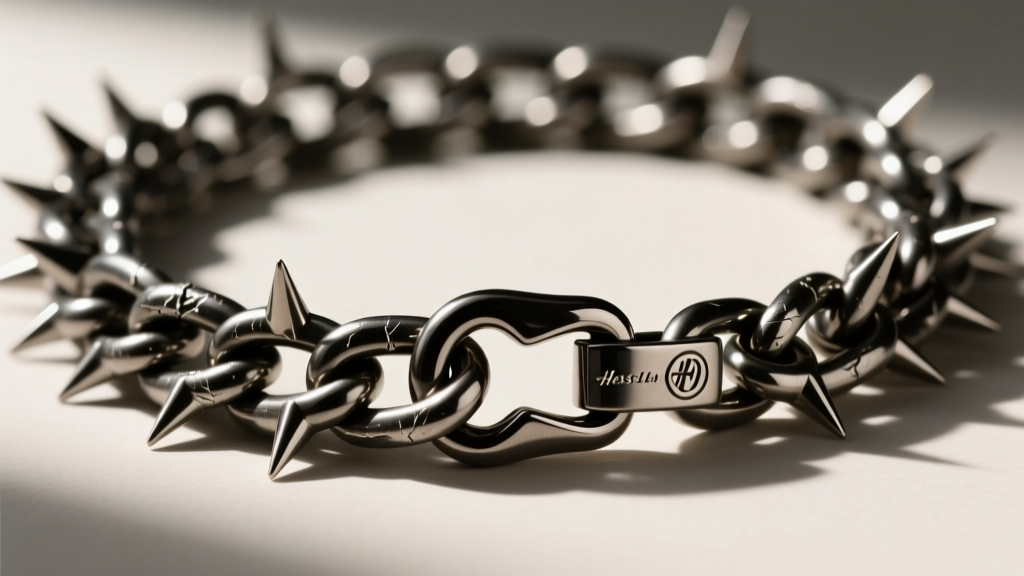
- The 14-Inch Choker (The Anchor): Typically a 6mm to 8mm spiked Cuban link or a heavy rolo chain. This sits tight against the collarbone and acts as the visual foundation. Spiked Cubans provide the necessary punk-aggression without the sharp edges of early 2000s safety-pin designs.
- The 18-Inch Mid-Drop (The Focal Point): This is where the primary pendant lives. A 3mm or 4mm ball chain (the classic dog-tag style) or a flattened curb chain works best here. This length rests perfectly on the upper chest, drawing the eye to the hardware.
- The 22-Inch Chest Drape (The Movement): A delicate but dark chain, such as a 2mm blackened box chain or a fine rope chain. This layer often features a smaller, secondary charm—like a miniature carabiner, a safety pin, or a subtle anarchy motif—to create depth and movement when walking.
Pendant Anatomy: Industrial Hardware and Acrylics
While the original scene era relied heavily on cartoonish motifs and band logos, the 2026 pendant landscape leans heavily into brutalist industrial hardware and elevated nostalgia. O-ring pendants, originally borrowed from pet and equestrian hardware, remain a staple, but they are now machined from solid steel with seamless welding. Padlocks, heavy-duty snap hooks, and hexagonal nuts are being repurposed as high-end pendants, reflecting a utilitarian shift in alt-fashion.
However, the neon acrylic charm has also made a triumphant, ironic return. Laser-cut acrylics in toxic green, hot pink, and UV-reactive yellow are being paired with heavy blackout steel chains. The juxtaposition of the hyper-masculine, heavy metal chain with the hyper-feminine, nostalgic acrylic charm creates the exact tension that defines the modern scene aesthetic.
Hardware and Clasp Mechanics
An often-overlooked element of premium scene necklaces is the clasp and jump ring engineering. Cheap necklaces use thin, 22-gauge wire jump rings that easily pull apart when a heavy pendant swings. In 2026, reputable alt-jewelers use 16-gauge or 18-gauge split rings, or seamlessly soldered jump rings, to secure heavy O-rings and padlocks. Furthermore, the standard lobster clasp is being replaced by magnetic neodymium clasps encased in blackened steel, or industrial screw-barrel clasps, which maintain the uninterrupted hardware aesthetic while providing superior security for heavy, multi-layered stacks.
Styling Scene Necklaces for Modern Necklines
Integrating heavy, layered scene necklaces into a contemporary wardrobe requires an understanding of neckline geometry. The goal is to frame the hardware, not let it fight with the garment.
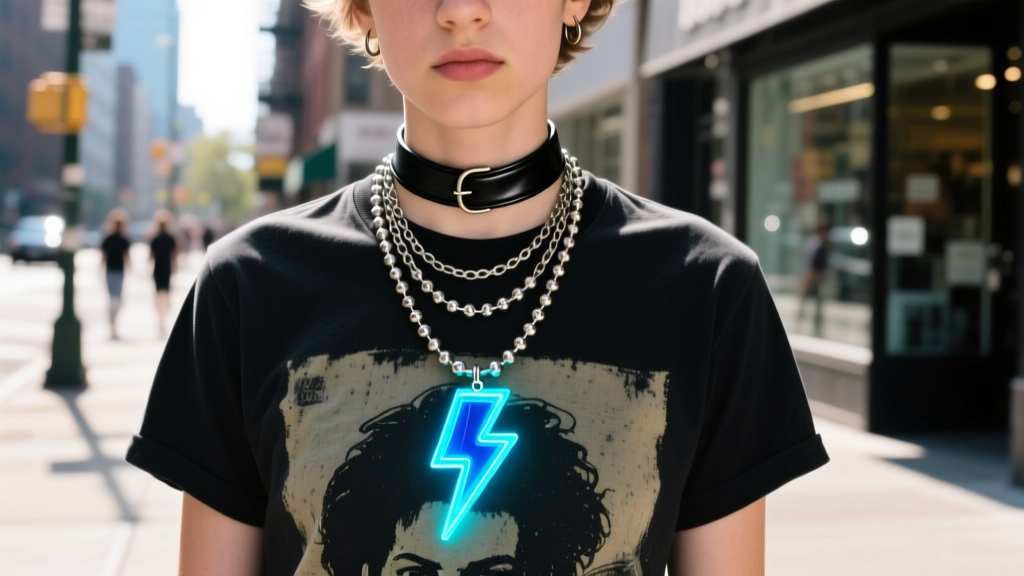
The Crew Neck Rule: When wearing a classic vintage band tee or a heavyweight streetwear crew neck, keep the layers tight. A 14-inch spiked choker paired with an 18-inch ball chain sits perfectly above the ribbed collar, creating a framed, structured look.
V-Necks and Deep Scoops: These necklines demand a longer, 22-inch or 24-inch drop chain with a heavy, vertical pendant (like a dagger or an elongated padlock) to follow the natural V-shape of the exposed skin. Avoid tight chokers with deep V-necks, as the visual gap between the collarbone and the necklace feels unbalanced.
The Unbuttoned Collar: For a more mature, high-fashion approach to the scene aesthetic, layer a delicate 18-inch blackened rolo chain inside the open collar of a dark, oversized button-down shirt. Let the pendant disappear into the shadow of the fabric, offering a subtle, subversive hint of the alt-aesthetic without overwhelming the silhouette.
Sourcing the Revival: Where to Invest
The market for scene necklaces in 2026 is bifurcated. On one end, legacy mall brands are producing mid-tier 316L steel replicas of 2006 classics, priced between $30 and $60. These are excellent for trend-testing. On the other end, independent avant-garde jewelers and high-end streetwear houses are releasing limited-run, hand-oxidized sterling silver and PVD-coated hardware pieces, often ranging from $150 to over $400. For the serious collector, investing in the independent tier guarantees unique hardware profiles, ethical manufacturing, and heirloom-level durability that transcends the fleeting nature of micro-trends.


