Scorpio Necklace Gold: Comparing Karats, Alloys and Durability
Discover the best gold alloys for your Scorpio necklace. Compare 10k, 14k, and 18k gold properties, hardness, and pricing for lasting zodiac jewelry.

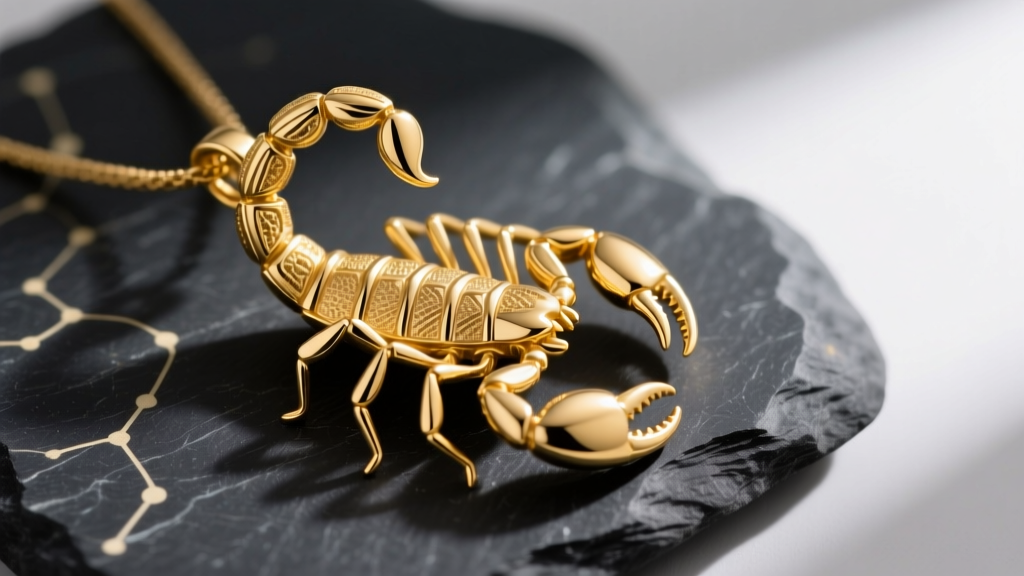
Scorpio is a fixed water sign known for its intensity, resilience, and appreciation for depth and permanence. When selecting a daily-wear zodiac pendant, superficial fashion jewelry simply will not suffice. Finding the perfect scorpio necklace gold composition requires looking beyond the surface shine and understanding the underlying metallurgy. A Scorpio’s jewelry must withstand the rigors of daily life while maintaining its intricate details—whether that is a delicately cast scorpion stinger, a deeply engraved constellation map, or a heavy, sculptural water-sign motif.
However, not all gold is created equal. The karat weight, alloy mixture, and structural mechanics of the chain dictate whether your necklace will become a lifelong talisman or a bent, tarnished disappointment within a year. In this comprehensive guide, we break down the exact material properties, Vickers hardness metrics, and pricing structures of various gold alloys to help you choose the ultimate Scorpio pendant.
The Metallurgy of Gold: Why Pure 24k Fails for Zodiac Pendants
To understand gold alloys, we must first look at pure gold. According to the World Gold Council, 24-karat gold is 99.9% pure. While it boasts a rich, unmistakable yellow hue and hypoallergenic properties, it is metallurgically unsuited for intricate jewelry. Pure gold registers a mere 25 to 30 on the Vickers Hardness (HV) scale. For context, this is roughly the same hardness as a human fingernail.
If a Scorpio pendant were cast in 24k gold, the delicate points of the scorpion’s pincers or the fine tips of a constellation star would bend, warp, or snap under minimal pressure. To achieve the tensile strength required for fine jewelry, gold must be alloyed with harder metals like copper, silver, zinc, and sometimes palladium or nickel. This alchemy not only increases durability but also allows for the diverse color palette seen in modern fine jewelry.
10k vs. 14k vs. 18k: The Ultimate Gold Alloy Comparison
When shopping for a scorpio necklace gold buyers are typically presented with three main options in the US and European markets: 10k, 14k, and 18k. Each offers a distinct balance of purity, durability, and color saturation.
| Karat | Gold Purity | Primary Alloy Metals | Vickers Hardness (HV) | Avg. Pendant Price (1 inch) | Best For |
|---|---|---|---|---|---|
| 10k Gold | 41.7% | Copper, Zinc, Silver | ~160 HV | $120 - $220 | Budget buyers, high-impact daily wear |
| 14k Gold | 58.3% | Copper, Silver, Zinc | ~140 HV | $250 - $450 | The ideal balance of durability and rich color |
| 18k Gold | 75.0% | Copper, Silver, Palladium | ~125 HV | $400 - $750+ | Hypoallergenic needs, luxury heirlooms, deep color |
Why 14k is the Industry Standard for Zodiac Charms
For a highly detailed Scorpio pendant, 14k gold is widely considered the sweet spot. With a Vickers hardness of roughly 140 HV, it is resilient enough to protect fine engravings and prong-set gemstones (like a Scorpio’s birthstone, the deep red garnet or opal) without being so hard that it becomes brittle. Furthermore, 14k yellow gold retains enough pure gold to offer a warm, luxurious tone without the steep premium of 18k.
Color Alchemy: Yellow, White, and Rose Gold for Scorpio Aesthetics
Scorpio energy is often associated with deep, transformative, and mysterious aesthetics. The color of your gold alloy can dramatically shift the mood of the pendant.
- Yellow Gold: The classic choice. An 18k yellow gold alloy (75% gold, 12.5% copper, 12.5% silver) offers a buttery, saturated yellow that pairs beautifully with dark gemstones like black onyx or deep red garnet, echoing the intense Scorpio palette.
- Rose Gold: Achieved by increasing the copper content. An 18k rose gold alloy might contain up to 22.25% copper. The resulting pinkish-red hue feels inherently passionate and aligns well with Scorpio’s ruling planets, Mars and Pluto. Note that higher copper content slightly increases the alloy's hardness and tensile strength.
- White Gold: Created by alloying pure gold with white metals like palladium, nickel, or silver, and then plating it with rhodium. White gold offers a sleek, modern, and slightly clinical look that contrasts sharply with dark clothing. However, it requires re-plating every 12 to 24 months as the rhodium layer (typically 0.75 to 1.0 microns thick) wears away to reveal the slightly yellowish underlying alloy.
Solid Gold vs. Gold-Filled vs. Vermeil: Longevity Metrics
Scorpios value authenticity and permanence. Understanding the Federal Trade Commission Jewelry Guides regarding gold terminology is crucial to avoid buying a piece that will degrade over time.
"Gold-filled jewelry must contain a layer of gold alloy that constitutes at least 1/20th (5%) of the total weight of the metal product, mechanically bonded to a base metal core." — FTC Jewelry Guides
The Verdict on Plating and Filled Metals
Gold Vermeil (pronounced ver-may) consists of a thick layer of gold (minimum 2.5 microns) plated over sterling silver. While better than standard flash plating, the gold layer will eventually wear through on a high-friction area like the neck, especially if exposed to sweat and perfumes. Gold-Filled pieces offer vastly superior longevity due to the mechanical heat-bonding process, often lasting 10 to 30 years with proper care. However, for a deeply personal zodiac talisman meant to be passed down as an heirloom, solid 14k or 18k gold remains the only true investment. Solid gold will never flake, peel, or expose a base metal core, and it can be easily polished and restored by a jeweler decades from now.
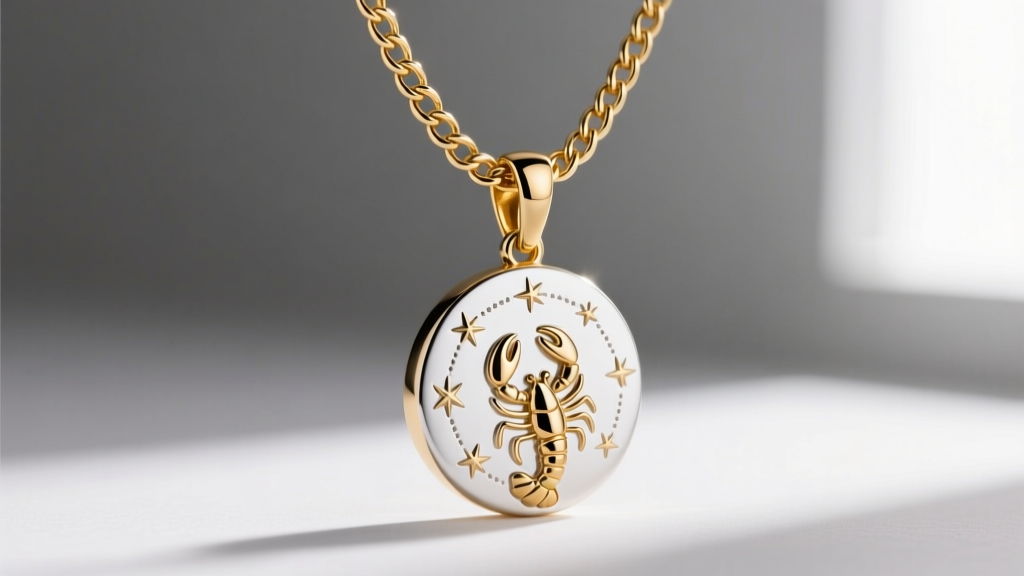
Chain Gauges, Clasps, and Structural Integrity
A common failure point in zodiac necklaces is not the pendant itself, but the chain and clasp mechanism. Scorpio pendants, especially those cast in solid gold with three-dimensional relief, can be surprisingly heavy, often weighing between 4 to 8 grams. Pairing a heavy pendant with a delicate chain is a recipe for structural failure.
Choosing the Right Chain Gauge and Style
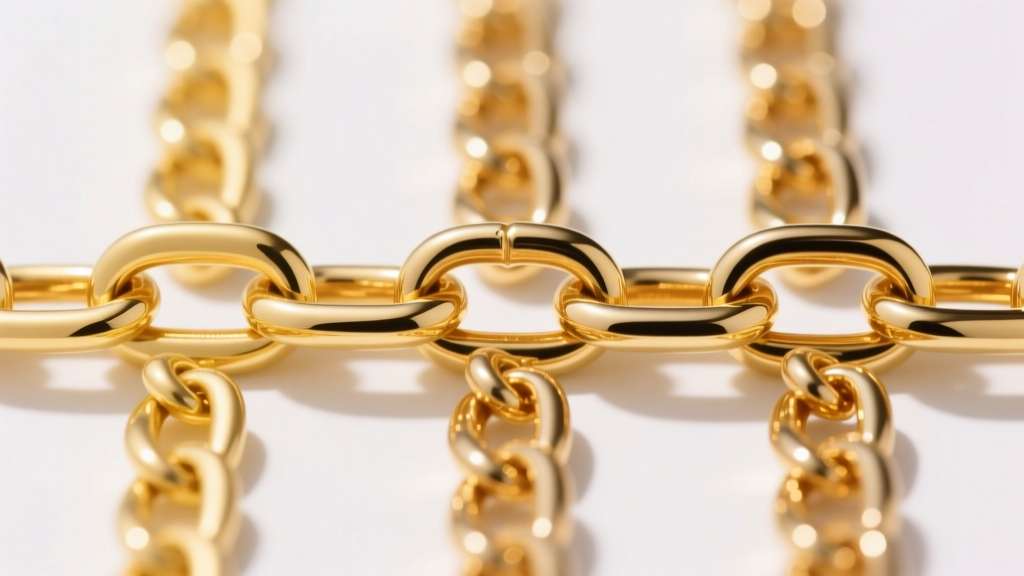
Chain thickness is measured in millimeters. For a standard solid gold Scorpio pendant, you should avoid anything under 1.2mm.
- 1.2mm - 1.5mm Cable or Box Chain: Suitable for lightweight, flat-stamped constellation pendants (under 3 grams). Box chains offer excellent tensile strength due to their interlocking square links.
- 1.8mm - 2.5mm Curb or Rope Chain: Mandatory for heavy, 3D sculptural scorpion pendants. Curb chains lay flat against the chest and distribute weight evenly, reducing stress on the individual links.
Clasp Mechanics: Lobster vs. Spring Ring
Never trust a heavy gold pendant to a standard spring ring clasp. Spring rings rely on a tiny internal steel spring that is prone to corrosion from sweat and can easily snap under the pendulum motion of a heavy charm. Always opt for a solid gold lobster clasp. Lobster clasps feature a robust, self-closing mechanism with a much thicker wire gauge. For chains 2.0mm and thicker, ensure the lobster clasp is at least 12mm in length to accommodate the thicker end-jump rings without bending the bail of your Scorpio pendant.
Final Thoughts: Investing in Your Zodiac Metal
According to the Gemological Institute of America (GIA), the longevity of gold jewelry is directly tied to the wearer's understanding of its alloy composition. A Scorpio necklace is more than just an accessory; it is a reflection of the sign's depth, power, and resilience. By prioritizing 14k or 18k solid gold, selecting a chain gauge that properly supports the pendant's weight, and avoiding superficial plating, you ensure that your zodiac jewelry remains as enduring and intense as the sign it represents.


