Seaglass Necklace Troubleshooting: Repairs, Fakes, and Care Guide
Fix broken wire wraps, spot fake seaglass, and restore frost. Expert troubleshooting guide for maintaining and repairing your seaglass necklace.

The Anatomy of Seaglass Necklace Failures
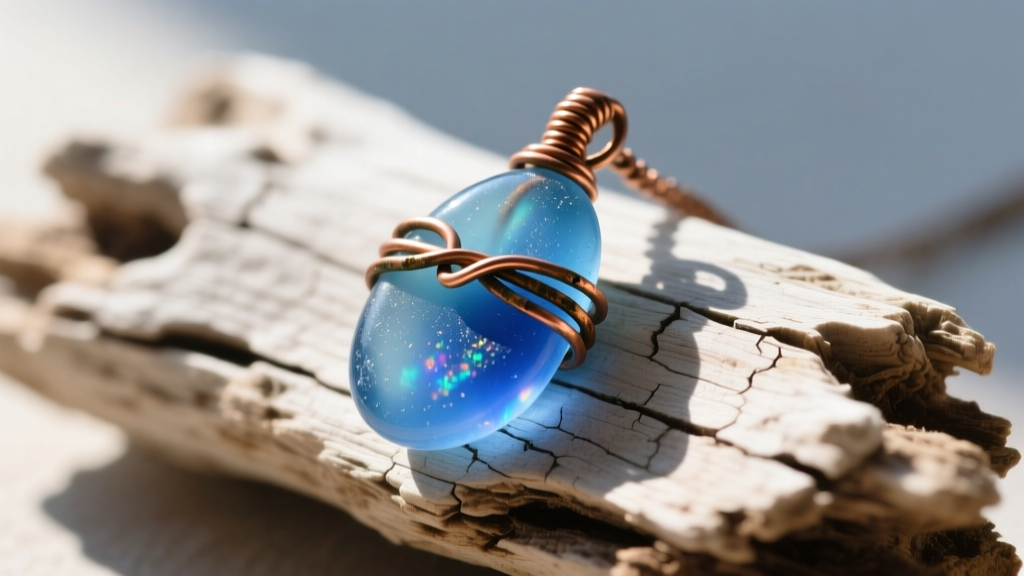
Seaglass necklaces possess a unique, organic charm, but their irregular shapes and delicate frost present distinct structural challenges. Unlike faceted gemstones set in calibrated bezels, seaglass is asymmetrical, often featuring uneven thickness and micro-fractures from decades of ocean tumbling. The most common point of failure in a seaglass necklace is not the glass itself, but the junction where the glass meets the metal finding. Wire wraps slip off tapered edges, bezel settings fail to grip uneven contours, and drill holes crack under lateral tension. Troubleshooting these issues requires an understanding of both lapidary mechanics and metallurgy.
Identifying Drill Hole Micro-Fractures
If your seaglass pendant cracks near the bail or drill hole, the root cause is often improper drilling techniques during the initial manufacturing. Standard carbide or twist drill bits create immense lateral pressure and thermal shock. Authentic lapidaries use 1.5mm to 2mm diamond-coated core drills operated at low RPMs with continuous water lubrication. If you notice a crack propagating from the drill hole, immediately remove the glass from the necklace. You can stabilize the micro-fracture by applying a drop of low-viscosity cyanoacrylate (jewelry-grade super glue) via a fine needle applicator, allowing it to wick into the fissure before re-setting.
Troubleshooting Wire Wrap and Bezel Failures
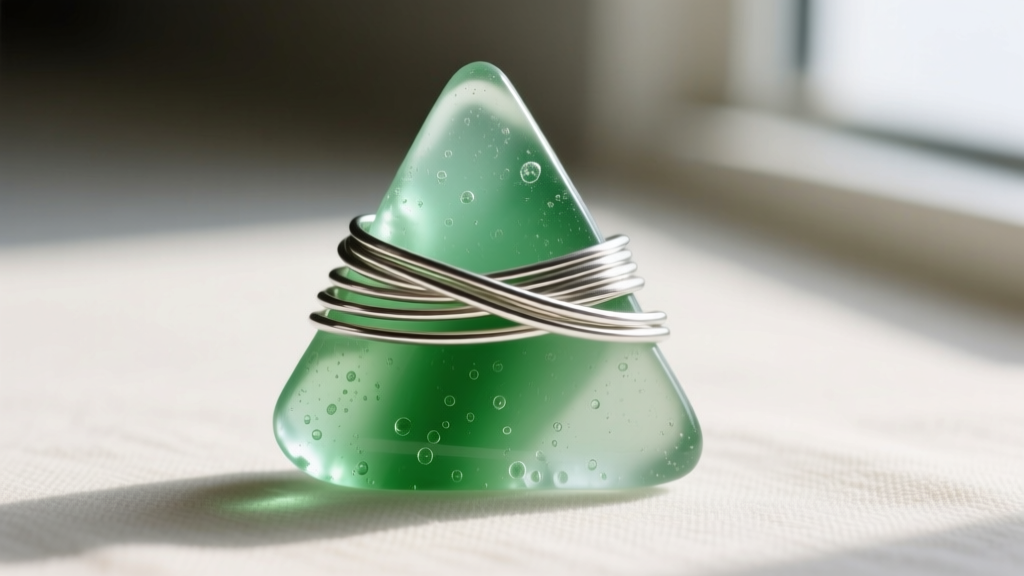
Wire wrapping is the most popular setting for seaglass because it accommodates the glass's natural, asymmetrical topography. However, improper wire selection leads to frequent slippage and metal fatigue.
Fixing Slipping Wire Wraps
If your wire wrap constantly slides off the smooth, frosted edge of the glass, the issue is likely wire temper. Many beginners use "dead soft" wire, which is highly malleable but lacks the memory required to grip a tapered edge. According to metallurgical standards from Rio Grande, you should upgrade to 20-gauge or 22-gauge "half-hard" sterling silver or copper wire. Half-hard wire has been work-hardened to provide structural tension. To secure a slippery piece, incorporate a "locking wrap" technique: weave a 26-gauge dead soft wire tightly around the base wires at the glass's natural indentations or "pits," creating a physical barrier that prevents the main frame from sliding.
Repairing Fatigued Bails
The bail—the loop that connects the pendant to the chain—endures constant friction. If your wrapped bail is thinning or snapping, do not attempt to solder it directly, as the heat transfer will shatter the seaglass. Instead, use a cold connection method. Cut away the fatigued wire and attach a pre-made sterling silver or gold-filled glue-on bail using a two-part jeweler's epoxy (such as G-S Hypo Cement or Devcon 5-Minute Epoxy). Ensure the glass surface is lightly scuffed with a diamond file where the epoxy will sit to maximize mechanical adhesion.
The Authenticity Test: Real vs. Tumbled Fake Seaglass
The market is currently flooded with machine-tumbled glass masquerading as authentic ocean-tumbled seaglass. Tumbled glass is artificially frosted in rock tumblers using silicon carbide grit, resulting in a uniform, chalky appearance that lacks the historical and structural characteristics of true seaglass. The North American Sea Glass Association (NASGA) provides strict guidelines for authentication.
| Feature | Authentic Ocean Seaglass | Machine-Tumbled Fake |
|---|---|---|
| Surface Pitting | Distinct "C-shaped" pitting and micro-grooves caused by sand and saltwater impact. | Uniform, chalky frost with no deep pitting; surface feels artificially smooth. |
| Edge Geometry | Edges are smoothly rounded but retain slight asymmetry and organic undulations. | Edges are perfectly, uniformly rounded with a manufactured, symmetrical consistency. |
| UV Reaction | Specific vintage colors (e.g., Vaseline glass) will fluoresce under 365nm UV light. | Modern craft glass rarely contains uranium or manganese; no fluorescence under UV. |
| Hydration Layer | Develops a subtle, natural patina over time due to prolonged saltwater hydration. | Lacks a true hydration layer; feels dry and overly powdery to the touch. |
Restoring the Frost: Cleaning Without Ruining the Patina
A common troubleshooting scenario involves a seaglass necklace that has lost its signature frost after being exposed to skin oils, lotions, and environmental dirt. The instinct is to clean it aggressively, but this can permanently destroy the glass's natural hydration layer.
What NOT To Do
- Never use ultrasonic cleaners: The high-frequency cavitation bubbles can easily shatter seaglass, especially pieces with hidden internal stress fractures.
- Avoid harsh chemicals: Acetone, bleach, and commercial silver dips will strip the delicate frost and leave the glass looking unnaturally shiny and artificial.
- Do not use polishing cloths: Abrasive jeweler's cloths will buff away the microscopic pitting that gives seaglass its matte finish.
The Proper Cleaning Protocol
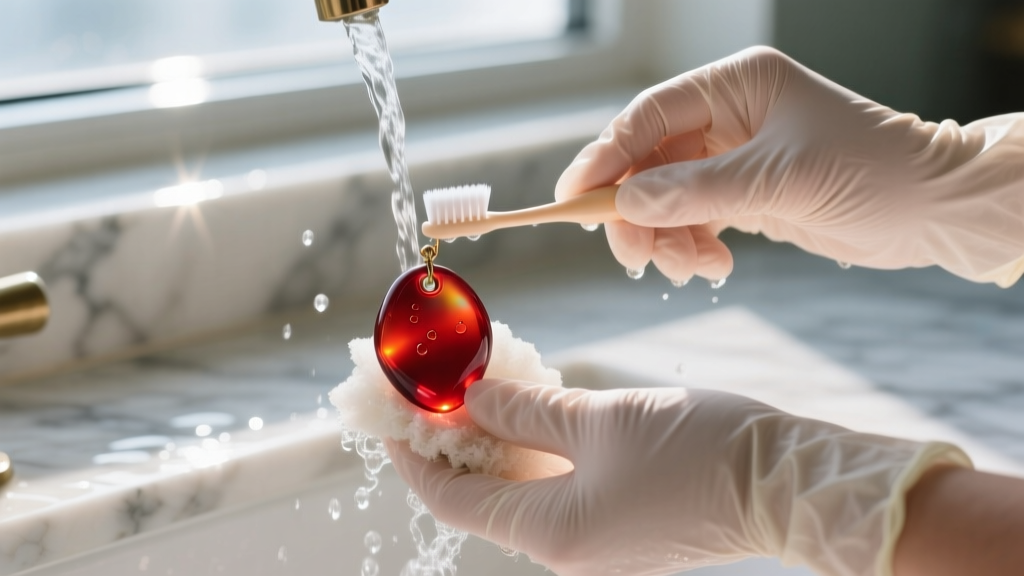
To safely restore the frost, prepare a solution of lukewarm distilled water and a few drops of pH-neutral dish soap (like Dawn). Submerge the pendant for 10 minutes to loosen sebum and lotions. Using a brand-new, extra-soft baby toothbrush, gently agitate the surface in circular motions. Rinse thoroughly with distilled water to prevent hard water mineral deposits, and pat dry with a lint-free microfiber cloth. If the glass looks too "dry" after cleaning, rub a single drop of mineral oil or jojoba oil into the surface, then buff off the excess. This temporarily enhances the color without damaging the frost.
Uranium Glass Seaglass: Safety and UV Testing
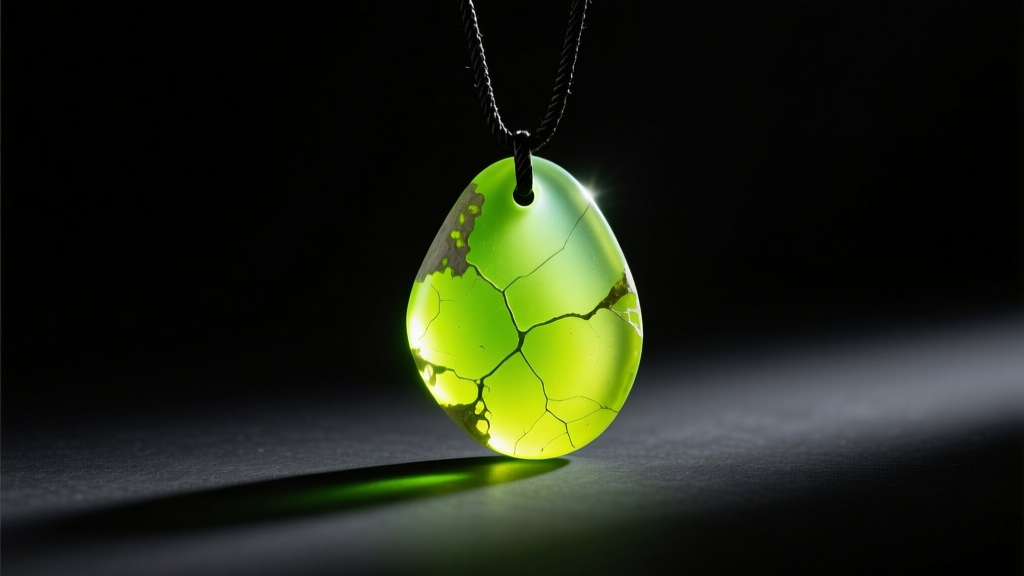
One of the most highly prized finds in seaglass jewelry is "Vaseline glass," which contains uranium dioxide, giving it a distinct yellow-green hue. While the idea of wearing radioactive material sounds alarming, the Gemological Institute of America (GIA) and various health physics organizations note that the radiation emitted by uranium glass is negligible and generally poses no health risk when worn externally. However, troubleshooting authenticity requires a 365nm UV flashlight. Under this specific wavelength, authentic uranium seaglass will emit a brilliant, glowing green fluorescence. If your "Vaseline" pendant does not glow under a 365nm light, it is likely modern green craft glass colored with iron or chromium oxides.
Preventative Maintenance and Chain Selection
The final piece of the troubleshooting puzzle is chain selection. Seaglass pendants often feature irregular, jagged edges near the drill hole or wire wrap that can easily catch on delicate chains. Rope chains and snake chains are notorious for snagging on the micro-pits of seaglass, leading to kinked metal and broken links. For optimal durability, pair your seaglass necklace with a 1.5mm to 2.0mm sterling silver box chain or a flat curb chain. These styles feature flush, interlocking links that glide smoothly over the glass's uneven topography without catching. Always store the necklace flat or hung vertically in a dry environment, as prolonged humidity can accelerate the tarnishing of the metal findings, which in turn can stain the porous frost of lighter-colored seaglass.


