How to Choose, Secure, and Style a Stone Holder Necklace
Learn how to choose, secure, and style a stone holder necklace. Expert guide on settings, wire gauges, metal grades, and layering techniques.

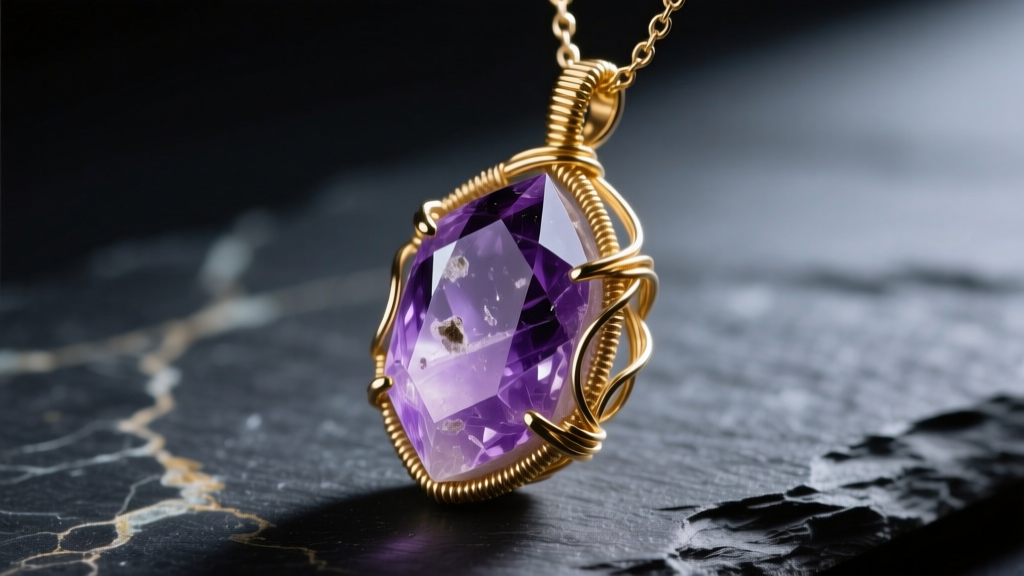
The resurgence of raw, uncut crystals and irregular heirloom gemstones has transformed the stone holder necklace from a niche lapidary craft into a mainstream jewelry staple. Whether you are showcasing a tumbled moonstone, a raw quartz point, or a custom-cut cabochon, the hardware that cradles your stone is just as critical as the gem itself. A poorly designed holder can lead to lost stones, metal fatigue, and damaged settings.
In this comprehensive guide, we break down the metallurgy, gemology, and styling mechanics required to select, secure, and wear a stone holder necklace with absolute confidence.
Understanding Stone Holder Mechanisms and Security Levels
Not all stones can withstand the same type of pressure. When selecting a holder, you must cross-reference the setting's tension mechanism with the stone's durability on the Mohs hardness scale. According to the GIA Gem Encyclopedia, stones below a 7 on the Mohs scale (like fluorite, apatite, or opal) are highly susceptible to cleavage and fracturing if subjected to continuous tension.
| Setting Type | Best For (Mohs Scale) | Security Level | Ideal Stone Shape |
|---|---|---|---|
| Tension / Claw Prong | 7.5 - 10 (Quartz, Beryl, Corundum) | Moderate | Faceted, Geometric |
| Wire-Wrapped Cage | 5 - 7 (Opal, Turquoise, Jade) | High | Irregular, Raw, Tumbled |
| Bezel Cup (Soldered) | All (Custom fitted) | Maximum | Cabochon, Calibrated |
| Macrame / Waxed Cord | All (Zero metal pressure) | Moderate | Large Raw Points, Geodes |
Step-by-Step: How to Secure Your Stone in a Cage or Tension Holder
If you are purchasing an adjustable tension holder or a wire cage pendant, securing the stone properly requires precision. Relying on bare hands often results in uneven pressure and scratched metal. Here is the professional method for seating a stone.
Step 1: Measure and Map the Stone
Use digital calipers to measure the exact width and depth of your stone. If you are using a standard 14mm x 18mm cage pendant, ensure your stone's thickest point does not exceed 8mm. Forcing an oversized stone into a standard cage will permanently warp the prongs.
Step 2: Adjust the Tension Arms
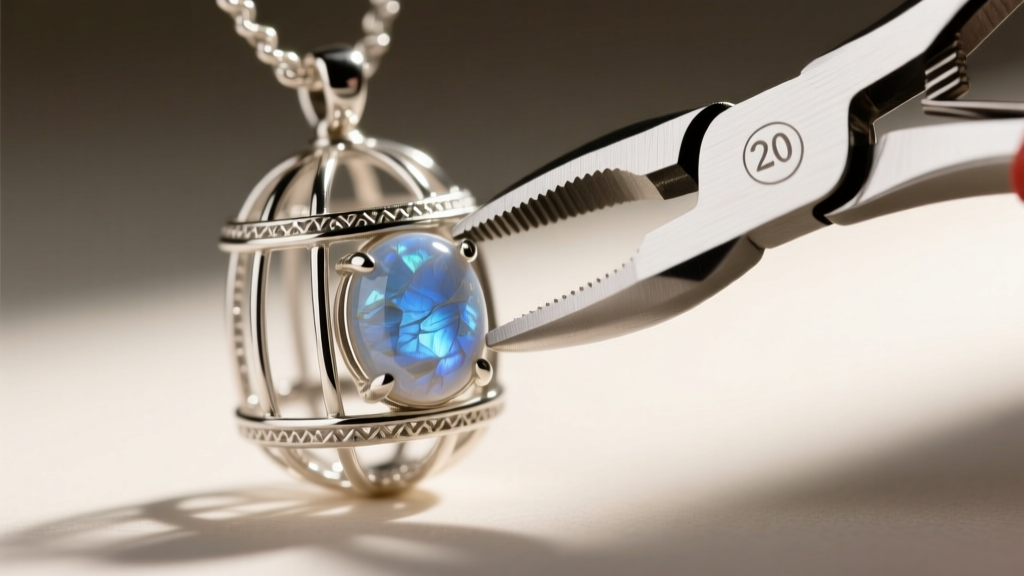
Open the tension arms slightly wider than your stone's width. Crucial: Always use nylon-jaw pliers when bending the metal arms. Steel jewelry pliers will leave permanent gouges in precious metals, creating micro-fractures that lead to snapping over time. For expert tool techniques, refer to the Rio Grande Jewelry Tutorials library.
Step 3: Seat and Lock the Stone
Place the stone into the base cradle of the holder. Gently squeeze the top prongs inward using your nylon-jaw pliers. The prongs should rest exactly on the stone's equator or in natural crevices (for raw stones). Do not overtighten; the metal should hold the stone snugly without bowing.
Material Grades: Choosing the Right Chain and Holder Hardware
The metal you choose dictates the lifespan of your necklace. A heavy raw obsidian point can weigh upwards of 25 grams, which will easily snap a delicate 0.8mm chain or cause metal fatigue in soft alloys.
- Argentium 935 Silver: Superior to standard 925 sterling silver. Argentium contains germanium, making it highly tarnish-resistant and slightly harder, which is ideal for tension prongs that need to maintain their grip without frequent re-tightening.
- 14/20 Gold-Filled: Ensure the stamp reads "14/20" (meaning 1/20th of the total weight is 14k gold). Gold-plated wire will rub off against the friction of a raw stone, exposing the brass core and causing skin discoloration.
- Grade 5 Titanium (Ti-6Al-4V): The ultimate choice for heavy, oversized stones. Titanium boasts an incredible strength-to-weight ratio and is 100% hypoallergenic, though it cannot be easily resized or soldered by standard jewelers.
Chain Thickness Rule of Thumb: For stones weighing under 10g, a 1.0mm to 1.2mm chain is sufficient. For stones between 10g and 30g, upgrade to a 1.5mm to 2.0mm rope or wheat chain to prevent the bail from wearing through the chain links.
Step-by-Step Styling: Layering and Neckline Pairing
A stone holder necklace is inherently a statement piece due to the organic, often asymmetrical nature of the stones it carries. Styling it requires balancing visual weight.
The Rule of Thirds for Layering
When stacking your stone holder with other chains, use the Rule of Thirds to avoid tangling and visual clutter.
1. Base Layer (16 inches): A delicate, lightweight chain (like a 1mm cable chain) sitting at the collarbone.
2. Mid Layer (20 inches): A textured chain (like a paperclip or Figaro chain) resting on the upper chest.
3. Focal Layer (24-28 inches): Your stone holder necklace, allowing the heavy pendant to hang freely in the center of the torso without striking the other clasps.

Pairing with Necklines
"Raw, unpolished stones in wire-wrapped holders demand negative space. Pair them with deep V-necks, scoop necks, or open-buttoned linen shirts. Avoid high crew necks or turtlenecks, which will cause the heavy bail to catch on the fabric and pull the chain taut against your neck."
Maintenance and Troubleshooting Common Failures
Even the highest quality stone holder necklace requires routine maintenance. The most common point of failure is not the chain, but the bail (the loop connecting the holder to the chain) and the prong tips.
Prong Fatigue and Loosening
Metals like sterling silver and pure gold are malleable. Over months of wear, body heat and minor impacts can cause tension prongs to slowly open. Every three months, gently squeeze the prongs inward with nylon-jaw pliers to reset the tension. If a prong snaps due to metal fatigue, do not attempt to glue it; take it to a jeweler for a laser weld.
Bail Friction
If your stone holder uses a hidden bail (a loop soldered to the back of the cage), the chain will constantly rub against the inside of the loop. Inspect the top inside of the bail with a 10x jeweler's loupe every six months. If you see a groove forming deeper than 0.2mm, have a jeweler insert a hardening jump ring or replace the bail to prevent the chain from snapping unexpectedly.
By understanding the interplay between gemstone hardness, metal tensile strength, and proper styling proportions, your stone holder necklace will remain a secure, breathtaking focal point in your collection for years to come.


