How to Select Different Necklace Chain Types for Pendants
Learn how to select different necklace chain types for pendants. A step-by-step structural guide covering gauges, link integrity, and weight limits.

Choosing the right chain for a pendant is not merely an aesthetic decision; it is an exercise in structural engineering. A mismatched chain and pendant will inevitably lead to metal fatigue, stretched links, or catastrophic failure. When evaluating different necklace chain types, you must consider tensile strength, link soldering, bail clearance, and metallurgical hardness. This step-by-step guide provides a professional framework for matching chains to pendants based on exact weight metrics and structural integrity, ensuring your jewelry lasts a lifetime.
Step 1: Calculate Pendant Weight and Bail Clearance
The first step in selecting a chain is determining the exact gravitational load it will bear. Use a digital jeweler's scale to weigh your pendant. Chains are generally categorized by weight capacity:
- Lightweight (Under 5 grams): Suitable for delicate chains (0.9mm - 1.2mm gauge). Ideal for small diamond solitaires or thin gold charms.
- Medium Weight (5 to 15 grams): Requires standard chains (1.5mm - 2.5mm gauge). Fits most standard gemstone pendants and medium-sized lockets.
- Heavyweight (Over 15 grams): Demands heavy-duty chains (3.0mm+ gauge). Necessary for large cabochons, solid gold crosses, or thick metal medallions.
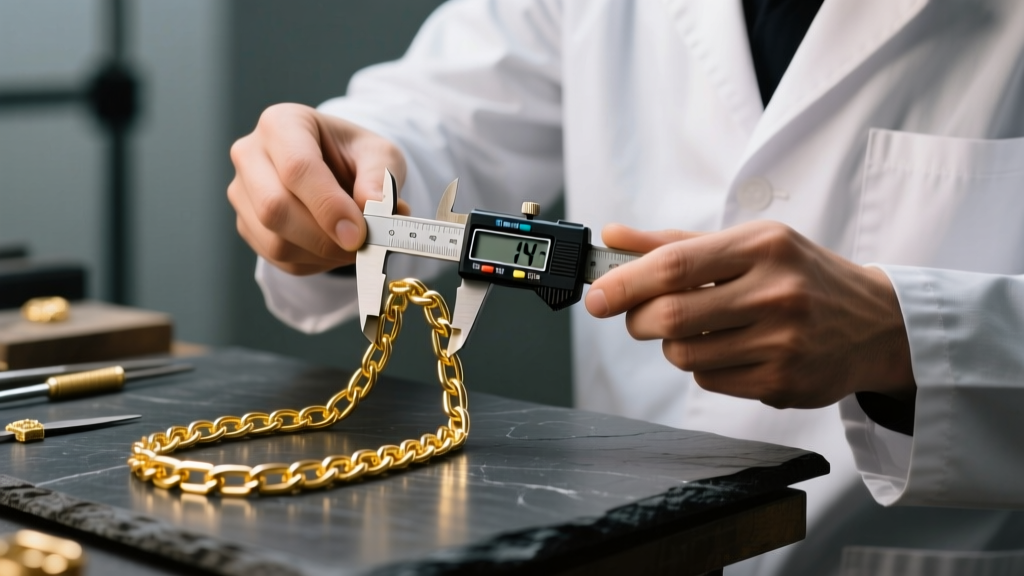
Equally critical is the bail clearance. The inner diameter (ID) of the pendant's bail must be at least 0.5mm larger than the width of the chain. For example, a 2.5mm wheat chain will bind and cause friction wear if forced through a 2.5mm bail. Always measure the bail ID with digital calipers before purchasing.
Step 2: Evaluate Link Integrity and Soldering
Not all links are created equal. The manufacturing process of the chain dictates its resistance to pulling and snapping. According to jewelry manufacturing standards outlined by Rio Grande, chains fall into two primary structural categories: soldered and unsoldered.
The Soldered vs. Unsoldered Breakdown
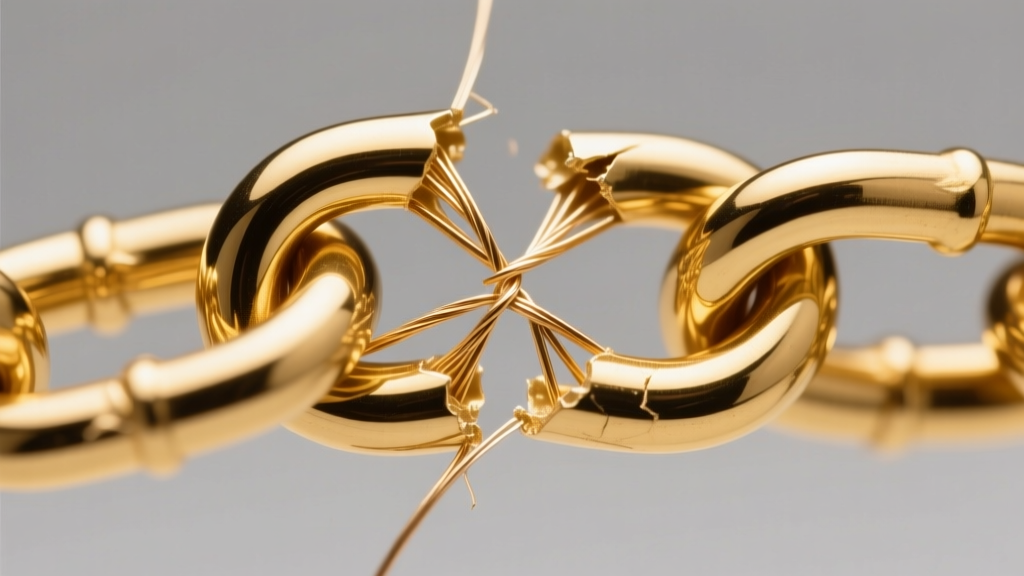
Unsoldered chains (like standard cable, curb, and Figaro) are formed by bending wire into loops without welding the seam shut. Their strength relies entirely on the tensile strength of the wire itself. If a heavy pendant swings and catches, the open seam can pull apart, causing the link to unhook. Soldered chains feature a microscopic weld at the seam of every single link, vastly increasing their load-bearing capacity. Alternatively, interwoven chains (like Franco or Wheat) do not require soldering because their complex, multi-axis link structures distribute stress evenly, making them virtually impossible to pull apart under normal wear.
Step 3: Match the Chain Profile to the Pendant Style
Beyond structural integrity, the visual weight and profile of the chain must complement the pendant. The Gemological Institute of America (GIA) emphasizes that proportion and metal harmony are key to high-end jewelry design. Below is a master chart for matching chain types to specific pendant profiles.
| Chain Type | Link Structure | Recommended Gauge | Max Pendant Weight | Best Use Case |
|---|---|---|---|---|
| Cable | Unsoldered / Soldered | 0.9mm - 1.5mm | 5 grams | Minimalist pendants, lightweight diamonds |
| Box | Interlocking Folds | 1.2mm - 2.0mm | 12 grams | Geometric pendants, modern lockets |
| Wheat | Interwoven Ovals | 1.5mm - 3.0mm | 25+ grams | Heavy medallions, vintage-style crosses |
| Rope | Twisted Links | 2.0mm - 4.0mm | 20 grams | Statement pieces, worn alone or with large bails |
| Franco | Interwoven V-Links | 2.0mm - 5.0mm | 50+ grams | Heavy streetwear pendants, solid gold charms |
| Curb | Flattened Unsoldered | 1.5mm - 3.0mm | 10 grams | Flat-laying pendants, dog tags |
When selecting materials, remember that 14k gold (58.5% pure gold) has a higher Vickers hardness (~135 HV) than 18k gold (~120 HV). For heavy pendants exceeding 20 grams, 14k gold or platinum (950) is vastly superior to 18k or 22k gold, which are prone to stretching under constant gravitational load.
Step 4: Upgrade Your Clasps and Jump Rings
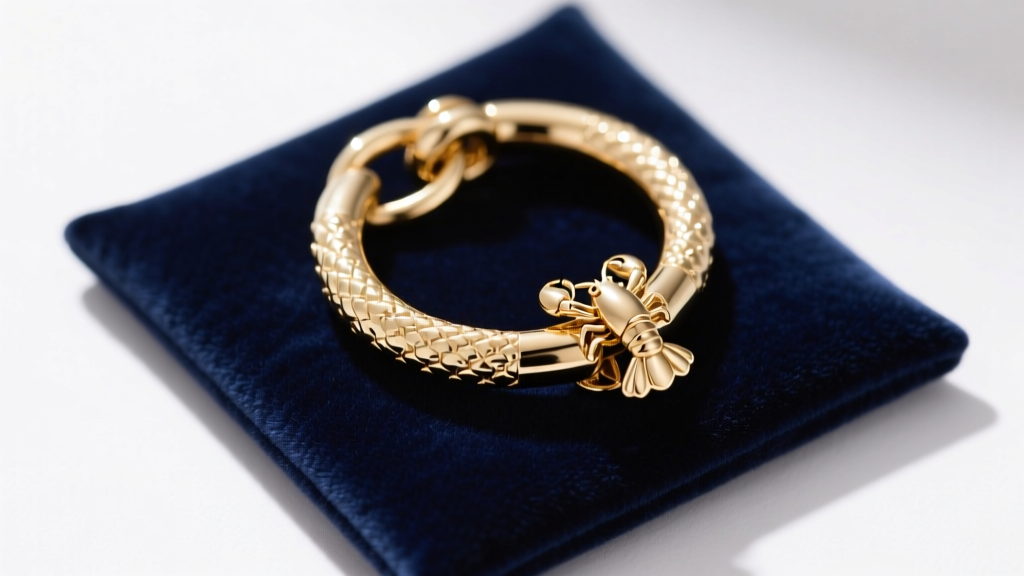
The chain itself is rarely the point of failure; the clasp and jump ring assembly are the true weak links. Standard spring-ring clasps are notorious for failing because the internal spring degrades or the tiny lever bends under lateral stress. For any pendant over 5 grams, upgrade to a heavy-duty lobster clasp.
Furthermore, inspect the jump ring connecting the clasp to the chain. A standard 20-gauge wire jump ring will easily pull open if the necklace is snagged. For medium to heavy chains, ensure the jump ring is crafted from 18-gauge or 16-gauge wire, and ideally, have a jeweler solder the jump ring shut to create a continuous, unbreakable loop.
Common Chain Failure Modes and How to Prevent Them
Expert Insight: Friction is the silent killer of jewelry. A pendant that slides freely back and forth across a 1.0mm cable chain will eventually act like a saw, cutting through the top of the chain links over a period of 12 to 18 months.
To prevent specific failure modes, adhere to these troubleshooting rules:
- Kinking (Rope Chains): Rope chains twist easily and are difficult to untangle. Never sleep in a rope chain, and store it laid flat or hung vertically to prevent permanent structural kinks.
- Stretching (Cable/Curb Chains): If an unsoldered chain stretches, it has undergone plastic deformation. The only fix is to remove the stretched links and reattach the clasp, which shortens the necklace.
- Bail Wear (Box Chains): Box chains have sharp, 90-degree inner corners. If the pendant bail is made of a softer metal (like high-karat gold or silver), the box chain will slowly saw through the bail. Always ensure the bail is reinforced with a steel or platinum insert.
By treating chain selection as a precise science rather than an afterthought, you protect your investment and ensure your pendant remains secure and beautifully displayed for decades.


