Crafting the Self Portrait With Thorn Necklace: Material Guide
Explore the best metals for crafting a wearable Self Portrait with Thorn Necklace replica. Compare silver, titanium, and gold properties.

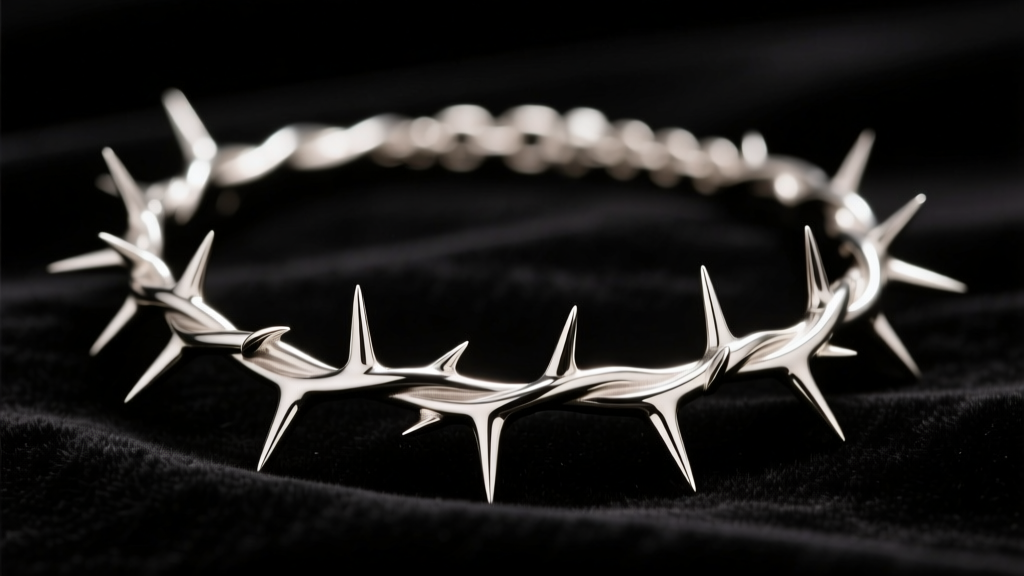
The Iconography of the Thorn Necklace in Modern Jewelry
Frida Kahlo’s 1940 masterpiece, Self-Portrait with Thorn Necklace and Hummingbird, remains one of the most visceral representations of pain, resilience, and Mexican heritage in art history. The thorn necklace, digging into her skin yet worn with stoic defiance, has transcended canvas to become a powerful motif in contemporary avant-garde jewelry. For modern jewelers and collectors, translating this iconic imagery into a wearable piece presents a unique metallurgical and structural challenge. Crafting a faithful yet comfortable self portrait with thorn necklace replica requires balancing the aggressive, sharp aesthetics of natural thorns with the strict biomechanical requirements of skin-safe jewelry.
According to the Museo Frida Kahlo, the artist frequently used jewelry and clothing as extensions of her physical and emotional narrative. Today, bespoke jewelers honor this narrative by engineering thorn-motif necklaces that capture the visual danger of the original piece without inflicting actual harm. This guide breaks down the material properties, casting behaviors, and finishing techniques required to execute this complex design.
Material Requirements for Thorn-Motif Necklaces
Designing a necklace composed of interlocking thorns or a continuous vine of spikes introduces three primary engineering hurdles:
- Structural Integrity at Thin Gauges: The tips of the thorns often taper down to 18 or 20 gauge (approx. 1.0mm to 0.8mm). The material must possess enough tensile strength to resist bending when snagged on clothing.
- Casting Porosity Risks: Sharp, tapering points in lost-wax casting are notorious for trapping air or failing to fill completely if the metal's fluidity and melting temperature are not perfectly calibrated.
- Skin Safety and Hypoallergenicity: Because the thorns rest directly against the clavicle and sternum, the alloy must be free of nickel and highly resistant to corrosion from sweat and skin oils.
Comprehensive Material Comparison for Thorn Casting
Selecting the right alloy is the most critical decision in the fabrication process. Below is a comparative analysis of the most viable metals for crafting a high-end thorn necklace.
| Metal / Alloy | Vickers Hardness (HV) | Casting Temp (°C) | Skin Safety | Approx. Cost / Gram |
|---|---|---|---|---|
| Sterling Silver (925) | 65 - 75 | 890 - 930 | Moderate (Copper allergy risk) | $0.80 - $1.20 |
| Argentium Silver (935) | 90 - 110 | 880 - 920 | High (Tarnish resistant) | $1.10 - $1.50 |
| 14k Yellow Gold | 130 - 150 | 850 - 900 | High (Nickel-free alloys) | $45.00 - $55.00 |
| 18k Yellow Gold | 110 - 125 | 900 - 940 | Very High | $60.00 - $75.00 |
| Titanium (ASTM F136) | 300 - 330 | N/A (CNC / 3D Print) | Implant-Grade (Highest) | $0.50 - $2.00 |
Note: Hardness values can be increased through work-hardening or specific heat treatments. Data sourced from Rio Grande metallurgical charts.
Sterling Silver (925) vs. Argentium Silver
Traditional 925 Sterling Silver is the most accessible material for casting intricate thorn vines. However, its relatively low Vickers hardness means that long, tapering thorns are prone to bending. Furthermore, the copper content in 925 silver causes rapid tarnishing, which can pool in the deep crevices of the thorn bases, making polishing a nightmare. Argentium Silver (935) is vastly superior for this application. By replacing some copper with germanium, Argentium achieves a higher baseline hardness and forms a transparent germanium dioxide layer that prevents tarnish. This allows the sharp crevices of the thorns to remain bright with minimal maintenance.
14k vs. 18k Yellow Gold
While 18k gold offers a richer, warmer color that closely mimics the earthy tones of natural wood and vines, its higher pure gold content makes it softer. For a thorn necklace where the tips must resist deformation, 14k yellow gold is the optimal choice. The higher proportion of alloying metals (like silver, zinc, and copper) increases the hardness to roughly 140 HV, ensuring the thorn tips maintain their structural integrity over decades of wear. When sourcing 14k gold casting grain, jewelers must specifically request nickel-free master alloys to prevent contact dermatitis on the sensitive chest area.
Implant-Grade Titanium (ASTM F136)
For collectors with severe metal allergies, Titanium (specifically Ti-6Al-4V ELI, governed by ASTM F136 standards) is the ultimate biocompatible material. However, titanium cannot be cast using traditional jewelry lost-wax investment methods due to its extremely high melting point and reactivity with oxygen. Instead, titanium thorn necklaces are either CNC-milled from solid billets or 3D-printed using Direct Metal Laser Sintering (DMLS). This results in a piece that is incredibly strong and feather-light, though the surface texture requires extensive hand-polishing to achieve a mirror finish.
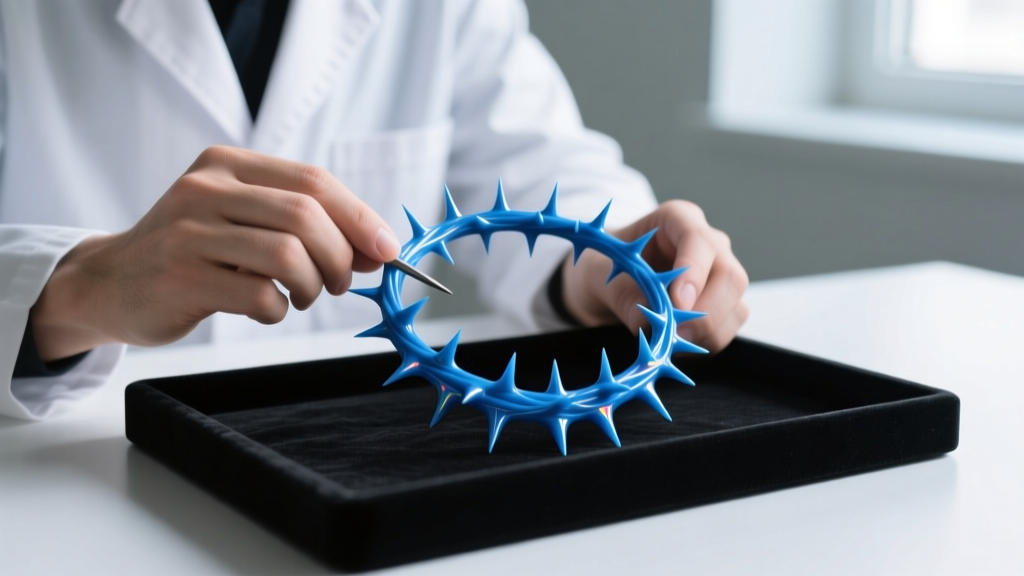
The Lost-Wax Casting Challenge: Spruing and Venting
When translating the self portrait with thorn necklace concept into a physical object, the wax model stage is where most failures occur. Sharp, tapering thorns act as thermal sinks during the casting process. If the molten metal cools too quickly upon hitting the thin tips of the thorns, it will freeze before the cavity is filled, resulting in rounded, incomplete points.
To combat this, master casters employ a technique called auxiliary venting. Micro-thin wax wires (0.5mm) are attached to the very tips of the longest thorns, leading directly to the main sprue button. This provides a secondary pathway for air to escape and ensures that the hottest, most fluid metal is pulled all the way to the extreme tips of the design. Once cast, these tiny vents are snipped off and filed flush.
Safety and Wearability: Blunting the Thorns
A literal interpretation of Kahlo’s painting would result in a necklace that pierces the wearer’s skin—a clear violation of jewelry safety standards and consumer protection laws. The art of the modern thorn necklace lies in the optical illusion of sharpness.
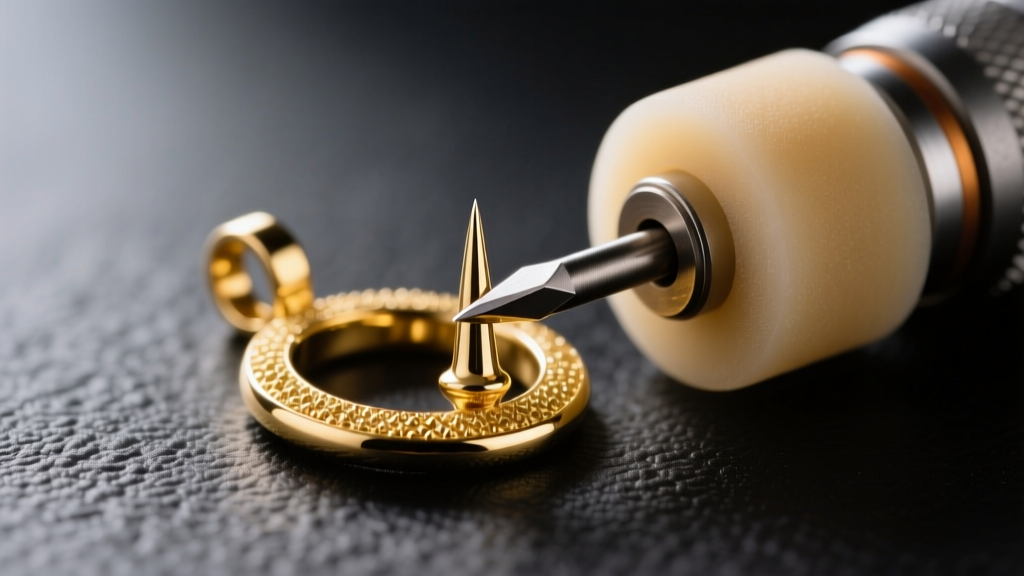
Jewelers achieve this through a process called micro-blunting. Using a high-speed rotary tool equipped with a fine-grit silicone polishing wheel, the absolute apex of each thorn is flattened to a microscopic 0.5mm plateau. To the naked eye, the thorn still appears razor-sharp, but the flattened tip disperses pressure across the skin rather than puncturing it. Following this, the entire piece is tumbled in a magnetic finishing machine with stainless steel shot, which burnishes the metal and work-hardens the surface without rounding off the deliberate, aggressive angles of the vine.
Alternative Materials: Enamel and Cold Porcelain
For those seeking a lighter, more colorful interpretation that mirrors the lush foliage surrounding Kahlo in her painting, mixed-media approaches are highly effective. Champlevé enameling can be used to fill the recessed channels between the silver thorns with deep, vitreous greens and blacks. The glass-like enamel is fired at roughly 800°C, fusing permanently to the metal.
Alternatively, cold porcelain or high-density jewelry resins can be sculpted around a sterling silver armature wire. This allows for hyper-realistic, hand-painted wood and thorn textures that are entirely impossible to achieve with solid metal casting, though they sacrifice the heirloom durability of precious metals.
Conclusion: Selecting Your Medium
Recreating the self portrait with thorn necklace is a masterclass in balancing aesthetic aggression with wearable comfort. For heirloom-quality, durable pieces, 14k yellow gold or Argentium silver offer the best compromise between casting fluidity, structural hardness, and skin safety. By respecting the metallurgical limits of thin-gauge tapering and employing meticulous micro-blunting techniques, jewelers can forge a piece that honors Kahlo’s legacy of beautiful resilience without drawing a single drop of blood.


