Vintage Silver Ball Necklace 90s: The Ultimate Buying Guide
Discover how to authenticate, price, and style a vintage silver ball necklace 90s era. Expert tips on hallmarks, bead sizes, and 2026 market values.

The Resurgence of the 90s Silver Bead Necklace
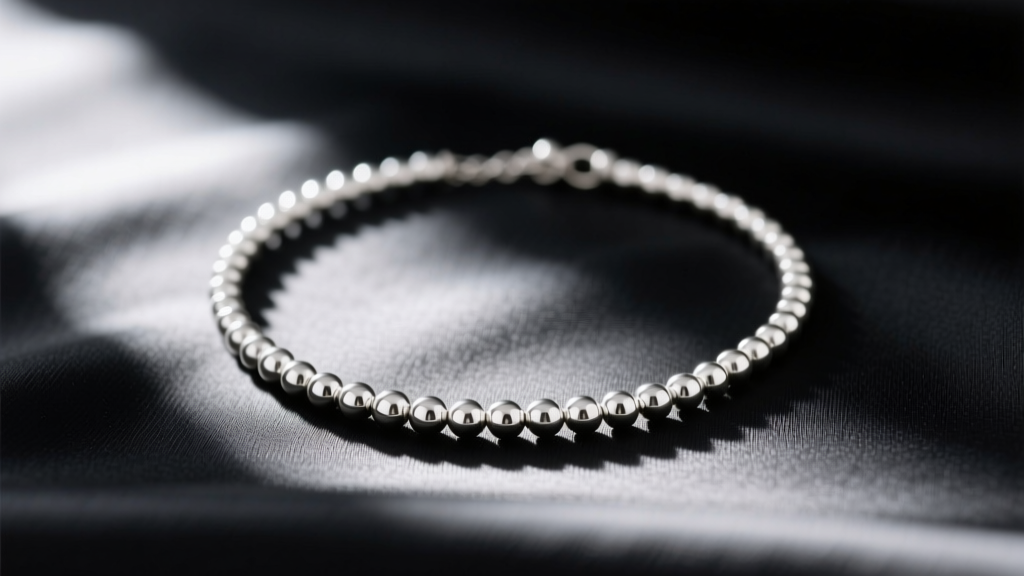
The minimalist revival dominating 2026 fashion has brought the iconic silver ball necklace 90s era back to the forefront of luxury and vintage markets. Often mischaracterized as a simple accessory, the true 1990s sterling silver bead necklace is a masterclass in understated elegance. Popularized by high-end designers and widely adapted by premium mall brands, these necklaces became the defining uniform of the decade's 'quiet luxury' and grunge-adjacent styling. Unlike the ball chains associated with military dog tags, the 90s silver ball necklace consists of perfectly spherical, solid sterling silver beads strung together to create a fluid, liquid-metal drape. For serious collectors and vintage enthusiasts, acquiring an authentic piece from this era requires a keen eye for metallurgical details, stringing mechanics, and historical hallmarks. This comprehensive buying guide will equip you with the exact specifications needed to navigate the secondary market, avoid modern reproductions, and secure a genuine artifact of 90s jewelry history.
Anatomy of a True 90s Silver Ball Necklace
To accurately identify a vintage silver ball necklace 90s collectors covet, you must first understand its physical anatomy. The magic of these pieces lies in their fluidity, which is entirely dependent on the stringing method and the bead-to-hole ratio.
Stringing Mechanics: Wire vs. Thread
In the 1990s, high-end designer bead necklaces were predominantly strung on coated stainless steel beading wire (such as early iterations of Accu-Flex), secured with sterling silver crimp beads at the clasp terminals. This allowed the necklace to support the substantial weight of solid silver spheres without stretching. Conversely, lower-tier mall brands often utilized multifilament nylon or silk thread. When inspecting a vintage piece, gently flex the necklace near the clasp. If you see a microscopic metallic cylinder (the crimp bead) securing the wire loop, you are likely looking at a premium 90s piece. If the beads are knotted or secured with a simple wire wrap, it may be a later reproduction or a lower-tier vintage item.
The Bead-to-Hole Ratio
Authentic 90s designer beads feature a remarkably tight bead-to-hole ratio. The drill hole through the center of a 5mm silver bead should be no larger than 1.2mm. This precision engineering ensures that when the necklace is laid flat, the beads sit flush against one another, creating a continuous, unbroken metallic line without visible stringing material. Modern, mass-produced replicas often feature larger 2mm drill holes to accommodate cheaper, thicker stringing wires, resulting in a 'gappy' appearance that ruins the liquid drape effect.
Authentication: Hallmarks, Weight, and Clasp Mechanics
Verifying the authenticity of a vintage silver ball necklace 90s era requires moving beyond a simple visual inspection. You must act as a metallurgical detective, examining the microscopic clues left behind by 90s manufacturing standards.
Decoding the 925 Stamp
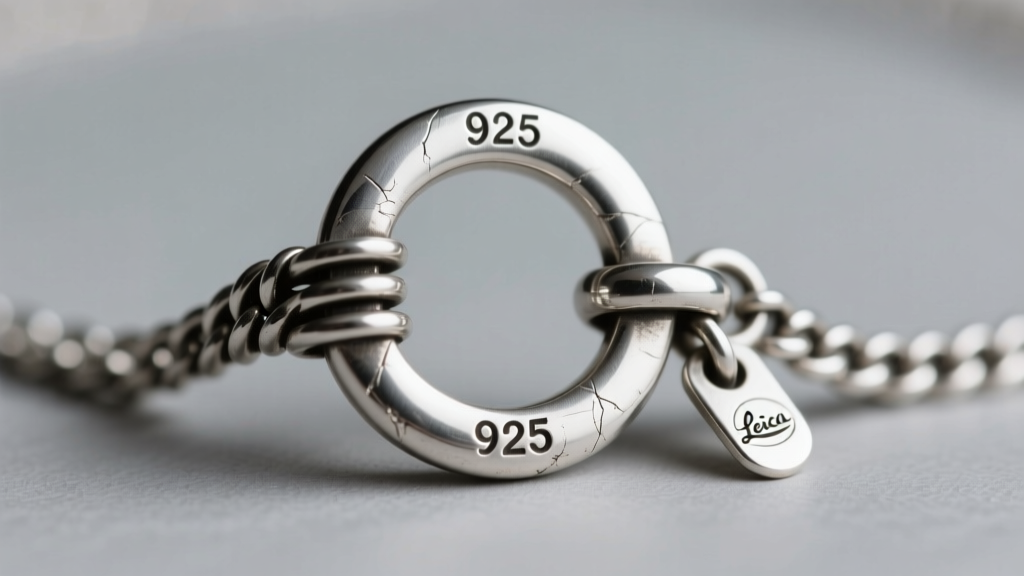
According to guidelines from The Silver Institute, the '925' stamp indicates 92.5% pure silver and 7.5% alloy (usually copper) for durability. On a genuine 90s piece, this stamp is rarely laser-engraved directly onto the spherical beads due to the curvature. Instead, look for a tiny, often oval-shaped maker's tag attached to the jump ring near the clasp. The stamping on 90s tags was done via mechanical die-striking, meaning the font will appear slightly soft or uneven under a 10x jeweler's loupe. Modern laser-etched 925 stamps are perfectly uniform and sharply defined—a dead giveaway of a contemporary reproduction.
The Clasp Transition of 1994
The 1990s marked a transitional period in jewelry findings. Early 90s silver bead necklaces almost exclusively utilized the classic spring ring clasp. By the late 90s (circa 1996-1999), the lobster claw clasp became the industry standard for heavier pieces. If a necklace purports to be from 1992 but features a bulky, modern-style lobster clasp with a perfectly symmetrical, machine-cast trigger, it has likely been repaired or is a modern fake. A true 90s spring ring clasp will have a slightly asymmetrical thumb lever and a soldered jump ring that shows minor tooling marks under magnification.
The Paramagnetic Test
Sterling silver is paramagnetic, meaning it exhibits no noticeable attraction to a standard neodymium magnet. If the clasp or the beads of your silver ball necklace 90s piece snaps to a magnet, it is either silver-plated brass or contains a steel core. Note: The internal spring inside a spring ring clasp is made of steel and will attract a magnet, but the beads and the outer clasp housing must not.
Bead Diameter and Length Matrix
The visual impact of a 90s silver bead necklace is dictated by the exact millimeter diameter of the spheres and the overall length of the strand. The 5mm bead on an 18-inch princess strand is the undisputed holy grail of 90s vintage, but understanding the full matrix helps you identify rare variations.
| Bead Diameter | Standard 90s Length | Visual Weight | Market Rarity |
|---|---|---|---|
| 3mm (Seed) | 15' - 16' (Choker) | Delicate, subtle shimmer | High (Often lost or broken) |
| 5mm (Standard) | 18' (Princess) | Classic, fluid liquid-metal | Medium (The 90s staple) |
| 6mm - 7mm | 20' - 24' (Matinee) | Chunky, grunge-layering | Low (Rare designer runs) |
| 8mm+ (Statement) | 28'+ (Opera) | Heavy, bold, sculptural | Extremely Rare |
When shopping on platforms like 1stDibs Vintage Jewelry Archives, always request caliper measurements from the seller. A necklace listed as '5mm' that actually measures 4.2mm is likely a later reproduction using metric-improper molds.
2026 Market Pricing: What You Should Actually Pay
The secondary market for a vintage silver ball necklace 90s era has matured significantly. Pricing is heavily stratified based on provenance, condition, and brand lineage. The influence of heritage brands, heavily documented in Tiffany & Co. Archives, sets the ceiling for these valuations.
- Tier 1: Heritage Designer (e.g., Tiffany & Co. 1837, Elsa Peretti Seeds)
Expect to pay between $350 and $650 for an authenticated, 18-inch 5mm bead necklace in good condition. Pieces with original 90s pouches and boxes command a 20% premium. - Tier 2: Premium European & Mall Brands (e.g., Thomas Sabo, Georg Jensen)
These pieces offer exceptional 925 silver quality and precise bead uniformity. Market value sits firmly between $120 and $250. - Tier 3: Unbranded 925 Vintage (Department Store Era)
While lacking a prestigious maker's mark, unbranded 90s sterling silver bead necklaces are fantastic for everyday wear and layering. Fair market value ranges from $45 to $95, depending on the clasp quality and silver weight.
'The true value of a 90s silver bead necklace isn't just in the silver weight; it's in the precision of the drill holes and the quality of the internal stringing wire. A well-strung 90s piece will drape like water, while a poorly strung modern replica will kink and stiffen.' — Master Jeweler and Vintage Appraiser
Layering the 90s Silver Ball Necklace for Modern Styling
In 2026, wearing a vintage silver ball necklace 90s era as a standalone piece is a nod to pure minimalism, but the true styling potential lies in mixed-metal layering. The spherical geometry of the silver beads provides a perfect textural contrast to modern chain styles.
The Mixed-Metal Matrix
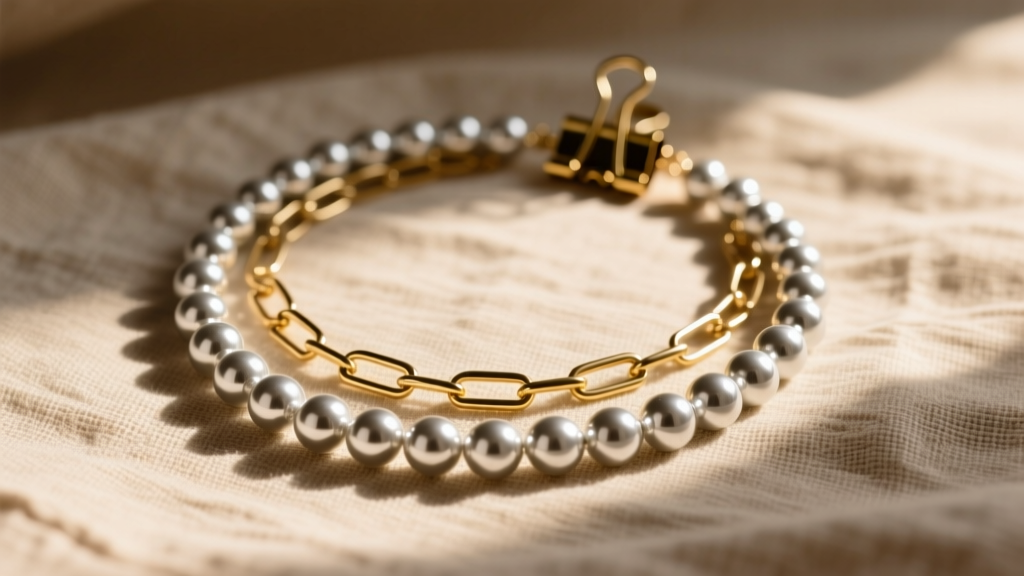
Pair your 18-inch 5mm silver bead necklace with a 20-inch 14k yellow gold paperclip chain. The rigid, open rectangular links of the gold chain will frame the fluid, reflective surface of the 90s silver beads, creating a dynamic interplay of light and shadow. This technique bridges the gap between 90s grunge and contemporary quiet luxury.
The Pendant Anchor
While 90s bead necklaces were rarely designed to hold heavy pendants, you can safely slide a lightweight, modern diamond solitaire or a small enamel charm onto the strand. Ensure the pendant's bail is smooth and lined with gold or platinum; a rough silver bail will act like a file against the softer 925 silver beads, causing micro-scratches and eventual structural weakening of the bead surface.
Expert Care: Preserving the Interstitial Patina
The most critical aspect of maintaining a vintage silver ball necklace 90s era is understanding the chemistry of silver tarnish, specifically silver sulfide (Ag2S). Over three decades, the microscopic gaps between the beads accumulate a dark, oxidized patina. In the modern vintage market, this 'interstitial patina' is highly prized—it proves the necklace's age and adds a three-dimensional depth that makes the silver spheres appear to float.
The Danger of Chemical Dips
Never submerge a 90s silver bead necklace in commercial chemical tarnish removers (like Tarn-X). These thiourea-based acids will instantly strip the interstitial patina, leaving the necklace looking flat, artificially white, and clinically modern. Furthermore, these chemicals can degrade the protective polymer coating on the internal steel stringing wire, leading to catastrophic wire failure and a scattered necklace.
The Polishing Cloth Method
To clean your piece without destroying its vintage character, use a dry, untreated microfiber cloth or a very lightly treated silver polishing cloth. Drape the necklace over your index finger and gently run the cloth over the exposed tops of the beads. This removes skin oils and surface oxidation while leaving the dark, historic patina safely tucked between the spheres. Store the necklace flat in an anti-tarnish flannel pouch with a piece of activated charcoal or silica gel to control ambient humidity and slow future oxidation.


