Self Portrait with Necklace of Thorns: Crafting Botanical Spikes
Explore the metallurgy and crafting techniques behind the iconic self portrait with necklace of thorns, from lost-wax casting to safe ergonomics.

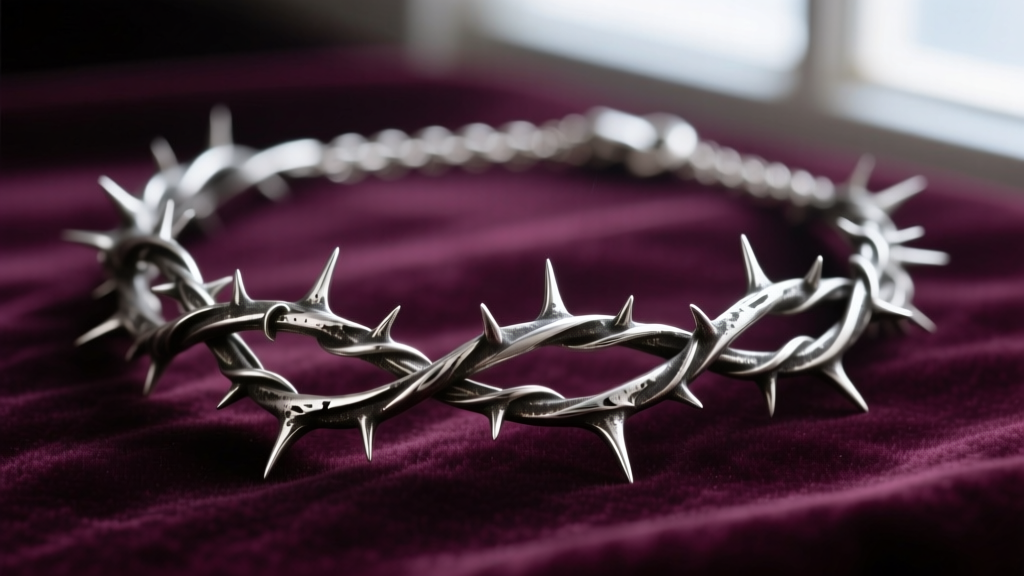
Few pieces of art have influenced the trajectory of botanical and avant-garde jewelry design quite like Frida Kahlo’s 1940 masterpiece. The painting captures the artist adorned in a visceral, piercing collar of twisted vines and sharp spikes. Today, the self portrait with necklace of thorns serves as more than a historical artifact; it is a masterclass in organic tension, symbolic metallurgy, and the translation of natural hazards into wearable art. For modern jewelers and collectors, recreating or drawing inspiration from this iconic piece requires a deep understanding of lost-wax casting, ergonomic safety, and alloy selection.
The Iconography of the Thorn: From Canvas to Cast Metal
Housed at the Harry Ransom Center, the original painting utilizes the thorn necklace as a stark metaphor for resilience, chronic pain, and the inescapable embrace of nature. In the context of jewelry history, botanical motifs have long been used to signify growth and beauty, but the introduction of the thorn introduces an element of danger and protection. When translating this 2D iconography into 3D metalwork, artisans must capture the chaotic, asymmetrical growth patterns of real Acacia or Bougainvillea thorns while ensuring the piece functions as a cohesive, flexible necklace.
The visual weight of the necklace in the painting sits high on the collarbone, acting almost as a gorget or armor. To replicate this presence without the literal masochism depicted on canvas, contemporary metalsmiths rely on advanced articulation and precise weight distribution, ensuring the 'thorns' lay flat against the sternum rather than jutting outward unpredictably.
Metallurgical Choices for Botanical Jewelry
The choice of metal drastically alters the emotional resonance of a thorn necklace. While Kahlo’s painting features dark, woody, organic tones, modern interpretations often leverage the contrast between precious metals and oxidized textures. According to material science data referenced by the Gemological Institute of America (GIA), the hardness and malleability of the chosen alloy will dictate how fine the thorn tips can be cast before becoming brittle.
| Alloy | Hardness (HV) | Finish Potential | Best Application |
|---|---|---|---|
| .925 Sterling Silver | 60-70 | High Polish, Liver of Sulfur Oxidation | Intricate vine detailing, high-contrast thorn tips |
| 14k Yellow Gold | 130-150 | Matte, Satin, Brushed | Luxury chokers, durable everyday botanical pendants |
| Silicon Bronze | 80-100 | Raw, Patinated, Sealed | Avant-garde statement pieces, rustic textures |
For the most authentic, moody replication of the self portrait with necklace of thorns, .925 sterling silver treated with liver of sulfur is the industry standard. The oxidizing agent turns the deep crevices of the vine bark black, while the thorn tips are polished to a mirror finish, creating a striking visual contrast that mimics the interplay of light and shadow in oil painting.
Technical Drafting & Lost-Wax Casting for Organic Spikes
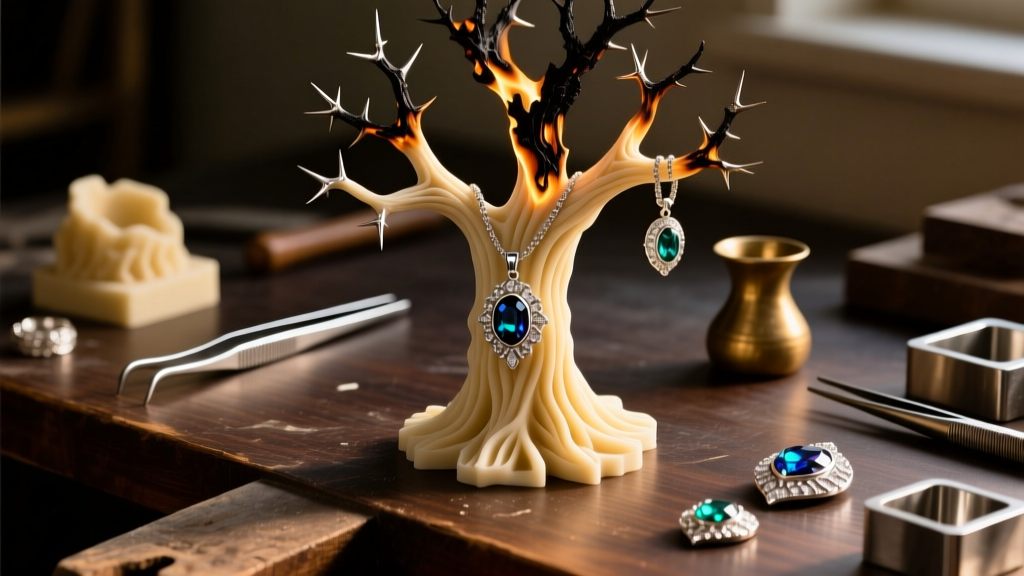
Crafting a thorn necklace cannot be done through simple wire wrapping or stamping; it requires the ancient, yet highly technical, process of lost-wax casting. Organic, asymmetrical shapes are notoriously difficult to cast due to the risk of shrinkage porosity and incomplete fills. Master jewelers utilize resources and technical guidelines from suppliers like Rio Grande Jewelry Supply to mitigate these risks.
Spruing Strategies for Asymmetrical Vines
When carving the original wax model, the thorns must be attached to a central wax sprue. Because thorns taper to a fine point, the molten metal can cool too quickly at the tip, resulting in a rounded, blunt end rather than a sharp spike. To counter this, jewelers use a technique called 'feeder spruing,' where a secondary, thinner wax channel is attached near the base of each major thorn to ensure a continuous flow of pressurized molten silver during the centrifugal or vacuum casting process.
Safety Gauges and Ergonomic Clearances
In Kahlo’s painting, the thorns actively pierce the skin, drawing blood to symbolize martyrdom. In contemporary jewelry design, this hazard must be engineered out without losing the visual threat of the spike. According to ergonomic standards for avant-garde body adornment, a 'sharp' thorn tip should never have a point radius of less than 0.8mm. This provides the illusion of a needle-sharp point while remaining completely safe against the skin.
Furthermore, the inner curve of the choker must maintain a minimum 1.5mm clearance from the wearer's clavicle and jugular notch. This is often achieved by soldering a smooth, contoured backing plate to the reverse of the thorn clusters, or by designing the thorns to point strictly downward or outward, never inward toward the neck.
Articulation and Chain Selection
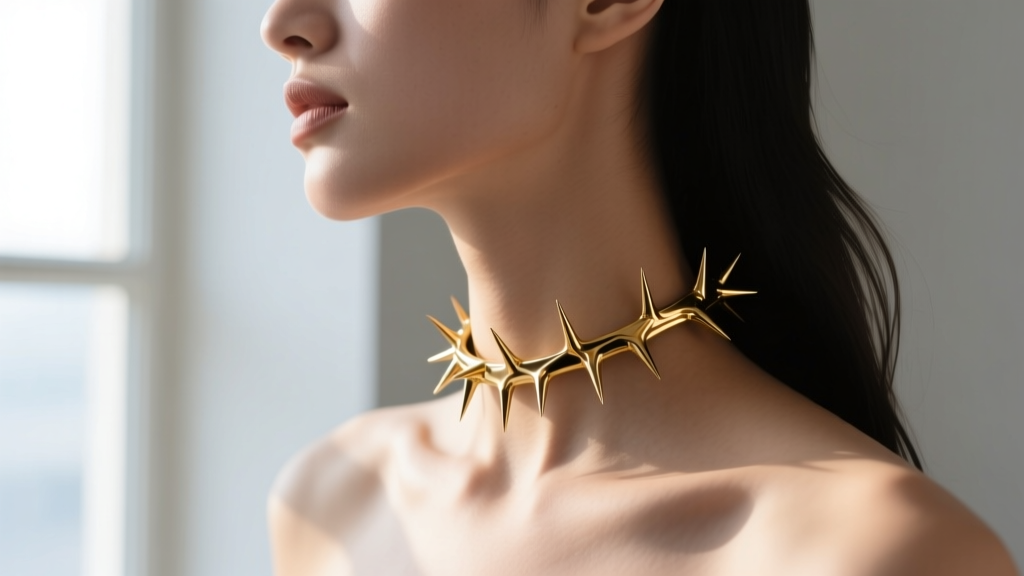
A rigid, solid-metal thorn collar would be unwearable, as it would not flex with the natural movement of the neck and shoulders. The secret to a high-end botanical necklace lies in its articulation. The vine structure is typically broken down into 15 to 20 individual segments, connected by hidden sterling silver jump rings or custom friction-hinges.
- Hidden Hinges: Allow the vine to drape organically over the collarbone while keeping the thorn orientation fixed.
- Ball-Chain Integration: For pendant styles, a heavy-gauge (2.5mm to 3.0mm) oxidized ball chain provides a mechanical, industrial contrast to the organic vine pendant.
- Leather Cordage: For a more rustic approach, braided leather with custom silver end-caps mimics the raw, natural aesthetic of the original painting.
Styling Avant-Garde Thorn Pendants and Chokers
Wearing a piece inspired by the self portrait with necklace of thorns requires careful consideration of necklines and fabrics. Because the metalwork is highly textured and visually 'heavy,' it pairs best with minimalist, solid-colored garments that allow the jewelry to act as the focal point.
"I paint myself because I am so often alone and because I am the subject I know best." — Frida Kahlo. When wearing botanical armor, the wearer becomes both the artist and the canvas, projecting an aura of untouchable resilience.
For formal evening wear, a deep V-neck or an off-the-shoulder velvet gown provides the perfect backdrop for an oxidized silver thorn choker. The dark fabric absorbs light, allowing the polished silver thorn tips to catch the ambient light like dew on a briar patch. For everyday styling, a single, asymmetrical thorn pendant resting on the sternum over a crisp white linen shirt offers a subtle nod to surrealist art history while remaining thoroughly modern and wearable.
Ultimately, the enduring legacy of Kahlo's thorn necklace in the jewelry world is a testament to the power of emotional design. By combining historical reverence with modern metallurgical precision and strict safety ergonomics, today's artisans continue to keep this powerful symbol of beautiful suffering alive in cast metal.


