2026 Trends: Styling the Chain Necklace With Diamonds
Discover 2026 styling trends for the chain necklace with diamonds. Expert insights on metal grades, diamond specs, layering, and pricing tiers.

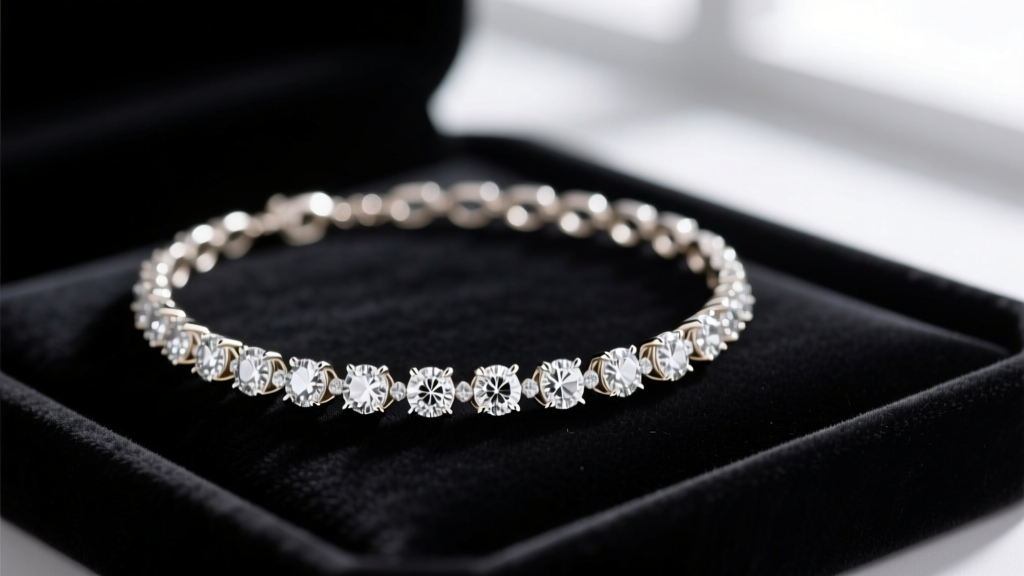
The 2026 Shift: From Flashy Tennis to Subtle Station Chains
The landscape of fine jewelry has shifted dramatically as we navigate 2026. The chain necklace with diamonds is no longer just a red-carpet staple or a bridal accessory; it has evolved into a highly technical, everyday layering essential. In previous years, the heavy 10-carat diamond tennis necklace dominated the market, prioritizing maximum carat weight over wearability. Today, the 2.5 to 4.0-carat diamond station chain is the undisputed leader in both luxury and accessible fine jewelry markets.
Why the shift? The modern aesthetic favors "curated personalization" over overt display. A station chain—where individual diamonds are spaced 1.5 to 2 inches apart along a delicate metal cable or box chain—catches light intermittently. This creates a "floating" illusion that pairs brilliantly with modern asymmetrical necklines, structured blazers, and even high-quality casual wear. Furthermore, the reduced carat weight significantly lowers the center of gravity, preventing the necklace from sliding off-center, a common frustration with heavier, continuous diamond rivieres.
Bezel vs. Prong: The Durability Debate
When selecting a chain necklace with diamonds for daily wear, the setting style dictates the piece's lifespan. Prong-set stations (typically 4-prong martini or basket settings) elevate the diamond, allowing maximum light return from the sides. However, they introduce a critical failure mode: snagging. Prongs routinely catch on silk, cashmere, and lace, which can bend the metal and dislodge the stone.
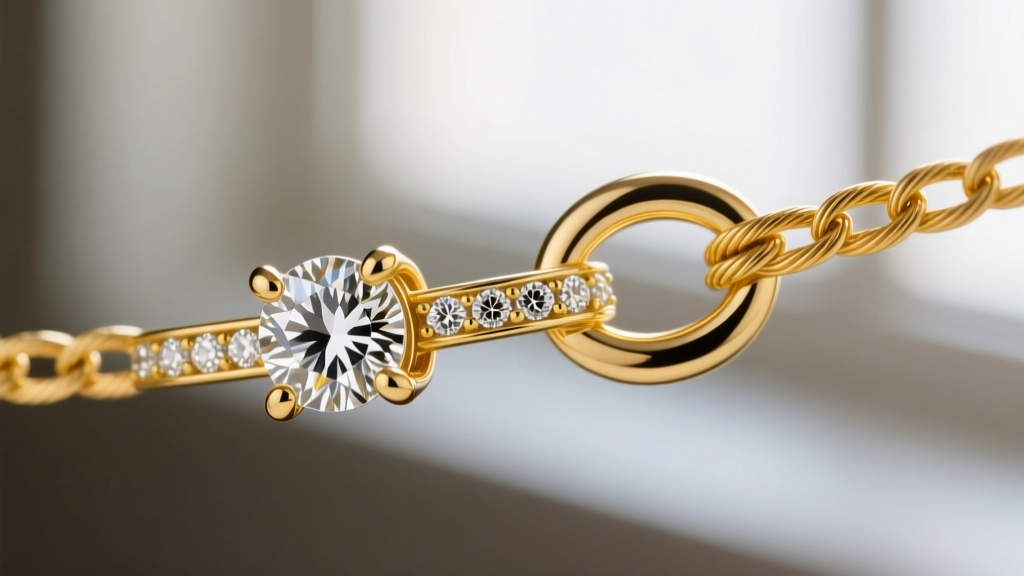
Conversely, bezel settings encircle the diamond in a continuous metal rim. While a bezel hides approximately 12% to 15% of the diamond's crown (slightly reducing perceived brilliance), it offers superior structural integrity. For a piece meant to be worn 300 days a year, a bezel-set chain necklace with diamonds in 14k gold represents the optimal intersection of durability and scintillation. We strongly advise against 18k gold for prong-set station chains; the higher gold purity makes the metal too soft, leading to prong deformation under lateral stress.
Technical Specs: What to Demand in 2026
Not all diamond chains are created equal. The melee and semi-melee diamonds (ranging from 0.05ct to 0.15ct each) used in these necklaces require specific grading parameters to ensure they do not look cloudy or lifeless in motion. According to the Gemological Institute of America (GIA), cut quality is paramount for small stones. An "Excellent" or "Ideal" cut grade ensures the diamond reflects light back to the eye, whereas a poor cut will make the chain look like strung-together glass beads.
| Specification | 14k Gold Station Chain | 18k Gold Tennis Chain | Platinum Riviere |
|---|---|---|---|
| Ideal Diamond Clarity | SI1 to SI2 (Eye-clean) | VS2 to SI1 | VS1 to VS2 |
| Ideal Diamond Color | G to H (Near colorless) | F to G (Colorless) | D to F (Colorless) |
| Chain Link Width | 1.2mm to 1.5mm | 2.5mm to 3.0mm | 3.5mm+ |
| Primary Failure Mode | Clasp spring fatigue | Link stretching (18k) | Prong wear over decades |
Color is equally critical. Because the diamonds in a station chain are isolated against the skin or clothing, any yellow or brown tint is magnified. Stick to G or H color minimums for white gold and platinum chains. If you prefer the warmth of yellow or rose gold, you can safely drop down to I or J color, as the metal's reflection will mask the faint warmth of the diamond.
Layering Frameworks: The 3-Point Anchor System
Layering multiple necklaces is a hallmark of 2026 styling, but executing it with diamond chains requires a strategic approach to prevent the dreaded "tangled nest" failure mode. When three chains of identical weight, link structure, and length are worn together, they naturally twist and knot due to kinetic friction. To solve this, master jewelers recommend the 3-Point Anchor System:
- The Base (14 to 15 inches): A 1mm to 1.2mm cable chain featuring a single 0.25ct bezel-set diamond. This sits high on the collarbone and acts as a lightweight anchor.
- The Core (16 to 17 inches): Your primary chain necklace with diamonds. A 2mm box chain featuring 3.00ctw of station diamonds. The box chain's rigid structure resists tangling.
- The Anchor (18 to 20 inches): A heavier 3mm rope or wheat chain terminating in a substantial 1.00ct to 1.50ct solitaire pendant. The increased weight at the bottom pulls the layered arrangement taut, keeping the necklines distinct and separated.
Avoiding the "Tangled Nest" Failure Mode
Beyond varying lengths and weights, the physical geometry of the chain links matters. Never layer a cable chain with another cable chain. Instead, mix geometric profiles: pair a smooth, round cable chain with a flat, geometric box chain or a twisted rope chain. The differing surface textures reduce the friction coefficient between the metals, allowing them to slide past one another rather than interlocking.
Clasp Mechanics and Chain Integrity
The clasp is the single most vulnerable point on any fine jewelry piece, yet it is frequently overlooked by consumers. Spring ring clasps—the small, circular clasps with a tiny spring-loaded lever—are a massive liability on any chain necklace with diamonds exceeding 8 grams in total weight. The internal spring mechanism routinely fails under the kinetic, swinging weight of the diamonds, leading to catastrophic loss.
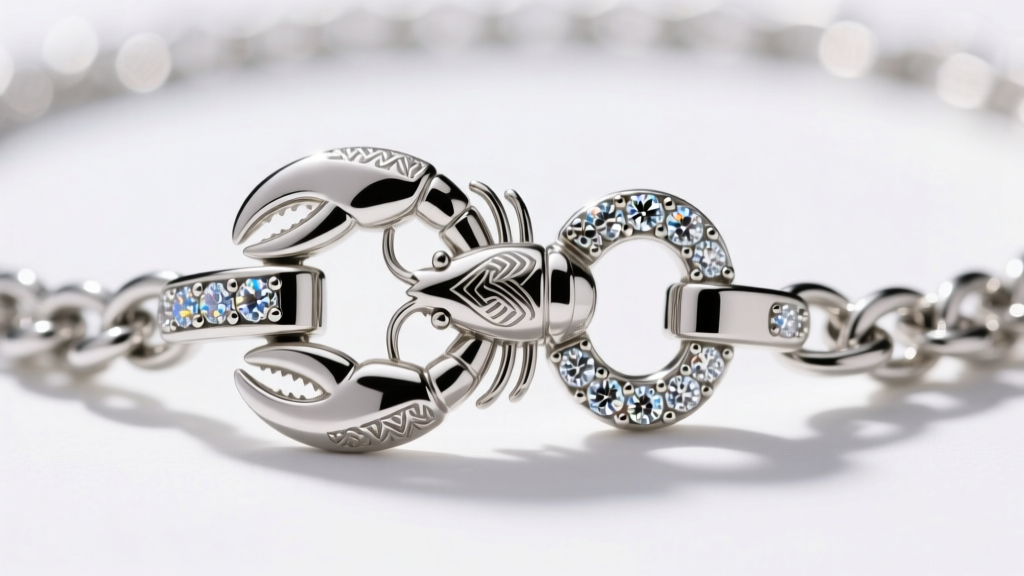
For station chains and tennis necklaces, a solid lobster clasp is mandatory. Lobster clasps feature a robust, spring-loaded lever that locks securely into the jump ring. For high-carat tennis chains (over 5.00ctw), insist on a hidden box clasp equipped with a custom figure-8 safety wire. As noted by industry experts at Jewelers of America, the figure-8 safety wire acts as a secondary fail-safe; if the primary box clasp unlatches due to a snag, the tension wire keeps the necklace secured around the neck, giving the wearer time to notice and repair the piece before the diamonds are lost.
Investment & Pricing Realities: Lab-Grown vs. Natural
The pricing landscape for diamond chains has been entirely rewritten by the maturation of the lab-grown diamond market. In 2026, the price gap between earth-mined and lab-grown diamonds in melee and semi-melee sizes is substantial, fundamentally altering how consumers approach the chain necklace with diamonds as an investment.
"The modern consumer views the diamond station chain not as a generational heirloom to be locked in a vault, but as a high-utility luxury asset meant for daily rotation. Lab-grown diamonds have unlocked the ability to achieve higher color and clarity grades at a fraction of the historical cost."
A 3.00 carat total weight (ctw) lab-grown diamond station chain in 14k white gold currently retails between $1,400 and $2,400, depending on the brand markup and the specific color grade (lab stones are frequently produced in E-F colors). The exact same chain, featuring natural earth-mined diamonds of G-H color and SI1 clarity, commands a retail price ranging from $6,800 to $9,500.
For buyers prioritizing sheer visual impact and daily wearability, lab-grown chains offer undeniable value. However, for those viewing the piece as a store of financial value or a traditional heirloom, natural diamonds retain a stronger secondary market liquidity. Ultimately, whether you choose a delicate bezel-set station chain or a classic prong-set tennis necklace, prioritizing structural integrity—through proper metal purity, secure clasps, and excellent cut grades—will ensure your diamond chain remains a cornerstone of your wardrobe for decades to come.


