Top Selfie Necklace Materials: Silver, Gold & Steel
Discover which metal reflects the best flash for your mirror pics. We compare silver, gold, and steel for the ultimate selfie necklace.

The Anatomy of a Perfect Selfie Necklace
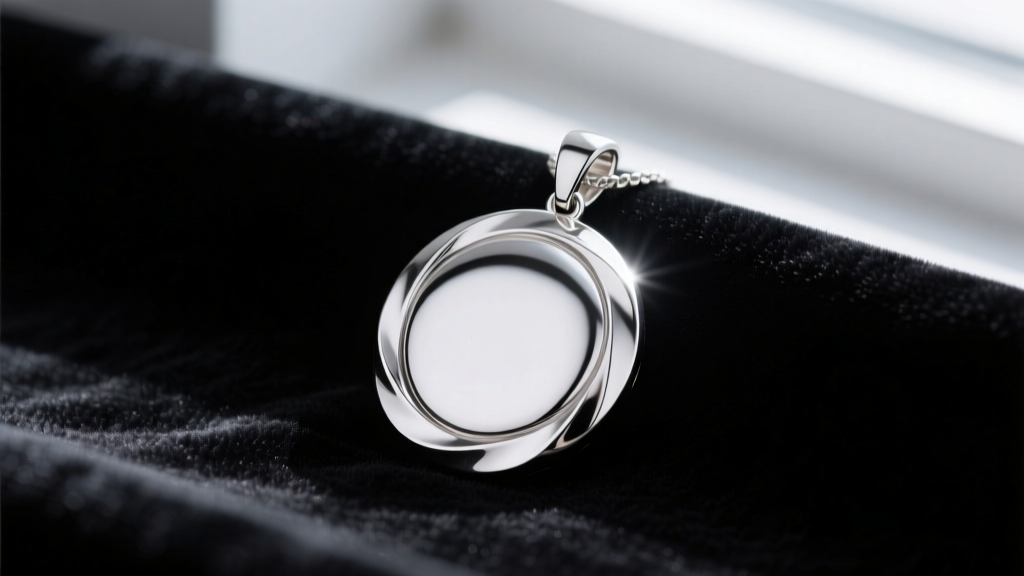
The "selfie necklace" has evolved from a quirky Y2K trend into a calculated accessory for the 2026 digital aesthetic. Whether you are aiming for the blinding flash-bounce of a mirror-finish pendant or the high-contrast grit of a laser-etched photo locket, the metal you choose dictates how your jewelry translates through a smartphone lens. Modern smartphone CMOS sensors struggle with extreme dynamic range; a metal that is too reflective will blow out highlights, creating a glowing halo, while a metal that is too dull will disappear against your skin tone. Understanding the optical and metallurgical properties of your jewelry is the key to mastering your mirror pic.
Metal Reflectivity: The Science of the Flash Bounce
Specular reflection is the mirror-like bounce of light off a surface. When your camera flash hits a necklace, the metal's inherent reflectivity index determines how much light returns to the sensor. Pure silver sits at the top of the visible light reflectivity spectrum at roughly 95%, while gold alloys and stainless steel lag behind. However, pure reflectivity isn't the only factor. The Vickers Hardness (HV) of the metal determines how sharply it can be faceted or polished, which directly impacts light scattering and the "sparkle" effect captured on video.
Sterling Silver (925): The King of Specular Reflection
Sterling silver is the undisputed champion of raw light return. With a visible light reflectivity of up to 95%, a high-polish 925 silver mirror pendant will catch even the ambient light of a dimly lit room. However, silver has a critical flaw for daily wear: tarnish. Silver reacts with sulfur in the atmosphere to form silver sulfide, a yellow-brown film that drastically reduces reflectivity. To combat this, jewelers use rhodium plating. While a rhodium-plated silver piece resists tarnish, the plating drops the overall reflectivity to approximately 80%. For the ultimate selfie bounce, un-plated, frequently polished high-grade 925 silver is required, though it demands rigorous maintenance.
White Gold (14k vs 18k): Facets and Flash
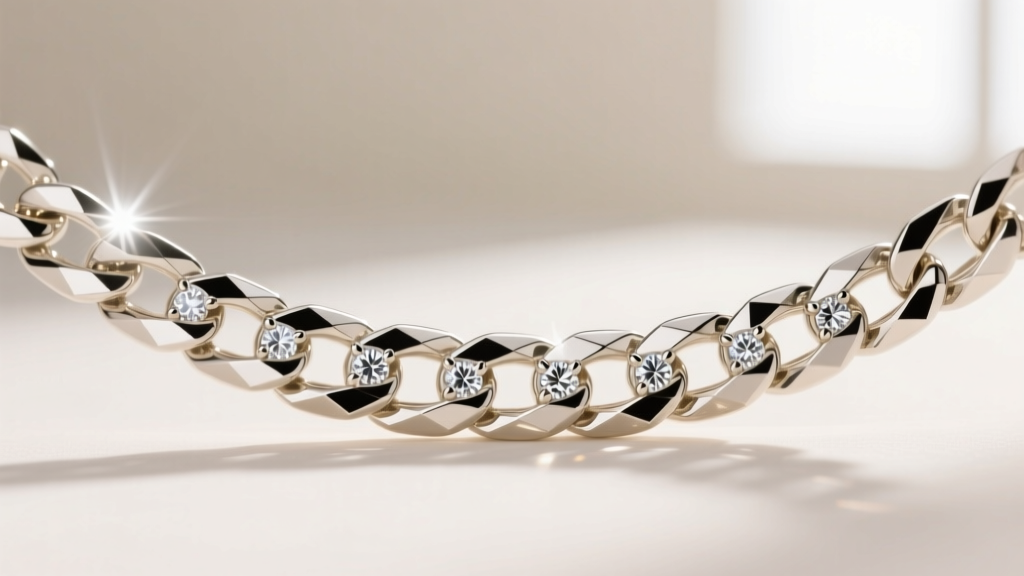
White gold is an alloy of yellow gold and white metals like palladium or nickel, finished with a rhodium flash. While its baseline reflectivity is lower than silver, white gold excels in structural hardness, which is crucial for "diamond-cut" chains and pendants. A 14k white gold alloy has a Vickers Hardness of roughly 135 HV, compared to 18k white gold at 110 HV. This extra hardness allows jewelers to cut sharper, more precise facets into the metal. These micro-facets act like tiny mirrors, scattering light into the camera lens from multiple angles, creating a dynamic, multi-point sparkle that looks incredible on TikTok and Instagram Reels. According to the Gemological Institute of America (GIA), the rhodium plating on white gold will eventually wear off, revealing the slightly warmer alloy beneath, which subtly alters the color temperature of your flash bounce over time.
316L Stainless Steel: The High-Contrast Streetwear Standard
Stainless steel (specifically the 316L surgical grade) has become the backbone of the streetwear selfie necklace trend. With a reflectivity of around 60%, it does not produce the blinding flash of silver. Instead, it offers a softer, more diffuse glow that retains sharp edge definition on camera. Because 316L steel contains molybdenum, it is virtually impervious to tarnish and sweat, making it the ideal choice for festival and nightclub mirror selfies where humidity and perspiration would instantly degrade silver. Its high hardness (150-190 HV) also means it holds a mirror polish exceptionally well without scratching easily against zippers or phone cases.
Material Comparison Chart
| Metal / Alloy | Visible Light Reflectivity | Vickers Hardness (HV) | Tarnish Risk | Avg. Price Range (Pendant) |
|---|---|---|---|---|
| 925 Sterling Silver (Unplated) | ~95% | 60 - 70 | High (Rapid) | $40 - $120 |
| 925 Silver (Rhodium Plated) | ~80% | 60 - 70 (Base) | Low | $60 - $150 |
| 14k White Gold | ~75% (Rhodium dependent) | 130 - 140 | None (Alloy wear) | $250 - $600 |
| 316L Stainless Steel | ~60% | 150 - 190 | None | $20 - $80 |
| Grade 5 Titanium | ~45% (Polished) | 330 - 350 | None | $90 - $200 |
Photo-Etched Selfie Lockets: Laser Oxidation Constraints
If your definition of a selfie necklace leans toward a custom photo-engraved pendant, the material science shifts from reflectivity to laser oxidation. Fiber lasers create permanent marks on metal by inducing localized oxidation. 316L Stainless Steel and Titanium are the superior choices for photo-etched lockets. When the laser hits these metals, it creates a deep, high-contrast black oxide layer that yields a 90% contrast ratio, ensuring your selfie engraving is crisp and legible on camera. Silver, conversely, does not oxidize black under a standard fiber laser; it requires chemical antiquing or enamel filling to achieve contrast, which can chip or fade, ruining the high-definition look of your custom photo.
Chain Profiles That Maximize Light Return
The pendant is only half the equation. The chain you pair with your selfie necklace dictates how light travels across your neckline. For maximum camera interaction, opt for these structural profiles:
- Diamond-Cut Rope Chain: The twisted, faceted links act as a continuous array of micro-mirrors. Best in 14k white gold for sharp, aggressive flash scattering.
- Liquid Snake Chain: Features a seamless, tubular surface that provides a continuous, unbroken specular reflection. Best in rhodium-plated silver for a sleek, futuristic mirror effect.
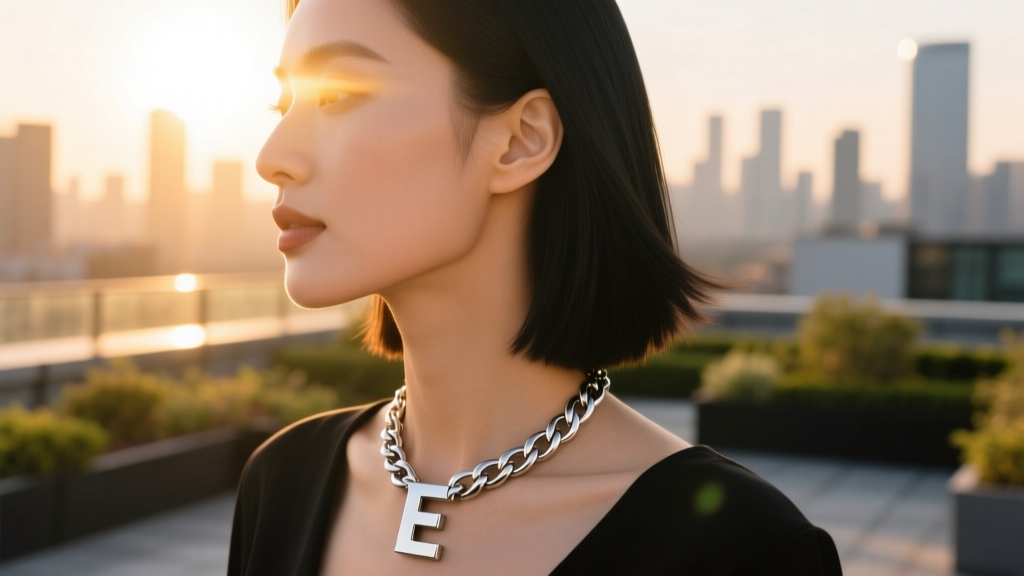
- Cuban Link (Flat-Cut): The flat, interlocking tops of a Cuban link provide broad, directional light bounces. Best in 316L steel for a bold, high-contrast streetwear aesthetic.
The 2026 Verdict and Care Protocol
"To preserve the optical clarity of a mirror-finish selfie necklace, never use ultrasonic cleaners on rhodium-plated silver or photo-etched steel. The high-frequency cavitation will strip the plating and dull the laser-etched oxide layers. Stick to a microfiber optical cloth and a gentle, non-abrasive jewelry dip."
Ultimately, the best material for your selfie necklace depends on your specific digital aesthetic. If you want the blinding, ethereal flash-bounce that dominates high-fashion mirror pics, invest in a heavily polished, un-plated 925 sterling silver mirror pendant and commit to weekly polishing. If you prefer a durable, low-maintenance piece that offers a structured, high-contrast glow for daily vlogging and streetwear fits, 316L stainless steel is the undisputed champion. For those who want intricate, light-scattering facets that catch the camera from every angle, 14k white gold remains the premium standard. Choose your metal wisely, and let the flash do the rest.


