The Engineering of a Shirt With Necklace Attached: A Technical Guide
Explore the technical design, material safety, and fabric mechanics of the shirt with necklace attached trend. Learn to evaluate integrated jewelry apparel.


The Convergence of Textile and Metallurgy
The modern apparel market has seen a massive surge in mixed-media garments, with the shirt with necklace attached emerging as a dominant hybrid category. While consumers often view these pieces through a purely aesthetic lens, from an engineering perspective, they represent a complex intersection of textile mechanics and metallurgy. As of 2026, the integration of permanent hardware into flexible fabrics requires precise calculations regarding weight distribution, galvanic corrosion, and skin safety. This guide deconstructs the technical realities of integrated jewelry apparel, providing a framework for evaluating quality, durability, and material safety.
Hardware Integration: Anchoring Metal to Fiber
The primary failure point in any garment with built-in jewelry is the junction where rigid metal meets flexible textile. Manufacturers typically rely on three distinct anchoring methods, each with varying load-bearing capacities.
Direct Grommet Threading
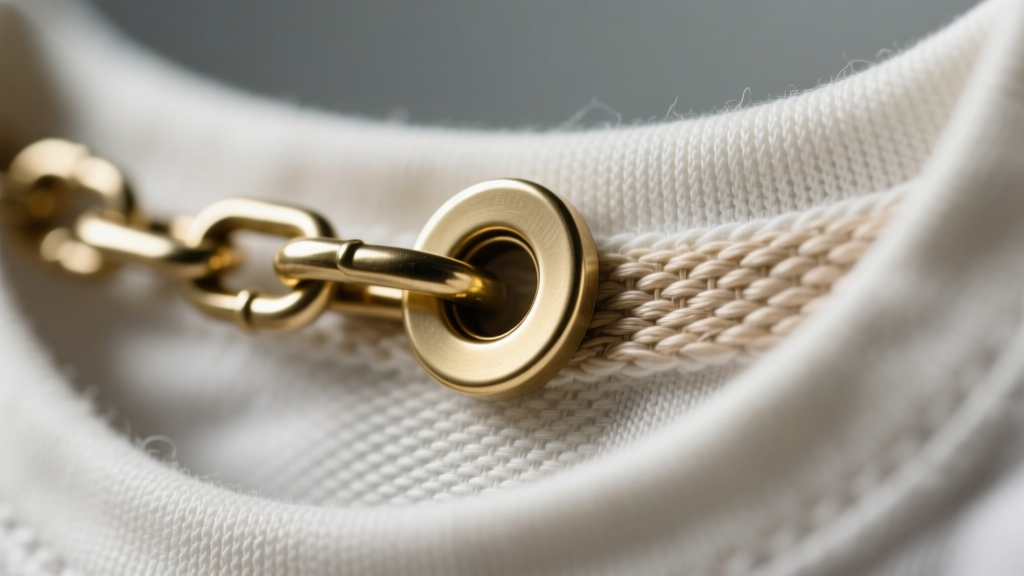
The most common technique involves threading a chain through a metal grommet or eyelet set into the neckline. In high-quality manufacturing, these grommets are crafted from solid brass or 316L stainless steel and are backed by a hidden washer to distribute sheer force. In fast-fashion iterations, lightweight aluminum or plastic grommets are often used, which can easily warp and tear through lightweight fabrics (under 140 GSM) when subjected to the pendulum effect of a heavy pendant.
Bezel and Rivet Settings
For garments featuring a fixed pendant rather than a continuous chain, jewelers' bezel cups are sometimes sewn directly into a reinforced placket. Alternatively, micro-rivets are used to clamp a pendant base to the fabric. Riveting requires a localized fabric stabilizer—typically a non-woven interfacing or a patch of twill tape—placed between the outer fabric and the interior lining to prevent the metal from acting as a cheese-wire against the threads.
Metallurgical Realities: Base Metals vs. Plated Alloys
Because the hardware on a shirt with necklace attached is subjected to the high-friction, high-moisture environment of the human décolletage, the choice of alloy is critical. The jewelry industry relies on strict plating standards, which are heavily regulated by organizations like the Federal Trade Commission Jewelry Guides. However, apparel manufacturers often bypass these standards, utilizing industrial-grade hardware that degrades rapidly.
| Material Grade | Plating Thickness | Corrosion Resistance | Skin Safety Profile |
|---|---|---|---|
| Zamak (Zinc Alloy) | Flash (< 0.5 µm) | Poor (Pits easily) | High Nickel Risk |
| Solid Brass | Vermeil (2.5+ µm) | Moderate (Tarnishes) | Safe (if nickel-free) |
| 316L Surgical Steel | None / PVD Coated | Excellent | Hypoallergenic |
| 14k Solid Gold | N/A (Solid) | Excellent | Hypoallergenic |
Garments utilizing Zamak with flash plating will typically exhibit base-metal bleed within 10 to 15 wears, as the friction against the collarbone strips the microscopic gold or rhodium layer. For longevity, buyers should seek out brands that explicitly state the use of PVD (Physical Vapor Deposition) coated stainless steel, which bonds at a molecular level and withstands the acidic pH of human sweat.
Fabric Tension and Weight Distribution Mechanics
A critical, often overlooked variable in integrated apparel is the Denier-to-Weight ratio. A standard 45-gram stainless steel Cuban link chain exerts significant downward and lateral force on a neckline. If applied to a lightweight 120 GSM (grams per square meter) viscose or silk blend, the fabric will warp, causing the neckline to sag and the garment's silhouette to collapse.
Calculating the Load Threshold
- Lightweight Fabrics (100-140 GSM): Can only support hardware weighing up to 15 grams without visible distortion. Requires an interior silk-facing stabilizer.
- Midweight Fabrics (150-190 GSM): Ideal for standard integrated chains (20-35 grams). The natural drape of cotton or modal can mask minor tension lines.
- Heavyweight Fabrics (200+ GSM): Necessary for oversized pendant hardware or heavy link chains (40+ grams). Commonly found in structured linen or heavyweight streetwear tees.
Engineers mitigate sagging by incorporating a 'floating' interior yoke—a secondary layer of fabric anchored at the shoulder seams that bears the weight of the chain, isolating the delicate exterior neckline from the gravitational pull.
Dermatological Risks: Sweat, Friction, and Galvanic Corrosion
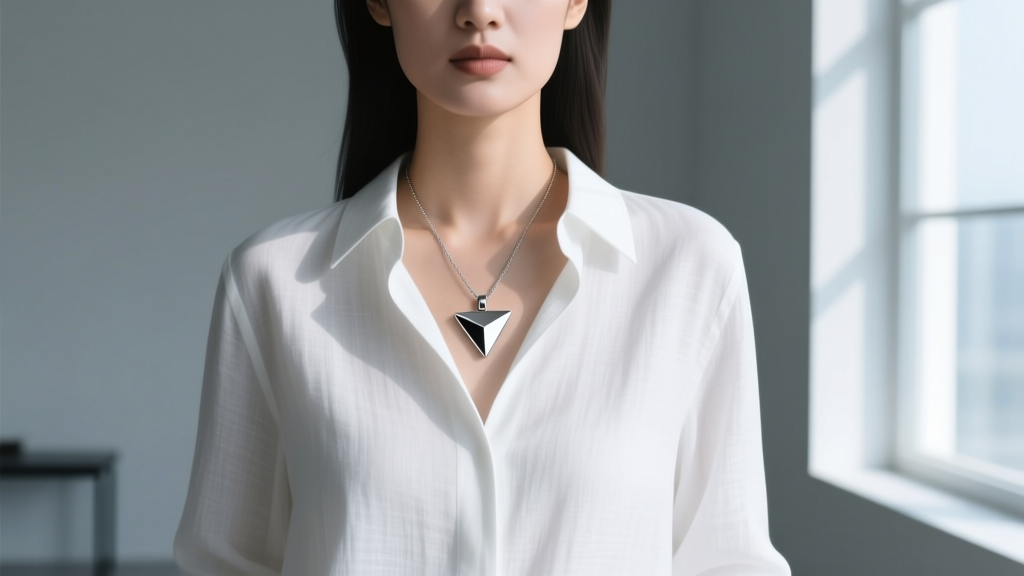
The sternum and collarbone area possesses a high density of eccrine sweat glands. When a shirt with necklace attached is worn, the trapped moisture creates an electrolyte solution between the skin and the metal hardware. If the hardware consists of dissimilar metals—for instance, a steel chain connected to a brass clasp—this moisture bridges the gap, triggering galvanic corrosion. This not only destroys the hardware but releases metallic salts into the skin.
The most common adverse reaction is allergic contact dermatitis, primarily driven by nickel exposure. According to the American Academy of Dermatology, nickel allergy affects a significant portion of the population, presenting as an itchy, red, and blistering rash exactly where the metal touches the skin. Because apparel companies are not always held to the same strict nickel-release limits as dedicated fine jewelers (such as the EU REACH standards), consumers must actively verify that the integrated hardware is certified nickel-free, especially on garments designed for summer wear or athletic use.
Care and Maintenance Protocols for Mixed-Media Garments
Washing a garment with permanently affixed metal requires a departure from standard laundry protocols. The mechanical agitation of a washing machine can cause heavy pendants to act as blunt instruments, tearing the fabric from the inside out or chipping the machine's drum.
Step-by-Step Washing Framework
- Isolate the Hardware: Wrap the chain or pendant in a microfiber cloth and secure it with a soft hair tie to prevent it from swinging during the wash cycle.
- Turn Inside Out: This protects the exterior fabric from friction pilling and shields the metal plating from abrasive detergents.
- Use Neutral pH Detergents: Avoid enzymatic or bleach-based detergents. High alkalinity strips flash-plating and accelerates the oxidation of brass and copper alloys.
- Air Dry Flat: Hanging a wet, heavy garment exacerbates the gravitational pull on the wet fibers, permanently stretching the neckline. Lay the shirt flat on a mesh drying rack, arranging the chain flat against the fabric to prevent water spots from forming on the metal.
By understanding the material science and structural engineering behind a shirt with necklace attached, consumers and designers alike can move beyond fleeting trends and invest in mixed-media garments that are built to endure both the elements and the washing cycle.


