Short Pearl Necklace Value Guide: Budgeting for Real Pearls
Discover how to assess the true value of a short pearl necklace. Compare prices, pearl grades, and materials to make a smart budget investment.

The Anatomy of a Short Pearl Necklace
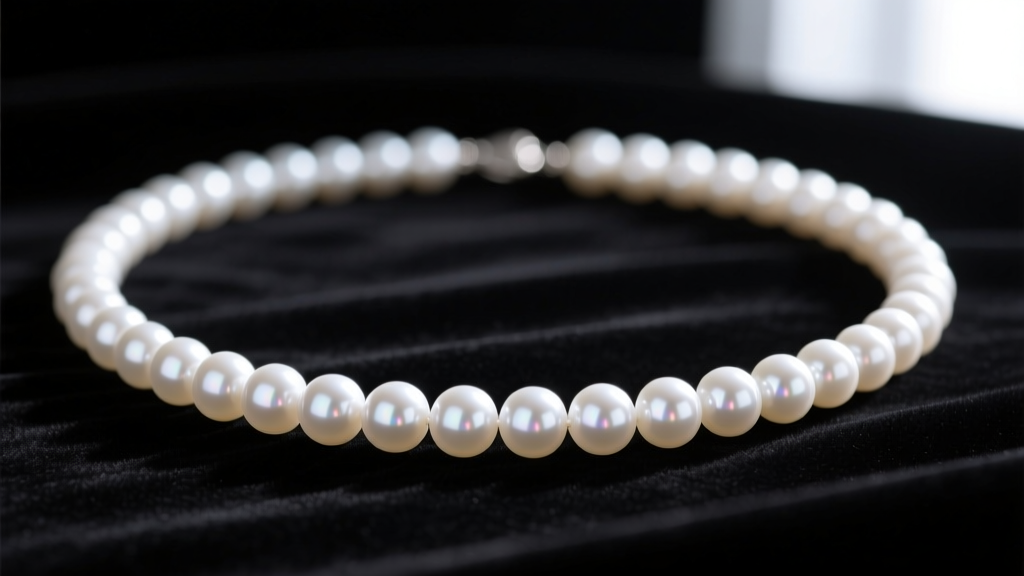
When evaluating a short pearl necklace, jewelers are typically referring to two specific, highly sought-after lengths: the 14-inch collar and the 16-inch choker. Unlike the standard 18-inch princess length that rests casually on the collarbone, short necklaces sit snugly against the base of the neck or higher. This close proximity to the face means the pearls act as a natural reflector, bouncing light upward to illuminate the wearer's complexion. Consequently, the luster and color quality of the pearls are heavily magnified. A low-quality short strand will highlight dullness and surface blemishes, while a high-quality piece will provide a striking, luminous effect.
To properly assess the budget and true market value of these pieces, we must look beyond the basic "real vs. fake" dichotomy. A standard 16-inch choker strung with 7.0mm to 7.5mm pearls requires exactly 53 to 57 individual pearls, depending on the thickness of the silk knots between them. This high pearl count means that matching—the uniformity of size, shape, and color across the entire strand—is a massive driver of cost. Below, we break down the exact metrics that dictate what you should pay for a short pearl necklace in today's market.
Pearl Types and Market Pricing Tiers
The most significant variable in your budget assessment is the pearl's origin and cultivation method. While the market offers endless variations, three categories dominate the short necklace space. Understanding the difference between tissue-nucleated and bead-nucleated pearls is critical for assessing long-term value and durability.
- Freshwater Pearls: Cultivated primarily in China, these are tissue-nucleated, meaning the resulting pearl is solid nacre all the way through. They are incredibly durable and resistant to chipping. Historically, they lacked the mirror-like luster of saltwater pearls, but modern cultivation techniques have produced "metallic" freshwater pearls that rival saltwater luster at a fraction of the cost.
- Akoya Pearls: The classic saltwater pearl, bead-nucleated with a mother-of-pearl shell bead. Akoyas are renowned for their sharp, mirror-like luster and perfectly round shapes. They are the traditional choice for a high-end short pearl necklace.
- Hanadama Akoya: Not a separate species, but a strict certification grade. Hanadama pearls represent the top 1% of Akoya production, featuring exceptional luster and a minimum nacre thickness of 0.4mm, verified by gemological laboratories.
| Pearl Type | Typical Size (16" Strand) | Nacre Thickness | Estimated Budget Range |
|---|---|---|---|
| AAA Freshwater | 7.0 - 8.0mm | Solid Nacre (100%) | $150 - $450 |
| AA+ Akoya | 6.5 - 7.5mm | 0.25mm - 0.35mm | $600 - $1,200 |
| Hanadama Akoya | 7.0 - 8.0mm | 0.40mm+ | $2,000 - $4,500+ |
Decoding Pearl Grading: Where Your Money Actually Goes
According to the Gemological Institute of America (GIA), pearl value is determined by seven distinct quality factors. For short necklaces, three of these dictate roughly 80% of the final retail price: Luster, Surface Quality, and Matching.
Luster: The Ultimate Value Indicator
Luster refers to the sharpness and intensity of light reflecting off the pearl's surface, as well as the deep glow emanating from within the nacre layers. When assessing a short pearl necklace on a budget, never compromise on luster. A smaller pearl (6.0mm) with excellent, mirror-like luster will always look more expensive and elegant than a larger pearl (9.0mm) with a chalky, dull finish. You can perform the "ball on a page" test: hold the pearl over a printed page. If you can clearly read the text through the pearl's reflection, the luster is exceptionally high.
Surface Quality and the "Cleanliness" Myth
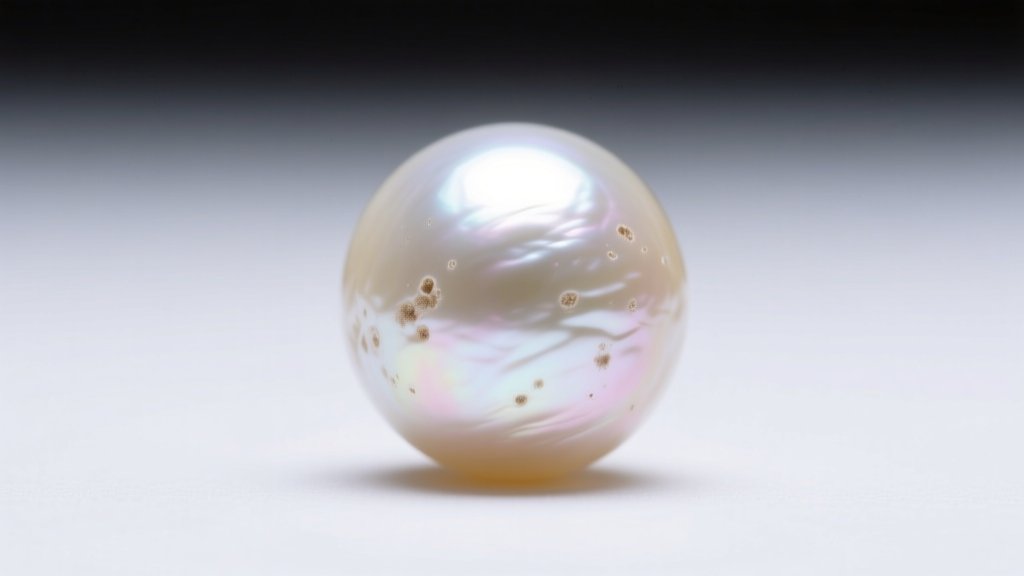
Many budget buyers mistakenly believe that a valuable pearl must be 100% flawless. In reality, pearls are organic gems formed by living mollusks. The American Gem Society (AGS) notes that minor surface blemishes, tiny bumps, or slight growth rings are natural hallmarks of authenticity. A completely flawless strand at a bargain price is almost certainly a glass or plastic imitation. When budgeting, accept "clean to the naked eye" (minor blemishes visible only under 10x magnification) rather than paying a 40% premium for absolute perfection.
Hidden Value Killers: Stringing and Clasps
A common failure mode in budget pearl jewelry is the structural breakdown of the stringing materials. The value of a short pearl necklace isn't just in the gems; it's in the engineering that keeps them secure.
- Hand-Knotted Silk vs. Synthetic: Traditional high-end strands are hand-knotted on pure silk thread. Silk provides a beautiful, fluid drape that allows the short necklace to contour perfectly to the neck. However, silk degrades when exposed to perfumes, sweat, and water. Premium synthetic threads like Power Pro offer superior tensile strength and moisture resistance, though they can feel slightly stiffer. If a vendor uses cheap nylon monofilament without knots between the pearls, the necklace loses immediate value; if the strand snaps, you lose all 50+ pearls.
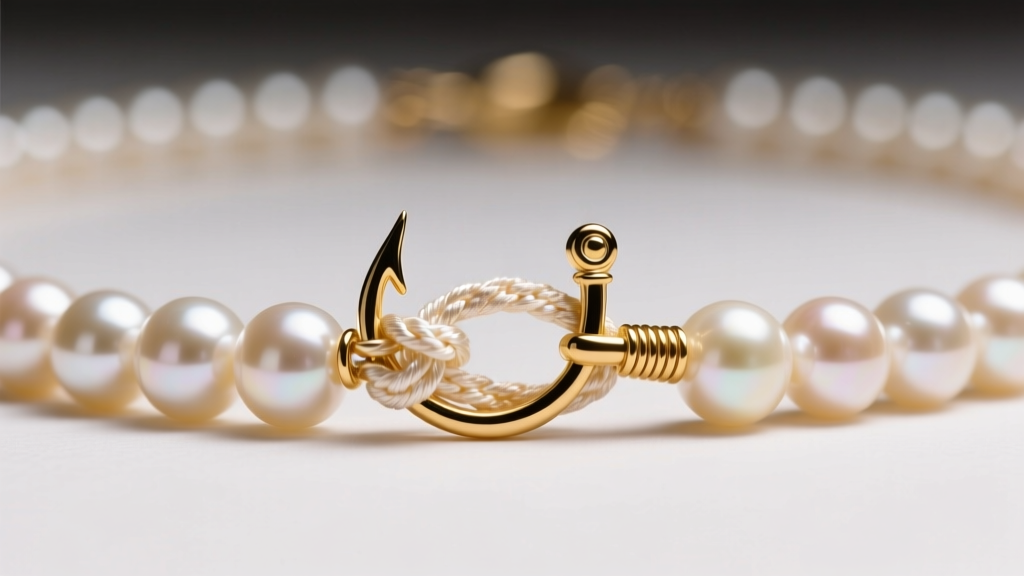
- Clasp Security and Metallurgy: A short pearl necklace experiences high tension at the clasp due to the snug fit around the neck. Avoid base-metal lobster clasps, which can easily snap under pressure and turn the skin green. A valuable piece will feature a 14k or 18k gold fishhook or box clasp. Furthermore, look for French wire (also known as gimp)—a tiny coil of fine gold or silver wire wrapped around the silk where it meets the clasp. This prevents the metal from sawing through the silk thread over time.
How to Spot Overpriced Imitations
The market is saturated with imitation pearls, from basic plastic beads to high-end coated glass like Majorica pearls. While Majorica pearls are beautiful and durable, they possess zero intrinsic gemological value and should be priced accordingly (typically under $150 for a short strand). To ensure you are paying for real nacre, use the Tooth Test. Gently rub the pearl against the biting edge of your front incisor. A real pearl will feel distinctly gritty or sandy due to the microscopic crystalline platelets of aragonite that make up the nacre. An imitation pearl will feel perfectly smooth, like glass or plastic. Additionally, real pearls will feel noticeably cool to the touch when first picked up, warming slowly to your body temperature, whereas plastic imitations feel room-temperature immediately.
Final Verdict: Building Your Budget Strategy
If your goal is to acquire a stunning, authentic short pearl necklace without overpaying, follow this decision framework:
- Set your length: Decide between a 14-inch collar (bold, vintage-inspired) or a 16-inch choker (versatile, modern). Measure your neck with a soft tape measure before ordering.
- Prioritize Luster over Size: A 16-inch strand of 6.5-7.0mm AAA Freshwater pearls with metallic luster will outshine a 9.0mm chalky strand every time, while saving you hundreds of dollars.
- Inspect the Knots: Ensure the necklace is individually knotted. The knots should be tight against the pearls with no visible gaps or stretching.
- Demand Proper Hardware: Refuse to pay premium prices for strands finished with cheap alloy clasps or unknotted synthetic wire.
By understanding the exact metrics of pearl grading, cultivation types, and structural integrity, you can confidently navigate the market. A short pearl necklace is a timeless wardrobe staple, and with the right knowledge, you can secure a piece that offers both exceptional beauty and enduring financial value.


