How to Shorten a Chain Necklace for Trend-Perfect Layering
Learn how to shorten a chain necklace to achieve perfect proportions. Expert tips on tools, chain types, and 2026 layering trends for a custom fit.

The 2026 Shift: Why Bespoke Lengths Are Trending
In the contemporary jewelry landscape, the standard 18-inch princess-length necklace is no longer the default. As we navigate the style currents of 2026, the focus has shifted toward hyper-curated, bespoke layering. The modern aesthetic demands precision; a chain that sits a mere half-inch too low can disrupt the entire visual harmony of a layered neckline. Learning how to shorten a chain necklace is no longer just a basic repair skill—it is an essential styling technique for achieving the coveted "micro-layered" look, where chains are spaced exactly 1.25 to 1.5 inches apart.
According to trend forecasts analyzed by the Jewelers of America, consumers are increasingly purchasing longer, versatile chains and immediately customizing them to fit their unique neck circumference and preferred layering stack. This shift means that understanding chain anatomy, link tension, and proper cutting techniques is vital for preserving both the structural integrity and the resale value of your fine jewelry.
Anatomy of a Chain: What You Can and Cannot Easily Cut
Not all chains are created equal. The feasibility of shortening a necklace at home depends entirely on the link structure and the metal's work-hardening properties. Before you pick up a pair of cutters, you must identify your chain type.
| Chain Type | Link Structure | DIY Shortening Difficulty | Required Technique |
|---|---|---|---|
| Cable / Rolo | Simple uniform oval or round links | Easy | Cutting one link and reattaching via jump ring |
| Curb / Figaro | Flattened, interlocking links | Moderate | Requires flush cutting at the soldered seam to prevent sharp edges |
| Box | Square, geometric interlocking links | Hard | Cutting risks structural collapse; laser welding recommended |
| Rope / Wheat | Tightly woven, twisted links | Expert / Avoid DIY | Highly prone to fraying; requires professional bench jeweler |
As noted by the Gemological Institute of America (GIA), the karat weight of the gold also dictates how the metal will respond to cutting and manipulation. 14k and 18k gold are relatively soft and forgiving, whereas platinum and white gold (which is often rhodium-plated) can become brittle or show discoloration at the cut site if not properly polished and re-plated.
The Jeweler Toolkit: Beyond Basic Wire Cutters
The most common mistake amateurs make is using standard hardware store wire cutters or bevel-cut jewelry snips. Bevel cutters leave a sharp, angled pinch on the metal link, which will snag on clothing and scratch the wearer's skin. To properly shorten a chain, you need specialized precision tools.
Essential Tools for the Job
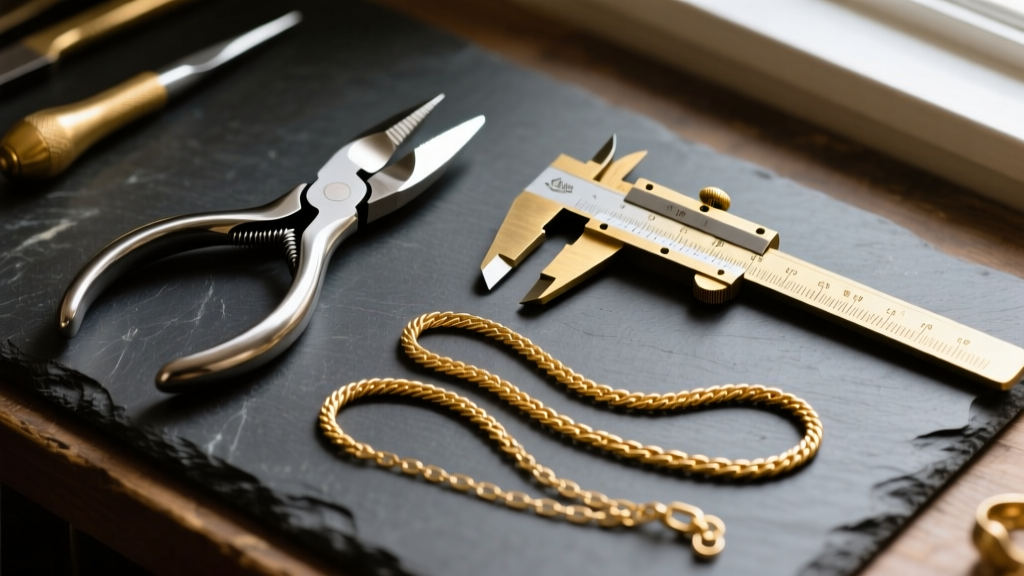
- Flush Cutters: Invest in a high-quality pair, such as the Lindstrom RX 8151. Flush cutters slice the metal cleanly, leaving one side of the link completely flat and smooth.
- Chain-Nose Pliers (x2): You need two pairs of smooth-jawed chain-nose pliers to open and close jump rings without marring the metal or pulling the rings apart.
- Calipers: A digital brass caliper is essential for measuring the exact millimeter drop you need to remove to hit your target layering length.
- Jump Rings: Keep a stash of 20-gauge and 22-gauge sterling silver or gold-filled jump rings. For a standard 1.5mm cable chain, a 3.0mm outer-diameter jump ring provides the perfect, nearly invisible connection point.
Execution: The Cut and Reconnect
Once you have measured the exact length to be removed, use your flush cutters to snip a single link at the desired termination point. Crucial rule: Never pull a jump ring apart laterally like a door hinge; this permanently distorts the circle and weakens the metal's temper. Instead, grip the jump ring with your two pairs of chain-nose pliers on either side of the split, and twist your wrists in opposite directions to open it laterally. Thread the chain end and the clasp onto the ring, then twist it back closed until you hear and feel a microscopic "click" indicating the ends are perfectly flush.
Proportions and Placement: Where Should the Necklace Fall?
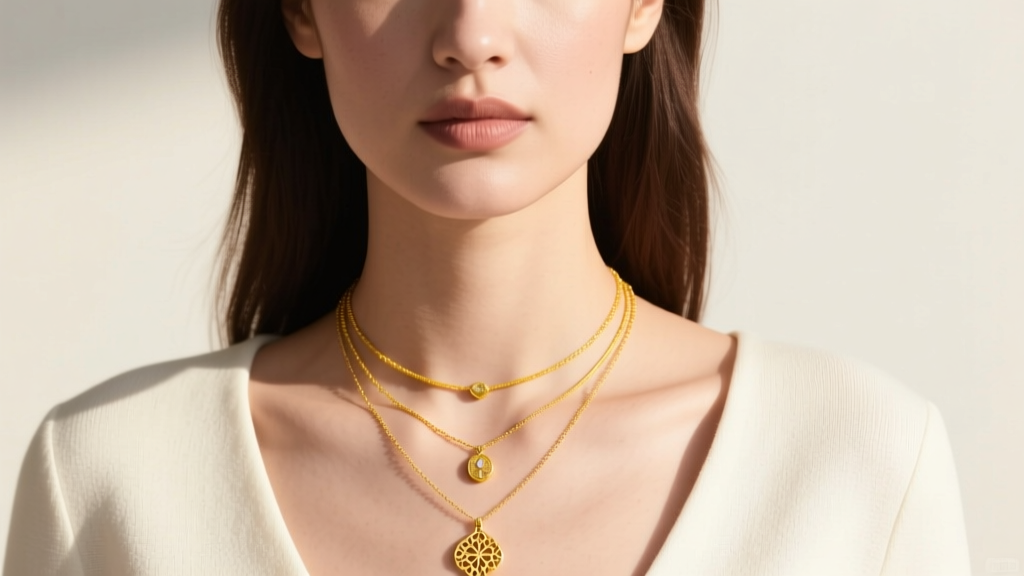
Shortening a necklace is an exercise in spatial awareness. In 2026, the "choker-collar" hybrid (sitting precisely at 14.5 to 15 inches) has seen a massive resurgence, paired with a 16.5-inch mid-length chain and an 18.5-inch pendant drop. To achieve this, you must measure the necklace while it is being worn, rather than laying it flat on a table. Gravity and the slope of the clavicle alter how a chain drapes.
Use a flexible tailor's tape measure to find your "hollow point" (the dip at the base of your throat). From there, measure down in 1.25-inch increments, marking your desired stack points with a washable fabric marker or a piece of painter's tape on your skin before taking the necklace off to cut.
Preserving the Clasp and Maintaining Tension
When figuring out how to shorten a chain necklace, many people instinctively cut the chain near the clasp. While this is acceptable, a superior technique for high-end jewelry is to cut the chain near the opposite end (the jump ring side) and preserve the original manufacturer's laser-engraved tags and spring-ring or lobster-claw tension mechanisms. Factory-installed clasps are often machine-soldered and tested for tensile strength; reattaching a clasp via a DIY jump ring introduces a potential failure point.
Pro-Tip: Do not discard the excess chain. A skilled stylist will shorten the necklace but keep the removed segment. By attaching a small lobster clasp to one end and a jump ring to the other, you create a custom "extender chain" that can be used to lengthen other pieces, wrap around the wrist as a delicate bracelet, or even serve as a detachable bail for a heavy pendant.
"The difference between an amateur jewelry stack and a curated, editorial neckline is often less than an inch of chain. Precision is the ultimate luxury." — Master Bench Jeweler Adage
When to Call a Professional Bench Jeweler
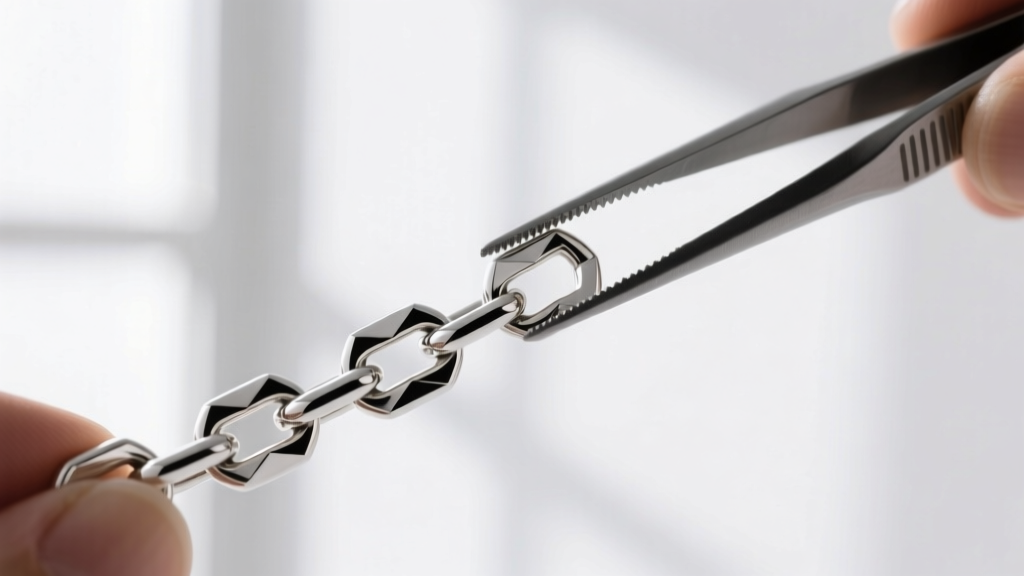
While shortening a simple 14k gold cable chain is a safe DIY endeavor, certain scenarios demand the expertise of a professional bench jeweler. If you are working with hollow-core chains (which crush easily under the pressure of pliers), diamond-cut chains (where the faceted edges will be dulled by a standard jump ring), or platinum rope chains, put the tools away.
Professional jewelers utilize laser welding technology to shorten complex chains without the need for bulky jump rings or open-flame soldering, which can melt delicate links or discolor gemstone enhancements. Expect to pay a bench fee ranging from $35 to $65 for a professional shortening and laser-polish, a worthwhile investment to protect a chain that may have cost hundreds or thousands of dollars. Mastering the art of the custom fit elevates your jewelry from mere accessories to a cohesive, intentional extension of your personal style.


