How to Shorten a Necklace Without Cutting It: Budget Guide
Learn how to shorten a necklace without cutting it using budget-friendly, non-destructive methods that preserve your jewelry's value and integrity.

The True Cost of Resizing: Why Non-Destructive Methods Win
When you inherit a vintage piece, buy a designer chain online, or simply want to adapt a matinee-length strand into a choker, the first instinct is often to visit a bench jeweler. However, learning how to shorten a necklace without cutting it is a crucial skill for any budget-conscious jewelry lover. Professional chain shortening and laser soldering typically cost between $35 and $85, depending on the metal and the complexity of the weave. For platinum or intricate hollow chains, that price can easily exceed $120.
Beyond the immediate financial cost, cutting a chain permanently alters its structural integrity and can severely degrade its resale value. According to the Jewelers of America, maintaining the original factory specifications of designer and antique jewelry is paramount for appraisal value. A cut and resoldered Cartier or Van Cleef & Arpels chain, for instance, loses its hallmark placement symmetry and can drop in secondary market value by 15% to 30%. By utilizing non-destructive, reversible shortening techniques, you protect both your wallet and the long-term equity of your jewelry collection.
4 Budget-Friendly Ways to Shorten a Necklace Without Cutting It
The following methods range from completely free to under $15, offering immediate results without the need for a jeweler's torch or saw. Each technique is evaluated for its material safety, aesthetic footprint, and structural reliability.
1. The Silicone Necklace Adjuster (Best for Delicate Chains)
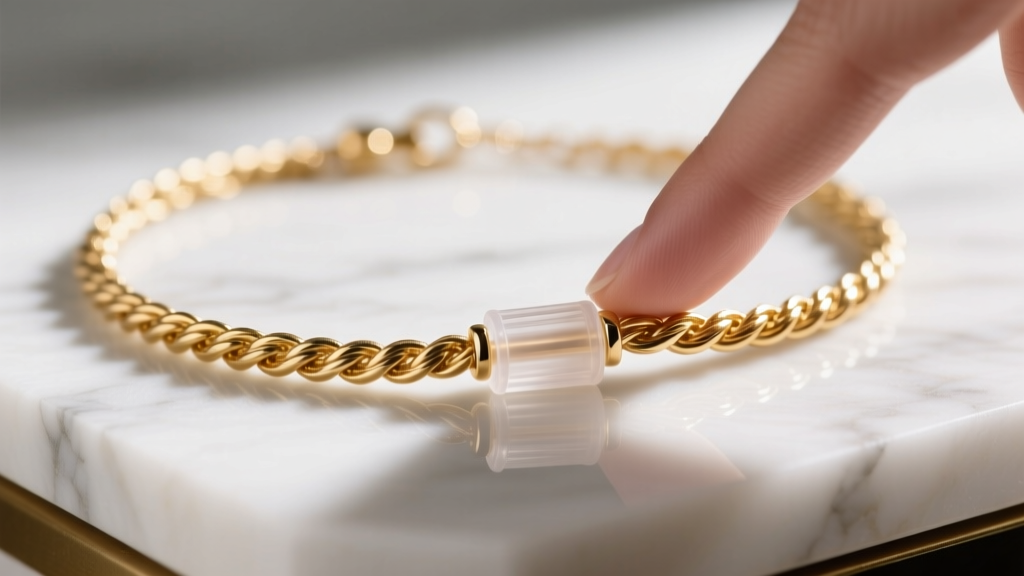
Silicone adjusters are small, flexible, disc-like sliders with a micro-slit in the center. They cost roughly $5 to $8 for a pack of ten on most online marketplaces. To use one, you simply drape the necklace around your neck, gather the excess chain at the nape of your neck, and slide the silicone disc over both the clasp and the gathered links. The friction of the silicone grips the metal, holding the excess chain securely against your skin.
Value Assessment: This is the most cost-effective method for chains under 2.5mm in thickness, such as delicate cable or box chains. However, it is not recommended for heavy pendants, as the silicone can stretch over time, causing the necklace to sag. It is entirely non-abrasive, making it safe for soft metals like 24k gold or high-polish sterling silver.
2. The Converter Clasp or Layering Hook
A converter clasp (often marketed as a layering hook or adjustable extender) is a specialized finding that features a primary lobster clasp on one end and a series of open loops or a secondary clasp on the other. Priced between $12 and $25 in sterling silver or gold-filled variants, this tool allows you to hook the primary clasp into any link along the chain, effectively creating a custom length while letting the excess chain hang down as a layered effect or tucking it away.
Value Assessment: This method offers the highest aesthetic value. It transforms a single long chain into a trendy layered look without any structural compromise. According to the Gemological Institute of America (GIA), using high-quality findings (like solid sterling silver or 14k gold-filled) prevents galvanic corrosion that can occur when dissimilar base metals touch. Always match the converter's metal grade to your chain.
3. The Lark's Head Knot (Best for Cords and Leather)
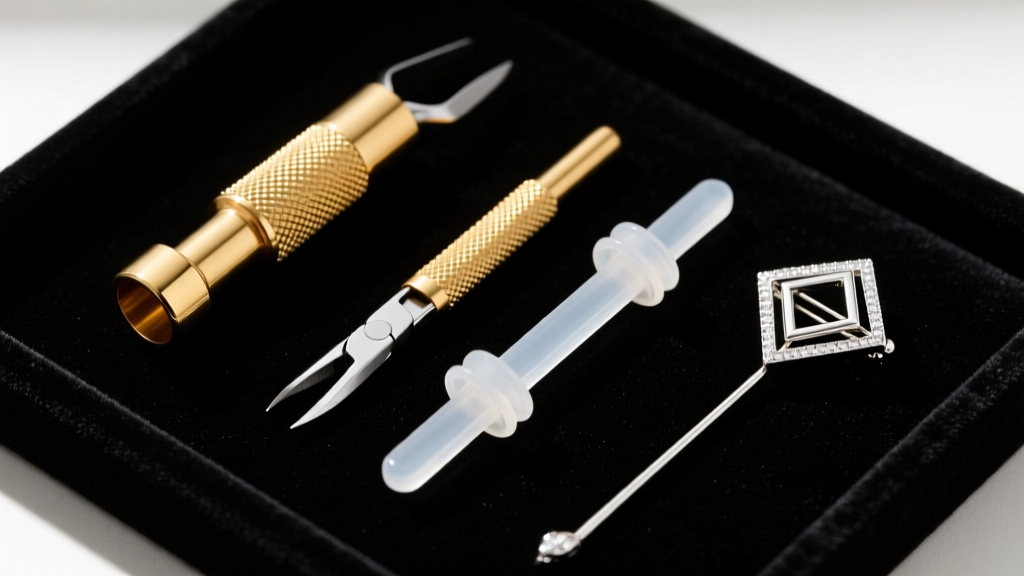
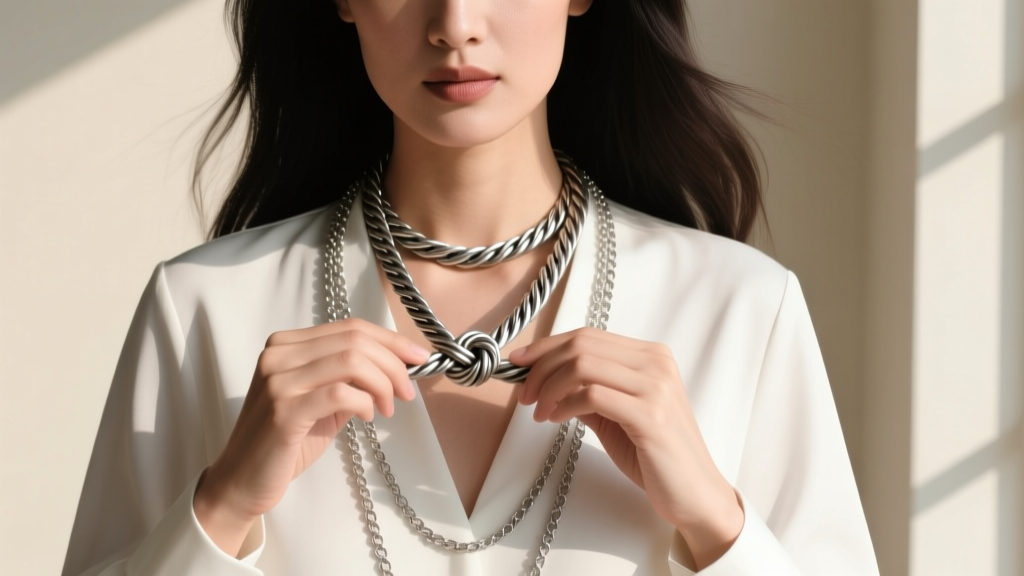
If your necklace is strung on leather, silk, suede, or a flexible metal mesh, the Lark's Head knot (also known as a cow hitch) is a completely free, zero-hardware solution. Fold the necklace in half to find the center, pass the looped end through the desired shortening point, and pull the clasp and tail ends through the loop. Pull tight to secure.
Value Assessment: While free, this method introduces acute bending stress. It is highly destructive to solid metal links—especially box chains, which will permanently kink, or rope chains, which can unravel if forced into a tight knot. Reserve this method exclusively for non-metal cords or highly flexible, woven stainless steel mesh that is engineered to withstand folding.
4. The Jump Ring Bypass (The Hardware Hack)
For a nearly invisible shortening method on standard link chains, purchase a single, high-gauge sterling silver or gold-filled jump ring (approx. $1 to $3). Open the jump ring using two pairs of jewelry pliers, thread it through the desired link on one side of the chain and the clasp on the other, and close it securely. This effectively bypasses several inches of the chain, hiding the excess links behind the neck or allowing them to dangle as an extender.
Value Assessment: This is the most secure mechanical fix for heavy pendants. The critical rule here is to never use a base-metal paperclip or steel hardware store ring. Base metals will trigger a galvanic reaction with precious metals, leading to rapid oxidation and green skin discoloration. Always use a precious-metal jump ring that matches or exceeds the karat of the chain.
Material Safety Matrix: Matching Method to Metal
Not all shortening methods are safe for all jewelry materials. The hardness and tensile strength of the metal dictate which budget hack you should employ. Use the table below to assess the risk profile of your specific piece.
| Chain Material & Grade | Recommended Method | Methods to Avoid | Risk Factor |
|---|---|---|---|
| 24k / 22k Pure Gold | Silicone Adjuster | Knots, Jump Rings (if forced) | High (Metal is extremely soft and prone to permanent deformation) |
| 14k / 18k Gold & White Gold | Converter Clasp, Jump Ring | Paperclips (Galvanic corrosion) | Low (Highly durable, safe for mechanical bypasses) |
| Sterling Silver (925) | Converter Clasp, Jump Ring | Base metal hardware, tight knots | Medium (Prone to tarnish if exposed to dissimilar metals) |
| Gold-Filled / Gold Vermeil | Silicone Adjuster, Converter | Lark's Head Knot, Pliers | High (Friction and bending will strip the gold layer, exposing brass) |
| Leather / Silk Cord | Lark's Head Knot | Silicone Adjusters (will slip) | Low (Organic materials handle knotting well) |
Chain Weave Warnings: Understanding Structural Limits
Budget hacks fail when they ignore the physics of the chain weave. A chain is only as strong as its weakest soldered link. When shortening a necklace without cutting it, you are often introducing new tension points or bending radii that the original designer did not intend.
- Box Chains: These are constructed from folded, square links. They have virtually zero tolerance for lateral bending. If you attempt to knot a box chain or force it through a tight silicone adjuster, the links will crease and permanently lose their geometric shape.
- Figaro and Curb Chains: These flat, interlocking weaves are highly resistant to pulling but can twist. When using a jump ring bypass, ensure the excess chain lays flat against the skin to prevent the links from catching on hair or clothing, which can pop the soldered joints.
- Hollow Chains: Often sold as budget-friendly alternatives to solid gold, hollow tube or rope chains are incredibly fragile. Any clamping pressure from a silicone adjuster or pliers can crush the tubing. Use only loose converter clasps with hollow weaves.
Hidden Costs: When to Pay a Jeweler Instead
While learning how to shorten a necklace without cutting it saves money upfront, there are specific scenarios where DIY methods become a liability. If your necklace features a heavy center-set gemstone pendant (e.g., a 15-carat quartz or heavy jade carving) on a chain thinner than 1.5mm, the added weight distribution of a bunched-up excess chain at the nape of your neck can cause severe friction burns on your skin and uneven wear on the clasp.
Furthermore, if the chain is made of platinum or titanium, these metals have incredibly high melting points and tensile strengths. If a DIY jump ring bypass fails and the chain snaps under tension, you will be forced to pay for an emergency soldering repair anyway. In these high-stakes scenarios, investing the $40 to $60 for a professional bench jeweler to remove the links and laser-weld the chain is the mathematically sound decision for long-term value preservation.
Final Value Assessment
Mastering non-destructive necklace shortening is an exercise in smart asset management. By utilizing a $6 silicone adjuster for delicate gold-filled pieces, or a $15 sterling silver converter clasp for heavy silver chains, you bypass the $50+ jeweler fees while keeping the jewelry in its original, unaltered state. Always prioritize material compatibility over convenience, avoid base-metal hardware to prevent chemical tarnishing, and respect the structural limits of your chain's weave. With these budget-friendly techniques, you can adapt any necklace to your exact neckline and style preferences without sacrificing a single link or a single dollar of its resale value.


