2026 Trend Report: The Silver Ball Chain Necklace Revival
Discover why the silver ball chain necklace is dominating 2026 jewelry trends. Explore styling, gauge sizes, and how to layer this military-inspired staple.

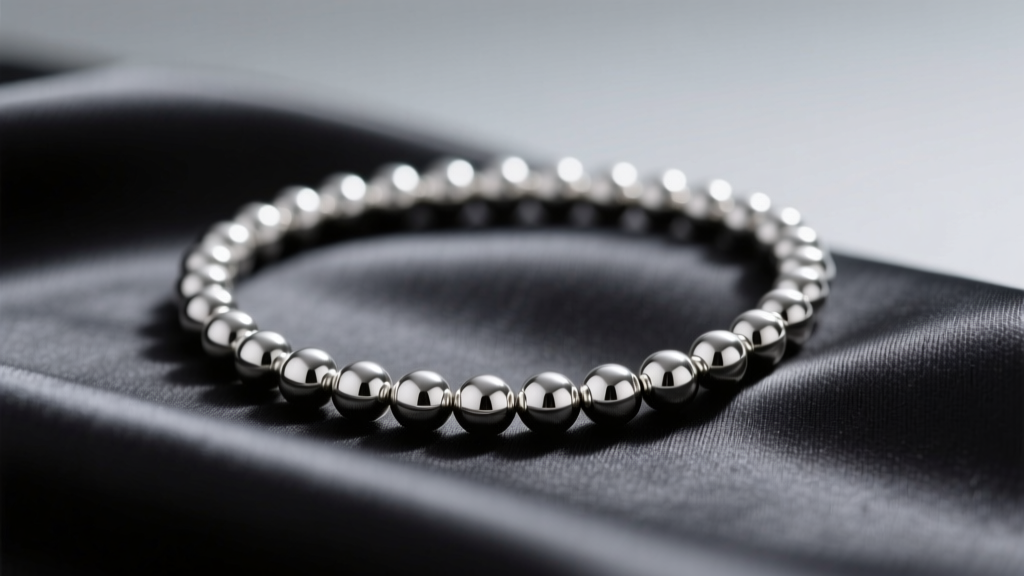
The Military-to-Runway Pipeline: Why 2026 is the Year of the Ball Chain
Once relegated to military dog tags and utilitarian keychains, the silver ball chain necklace has completed its multi-year migration from surplus stores to high-fashion runways. In 2026, this spherical staple is no longer just a nostalgic nod to 1990s grunge or early 2000s streetwear; it has been elevated into a sophisticated, gender-neutral layering essential. Designers are reimagining the classic bead chain with premium metallurgy, precision-engineered connectors, and high-end pendant pairings. According to recent market analyses by the Silver Institute, consumer demand for industrial-inspired silver jewelry has surged by 22% over the last eighteen months, driven by a cultural shift toward "utilitarian luxury."
But not all bead chains are created equal. The market is currently flooded with poorly constructed, base-metal imitations that tarnish, snap, and frustrate the wearer. To truly leverage this trend, one must understand the anatomy, material grades, and structural vulnerabilities of a premium silver ball chain necklace. This guide breaks down exactly what to look for, how to troubleshoot common failure points, and how to master the 2026 layering frameworks.
Metallurgy Matters: 925 Sterling vs. Argentium Silver
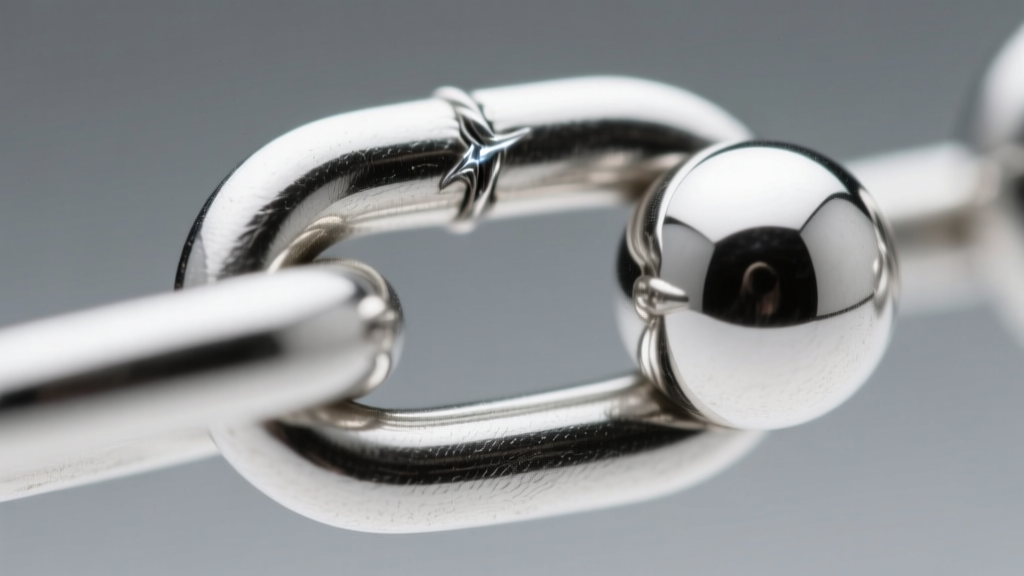
The defining characteristic of a ball chain is the tiny, repetitive crevice between the metal sphere and its connector link. These microscopic gaps are notorious traps for skin oils, lotions, and environmental sulfur. When traditional sterling silver tarnishes, removing that black silver sulfide layer from the interior joints of a bead chain is nearly impossible without harsh chemical dips that can degrade the metal over time.
The Argentium Advantage
For the modern silver ball chain necklace, Argentium silver is rapidly becoming the gold standard. As detailed in the Gemological Institute of America's (GIA) silver guide, traditional sterling silver is an alloy of 92.5% silver and 7.5% copper. The copper is what causes tarnish. Argentium silver, however, replaces a portion of that copper with germanium. When exposed to oxygen, the germanium forms a transparent, self-healing layer of germanium dioxide on the surface of the metal, drastically slowing the tarnishing process. For a ball chain, this means the spheres retain their high-polish luster for years with nothing more than a simple wipe from a microfiber cloth, completely bypassing the need for abrasive polishing pastes that get stuck in the joints.
Sphere Sizing, Gauge, and Pendant Compatibility
The aesthetic and functional utility of a silver ball chain necklace is entirely dictated by the diameter of its spheres. Choosing the wrong size for your intended styling will result in a chain that either kinks prematurely or overwhelms your neckline.
- 1.2mm to 1.5mm (Micro/Delicate): Best suited for 16-inch choker lengths or ultra-minimalist layering. These chains are highly flexible but prone to kinking if pulled. They cannot support heavy pendants and are best worn bare or with sub-5mm micro-gems.
- 2.0mm to 2.5mm (The Standard): The undisputed workhorse of the 2026 trend. A 2.5mm chain offers the perfect visual weight for solo wear while remaining supple enough for draping. Crucially, a 2.5mm chain requires a pendant bail with an inner diameter of at least 3.5mm to glide smoothly without catching on the connector links.
- 3.5mm to 5.0mm (Statement/Heavyweight): These thick, heavy chains are designed to be the focal point of an outfit. Often worn at 20-inch or 22-inch lengths, they mimic the drape of a rope chain but with a modern, industrial texture. They are generally too thick for standard pendant bails and are best left unadorned.
The Weak Link: Troubleshooting Barrel Clasps and Connectors
The most common point of failure on any silver ball chain necklace is the clasp. Historically, bead chains utilize a "barrel clasp" (also known as a bead clasp or tube clasp). This mechanism consists of a hollow, threaded metal cylinder that screws together, relying on a friction-fit internal folded pin to grip the terminal ball of the chain.
Why Barrel Clasps Fail
Over time, the internal metal pin suffers from fatigue and loses its spring tension. Furthermore, lint, dust, and skin oils accumulate inside the barrel, preventing a secure grip. When the pin flattens, the chain will unexpectedly detach and slide out of the barrel, often resulting in the loss of the necklace. Additionally, the threading on cheaper silver barrels can strip, making it impossible to screw the clasp shut securely.
| Clasp Type | Durability Rating | Pros | Cons |
|---|---|---|---|
| Barrel / Bead Clasp | Low | Maintains the seamless visual flow of the spheres. | Prone to internal pin fatigue; strips easily; difficult to operate with one hand. |
| Lobster Claw (with Soldered Ring) | High | Extremely secure; easy to operate; prevents accidental drops. | Breaks the visual continuity of the ball pattern at the nape of the neck. |
| Magnetic Tube Clasp | Medium | Effortless to put on and take off; sleek modern aesthetic. | Can detach if snagged forcefully on heavy clothing; magnets may weaken over time. |
Expert Recommendation: If you purchase a vintage or surplus silver ball chain necklace with a worn barrel clasp, take it to a local jeweler to have the terminal ball removed and a standard 5mm lobster claw attached via a 4mm soldered jump ring. This minor modification guarantees the security of your piece without compromising the chain's structural integrity.
2026 Layering Frameworks: Beyond the Dog Tag
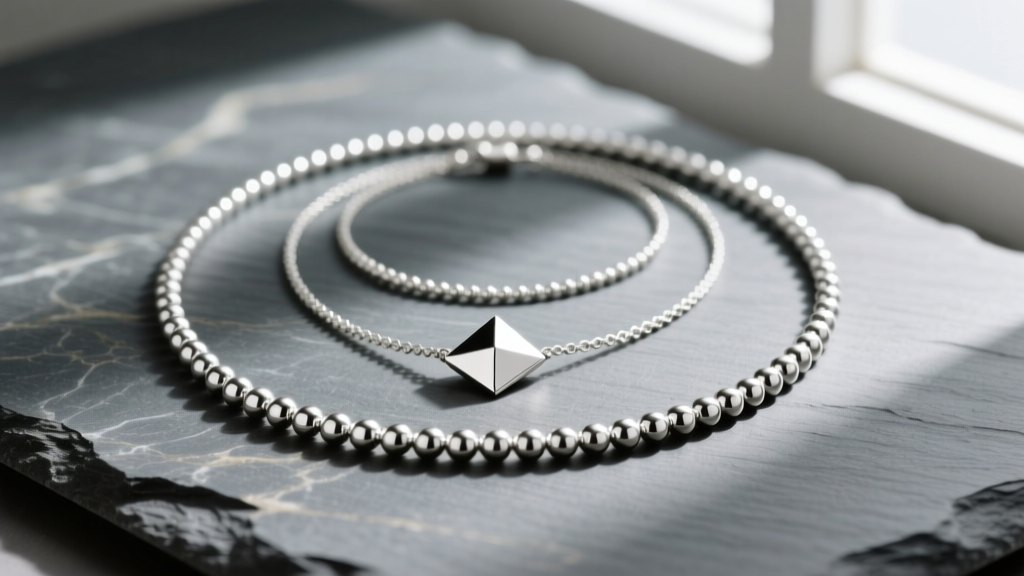
The contemporary approach to styling a silver ball chain necklace rejects the single, long dog-tag silhouette in favor of structured, multi-textural layering. The goal is to create depth through contrasting sphere sizes and precise length staggering.
"The modern ball chain layering technique relies on the 'Rule of Thirds' for both length and thickness. You want a distinct visual break between the collarbone, the upper sternum, and the lower chest to prevent the chains from tangling and to allow each gauge to catch the light independently."
The Cascade Framework:
- The Anchor (16 inches, 1.5mm): Sits tightly at the base of the throat. Acts as a delicate framing device for the face.
- The Core (18 inches, 2.5mm): Rests on the upper collarbone. This is where you introduce a pendant—such as a geometric silver cylinder or a raw, uncut sapphire—to serve as the visual anchor of the stack.
- The Statement (22 inches, 4.0mm): Drapes over the sternum. Worn bare, this heavyweight chain grounds the entire arrangement and provides a stark, industrial contrast to the finer chains above it.
Market Pricing and Authenticity Markers
When shopping for a silver ball chain necklace in 2026, price is a strong indicator of manufacturing origin and material purity. Fast-fashion retailers frequently sell "silver" bead chains that are actually brass or copper plated with a microscopic layer of silver. These will inevitably turn your skin green and the plating will flake off the spheres within weeks.
- $15 - $35 (The Plated Tier): Avoid. Usually marked as "silver-plated" or "Tibetan silver." The connector links are often merely crimped, not soldered, meaning they will pull apart under minimal tension.
- $45 - $120 (The Solid 925 Tier): The sweet spot for everyday wear. Look for the "925" stamp on the small tag attached to the clasp. Links should be smoothly soldered, and the spheres should feel uniformly weighted.
- $150 - $400+ (The Luxury/Argentium Tier): Designer or specialized artisan chains. These feature Argentium silver, precision-machined spheres with zero visible seams, and upgraded hardware like custom-machined magnetic clasps or integrated tension-set diamond stations between the beads.
Final Verdict
The silver ball chain necklace has successfully transcended its utilitarian roots to become a cornerstone of modern jewelry styling. By prioritizing advanced alloys like Argentium, understanding the mechanics of sphere sizing, and proactively upgrading vulnerable barrel clasps, you can secure a piece that is both structurally enduring and aesthetically cutting-edge. Whether worn as a solitary 2.5mm statement or integrated into a meticulously staggered cascade, the bead chain remains one of the most versatile, light-catching investments in the 2026 jewelry landscape.


