Silver Cleopatra Necklace: 2026 Price & Value Guide
Discover the true value of a silver Cleopatra necklace. Our 2026 guide breaks down pricing, material grades, and stone authenticity for smart buyers.

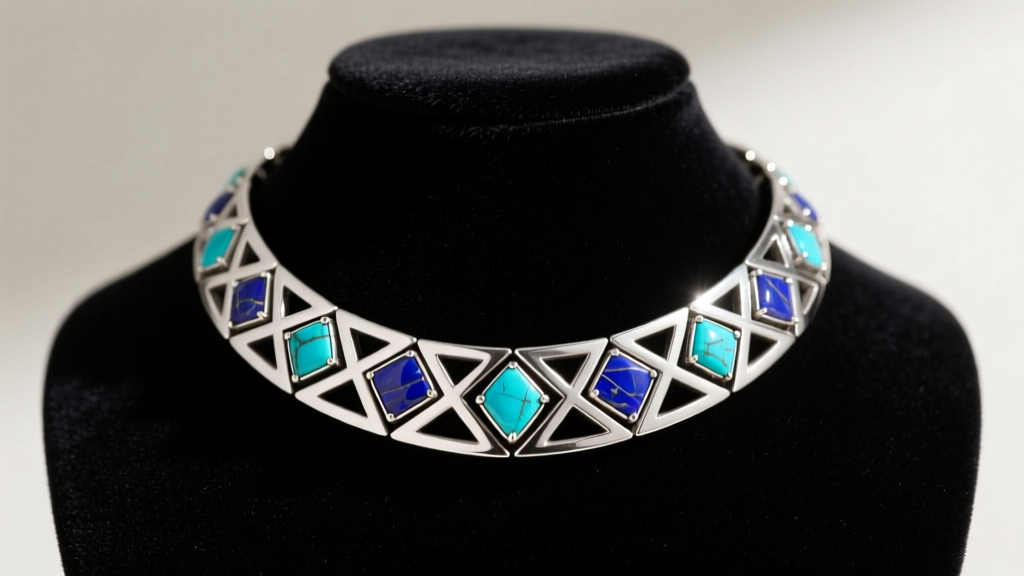
The Anatomy and History of the Usekh Collar
When modern jewelry enthusiasts search for a silver Cleopatra necklace, they are typically looking for a contemporary adaptation of the ancient Egyptian 'Usekh' collar. Historically, these broad, multi-strand necklaces were reserved for royalty and deities, crafted from gold, faience, and semi-precious stones. Today, the Egyptian Revival style remains a powerful fashion statement, characterized by a wide, tapered silhouette that rests flat against the collarbone and upper chest. However, translating this ancient, heavy design into modern silver jewelry presents unique manufacturing challenges and significant price variances. Understanding the anatomy of these pieces is the first step in assessing their true market value.
A genuine Cleopatra-style broad collar requires a complex articulation system. Unlike a simple chain necklace, a high-quality silver collar must feature multiple hinged or linked segments that allow the metal to drape smoothly over the clavicle without buckling. If a silver collar feels rigid or folds awkwardly, it is likely a cheap, stamped sheet-metal imitation rather than a properly engineered piece of jewelry.
The Silver Purity and Weight Equation
The most critical factor in determining the value of a silver Cleopatra necklace is its precious metal content. Broad collars are inherently heavy, often weighing between 80 and 180 grams. In 2026, with silver spot prices fluctuating between $28 and $32 per troy ounce, the raw melt value of a solid 150-gram 925 sterling silver collar is roughly $135 to $155. This baseline material cost completely eliminates the possibility of finding a genuine, solid 925 silver broad collar for under $100.
Beware of listings that claim 'solid silver' but price the necklace at $45. These pieces are almost invariably brass or copper alloys with a microscopic flash-plating of silver. Over time, the friction against the skin and the natural acidity of sweat will wear through this plating, resulting in the dreaded green skin effect caused by copper oxidation. Always look for the '925' stamp, but verify it with a magnet test (silver is non-magnetic) or request an XRF (X-ray fluorescence) test certificate from high-end artisan sellers.
Furthermore, many mid-tier manufacturers use rhodium plating over their 925 sterling silver. While rhodium prevents tarnish and provides a bright, white-gold-like finish, it adds to the manufacturing cost. A rhodium-plated silver Cleopatra necklace will typically command a 15% to 20% premium over unplated, oxidized, or high-polish silver equivalents due to the extra labor and material involved.
Gemstone Authenticity: Lapis, Turquoise, and Carnelian
The classic Egyptian color triad consists of deep blue lapis lazuli, vibrant turquoise, and fiery orange-red carnelian. In a silver Cleopatra necklace, the quality and authenticity of these inlays dictate a massive portion of the final price.
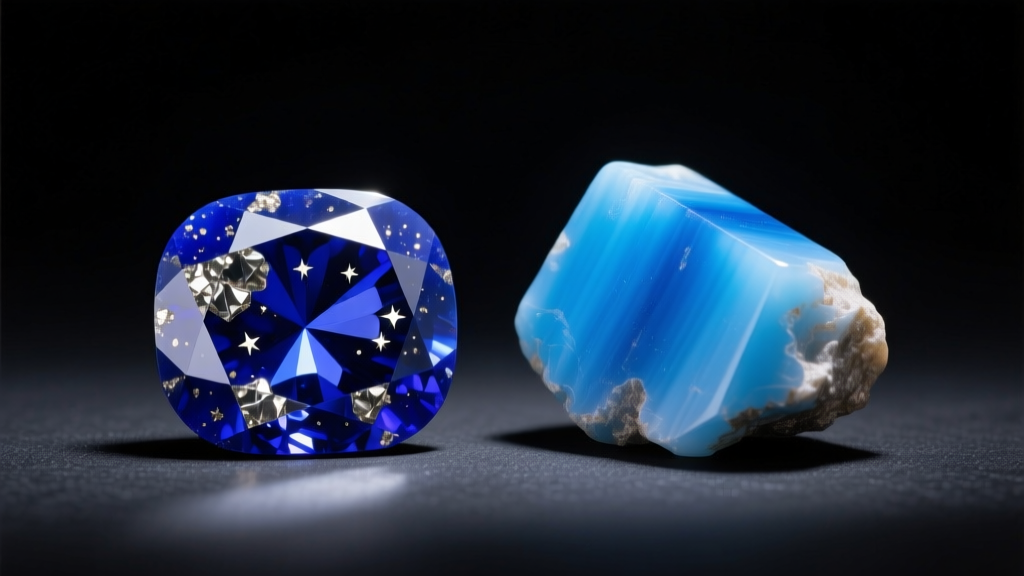
According to the Gemological Institute of America (GIA), genuine lapis lazuli should exhibit natural calcite (white) streaks and golden pyrite flecks. In budget necklaces, lapis is frequently replaced by dyed howlite or sodalite. You can perform a simple at-home test: gently rub a cotton swab dipped in nail polish remover (acetone) over an inconspicuous area of the blue stone. If the swab turns blue, the stone is dyed and holds virtually no intrinsic gemological value.
Turquoise presents another valuation hurdle. Natural, untreated turquoise is incredibly rare and expensive. Most mid-range silver collars use 'stabilized' turquoise—a real but porous stone that has been hardened with clear epoxy resin. This is an acceptable industry practice that ensures durability. However, 'reconstituted' turquoise (turquoise dust mixed with glue and dye) or completely synthetic imitations are common in fast-fashion Egyptian jewelry. Carnelian is more affordable, but it is almost always heat-treated agate or dyed quartz in commercial pieces. Genuine, untreated carnelian with natural color banding is a hallmark of premium, artisan-crafted collars.
The 2026 Pricing Matrix: Budget vs. Value
To help you navigate the market, we have categorized the current pricing landscape for silver Cleopatra necklaces based on materials, weight, and craftsmanship. Use this matrix to benchmark any piece you are considering.
| Tier | Material Base | Stone Quality | Weight Range | Estimated Price (2026) |
|---|---|---|---|---|
| Fast Fashion | Brass/Copper (Silver Plated) | Glass, Resin, Dyed Howlite | 40g - 70g | $35 - $85 |
| Mid-Tier Commercial | 925 Sterling (Hollow/Stamped) | Stabilized Turquoise, Synthetic Lapis | 60g - 90g | $120 - $250 |
| Artisan / High-End | Solid 925 Sterling (Cast/Forged) | Genuine Lapis, Carnelian, Turquoise | 100g - 180g+ | $350 - $900+ |
When evaluating value, consider the cost-per-wear and longevity. A $45 plated piece will likely degrade within a year of regular wear, while a $400 solid 925 artisan piece becomes a lifelong heirloom that retains its scrap and artistic value.
Structural Red Flags and Clasp Mechanics
The most common failure point in heavy Egyptian revival jewelry is the clasp. A 150-gram broad collar exerts significant lateral and downward pull on the neckline. Standard 12mm or 15mm lobster clasps are entirely inadequate for this weight; they will warp, the lever will bend, and the necklace will inevitably fall off and potentially be lost.
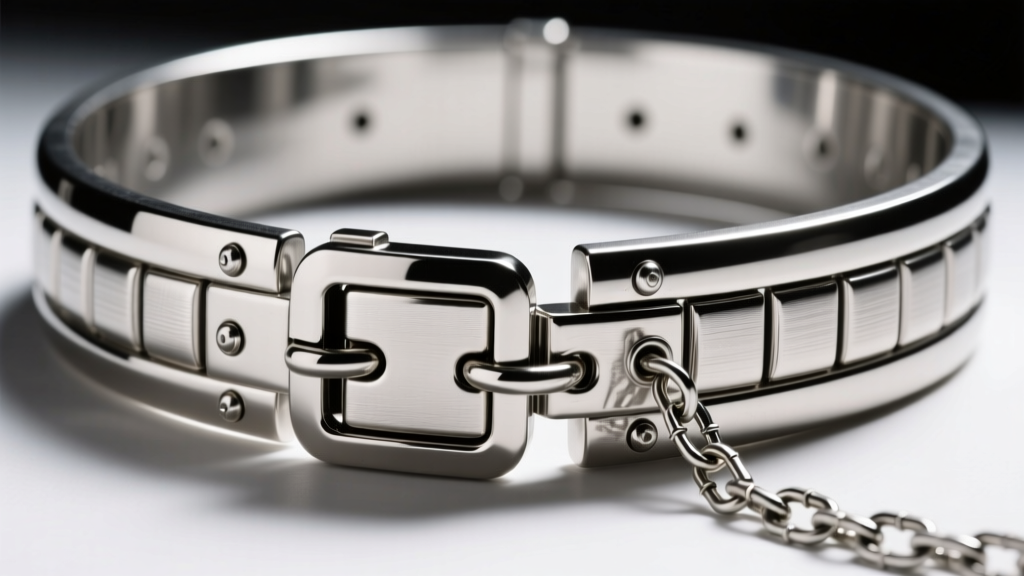
When assessing a silver Cleopatra necklace, inspect the clasp hardware closely. High-value pieces will utilize heavy-duty magnetic tube clasps with reinforced solder joints, paired with a secondary safety chain. Alternatively, a reinforced box clasp with a figure-eight safety latch is a sign of superior engineering. If a heavy collar relies on a simple spring-ring clasp, walk away—it is a structural liability waiting to fail.
Additionally, examine the backing of the collar. The Metropolitan Museum of Art notes that historical collars were often backed with leather or linen to protect the skin and provide structure. Modern silver adaptations should feature a smooth, contoured silver backing or a high-quality silicone grip strip. Rough, unfinished silver backs will catch on delicate fabrics and cause severe skin irritation due to the sheer weight of the metal pressing into the collarbone.
Final Verdict: Navigating the FTC Guidelines
Before finalizing any purchase, familiarize yourself with the Federal Trade Commission Jewelry Guides. The FTC strictly regulates the use of the word 'silver.' If a piece is not at least 92.5% pure silver, it cannot be legally marketed simply as 'silver' without qualifying terms like 'plated' or 'filled.' Sellers using deceptive terms like 'Tibetan Silver,' 'Egyptian Silver,' or 'Alpaca Silver' are selling base metal alloys that contain zero precious metals and may even contain harmful levels of lead or nickel.
Ultimately, a silver Cleopatra necklace is a bold, architectural piece of jewelry that demands respect for its materials and engineering. By prioritizing solid 925 sterling silver, demanding authentic or properly stabilized gemstones, and insisting on heavy-duty clasp mechanics, you can secure a piece that offers genuine value, historical resonance, and enduring style.


