Silver Loop Necklace Guide: Sterling 925 vs Argentium Properties
Discover the best metal for your silver loop necklace. We compare Sterling 925, Argentium, and Fine silver properties, durability, and tarnish resistance.

The Structural Demands of a Silver Loop Necklace
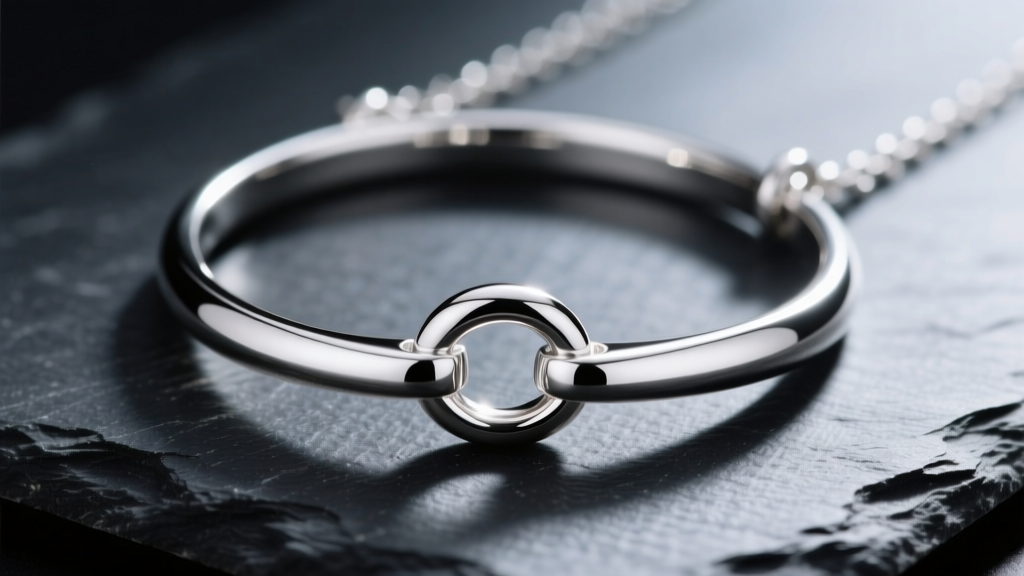
When jewelry enthusiasts think of a silver loop necklace, they often envision continuous circle pendants, infinity torcs, or seamless herringbone hoops. However, from a metallurgical perspective, a loop design is one of the most structurally demanding formats in jewelry making. Unlike a standard chain that distributes tension across hundreds of interlocking links, a continuous loop or a large circle pendant concentrates mechanical stress at a single point: the closure joint. If the metal lacks adequate tensile strength, or if the soldering process compromises the crystalline structure, the necklace will inevitably warp, snap, or permanently deform.
As we navigate the jewelry market in 2026, the term 'silver' is no longer a monolith. Innovations in alloy compositions have introduced options that drastically alter the lifespan, maintenance, and structural integrity of loop-based neckwear. To make an informed purchase, we must look past the aesthetic polish and examine the exact material properties, Vickers hardness ratings, and failure modes of the most common silver alloys used in loop designs.
Material Breakdown: 4 Types of Silver Compared
Not all silver is created equal. The addition of specific alloying metals dictates how a silver loop necklace will behave when subjected to the daily friction, skin acidity, and accidental tugs inherent to neckwear.
Sterling Silver (925): The Traditional Workhorse
Sterling silver is an alloy consisting of 92.5% pure silver and 7.5% copper. The copper is essential; pure silver is far too soft to hold a structural loop shape. The copper increases the Vickers hardness (HV) to roughly 65-75 in its annealed state, and up to 120 HV when work-hardened. However, copper is highly reactive with sulfur in the environment and human sweat, forming copper sulfide—the black tarnish that plagues traditional sterling silver jewelry. Furthermore, when a jeweler solders a 925 sterling loop closed, the copper oxidizes internally, creating 'firestain' (cuprous oxide) that can weaken the joint if not properly polished or treated.
Argentium Silver (935/960): The Modern Metallurgical Marvel
Developed by silversmith Peter Johns, Argentium replaces a portion of the copper alloy with the metalloid germanium. This seemingly minor adjustment creates a revolutionary property: a transparent layer of germanium dioxide forms on the surface, actively blocking tarnish-causing sulfur compounds. For a silver loop necklace, Argentium offers a massive structural advantage. Because it can be laser-welded or seamlessly fused without traditional solder, the loop joint becomes as strong as the parent wire, entirely eliminating the weak points associated with solder seams. According to the Argentium Silver Guild, this alloy is also highly ductile, making it ideal for the complex bending required in torc-style loops.
Fine Silver (999): The Hypoallergenic Liability
Fine silver is 99.9% pure. It is brilliantly white, entirely hypoallergenic, and completely immune to standard tarnish. However, its Vickers hardness sits at a mere 25 HV. In the context of a loop necklace, fine silver is a structural liability. An 18-gauge fine silver circle pendant will easily bend out of shape if caught on a sweater, and continuous fine silver torcs will slowly stretch and warp under their own weight. It is best reserved for bezel settings rather than structural loop components.
Silver-Plated and Silver-Filled: The Budget Traps
Often marketed deceptively, these materials feature a base metal core (usually brass or copper) coated with a microscopic layer of silver. In a loop necklace, the constant friction at the clasp or the bending stress at the loop apex will quickly wear through the plating, exposing the base metal and leading to rapid galvanic corrosion. These should be avoided for heirloom or daily-wear loop designs.
Comparative Data: Tensile Strength, Tarnish, and Pricing
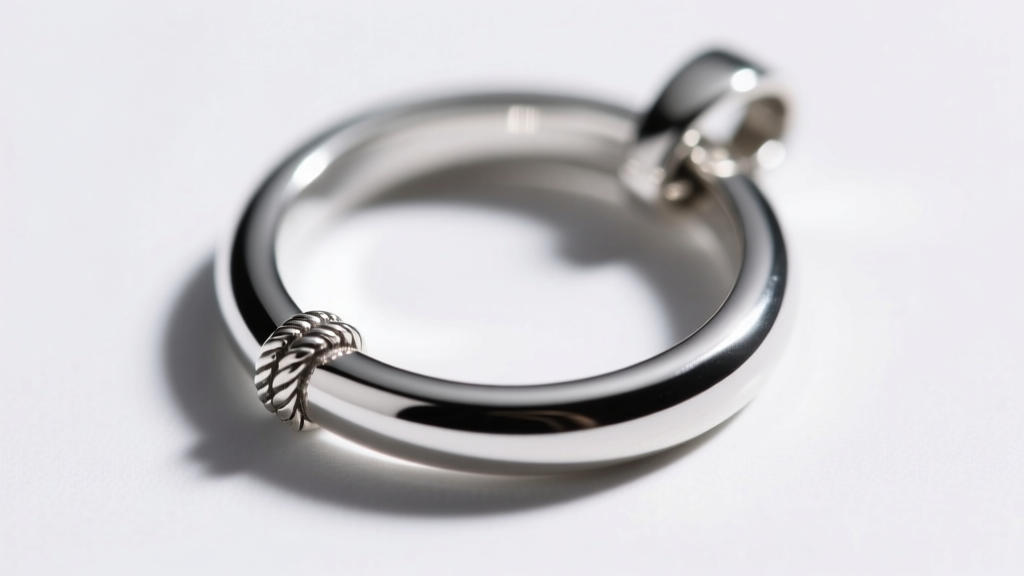
To visualize the engineering trade-offs, we have compiled the core metallurgical data relevant to loop necklace fabrication. Pricing reflects a standard 18-inch, 2mm continuous loop chain in the current 2026 market.
| Metal Grade | Composition | Vickers Hardness (HV) | Tensile Strength | Tarnish Resistance | Avg. Retail Price (18" Loop) |
|---|---|---|---|---|---|
| Sterling 925 | 92.5% Ag, 7.5% Cu | 65 - 120 | ~275 MPa | Low (Requires polishing) | $35 - $85 |
| Argentium 935 | 93.5% Ag, Cu, Ge | 75 - 130 | ~300 MPa | Exceptional | $65 - $140 |
| Argentium 960 | 96% Ag, Cu, Ge | 60 - 110 | ~250 MPa | Exceptional | $90 - $180 |
| Fine 999 | 99.9% Ag | 25 (Annealed) | ~125 MPa | High | $120+ (Artisan only) |
Real-World Failure Modes in Loop Designs
Understanding how a silver loop necklace fails in the wild is critical for selecting the right material. Based on repair bench data from master jewelers, here are the three most common catastrophic failures in loop neckwear:
- The Solder Snap (Sterling 925): When a continuous sterling loop is soldered, the heat alters the crystalline structure of the surrounding metal. If the jeweler quenches the piece too quickly, 'quench cracking' occurs. Months later, a simple tug on the necklace causes the loop to snap cleanly at the heat-affected zone.
- The Clasp Deformation (Fine/Sterling): Lobster clasps attached to lightweight silver loops often feature a thin jump ring. Over time, the repeated pulling of the clasp lever causes the silver jump ring to gap open. Without a fused or laser-welded jump ring, the loop pendant slips off and is lost.
- Firestain Bleed-Through: In poorly manufactured 925 sterling circle pendants, the copper oxides (firestain) created during the soldering of the loop bail are merely polished over. As the necklace wears against the skin's natural acids, the firestain oxidizes further, creating a permanent dark shadow beneath the silver plating layer.
"When a client requests a seamless, continuous silver torc, I exclusively use Argentium. The ability to fuse the ends together without silver solder means the loop's structural integrity is mathematically identical to the rest of the wire. There is no weak link." — Master Bench Jeweler, 2026 Guild Symposium
How to Verify Authenticity and Material Grade
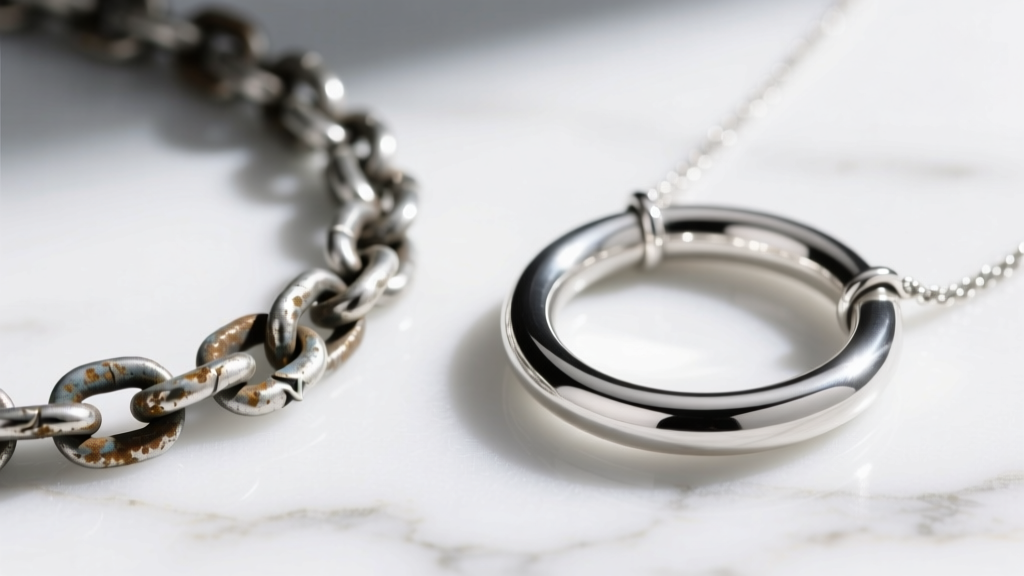
Because the visual differences between Sterling 925 and Argentium are nearly indistinguishable to the naked eye, verifying your silver loop necklace requires specific testing protocols. The Jewelers of America recommends the following verification steps:
- Hallmark Inspection: Look for the laser-engraved stamp on the clasp tag or the interior of the loop bail. Sterling will read
.925orSterling. Authentic Argentium will bear the trademarked 'A' with a unicorn profile or the.935stamp. - The Thermal Conductivity Test: Silver has the highest thermal conductivity of any common metal. Place an ice cube on the thickest part of the loop pendant. If it is genuine silver (925 or Argentium), the ice will begin melting almost instantaneously, far faster than on stainless steel or platinum.
- The Neodymium Magnet Test: While not a definitive test for purity, a strong neodymium magnet will slide down a solid silver loop chain with a distinct magnetic braking effect (eddy current resistance) due to silver's paramagnetic properties. If the magnet sticks firmly, the loop contains a ferromagnetic core (indicating heavy plating over steel).
Final Verdict: Which Silver Should You Choose?
If you are investing in a silver loop necklace designed for daily, maintenance-free wear, Argentium 935 is the undisputed champion. Its superior tensile strength, resistance to sulfur-based tarnish, and ability to be fused without weak solder joints make it the ultimate material for continuous loops and circle pendants. However, if you prefer the vintage aesthetic of traditional jewelry and do not mind occasional polishing with a jeweler's cloth, a well-constructed Sterling 925 loop remains a timeless, cost-effective choice. Avoid fine silver for any structural loop components, and always inspect the closure joint for seamless welding before making your final purchase.


