2026 Silver Mama Necklace Guide: Budget & Value Picks
Discover the true value of a silver mama necklace in 2026. We break down pricing tiers, sterling silver grades, and where to invest your budget wisely.

The Emotional and Material Weight of the Silver Mama Necklace
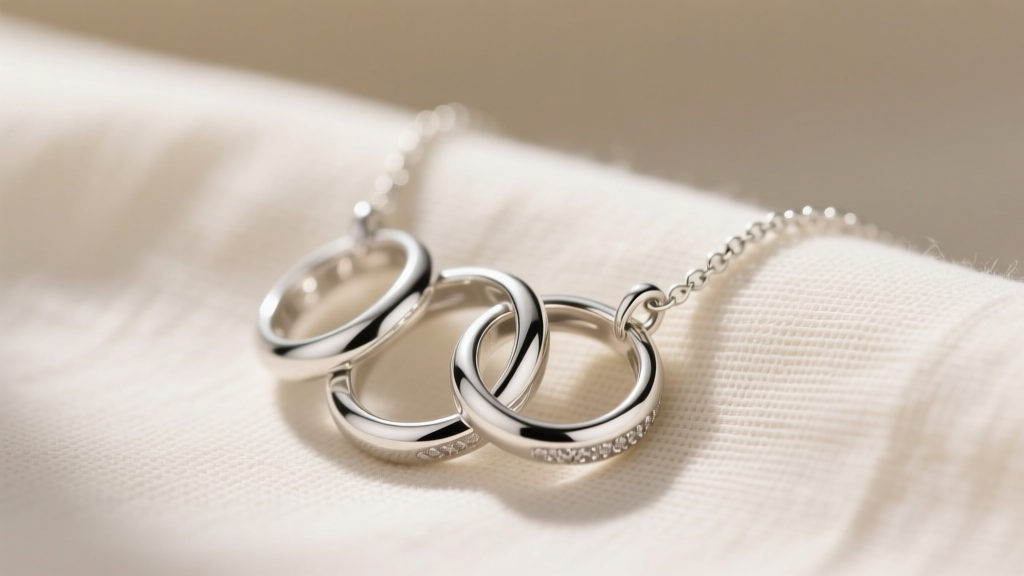
The silver mama necklace has transcended fleeting trend status to become a modern heirloom. Whether it features interlocking rings representing each child, delicate initial discs, or actual handwriting engravings, these pieces carry immense emotional weight. However, from a purely material and financial perspective, not all silver mama necklaces are created equal. In 2026, the market is flooded with options ranging from $15 dropshipped trinkets to $300 artisan-crafted fine jewelry. As a consumer, understanding the metallurgy, chain engineering, and engraving techniques is critical to ensuring your budget translates into lasting value.
Because a mother’s jewelry is often worn daily—enduring everything from infant tugging to exposure to lotions and hard water—the structural integrity of the piece is just as important as its aesthetic. This comprehensive value assessment breaks down exactly what you are paying for and how to identify genuine quality in the crowded sentimental jewelry market.
Metallurgy Matters: .925 Sterling vs. Argentium Silver
When shopping for a silver mama necklace, the hallmark ".925" is your baseline for quality. According to the Gemological Institute of America (GIA), sterling silver consists of 92.5% pure silver and 7.5% alloy metals, usually copper. While copper provides necessary tensile strength, it is also the culprit behind oxidation and tarnish. For a necklace that rests against the skin's natural oils and daily cosmetics, standard .925 sterling silver will require regular polishing to maintain its luster.
For buyers willing to stretch their budget by 20% to 30%, Argentium Silver is the ultimate value upgrade. Argentium replaces a portion of the copper with germanium, resulting in a metal that is highly tarnish-resistant, brighter, and hypoallergenic. If your budget allows, seeking out an artisan who works with Argentium .935 or .960 will drastically reduce the maintenance required to keep a multi-charm mama necklace looking pristine over a decade of daily wear.
The Danger of Silver Plating
Many budget-tier "mama" necklaces sold on fast-fashion marketplaces are actually brass or copper bases with a microscopic layer of silver plating. Once this plating wears off from friction—often within six months of daily wear—the underlying base metal turns the skin green and cannot be polished back to silver. Always verify that the listing explicitly states "solid sterling silver" rather than "silver-plated" or "silver-toned."
2026 Pricing Tiers: Where Does Your Budget Fit?
To accurately assess value, we must segment the market into three distinct tiers based on material sourcing, chain weight, and customization techniques.
| Tier | Price Range (2026) | Material & Build Quality | Longevity & Value |
|---|---|---|---|
| Tier 1: Mass Market | $15 - $40 | Silver-plated brass, 0.6mm cable chains, shallow laser engraving, spring-ring clasps. | Low. High risk of chain snapping and plating loss within 1 year. |
| Tier 2: Mid-Market Artisan | $55 - $110 | Solid .925 sterling, 1.0mm chains, standard laser or rotary engraving, lobster clasps. | Medium-High. Excellent value for money; requires occasional polishing. |
| Tier 3: Premium Fine | $130 - $350+ | Argentium or recycled .925, 1.5mm+ rolo/box chains, deep CNC or hand-stamping, bezel-set gems. | Lifetime. Heirloom quality; structural failure is highly unlikely. |
For most buyers, Tier 2 represents the optimal intersection of budget and value. You are paying for solid precious metal and adequate chain thickness without the steep markups associated with luxury boutique branding.
Chain Engineering and Clasp Failure Modes
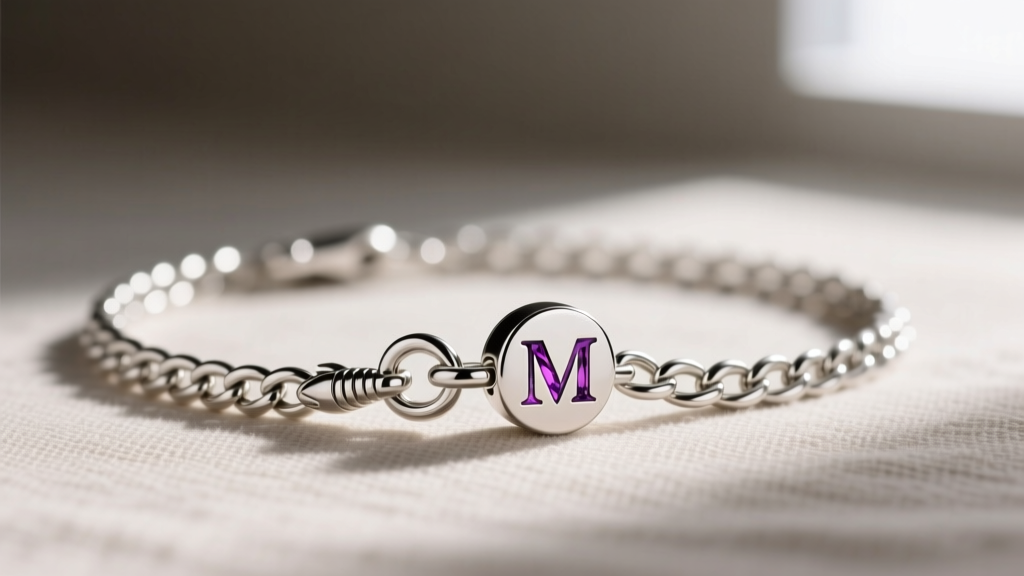
The most common point of failure in a silver mama necklace is not the pendant itself, but the chain and clasp. A necklace featuring three or four pendants (representing multiple children) creates a "pendulum effect." The dynamic load of multiple metal discs swinging and striking each other generates surprising kinetic force.
Choosing the Right Chain Weave
- Cable Chain: The most common and affordable. However, if the wire gauge is under 0.8mm, it will easily kink or snap under the weight of multiple charms.
- Rolo Chain: Composed of uniform, flat-edged round links. A 1.2mm rolo chain is the gold standard for multi-charm mama necklaces, offering excellent tensile strength and resistance to tangling.
- Box Chain: Very strong and smooth, but prone to permanent kinking if bent at a sharp angle (such as when sleeping in the necklace).
Clasp Mechanics
Never accept a spring-ring clasp on a multi-charm silver mama necklace. The internal tension spring in cheap spring rings frequently fails, leading to lost jewelry. Insist on a lobster clasp or, ideally, a parrot clasp with a secure locking mechanism. The Blue Nile Silver Education Guide emphasizes that matching the clasp weight to the chain and pendant weight is vital for overall structural security.
The Engraving Hierarchy: Laser vs. Hand-Stamped vs. CNC
Personalization is the core appeal of the silver mama necklace, but the method used to etch names, dates, or fingerprints drastically impacts the piece's lifespan and value.
1. YAG Laser Engraving (Budget)
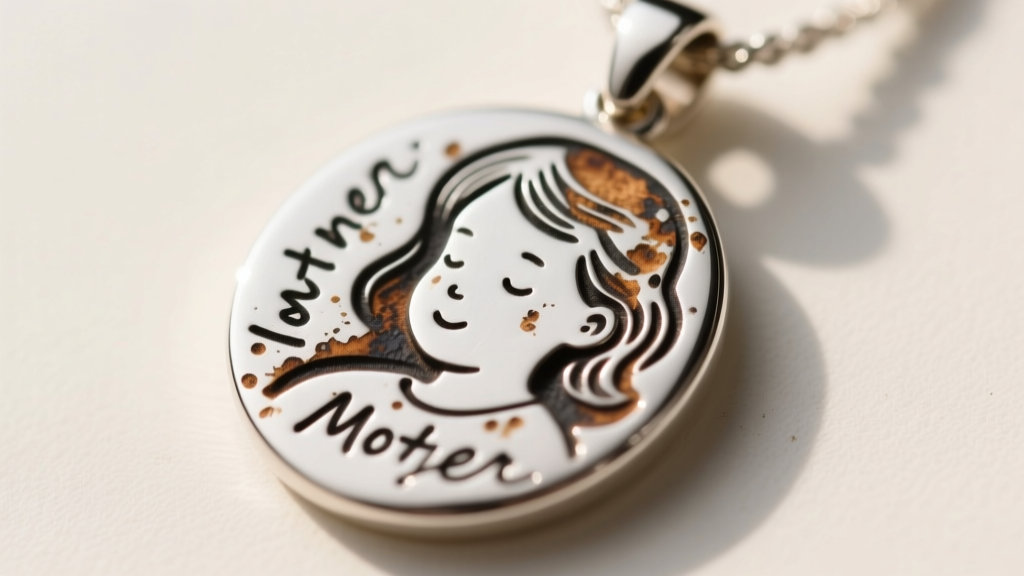
Laser engraving is fast and cheap, making it the default for Tier 1 and Tier 2 necklaces. However, lasers merely scorch the surface of the silver. Over two to three years of daily wear, skin oils, lotions, and friction will gradually erase shallow laser marks, especially on delicate handwriting or fingerprint pendants.
2. Hand Stamping (Mid-Tier)
Using steel stamps and a heavy mallet, artisans physically displace the silver to create deep, permanent letters. While the rustic, slightly misaligned aesthetic isn't for everyone, hand-stamped silver mama necklaces will never fade. The depth of the impression ensures the design outlasts the wearer.
3. CNC Routing (Premium)
For those who want the precision of a computer-guided design with the depth of hand-stamping, CNC routing uses microscopic drill bits to carve out the silver. This is the most expensive method but yields crisp, deep, and permanent engravings that can be filled with black oxidation for striking contrast.
Gemstone Settings for Birthstone Add-Ons
Many mothers choose to incorporate children's birthstones into their silver necklaces. When evaluating value, pay strict attention to the setting style. Prong settings are cheaper to manufacture but are a liability for active mothers; the tiny metal prongs easily catch on baby clothes, sweaters, and hair, eventually bending and losing the gemstone. For daily wear, always opt for a bezel setting, where a continuous rim of silver encircles the stone. Bezel settings cost slightly more in labor and metal weight, but they offer superior protection and a sleek, modern profile that won't snag on fabrics.
Final Verdict: Maximizing Your Investment
A silver mama necklace is a profound expression of love, but it should also be a sound financial purchase. To maximize value in 2026, bypass the ultra-cheap plated options that will inevitably end up in a landfill. Allocate a budget of $60 to $120 to secure a solid .925 sterling silver piece featuring a 1.2mm rolo chain, a secure lobster clasp, and deep hand-stamped or CNC-routed personalization. If your budget permits, upgrading to Argentium silver and bezel-set birthstones will transform a simple accessory into a resilient, tarnish-resistant family heirloom capable of withstanding the beautiful chaos of motherhood.


