The Ultimate Silver Necklace Stack Buying Guide & Tips
Master the art of the silver necklace stack. Learn chain profiles, tangling prevention, length ratios, and clasp hardware in our expert buying guide.

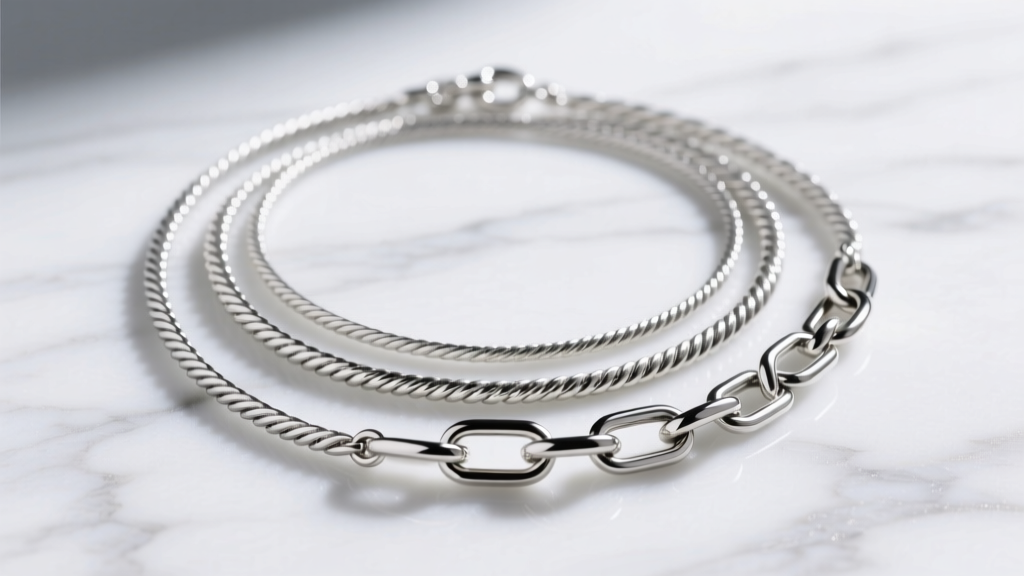
The Anatomy of a Perfect Silver Necklace Stack
Building a cohesive silver necklace stack requires more than just throwing multiple chains over your head. It demands an understanding of metallurgy, link geometry, and spatial distribution. When shopping for sterling silver, always verify the hallmark. According to the Jewelers of America, authentic sterling silver must contain 92.5% pure silver and 7.5% alloy metals, typically copper. This copper addition is non-negotiable for stacking; pure 999 fine silver lacks the tensile strength to withstand the friction of layered wear and will stretch or snap under its own weight over time.
Chain Link Profiles: Tangling & Texture
The most common failure in a silver necklace stack is severe tangling, which occurs when the links of one chain interlock with the gaps of another. To prevent this, you must vary the link geometry. A stack composed entirely of delicate cable chains will inevitably knot together. Instead, mix smooth, tightly woven links with open, geometric ones. Jewelry suppliers like Rio Grande categorize chains by their structural integrity and surface area, which directly impacts how they interact when layered.
| Chain Type | Ideal Thickness | Tangling Risk | Best Stack Position |
|---|---|---|---|
| Cable | 0.8mm - 1.2mm | High | Top (Closest to neck) |
| Box | 1.0mm - 1.5mm | Low | Middle |
| Rope | 1.5mm - 2.5mm | Medium | Middle / Bottom |
| Paperclip | 2.0mm - 4.0mm | Very Low | Bottom (Anchor piece) |
| Figaro | 2.0mm - 3.0mm | Low | Bottom |
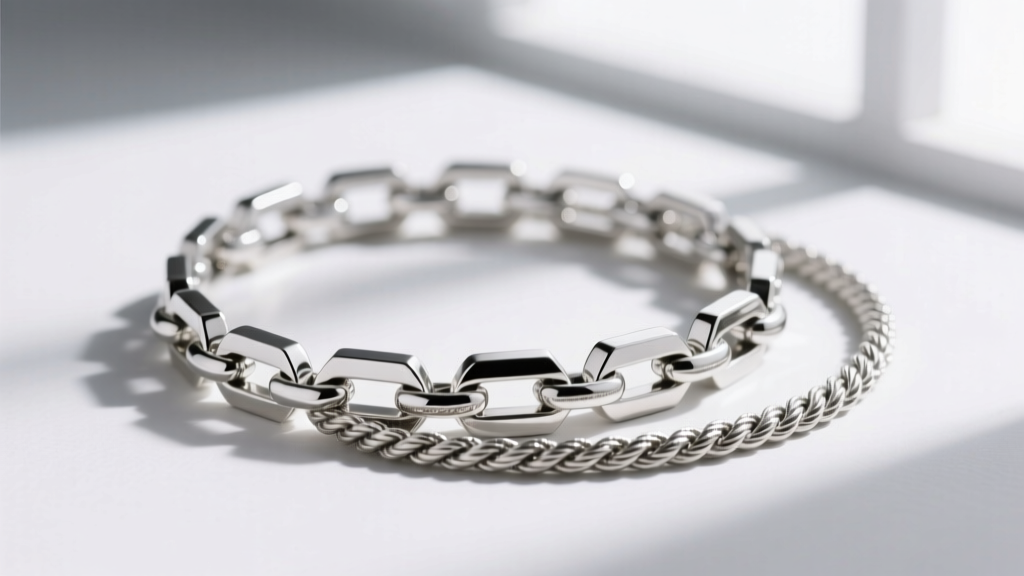
Length & Drop: The Golden Ratio of Layering
A successful silver necklace stack relies on precise length gradations. The "Golden Ratio" of layering dictates a minimum 2-inch separation between each chain. This gap prevents the clasps and links from rubbing against one another, which causes micro-abrasions and accelerates tarnishing.
The Ideal 3-Piece Stack Formula:
- Base Layer (14-16 inches): A delicate choker or collarbone-hugging chain (0.8mm cable or herringbone). This frames the face and anchors the stack.
- Mid Layer (18-20 inches): A medium-weight chain (1.5mm box or rope) that rests just below the collarbone. This is the ideal candidate for a small, lightweight pendant, such as a 5mm solitaire stone or a minimalist geometric charm.
- Anchor Layer (22-24 inches): A heavyweight, visually striking chain (3.0mm paperclip or Figaro) that draws the eye downward, elongating the torso and providing a visual foundation for the stack.
Clasp Hardware & Failure Modes
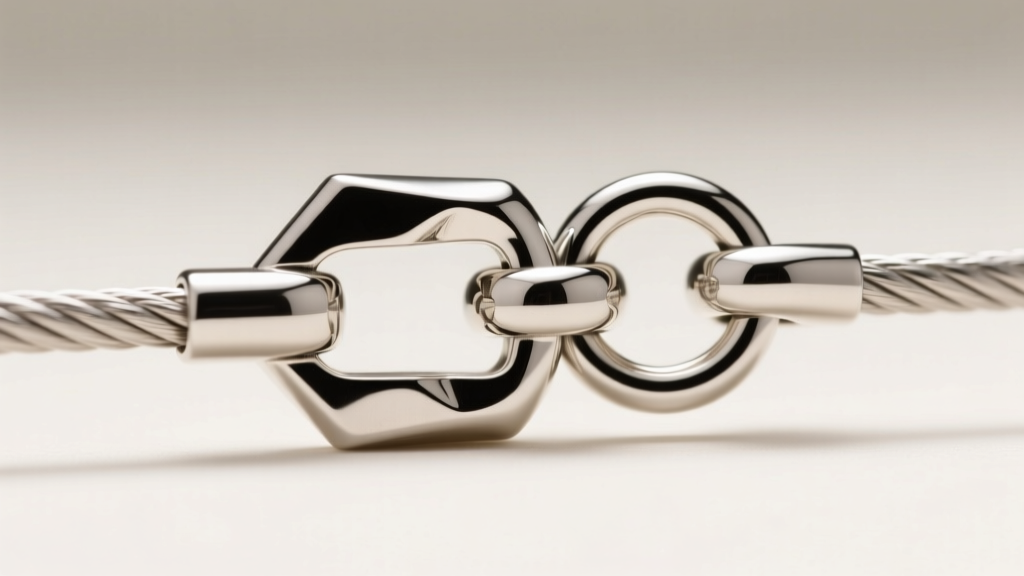
The clasp is the weakest point of any necklace, and in a stack, a failed clasp can lead to lost pieces or tangled messes. Avoid spring ring clasps for any chain over 1.5mm in thickness; the internal tension spring is prone to fatigue and failure. Instead, look for lobster claw clasps, which offer a more secure locking mechanism and are easier to manipulate when you are dealing with multiple chains at the back of your neck.
Furthermore, inspect the jump ring that connects the clasp to the chain. In high-quality silver stacks, this jump ring will be soldered shut. If it is merely pressed together, the friction from stacking will eventually work the gap open, causing the chain to separate.
Neckline Pairing: Framing the Silver Stack
The visual impact of your silver necklace stack is heavily dictated by the neckline of your garment. A 3-piece stack with a 14-inch base and 24-inch anchor requires a V-neck or deep scoop neck to allow the chains to lay flat against the skin without competing with fabric folds. For crew necks and turtlenecks, scale down to a 2-piece stack utilizing a 16-inch choker and an 18-inch mid-layer, ensuring the silver rests entirely above the garment's hemline.
Off-the-shoulder and boat neck tops provide a broad canvas of skin; here, you can experiment with wider, heavier chains like 4.0mm Figaro or Cuban links, as the expansive neckline balances the visual weight of the metal. Always consider the contrast: bright, highly polished silver pops brilliantly against dark, matte fabrics like black cotton or navy wool, while brushed or oxidized silver provides a necessary textural contrast against crisp white linens.
Pricing Tiers & Where to Invest
When building a silver necklace stack, your budget dictates the longevity and weight of your pieces.
Budget Tier ($30 - $80 per chain): Often features hollow-point links or very thin gauges (under 0.8mm). While affordable, these chains are highly susceptible to kinking and snapping. They are best reserved for the top, lightweight layer of your stack.
Mid-Tier ($80 - $250 per chain): The sweet spot for everyday stacking. Brands in this range offer solid links, reliable lobster clasps, and proper 925 stamping. You can expect chains in the 1.0mm to 2.5mm range that offer substantial drape without feeling like armor.
Luxury & Artisan ($250+ per chain): Here you are paying for heavyweight solid silver (often 3.0mm to 6.0mm), hand-forged links, and custom-machined clasps. These anchor pieces are designed to be the focal point of your stack and will last generations if properly maintained.
Maintenance: Keeping Silver Stacks Tarnish-Free
Sterling silver tarnishes due to a chemical reaction between the copper alloy and sulfur compounds in the air and on your skin. When chains are stacked, the trapped moisture and friction between the links can accelerate this process, leading to dark, stubborn oxidation in the crevices of the metal.
To maintain your stack, wipe each chain individually with a microfiber cloth after wearing to remove skin oils and lotions. For deeper cleaning, use a dedicated silver polishing cloth infused with anti-tarnish compounds. Avoid liquid silver dips on chains with oxidized details or gemstone accents, as the harsh chemicals will strip the intentional patina and damage porous stones like turquoise or opal. Store your stacked chains hanging vertically or laid completely flat in an airtight bag with a 3M anti-tarnish strip to halt the sulfur reaction.
Troubleshooting: The Baby Powder Untangling Method
Even with perfect length gradations, silver chains can occasionally knot together. When this happens, do not pull. The tensile strength of a 1.0mm silver chain is surprisingly low, and pulling will permanently stretch or snap the links. Instead, lay the tangled stack on a flat, dark surface. Sprinkle a generous amount of baby powder or talcum powder over the knot. The powder acts as a dry lubricant, reducing the friction coefficient between the silver links. Use two fine sewing needles to gently tease the center of the knot outward. Once separated, use a soft brush to remove the powder and polish the chains before wearing.


