Silver Teardrop Necklace Materials: Sterling vs. Fine Silver Guide
Compare sterling, fine, and Argentium silver for your silver teardrop necklace. Expert guide on durability, tarnish resistance, and 2026 pricing.

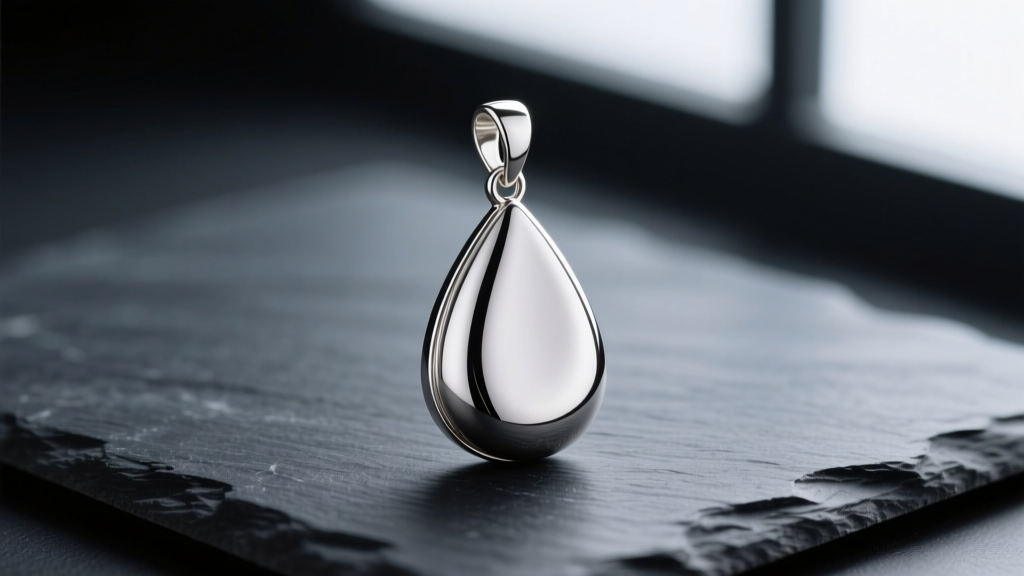
The Physics of the Teardrop Silhouette
When selecting a silver teardrop necklace, the silhouette is only half the equation. The teardrop shape—often referred to in gemology as a pear or briolette cut when faceted—presents a unique structural challenge. Unlike a symmetrical coin or bezel-set pendant that rests flat against the sternum, a teardrop pendant hangs from its narrowest point. This creates a pronounced pendulum effect, concentrating kinetic friction at the bail and the top curve of the pendant. Consequently, the metallurgical properties of the silver alloy you choose will dictate not just the necklace's luster, but its long-term structural survival.
In 2026, the jewelry market offers three primary silver categories for cast and fabricated pendants: Fine Silver (999), Sterling Silver (925), and the increasingly dominant Argentium Silver (935/960). Understanding the Vickers hardness (HV), tarnish profiles, and casting behaviors of these alloys is essential for making an informed investment.
Metallurgical Breakdown: Fine, Sterling, and Argentium
Fine Silver (999): The Hypoallergenic Standard
Fine silver consists of 99.9% pure silver. According to the Gemological Institute of America (GIA), fine silver possesses a brilliant, milky-white luster that is unmatched by its alloyed counterparts. However, its Vickers hardness sits at a mere 25-30 HV, making it exceptionally soft. For a silver teardrop necklace, fine silver is best suited for heavy, solid-cast pendant bodies where the thickness compensates for the lack of tensile strength. It is entirely immune to sulfur-based tarnish and is the premier choice for wearers with severe contact dermatitis or copper allergies.
Sterling Silver (925): The Traditional Workhorse
Sterling silver is an alloy comprising 92.5% silver and 7.5% copper. The addition of copper increases the hardness to approximately 60-70 HV, providing the necessary rigidity for intricate teardrop filigree and delicate chain integration. The drawback is the copper content, which reacts with atmospheric sulfur and human sweat to form silver sulfide (tarnish). Furthermore, when jewelers solder the bail onto a sterling teardrop pendant, the copper can oxidize, creating a stubborn purple-black stain known as firescale, which must be polished away or masked with plating.
Argentium Silver (935/960): The Modern Marvel
Argentium silver replaces a portion of the copper with the metalloid germanium. As detailed by Argentium Silver International, the germanium migrates to the surface and forms a transparent, self-healing layer of germanium dioxide. This layer effectively blocks sulfur and oxygen from reaching the silver, granting Argentium profound tarnish resistance. With a hardness that can reach 120 HV when precipitation-hardened in a kiln, Argentium is currently the superior metallurgical choice for the high-stress bail area of a teardrop pendant.
2026 Material Properties Comparison Chart
| Alloy Grade | Purity | Hardness (HV) | Tarnish Resistance | 2026 Market Premium | Best Teardrop Application |
|---|---|---|---|---|---|
| Fine Silver | 99.9% | 25 - 30 | Excellent (Immune) | Base Spot Price + 5% | Solid, heavy-cast minimalist teardrops |
| Sterling Silver | 92.5% | 60 - 70 | Poor (Requires upkeep) | Base Spot Price + 12% | Intricate wire-wrapped or filigree teardrops |
| Argentium 935 | 93.5% | 80 - 120 | Superior | Base Spot Price + 25% | Daily-wear teardrops with soldered bails |
The Bail Bottleneck: Friction and Wear
The most common failure point in any silver teardrop necklace is the bail—the loop that connects the pendant to the chain. Because the teardrop's center of gravity rests in the wide 'belly' of the pendant, every step the wearer takes causes the pendant to swing, driving the chain back and forth through the bail hole.
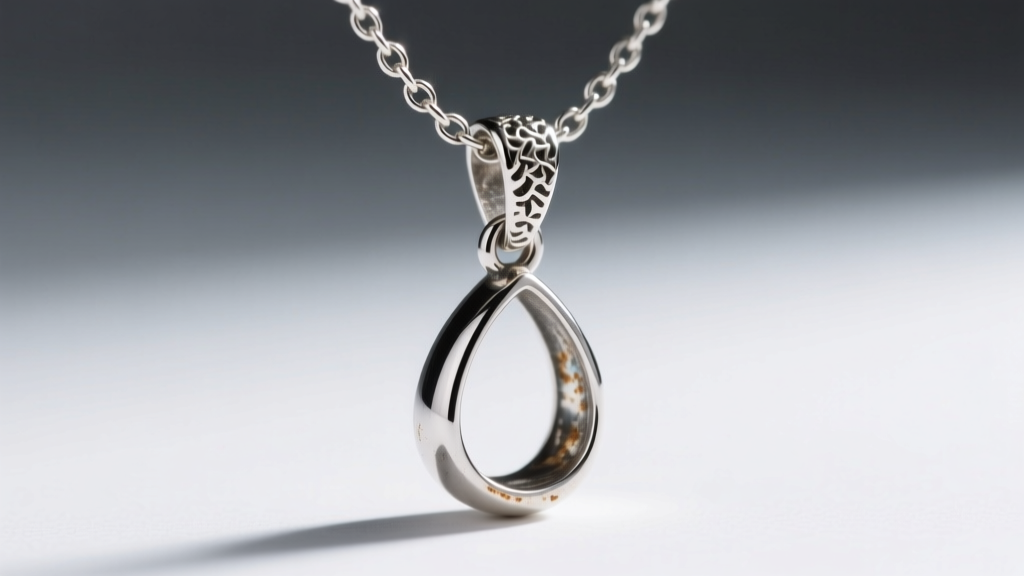
If the bail is cast in fine silver, this constant friction from a standard 1.2mm or 1.5mm cable chain will act like a saw, eventually wearing through the metal and causing the loss of the pendant. Master jewelers mitigate this by fabricating the pendant body in fine or sterling silver, but soldering on a hardened Argentium or heavy-gauge sterling bail. When shopping, always inspect the inner diameter of the bail; it should be at least 1.5 times the thickness of your chain to allow for a smooth, low-friction glide.
Rhodium Plating and Surface Finishes
Many commercial sterling silver teardrop necklaces are plated with rhodium, a platinum-group metal, to prevent tarnish and provide a bright, chrome-like finish. In 2026, standard rhodium plating thickness for pendants ranges from 0.75 to 1.0 microns. While this creates a stunning initial mirror finish on the curved belly of the teardrop, it fundamentally alters the optical properties of the silver.
'Rhodium masks the natural, warm depth of silver. For a teardrop pendant meant to catch and scatter light organically, an un-plated, high-polish Argentium finish often yields a more authentic and luminous reflection.' — Master Bench Jeweler Insights, Jewelers of America
If you prefer a matte or satin finish on your teardrop, avoid rhodium plating entirely. The plating process requires a highly polished base; applying rhodium over a brushed finish will result in a muddy, uneven appearance that quickly wears off the high points of the pendant.
Care, Patina, and Longevity
Maintaining the pristine curve of a silver teardrop requires alloy-specific care routines. Using the wrong chemical dip can permanently ruin the surface tension and luster of the metal.
- Fine Silver: Clean with warm water, mild dish soap, and a microfiber cloth. Never use abrasive polishing pastes, as the 25 HV hardness means you will easily scratch the surface and alter the precise geometry of the teardrop's point.
- Sterling Silver: Use a treated silver polishing cloth for regular maintenance. Avoid liquid thiourea-based 'silver dips' on teardrops with intentional oxidation (blackening) in the recessed textures, as the dip will strip the antique finish in seconds.
- Argentium Silver: Requires only occasional wiping with a soft cloth to remove skin oils. The germanium dioxide layer is self-repairing, meaning that even if you lightly polish the pendant, the tarnish resistance will naturally regenerate.
Final Verdict: Which Silver Suits Your Teardrop?
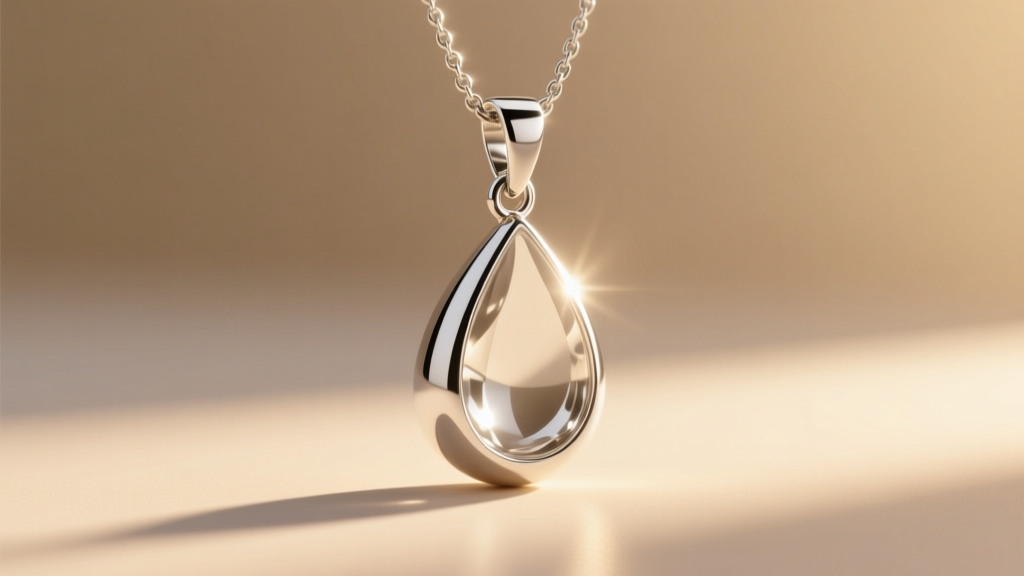
Your choice of material should align with how you intend to wear the piece. If you are purchasing a silver teardrop necklace as a heavy, occasional-wear statement piece and have sensitive skin, Fine Silver (999) offers unparalleled purity and hypoallergenic safety. If you desire intricate, lace-like metalwork woven into the teardrop shape, traditional Sterling Silver (925) remains the most cost-effective and structurally viable option, provided you commit to routine polishing. However, for a modern, everyday pendant that demands high structural integrity at the bail and resists the tarnish caused by daily wear, Argentium Silver is the undisputed champion of 2026 metallurgy. Always verify the hallmark—look for the '999', '925', or the distinctive Argentium unicorn stamp—before finalizing your investment.


