Simple Necklace Tattoo Guide: 2026 Collarbone Ink Trends
Explore the 2026 simple necklace tattoo trend. Compare fine-line collarbone ink to delicate gold chains, covering pain scales, needle sizes, and costs.

The Rise of Permanent Jewelry: Why Ink is Replacing Gold in 2026
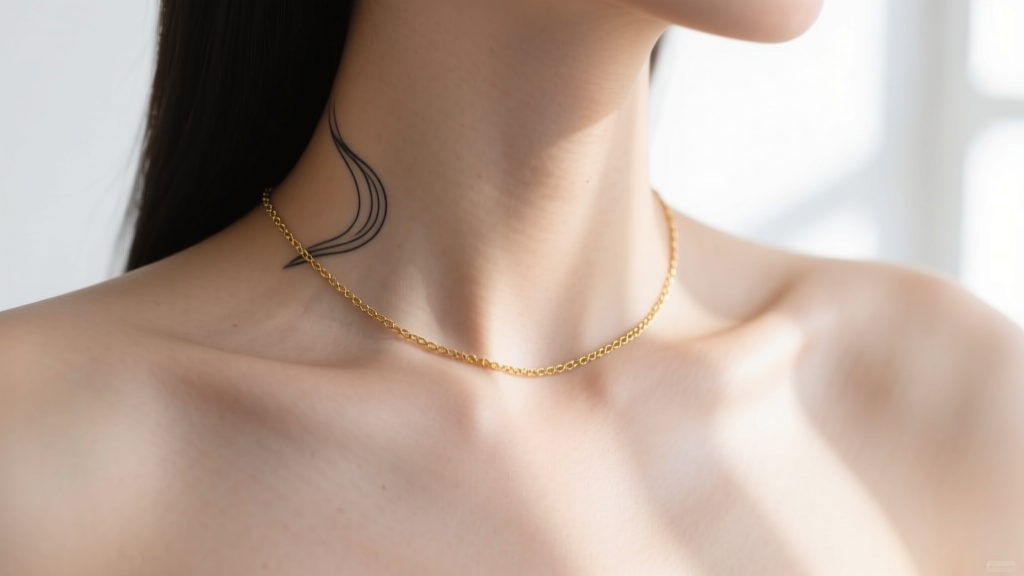
In the evolving landscape of body modification and fine jewelry, the simple necklace tattoo has emerged as a defining aesthetic of 2026. As the 'quiet luxury' movement matures, consumers are shifting away from conspicuous, heavy gold chains toward ultra-fine, permanent body art that mimics the drape and delicacy of high-end jewelry. This trend bridges the gap between traditional accessorizing and tattoo culture, offering the illusion of a layered 14k gold cable chain or a velvet choker without the hassle of tangled clasps, metal allergies, or the anxiety of losing a valuable heirloom.
According to industry analyses, the demand for micro-realism and fine-line tattoos has surged by over 40% since 2023, with collarbone and sternum placements leading the charge. Unlike traditional bold tribal or blackout tattoos, a simple necklace tattoo requires an artist with a profound understanding of skin elasticity, needle grouping, and anatomical topography. The goal is to create an optical illusion: ink that appears to rest on top of the skin like a physical chain, catching the light and shadow of the collarbone hollows.
Anatomy of Placement: Pain Scales and Topography
Choosing where to place your simple necklace tattoo is a critical decision that impacts not only the visual outcome but also the pain tolerance required and the longevity of the ink. The skin thickness varies dramatically across the neck, chest, and back, which dictates how the ink settles into the dermis over time.
| Placement Zone | Pain Level (1-10) | Healing Time | Best Chain Style Mimicked | Skin Thickness & Blowout Risk |
|---|---|---|---|---|
| Collarbone (Clavicle) | 5/10 | 10-14 Days | Cable, Fox, or Thread Chain | Medium; moderate risk over the bone ridge |
| Sternum (Breastbone) | 8/10 | 14-21 Days | Ornate Pendant, Lariat | Thin; high risk of ink migration if needle depth is poor |
| Nape of Neck | 3/10 | 7-10 Days | Choker, Curb, or Ribbon | Thick; very low risk, excellent for crisp lines |
| Throat / Front Neck | 7/10 | 14 Days | Delicate Lariat, Single Drop | Extremely thin; requires a highly specialized artist |
As noted by dermatological experts, the sternum and throat areas have a very thin epidermal layer sitting directly over bone and cartilage. This makes the FDA guidelines on tattoo safety highly relevant; improper needle depth in these areas can cause a 'blowout,' where ink bleeds into the hypodermis, creating a bruised, blurred effect that ruins the delicate chain illusion.
Design Blueprints: Mimicking Fine Jewelry Chains in Ink
To achieve the illusion of a physical necklace, tattoo artists must abandon standard tattoo liners and utilize specialized micro-needles. The magic of a simple necklace tattoo lies in the line weight. A standard 14k gold thread chain is roughly 0.8mm to 1.2mm in width. To replicate this, artists use specific needle configurations:
- 1RL (Single Needle): Used for ultra-fine 0.3mm to 0.5mm lines. This mimics the nearly invisible thread chains that hold diamond solitaire pendants. It requires a slow hand and multiple passes to pack the ink solidly without scarring the skin.
- 3RL (3-Round Liner): The industry standard for mimicking 1mm to 1.5mm cable and box chains. It provides enough ink saturation to look dark and crisp, simulating the shadow a real chain casts on the collarbone.
- 5RL / 7RL: Rarely used for the chain itself, but essential for creating the 'clasp' or thicker curb-chain segments near the nape of the neck.
Artists often employ 'negative space' techniques, leaving microscopic gaps in the ink line to simulate the individual links of a chain catching the light. This stippling effect tricks the eye into seeing three-dimensional metallic links rather than a flat, continuous line of black ink.
The 'Pendant' Illusion: Adding Dimension to Flat Ink
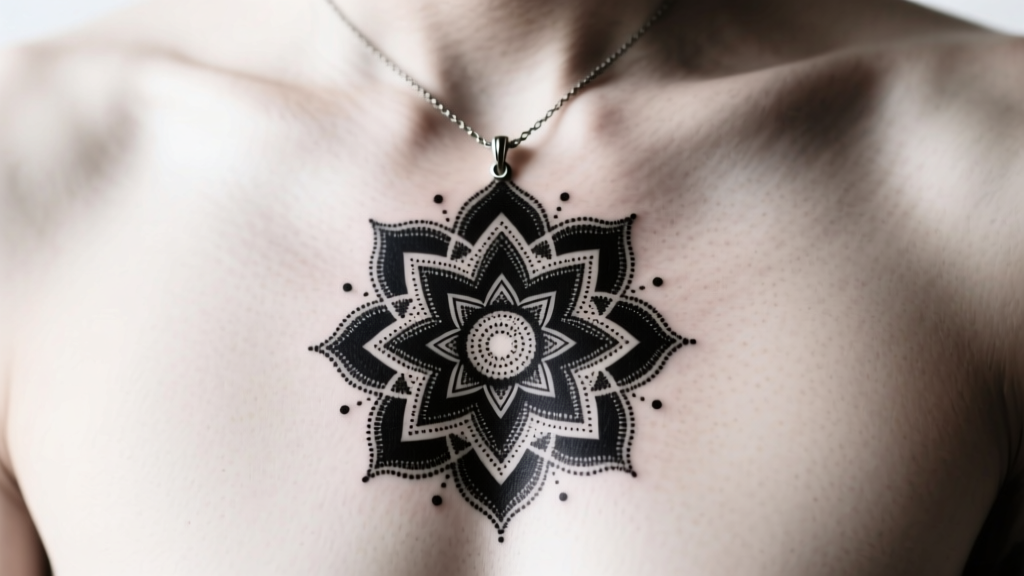
A chain alone is beautiful, but the addition of a pendant elevates the simple necklace tattoo into a focal piece. In 2026, the trend leans heavily into micro-dotwork and geometric pendants placed precisely in the sternal notch or the hollow of the throat.
Creating the illusion of a heavy gold or gemstone pendant on the chest requires an understanding of light mapping. Artists use soft gray washes (diluted black ink) to create a drop-shadow directly beneath the pendant design. This shadow anchors the 'jewelry' to the body, making it appear as though it is resting against the skin rather than floating on it. Mandala-inspired pendants, tiny minimalist crosses, and celestial motifs (like crescent moons and stars) remain the most requested pendant styles, as their symmetry forgives minor skin shifts during the healing process.
Real-World Costs: Fine Jewelry vs. Tattoo Artist Pricing
One of the primary drivers of the simple necklace tattoo trend is economic. With the price of raw gold reaching historic highs in the mid-2020s, the cost of a solid 14k gold chain has become prohibitive for many fashion-conscious consumers. Let's break down the financial comparison between purchasing a physical fine jewelry necklace and commissioning a permanent one.
- 14k Solid Gold Chain (16-inch, 1mm width): $250 - $450 (Excluding pendants)
- 14k Solid Gold Pendant: $150 - $600+
- Fine-Line Tattoo Specialist (2-hour session): $200 - $400 (Includes custom chain and pendant design)
- Annual Touch-up (Optional): $50 - $100
While the upfront costs are remarkably similar, the tattoo eliminates the risk of losing a $500 asset during travel, swimming, or sleep. However, it is crucial to never bargain-hunt for a fine-line tattoo. An artist charging $80 for a collarbone chain is likely using a standard 5RL or 7RL needle, which will result in a thick, bold line that looks like a tribal band rather than a delicate jewelry piece.
Aftercare and Fading: Protecting Your Permanent Collarbone Chain
The collarbone and chest are high-exposure areas for ultraviolet (UV) radiation, which is the primary enemy of tattoo longevity. UVA rays penetrate the dermis and break down the carbon molecules in black ink, causing a crisp simple necklace tattoo to fade into a blurry, blueish-gray smudge over a period of 3 to 5 years if left unprotected.
The American Academy of Dermatology strongly recommends applying a broad-spectrum SPF 50+ sunscreen to all exposed tattoos whenever you are outdoors. For a necklace tattoo, this means making sunscreen a daily part of your morning skincare routine, even in winter or when wearing sheer fabrics. Additionally, because the collarbone area experiences high friction from clothing straps, seatbelts, and handbag chains, the initial 14-day healing phase requires wearing loose, soft cotton garments to prevent the scabs from being prematurely ripped away, which will pull the ink out of the dermis and leave gaps in your 'chain'.
By understanding the anatomical challenges, needle requirements, and strict aftercare protocols, you can ensure your simple necklace tattoo remains a crisp, elegant, and permanent accessory for decades to come. For more insights on skin health and UV protection, refer to the Skin Cancer Foundation's comprehensive guides on daily sun defense.


