Single Black Pearl Necklace: Tahitian vs Dyed Pearl Guide
Compare Tahitian, dyed freshwater, and imitation options for your single black pearl necklace. Expert guide on nacre, luster, and pricing.

The Allure of the Dark Gem: Why Material Origin Matters
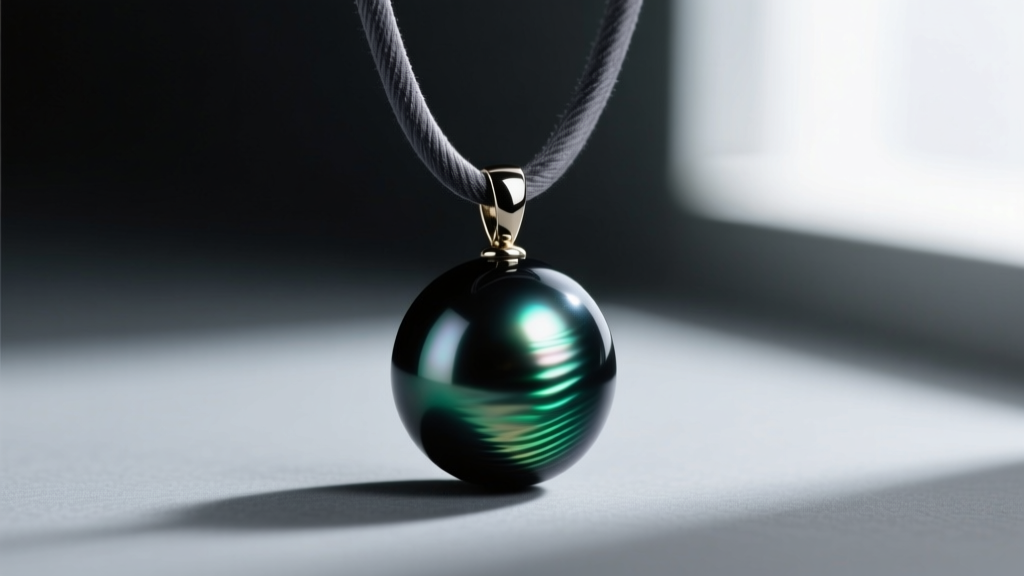
A single black pearl necklace is a masterclass in minimalist elegance. Unlike a traditional white strand that relies on uniformity, a solitary dark pearl commands attention through its mysterious luster, complex overtones, and striking contrast against the skin. However, as we navigate the 2026 fine jewelry market, the term 'black pearl' has become heavily diluted. Retailers frequently use it to describe everything from naturally dark Tahitian gems to chemically altered freshwater stones and even glass beads coated in synthetic guanine.
Understanding the material properties of your single black pearl necklace is not just an academic exercise; it directly dictates the piece's longevity, value, and visual depth. According to the Gemological Institute of America (GIA), the fundamental difference between pearl types lies in the mollusk species, the cultivation environment, and the post-harvest treatments applied. This guide will deconstruct the three primary materials used in black pearl pendants, providing you with the technical knowledge to make an informed investment.
Material Breakdown: Tahitian vs. Freshwater vs. Imitation
1. Natural-Color Tahitian Pearls (The Gold Standard)
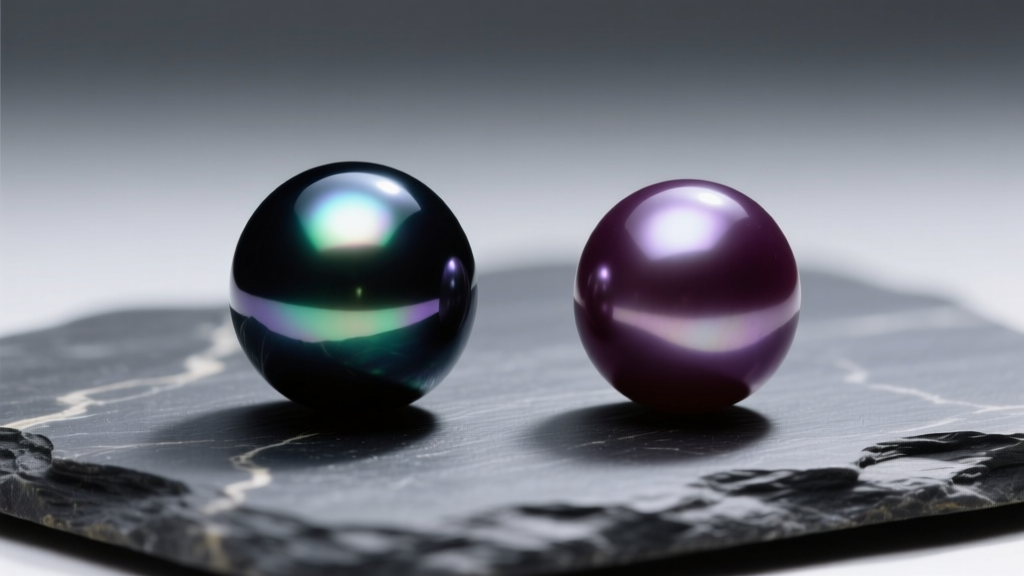
True black pearls are born from the Pinctada margaritifera oyster, native to the atolls of French Polynesia. These oysters possess a dark, charcoal-colored mantle tissue, which naturally secretes dark nacre. A high-quality Tahitian pearl is never purely, flatly black. Instead, its base body color ranges from light grey to deep charcoal, acting as a canvas for secondary overtones like peacock (a mix of green, pink, and purple), eggplant, or pistachio.
By law, the French Polynesian government mandates a minimum nacre thickness of 0.8mm for export. This thick nacre layer is crucial; it ensures the pearl's durability and allows light to penetrate deeply, refracting through microscopic aragonite platelets to create a sharp, mirror-like luster. For a single black pearl necklace featuring a 10mm to 12mm Tahitian pendant, expect to pay between $400 and $1,500, depending on the surface cleanliness and overtone rarity.
2. Dyed Freshwater Pearls (The Budget Alternative)
Freshwater pearls are cultivated in Hyriopsis mussels, primarily in China. While these mussels produce stunning whites, peaches, and lavenders, they do not naturally produce black pearls. To meet market demand, manufacturers subject white or grey freshwater pearls to post-harvest treatments. The most common method involves soaking the pearls in a silver nitrate solution, followed by exposure to light or gamma irradiation. This chemical reaction darkens the conchiolin (the organic 'glue' between nacre layers), resulting in a uniform, jet-black appearance.
While a dyed freshwater single black pearl necklace is highly accessible (typically pricing between $30 and $120), it lacks the optical depth of a Tahitian gem. The dye often absorbs light rather than reflecting it, resulting in a flatter, sometimes chalky luster. Furthermore, the dye can degrade over time if exposed to harsh cosmetics or prolonged UV radiation.
3. Imitation Shell Pearls (The Synthetic Choice)
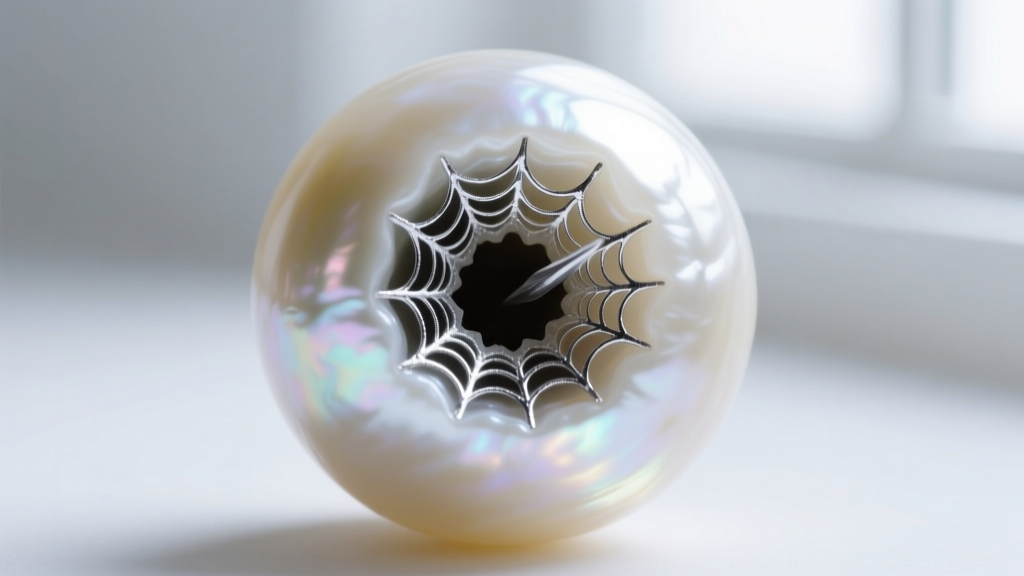
Imitation pearls, such as the famous Majorica brand, contain no organic nacre. They are manufactured using a glass, plastic, or polished shell bead core that is repeatedly dipped in 'essence d'orient'—a solution derived from fish scales (guanine) or synthetic mica. While modern manufacturing can create a highly reflective surface, the material properties are entirely different from organic gems. They are perfectly spherical, entirely blemish-free, and completely uniform in color. A single black pearl necklace made of imitation materials will cost under $50, but it holds zero intrinsic gemological value.
Side-by-Side Material Comparison Chart
| Property | Tahitian (Natural) | Freshwater (Dyed) | Shell Pearl (Imitation) |
|---|---|---|---|
| Mollusk / Core | Pinctada margaritifera | Hyriopsis mussel | Glass / Shell bead |
| Color Origin | Natural mantle tissue | Silver nitrate / Irradiation | Synthetic dyes in coating |
| Nacre Thickness | 0.8mm to 3.0mm+ | 0.5mm to 2.0mm | N/A (Surface coating only) |
| Typical Size Range | 8mm - 16mm | 6mm - 11mm | 4mm - 14mm |
| Price (Single Pendant) | $300 - $2,500+ | $30 - $150 | $15 - $60 |
| Tooth Test Result | Gritty / Sandy | Gritty / Sandy | Perfectly Smooth |
The Science of Luster: Aragonite and Conchiolin
To truly appreciate a single black pearl necklace, one must understand the gemology of luster. The Cultured Pearl Association of America (CPAA) notes that luster is the result of light reflecting off the surface and refracting through the layers of nacre. Nacre is a composite material consisting of hexagonal platelets of aragonite (a form of calcium carbonate) held together by conchiolin (an organic protein).
In naturally dark Tahitian pearls, the conchiolin contains dark pigments. When light enters the pearl, it bounces between the translucent aragonite layers and the dark conchiolin. This interference creates 'orient'—the iridescent play of colors that seems to float just below the surface. In dyed freshwater pearls, the silver nitrate treatment artificially darkens the conchiolin throughout the entire stone. Because the dye alters the refractive index of the protein layers, the light cannot penetrate as deeply, which is why dyed pearls often look opaque and lack the signature 'glow from within' that defines a premium Tahitian pendant.
Stringing Mechanics: Matching the Cord to the Pearl
The material of the necklace cord is a critical, yet frequently overlooked, component of a single black pearl necklace. If you are restringing a pendant or purchasing a bespoke piece, the cord material and color must be meticulously chosen.
- Silk Cord (Griffin Brand): For pearls with standard 0.8mm to 1.0mm drill holes, a size #4 or #6 100% natural silk cord is ideal. Silk knots beautifully and provides a soft, traditional drape. Critical Rule: Always use dark grey, charcoal, or black silk. If you string a dark pearl on white silk, the white cord will show through the drill hole, creating an unsightly 'white line' halo that ruins the visual continuity of the pendant.
- Synthetic Cords (Power Pro / Beadalon): For larger, heavier Tahitian pearls (13mm+), silk can stretch and degrade over time due to the weight and natural skin oils. Braided polyethylene gel-spun threads offer immense tensile strength without stretching. These are typically finished with a glued metallic end cap and a sterling silver or 14k gold bail.
- Metal Chains: If mounting the pearl on a metal chain, ensure the bail (the metal loop holding the pearl) has a smooth, polished interior. Rough metal edges inside the bail will slowly ream out the pearl's drill hole, causing irreversible structural damage to the nacre.
How to Spot a Dyed Pearl in 3 Steps
When shopping for a single black pearl necklace, employ these three gemological troubleshooting steps to verify the material:
- The Drill Hole Inspection: Use a 10x jeweler's loupe to examine the drill hole. In a dyed pearl, you will often see a dark, concentrated ring of dye pooled just inside the hole or along a structural crack. A natural Tahitian pearl will show distinct, concentric layers of nacre, much like the growth rings of a tree, with no unnatural color pooling.
- The Tone Uniformity Test: Roll the pearl under bright, diffused lighting. Natural black pearls exhibit slight color variations, subtle blemishes, and shifting overtones. If the pearl is a perfectly uniform, flat black with zero color variation, it is almost certainly dyed or imitation.
- The Price-to-Size Ratio: A 12mm, clean, naturally black Tahitian pearl is a rare gemological event. If a retailer is offering a 12mm 'black pearl' pendant on a silver chain for $85, the material is definitively dyed freshwater or synthetic. True Tahitian pearls of that size command a significant premium.
Final Verdict: Investing in Your Necklace
Choosing the right single black pearl necklace depends entirely on your budget and your expectations for longevity. If you seek an heirloom-quality piece with breathtaking peacock overtones and exceptional durability, a naturally colored Tahitian pearl is the undisputed champion. However, if you desire the aesthetic of a dark pearl for seasonal fashion without the premium investment, a high-quality dyed freshwater pearl strung on a dark silk cord offers a respectable, budget-friendly alternative. By understanding the underlying material science, you can confidently select a piece that aligns with your personal style and quality standards.


