Skeleton Necklace Value Guide: Sterling Silver vs. Plated Metals
Discover the true value of a skeleton necklace. Compare sterling silver, gold vermeil, and plated options to avoid overpaying for gothic jewelry.

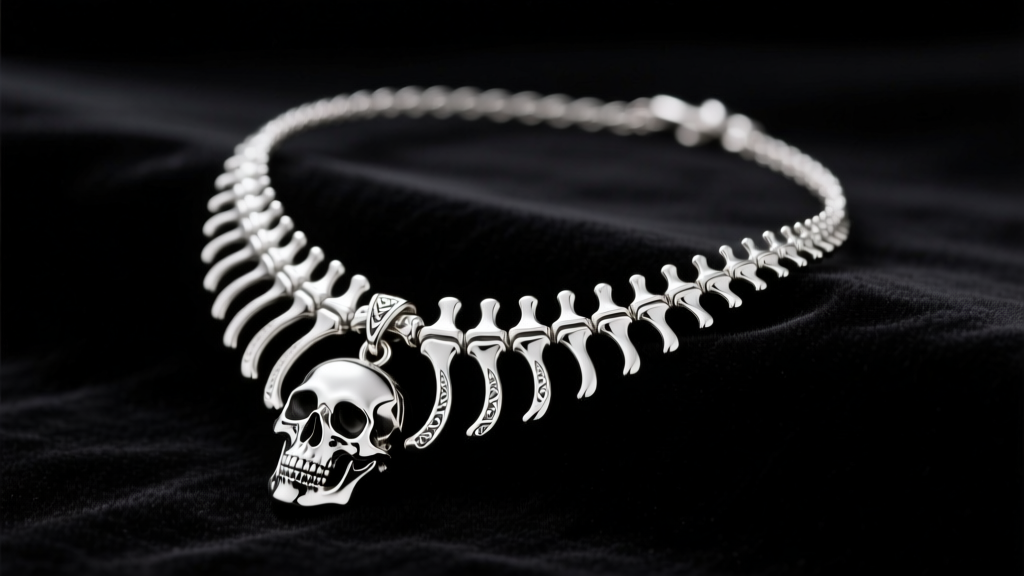
The Anatomy of Skeleton Necklace Pricing
The market for a skeleton necklace is vast, polarized between $12 fast-fashion trinkets and $2,500 artisan-crafted anatomical masterpieces. As we navigate the jewelry landscape in 2026, the gothic and memento mori aesthetics have matured from niche subcultures into mainstream high fashion. However, this surge in demand has flooded the market with deceptive pricing and subpar metallurgy. Understanding the true value of these pieces requires looking past the macabre aesthetic and examining the casting methods, material grades, and structural integrity of the chain and clasp mechanics.
When evaluating a skeleton necklace, the primary cost drivers are the articulation of the design and the metal purity. A static, solid-cast skull pendant requires minimal labor and simple die-striking or basic lost-wax casting. Conversely, an articulated skeleton spine—where each individual vertebra is cast separately and assembled with microscopic jump rings—demands dozens of hours of bench work. This labor disparity is why a high-quality articulated piece commands a premium, while cheap imitations often glue or solder joints that snap within weeks of daily wear.
Material Breakdown: Where Your Money Actually Goes
The metal composition of your necklace dictates not only its upfront cost but its lifespan, skin safety, and long-term value retention. Here is a deep dive into the materials dominating the current market.
Base Metals & Plating (The Budget Trap)
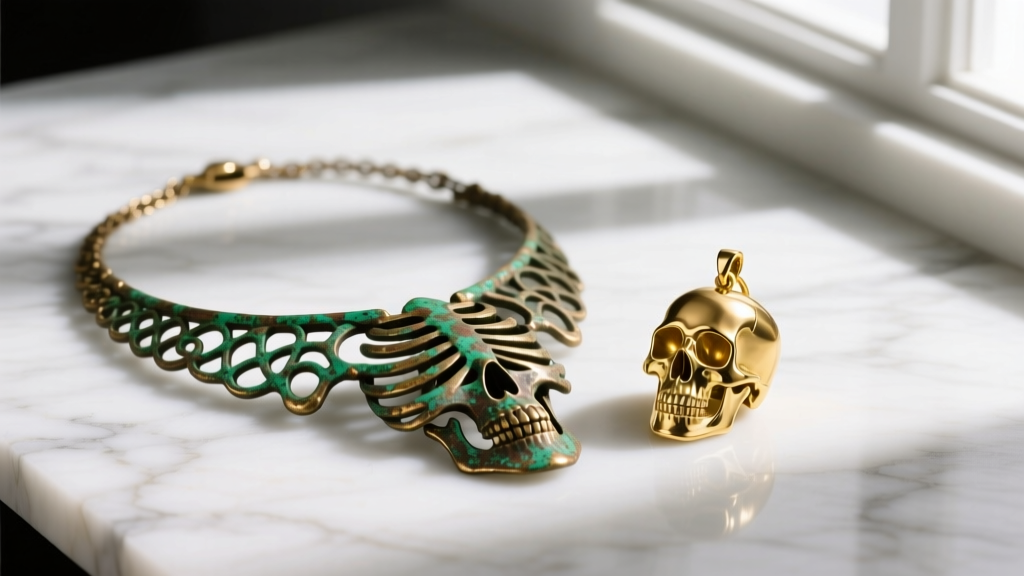
Pieces priced between $10 and $45 are typically crafted from zinc alloys, brass, or what is deceptively marketed as 'Tibetan silver.' According to the Federal Trade Commission Jewelry Guides, sellers must accurately disclose metal content, yet offshore marketplaces frequently bypass these regulations. These base metals are often 'flash plated' with a microscopic layer of silver or gold (usually less than 0.1 microns thick). Once this plating wears off from friction and skin acidity, the underlying copper and nickel are exposed. This leads to the dreaded 'green neck' effect (copper oxidation) and severe contact dermatitis from nickel exposure. The failure mode here is rapid and irreversible.
Solid Sterling Silver (The Sweet Spot)
For buyers seeking the best intersection of durability, prestige, and budget, solid .925 sterling silver remains the undisputed champion. Priced generally between $60 and $180, sterling silver offers the weight and luster of precious metal without the exorbitant cost of gold. The Gemological Institute of America (GIA) notes that while sterling silver (92.5% pure silver, 7.5% copper) is prone to tarnishing due to the copper content, this is a surface-level reaction that can be easily reversed with a polishing cloth. When buying a sterling silver skeleton necklace, ensure the piece is stamped with '.925' and features a rhodium or platinum flash to delay initial tarnishing.
Gold Vermeil & Solid Gold (The Investment Tier)
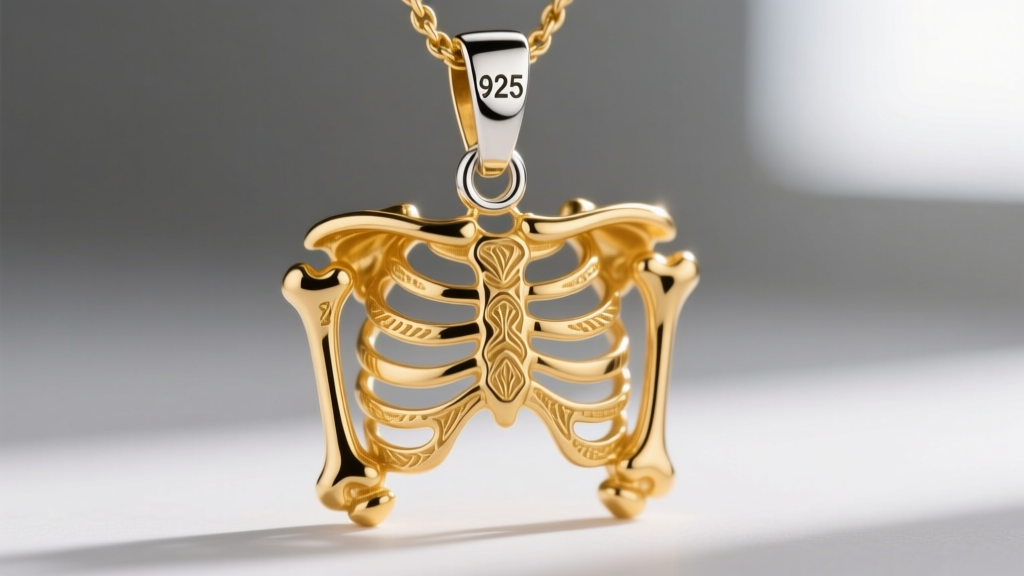
If you prefer the warmth of gold, you must understand the critical difference between gold-plated brass and gold vermeil. True vermeil requires a base of solid sterling silver plated with at least 2.5 microns of 10k, 14k, or 18k gold. Priced from $120 to $350, vermeil offers a luxurious aesthetic with a precious metal core. For heirloom-quality pieces, solid 14k gold ($400 to $1,500+) is the ultimate choice. 14k is preferred over 18k for intricate skeleton designs because the higher alloy content provides superior tensile strength, preventing the delicate ribs and finger bones from bending or snapping under stress.
Price-to-Value Matrix: What You Should Pay
To help you benchmark your next purchase, we have compiled a comprehensive value matrix based on current market averages for standard-sized skull and spine pendants (excluding heavy diamond or gemstone pavé settings).
| Material Grade | Expected Price Range | Estimated Lifespan | Primary Failure Modes |
|---|---|---|---|
| Zinc Alloy / Flash Plated | $12 - $45 | 3 - 6 Months | Plating rubs off, skin turns green, jump rings snap. |
| Brass with Heavy Gold Plate | $50 - $90 | 1 - 2 Years | Base metal pitting, irreversible tarnish, clasp spring failure. |
| Solid .925 Sterling Silver | $60 - $180 | Lifetime (with care) | Surface tarnish, delicate articulation pins bending. |
| Gold Vermeil (2.5+ microns) | $120 - $350 | 5 - 10 Years | Gold layer eventually wears on high-friction edges. |
| Solid 14k / 18k Gold | $400 - $1,500+ | Generational Heirloom | Loss of antique patina if over-polished. |
Identifying Quality: Hallmarks, Clasps, and Chain Mechanics
A skeleton necklace is only as strong as its weakest mechanical link. When assessing value, inspect the hardware with the same scrutiny as the pendant itself.
The Clasp Mechanism: Avoid spring ring clasps on any pendant weighing over 15 grams. The internal steel springs in cheap spring rings are notorious for fatiguing and failing, dropping your pendant onto hard surfaces. A high-quality lobster claw clasp with a solid, soldered jump ring is non-negotiable for heavy, articulated skeleton spines.
Chain Selection: The chain must complement the visual weight of the pendant. A delicate 1mm cable chain will look disproportionate and snap easily under a solid brass ribcage. Look for 2mm to 3mm rolo or curb chains. Furthermore, ensure the chain links are soldered shut. Unsoldered links will pull apart the moment the necklace catches on a sweater or jacket collar.
Casting Porosity: Inspect the surface of the skull or bones under good lighting. Cheap lost-wax castings often suffer from porosity—tiny pinholes or pitting on the metal surface caused by trapped gas during the cooling process. High-end jewelers use vacuum-assisted casting or centrifugal machines in controlled environments to ensure a dense, pore-free finish that takes a mirror polish beautifully.
The Verdict: Matching Your Budget to the Right Piece
Ultimately, the value of a skeleton necklace is dictated by your wear habits and material sensitivities. If you are purchasing for a one-off costume event or seasonal gothic aesthetic, a $30 brass piece is acceptable, provided you remove it before showering and apply a barrier like clear nail polish to the interior to prevent skin discoloration.
However, for daily wearers who view their jewelry as an extension of their personal style, solid .925 sterling silver is the undisputed baseline for acceptable value. It offers the necessary weight, hypoallergenic properties, and structural integrity to support complex, articulated designs. For those with a higher budget seeking a permanent fixture in their collection, a solid 14k gold vermeil or solid gold piece ensures that your memento mori will outlast you, aging gracefully into a genuine family heirloom.


