Who Is the Author of the Necklace? Tracing Jewelry Maker's Marks
Asking who is the author of the necklace? In jewelry, the author is the maker. Learn to decode hallmarks, purity stamps, and trace your piece's origin.

The Literary Query vs. The Jewelry Reality
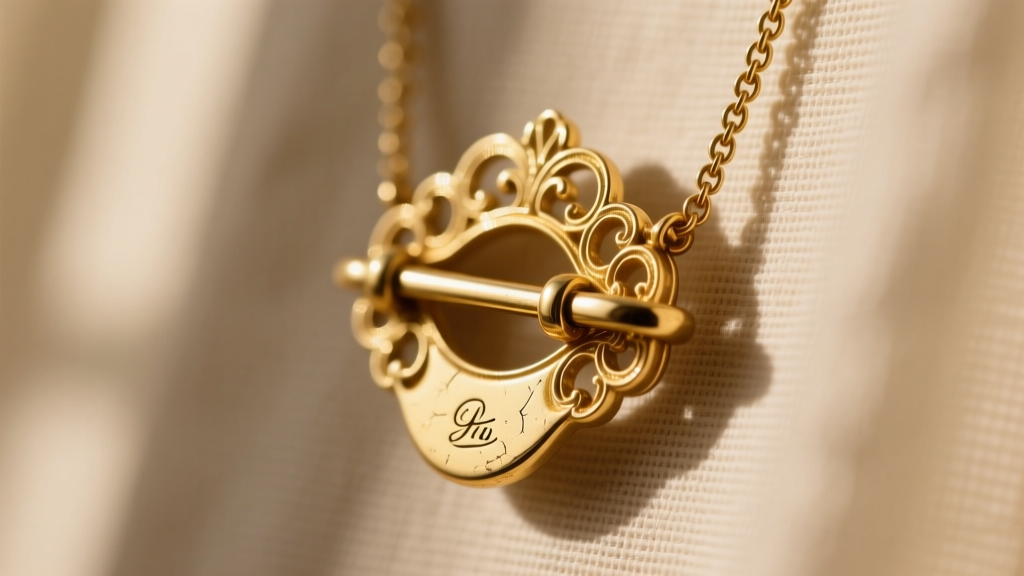
If you are a literature student frantically searching the web, the answer to 'who is the author of the necklace?' is Guy de Maupassant, who penned the famous 1884 short story La Parure. However, if you are a jewelry collector, vintage shopper, or heirloom inheritor holding a physical gold or silver chain and asking this exact question, you are looking for something entirely different. In the world of fine jewelry, the 'author' is the maker—the artisan, manufacturer, or assay office responsible for bringing the piece to life.
Tracing the authorship of a necklace is a critical troubleshooting skill. It dictates the piece's resale value, historical significance, and authenticity. Unlike paintings or literature, jewelry is rarely signed with a full name. Instead, makers use a complex, globally varied system of microscopic stamps, hallmarks, and purity marks. This guide will teach you how to decode these hidden signatures, troubleshoot missing marks, and definitively answer who authored your necklace.
Decoding the 'Author': Understanding Maker's Marks
To identify the creator of a necklace, you must first locate the maker's mark (often called a sponsor's mark in the UK). This is usually a unique combination of initials, a logo, or a specific geometric shape stamped into the metal, typically found on the back of the pendant, the tongue of the clasp, or the small jump ring connecting the chain.
The Anatomy of a Full Hallmark
In countries with strict consumer protection laws regarding precious metals, a single stamp is never enough. A full, legally compliant hallmark consists of three to four distinct marks:
- The Sponsor/Maker's Mark: The unique registered symbol of the 'author' or manufacturing company.
- The Metal Purity Mark: Indicates the fineness of the metal (e.g., 750 for 18k gold, or 925 for sterling silver).
- The Assay Office Mark: The government or independent body that tested and verified the metal (e.g., a Leopard's Head for London, or an Anchor for Birmingham).
- The Date Letter (Optional but common in vintage pieces): A specific font and letter combination denoting the exact year the piece was assayed.
According to The Assay Office, it is a legal requirement in the UK for any item sold as gold over 1 gram, or silver over 7.78 grams, to carry these hallmarks. Finding these marks is your first step in identifying the necklace's true origin.
Troubleshooting Faded, Missing, or Altered Stamps
The most common problem when tracing a necklace's author is that the marks are worn away, polished off, or entirely missing. Necklaces endure high friction, especially around the clasp and the links resting against the collarbone. Over decades, a 1mm maker's mark can easily become an illegible smudge.
Why Marks Go Missing
Before assuming a piece is fake, consider these common structural reasons for missing stamps:
- Clasp Replacement: Lobster and spring-ring clasps frequently break. If a jeweler replaced the original clasp in 1995, the new clasp will only bear the marks of the clasp manufacturer, not the original necklace author.
- Chain Soldering: If a chain snapped and was repaired via laser or torch soldering, the intense heat and subsequent polishing can obliterate nearby stamps on the jump rings.
- Over-Polishing: Aggressive motorized polishing with rouge compounds can shave off microns of metal, erasing shallow strike marks entirely.
Diagnostic Testing Methods for Unmarked Chains
When visual identification fails, gemologists and appraisers turn to scientific troubleshooting. As of 2026, non-destructive testing is more accessible than ever:
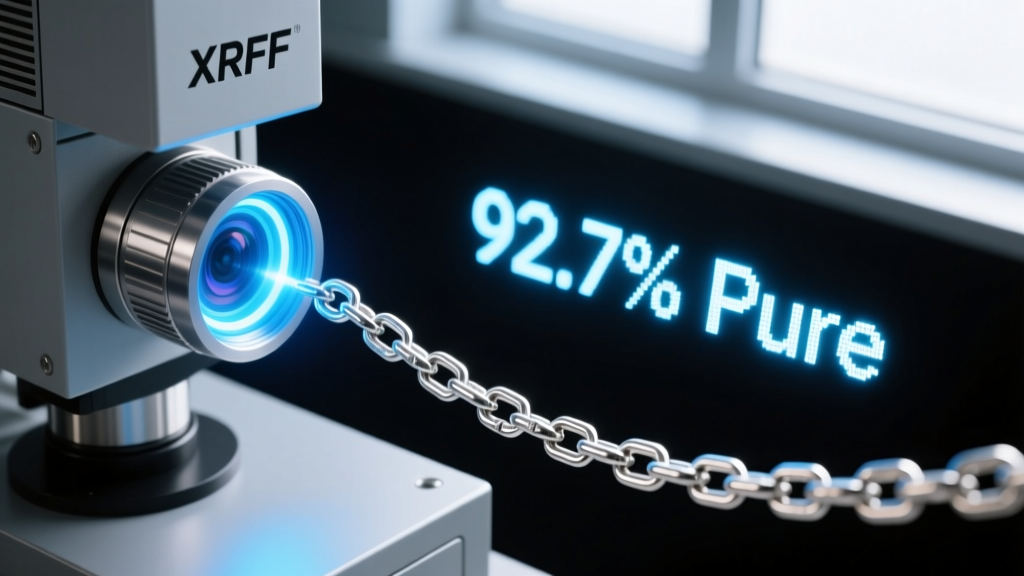
- X-Ray Fluorescence (XRF): An XRF analyzer gun fires X-rays into the metal and measures the fluorescent energy bouncing back. This provides an exact elemental breakdown (e.g., 75% Gold, 15% Copper, 10% Silver) in seconds without damaging the necklace. However, XRF cannot easily detect heavy gold plating over tungsten or base metals.
- Specific Gravity Testing: By weighing the necklace in air and then suspended in distilled water, jewelers calculate its density. 18k yellow gold has a specific gravity of roughly 15.2 to 15.9. If your unmarked chain tests at 8.9, you are holding brass or copper, regardless of what a faded stamp might suggest.
- Touchstone and Acid Testing: A traditional, slightly destructive method where the chain is rubbed on a basalt stone, and nitric acid of varying strengths is applied to the streak to observe the chemical reaction.
For comprehensive guidelines on metal tolerances and legal definitions of precious metals, the FTC Jewelry Guides remain the gold standard for US-based authentication and consumer protection.
Global Hallmarking Systems: A Quick Reference
Identifying the 'author' requires understanding the regional language of stamps. The US, Europe, and the UK use vastly different systems. Use this table to troubleshoot the purity marks you find on your necklace clasp.
| Metal | US Karat Stamp | European Millesimal Stamp | Common Alloy Mix / Notes |
|---|---|---|---|
| Gold (22k) | 22k or 22kt | 916 | 91.6% Gold. Very soft, rare in heavy chains, common in Indian/Asian bridal necklaces. |
| Gold (18k) | 18k or 750 | 750 | 75% Gold. Standard for high-end European pendants and luxury chains. |
| Gold (14k) | 14k or 585 | 585 | 58.5% Gold. The most durable and common choice for everyday US chain necklaces. |
| Gold (10k) | 10k or 417 | 417 | 41.7% Gold. The minimum standard to be legally called 'gold' in the US. |
| Silver | Sterling or 925 | 925 | 92.5% Silver, 7.5% Copper. Prone to tarnish; look for rhodium plating. |
| Platinum | Plat or Pt950 | 950 | 95% Platinum. Extremely dense; a genuine platinum chain will feel unusually heavy. |
Spotting Forgeries: When the 'Author' is Fake
Troubleshooting isn't just about finding a mark; it's about verifying that the mark is legitimate. The secondary market is flooded with counterfeit necklaces bearing stamped '925' or '18k' marks. Here is how to spot a forged authorship.
Laser vs. Strike Marks
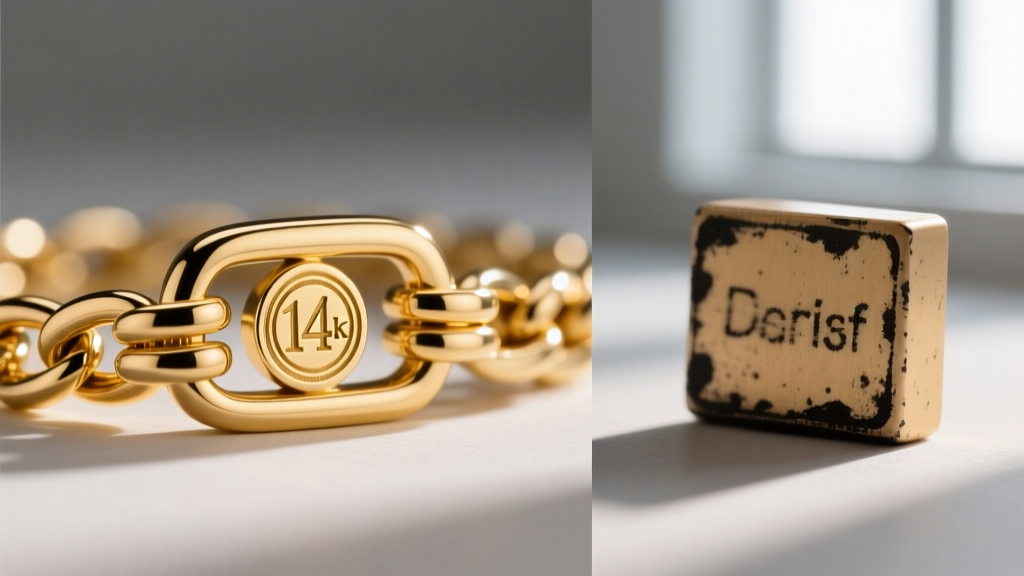
Historically, hallmarks were 'struck' into the metal using a steel punch and a hammer. This displaces the metal, creating a slightly raised, three-dimensional border around the inside of the stamp. Modern authentic pieces often use laser engraving, which is incredibly crisp, perfectly level, and features uniform font weights. Counterfeiters, however, often use cheap, low-power engraving tools that result in shallow, blurry, or 'melted' looking stamps with inconsistent depths.
The '925' Silver Plating Trap
A massive issue in the vintage and online necklace market is brass or nickel chains plated in a microscopic layer of silver, stamped '925'. Because the XRF or acid test might only read the surface layer, troubleshooting requires looking for wear points. Inspect the links near the clasp under a 10x triplet loupe. If you see a yellowish or reddish hue bleeding through the crevices where friction occurs, the necklace is plated, and the '925' stamp is a forgery.
Mismatched Components
Another red flag is a mismatch between the pendant and the chain. It is highly common for bad actors to take a genuine, hallmarked designer pendant (the true 'author') and attach it to a cheap, base-metal chain stamped with a fake mark. Always test the metal of the chain and the pendant independently.
Final Authentication Checklist
Before purchasing a high-value vintage necklace or attempting to trace its lineage, run it through this expert troubleshooting checklist:
- Locate all stamps: Check the clasp tongue, the jump ring, the back of the pendant, and the interior of any bales.
- Magnify: Use a 10x or 20x jeweler's loupe to check for the 3D displacement of genuine strike marks or the crispness of modern lasers.
- Verify the clasp: Ensure the clasp is original to the chain. Modern spring rings on Victorian-era chains indicate a replacement.
- Perform a magnet test: Gold and silver are non-magnetic. If your necklace snaps to a neodymium magnet, it contains iron or steel, regardless of the stamps.
- Consult the databases: Cross-reference the maker's mark initials with the GIA archives or regional assay office databases to confirm the manufacturer's identity and operational years.
Ultimately, answering 'who is the author of the necklace?' requires a blend of historical knowledge, optical magnification, and metallurgical science. By mastering these troubleshooting techniques, you protect your investments and preserve the true history of your jewelry.


