Who Wrote The Necklace? Maupassant’s Tale & Pendant Styling
Discover who wrote The Necklace, Guy de Maupassant's classic tale, and learn beginner-friendly tips on styling real vs. faux diamond pendants today.

The Literary Mystery: Who Wrote "The Necklace"?
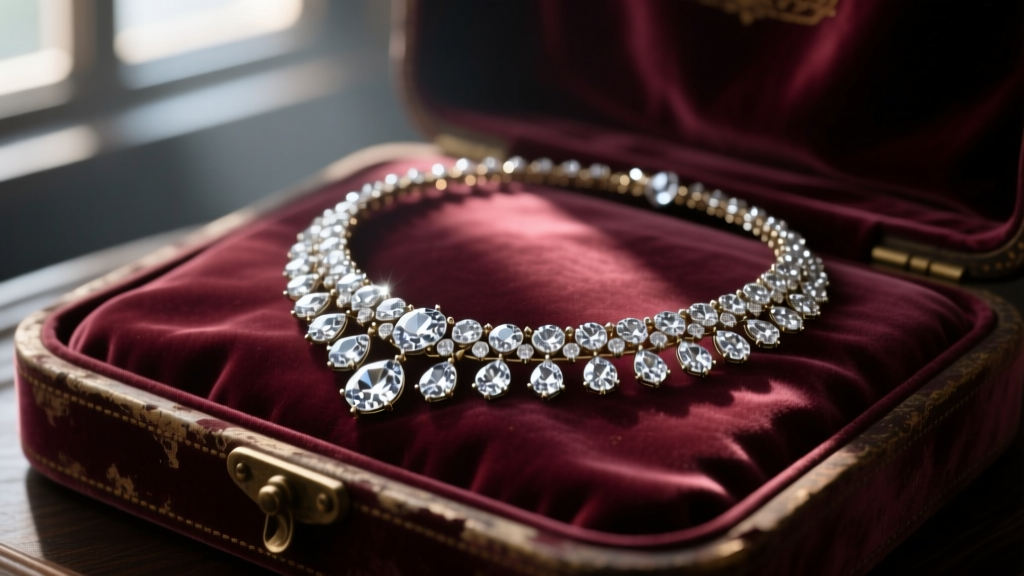
If you have ever found yourself asking who wrote the necklace after being stunned by one of literature's most famous twist endings, you are not alone. The classic short story "The Necklace" (originally titled "La Parure") was written by the French master of the short story format, Guy de Maupassant. First published in 1884, the tale follows Mathilde Loisel, a woman who borrows what she believes to be a breathtakingly expensive diamond necklace from her wealthy friend, Madame Forestier, to wear to a high-society ball.
After losing the necklace, Mathilde and her husband plunge themselves into a decade of grueling poverty to purchase a replacement made of genuine diamonds for 36,000 francs. The story's devastating final line reveals that the original borrowed piece was merely "paste" (costume jewelry) worth at most 500 francs. While Maupassant's story is a brilliant critique of vanity and class obsession, for modern jewelry enthusiasts, it serves as a fascinating historical case study on the evolution of faux diamonds, gemology, and the enduring allure of the pendant necklace.
The Science of "Paste": What Was Mathilde Actually Wearing?
To understand the tragedy of Mathilde Loisel, we must understand 19th-century jewelry manufacturing. In the 1880s, "paste" jewelry did not mean cheap plastic or modern cubic zirconia. It referred to high-lead glass, often called "strass" after Georges Frédéric Strass, an 18th-century jeweler who pioneered the technique. By adding lead oxide to glass, jewelers increased its refractive index (RI) from a standard 1.5 to roughly 1.7, giving it a brilliant, diamond-like sparkle under the gaslight and candlelight of Parisian ballrooms.
However, paste glass lacked two critical properties of genuine diamonds: dispersion (the "fire" or rainbow flashes) and hardness. On the Mohs scale of mineral hardness, diamond sits at a perfect 10, while paste glass ranks around 5 to 6. This meant that 19th-century paste necklaces would easily scratch, dull, and accumulate grime over time, losing their luster. Today, the Gemological Institute of America (GIA) utilizes advanced optical and thermal testing to instantly differentiate between carbon-based diamonds and glass or synthetic simulants, ensuring modern buyers never fall into Madame Forestier's deceptive trap.
Modern Simulants vs. Genuine Diamonds: A 2026 Comparison
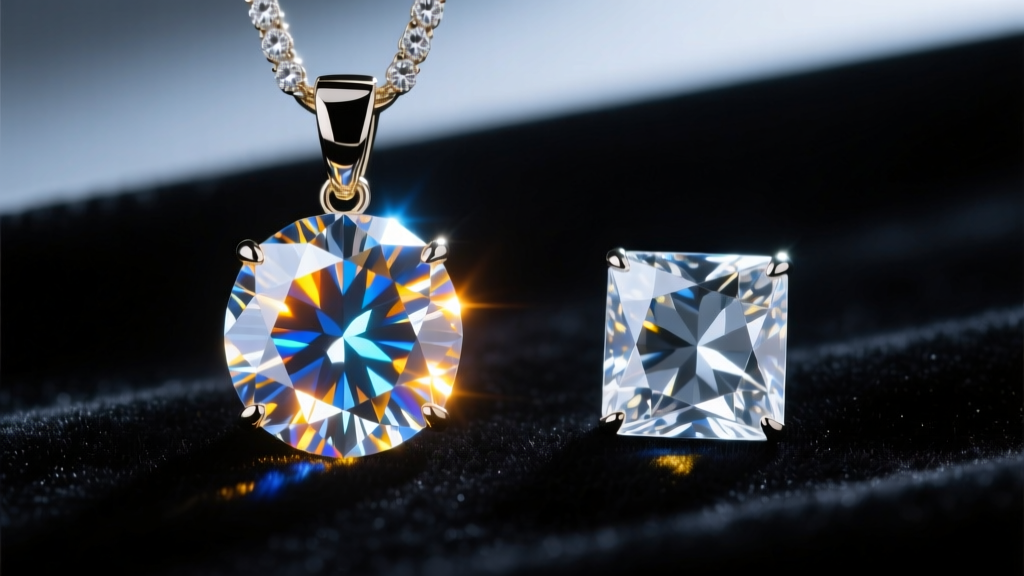
Today, the jewelry market offers a spectrum of diamond alternatives that Maupassant could never have imagined. If you are shopping for a solitaire diamond pendant in 2026, it is crucial to understand the physical and optical differences between natural diamonds, lab-grown diamonds, and modern simulants like Moissanite and Cubic Zirconia (CZ).
| Material | Refractive Index (Brilliance) | Mohs Hardness | 2026 Avg. Price (1-Carat Solitaire) | Best For |
|---|---|---|---|---|
| Natural Diamond | 2.42 | 10 | $3,500 - $6,000+ | Heirloom investment, traditionalists |
| Lab-Grown Diamond | 2.42 | 10 | $600 - $1,200 | Ethical buyers, budget-conscious luxury |
| Moissanite | 2.65 (High Fire) | 9.25 | $300 - $600 | Maximum sparkle, everyday durability |
| Cubic Zirconia (CZ) | 2.15 | 8 - 8.5 | $20 - $80 | Travel jewelry, temporary fashion |
| 19th-Century Paste | ~1.70 | 5 - 6 | Antique Value Only | Historical collectors, vintage aesthetics |
As the table illustrates, the 2026 market has been entirely revolutionized by lab-grown diamonds. Because they possess the exact same chemical, physical, and optical properties as mined diamonds, lab-grown pendants offer the authentic diamond experience at a fraction of the cost. Mathilde Loisel's decade of ruin could have been entirely avoided had she simply visited a modern gemologist or opted for a certified lab-grown replacement.
Beginner's Guide: Choosing the Right Chain for Your Pendant
A beautiful diamond or moissanite pendant is only as secure as the chain it hangs from. One of the most common beginner mistakes is pairing a heavy, valuable pendant with a flimsy, hollow chain. When styling a 1-carat solitaire pendant (which typically measures about 6.5mm in diameter and weighs roughly 0.2 grams), you need a chain that balances delicate aesthetics with structural integrity.
Chain Styles and Gauge Recommendations
- Box Chains (1.2mm - 1.5mm): The gold standard for diamond pendants. The interlocking square links distribute weight evenly and resist kinking. A 1.2mm gauge is delicate enough for a feminine neckline but strong enough to hold a 1-carat stone securely.
- Wheat Chains (1.0mm - 1.3mm): Featuring woven, oval links, wheat chains offer a beautiful, intricate texture that catches the light. They are highly durable and rarely snag on hair or clothing.
- Cable Chains (1.5mm+): A classic, minimalist choice. Ensure the links are soldered (closed with heat) rather than simply bent shut, which prevents the chain from pulling apart under the weight of a pendant.
- Chains to Avoid: Hollow rope chains and snake chains. Hollow ropes are notoriously prone to crushing and cannot be easily repaired. Snake chains, while sleek, easily kink and can trap body hair, making them impractical for daily pendant wear.
The Importance of the Clasp
Never trust a heavy pendant to a standard spring-ring clasp, which relies on a tiny, easily fatigued internal spring. Always upgrade to a lobster clasp. Lobster clasps feature a self-closing mechanism that is far more secure and easier to operate with one hand. For chains 18 inches or longer, ensure the clasp is proportionate to the chain weight—a 5mm to 7mm lobster clasp is ideal for most pendant necklaces.
Styling Lessons: Avoiding Mathilde's Trap in 2026
Maupassant's narrative is a cautionary tale about the dangers of prioritizing the appearance of wealth over genuine quality and personal authenticity. In the context of modern jewelry styling, the lesson is clear: build a collection based on versatile, authentic materials rather than massive, disposable costume pieces.
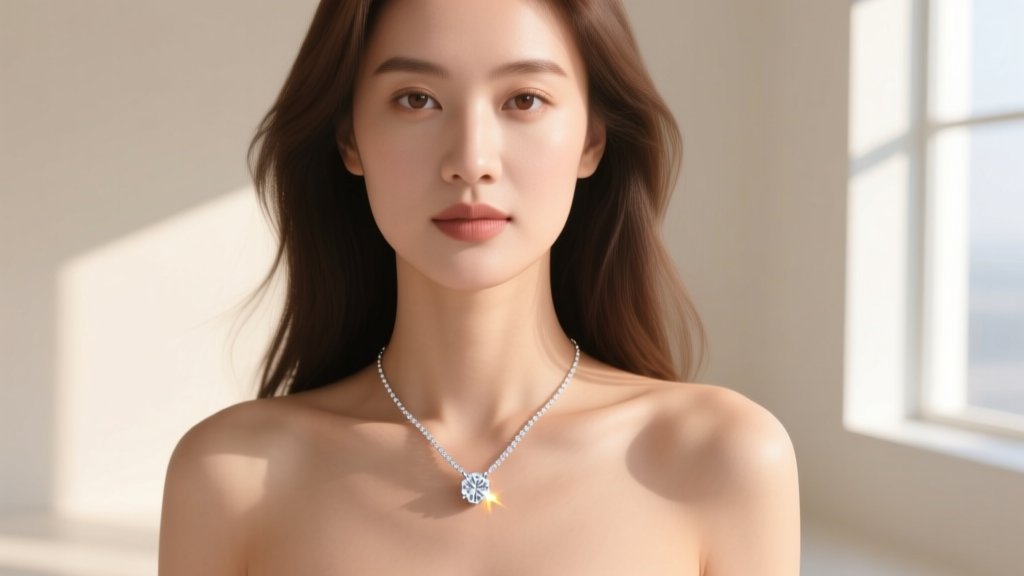
Instead of buying a bulky, multi-strand faux diamond statement necklace that will tarnish and turn your skin green within months, invest in a high-quality, solid gold pendant. A 14K (585) or 18K (750) gold solitaire pendant set with a lab-grown diamond or moissanite offers timeless elegance. It can be worn layered with a 16-inch gold choker for a modern 2026 aesthetic, or worn alone at an 18-inch length over a silk blouse for professional settings.
Furthermore, always verify your jewelry's hallmarks. Genuine pieces will be stamped with their metal purity (e.g., 14K, 18K, 750, 950 for platinum) and, in the case of diamonds over 0.50 carats, will often feature a microscopic laser inscription on the girdle matching a GIA or IGI grading report. By educating yourself on gemology and metalwork, you ensure that your jewelry box is filled with pieces of true, enduring value—no tragic twists required.
Further Reading and Historical Context
For those who wish to read Maupassant's original text in its entirety, Project Gutenberg offers free, public-domain access to the English translation of "The Necklace." Understanding the historical context of 19th-century French society not only deepens your appreciation for classic literature but also highlights how far jewelry craftsmanship, ethical sourcing, and gemological science have come over the last 140 years.


