Skull Chain Necklace Buying Guide: What to Look For
Discover how to choose the perfect skull chain necklace. Learn about metal grades, chain weaves, clasp security, and pricing in our expert buying guide.

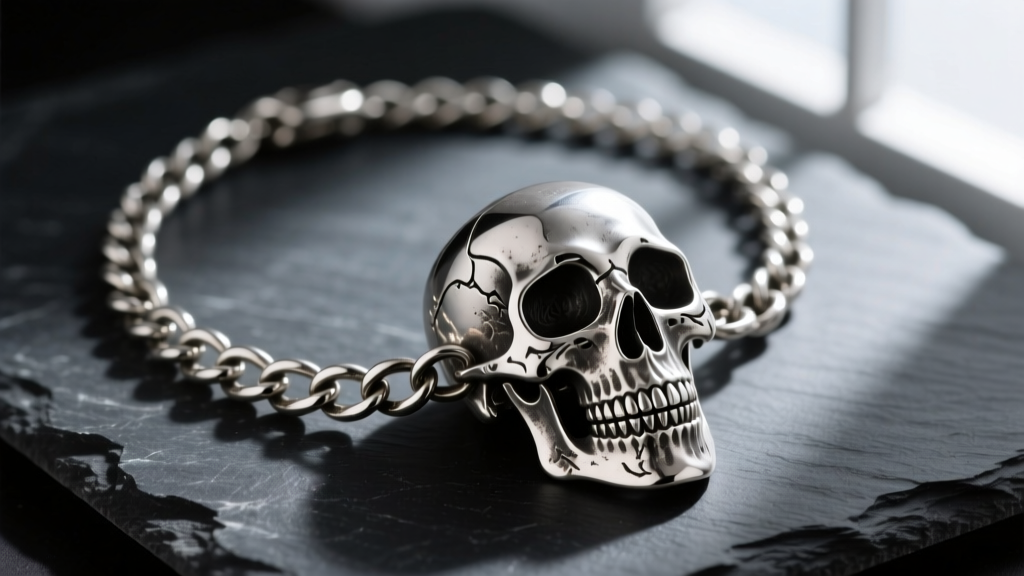
The Evolution of the Skull Motif in Modern Jewelry
Once relegated to subcultures and biker gangs, the skull motif has firmly cemented its place in high fashion and everyday luxury streetwear. Pioneered by iconic houses like Alexander McQueen and Chrome Hearts, the skull chain necklace is no longer just a symbol of rebellion; it is a versatile statement piece that speaks to memento mori—an artistic reminder of mortality and the celebration of life. However, the market is flooded with everything from $15 fast-fashion alloys to $15,000 bespoke diamond-encrusted pieces. Navigating this landscape requires a keen eye for metallurgy, structural integrity, and proportion. This comprehensive buying guide will break down exactly what to look for when investing in a skull chain necklace that will last a lifetime.
Decoding Metal Alloys: Durability, Weight, and Skin Reactions
The foundation of any premium skull pendant and chain is the metal. The Federal Trade Commission Jewelry Guides strictly regulate how metals are stamped and marketed, but understanding the practical differences between these alloys is crucial for daily wear.
925 Sterling Silver (The Artisan Standard)
Composed of 92.5% pure silver and 7.5% copper, sterling silver is the most popular choice for intricate skull designs. The copper adds necessary hardness, allowing jewelers to carve deep eye sockets, nasal cavities, and teeth. However, the copper also causes oxidation. High-end silversmiths often use 'liver of sulfur' to intentionally blacken the recesses of the skull, creating a striking 3D contrast. Look for pieces that are rhodium-plated (a 0.05 to 0.5-micron coating) if you want to prevent tarnish, though purists often prefer the raw, evolving patina of uncoated silver.
316L Surgical Stainless Steel (The Indestructible Workhorse)
If you want a piece you can wear in the ocean, the gym, and the shower without a second thought, 316L stainless steel is your answer. It is highly resistant to corrosion, hypoallergenic (due to extremely low nickel release), and significantly cheaper than silver. The trade-off? Steel is incredibly hard, meaning mass-produced steel skulls often lack the micro-detailing and hand-chased textures found in silver or gold.
Solid Gold (14k and 18k)
For luxury buyers, 14k and 18k gold offer prestige and heirloom value. 14k gold (58.3% pure gold) is harder and more scratch-resistant, making it ideal for heavy chains. 18k gold (75% pure gold) offers a richer, warmer yellow hue but is softer and more prone to denting if the skull pendant is overly large and swings against hard surfaces.
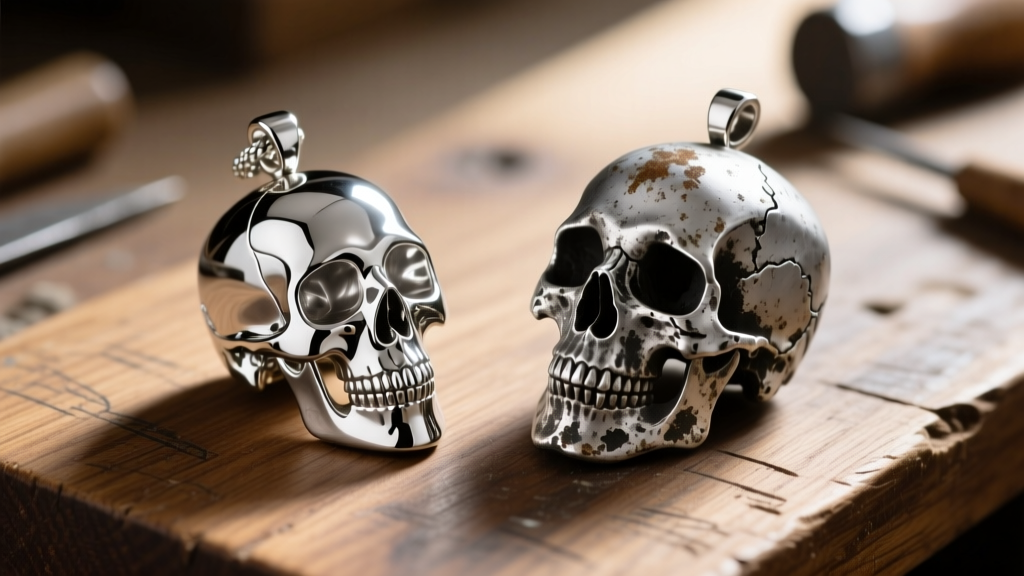
Chain Weaves That Complement Skull Pendants
A skull pendant is only as good as the chain that holds it. The weave dictates the drape, the light reflection, and the overall aesthetic. Below is a structural comparison of the most effective chain styles for skull pendants.
| Chain Weave | Durability & Tensile Strength | Best Pendant Weight | Aesthetic Vibe |
|---|---|---|---|
| Cuban Link | Exceptional. Interlocking flat links resist pulling and twisting. | Heavy (15g - 40g) | Bold, streetwear, hip-hop. |
| Rope Chain | High. The twisted geometry distributes tension evenly. | Medium (8g - 20g) | Classic, vintage, high-flash. |
| Figaro | Moderate to High. Alternating link sizes can catch on bail hardware. | Light to Medium (5g - 15g) | Italian heritage, tailored, smart-casual. |
| Box Chain | Moderate. Geometric links can kink if bent sharply. | Light (3g - 10g) | Modern, minimalist, geometric. |
Sizing, Weight, and the Pendant-to-Chain Ratio
One of the most common mistakes buyers make is ignoring the physics of jewelry. A massive, 30-gram solid silver skull cannot be safely hung on a delicate 1.5mm chain. The constant friction will eventually saw through the metal links at the bail (the loop connecting the pendant to the chain).
The Golden Ratio of Jewelry Proportions
- Light Pendants (Under 10 grams): Require a chain width of 1.5mm to 2.5mm. Ideal lengths are 18 to 20 inches, resting near the collarbone.
- Medium Pendants (10 to 25 grams): Require a chain width of 3mm to 5mm. A 20 to 22-inch length allows the skull to rest comfortably on the sternum.
- Heavy Pendants (25+ grams): Demand a chain width of 5mm to 8mm. Because heavy chains add their own substantial weight, opt for a 22 to 24-inch length to prevent neck strain.
Furthermore, pay close attention to the bail. A 'hidden bail' (where the chain threads directly through a hollowed-out top section of the skull) offers a seamless, floating look but limits the maximum chain thickness you can use. A traditional 'soldered loop bail' is more versatile and structurally sound for heavier pieces.
Clasp Mechanics and Security
According to repair data from the Jewelers of America, clasp failure is the number one cause of lost pendants. When buying a skull chain necklace, the clasp must be matched to the total weight of the piece.
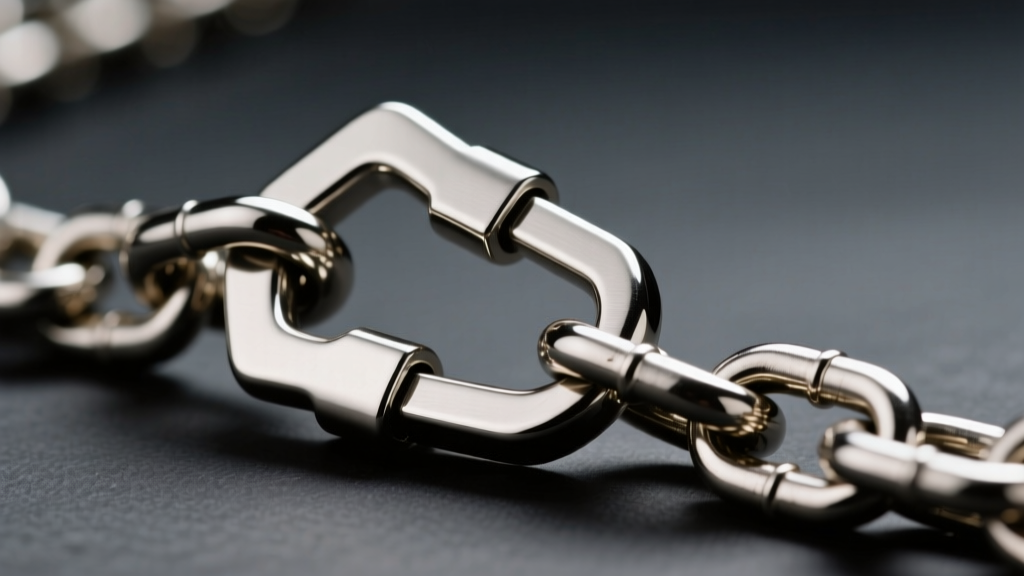
- Spring Ring Clasps: Avoid these for any skull pendant over 10 grams. The internal spring mechanism is weak and prone to snapping under sudden tension.
- Lobster Clasps: The industry standard for medium to heavy chains. Ensure the trigger mechanism is smooth and the interior opening is wide enough to clear the chain links without forcing them.
- Box Clasps with Safety Catches: The ultimate choice for heavy luxury chains (like thick Cubans). The tongue-and-groove mechanism locks the chain into a continuous loop, while the external safety wires prevent total loss if the primary lever fails.
Pro-Tip: Always perform the 'snag test.' Run the chain and pendant over a piece of silk or fine cotton. If the clasp or the bail catches on the fabric, it will eventually catch on your clothing and snap. Ensure all solder joints are filed completely flush.
Price Tiers and Brand Expectations
Understanding market pricing will protect you from overpaying for mass-produced items masquerading as artisan work.
Budget Tier ($30 - $80)
Expect 316L stainless steel or brass with a thin silver/gold plating. The skulls are usually cast from generic molds, resulting in shallow details and hollowed-out backs to save on material costs. Great for testing the style, but the plating will eventually wear off.
Mid-Range Artisan Tier ($150 - $500)
This is the sweet spot for solid 925 sterling silver. In this tier, you should expect hand-finished details, intentional oxidation (blackening) in the crevices, and solid (not hollow) casting. Brands in this space often offer unique, copyrighted designs rather than generic skulls.
Luxury and Bespoke ($1,000 - $10,000+)
Solid 14k or 18k gold, often accented with black diamonds, rubies, or sapphires in the eye sockets. At this price point, the skull should be fully three-dimensional, articulated (e.g., a moving jaw on a hidden hinge), and paired with a heavy, custom-milled chain.
Final Verdict: Matching Your Lifestyle
A skull chain necklace is an investment in personal expression. If you lead an active, outdoor lifestyle, a 316L stainless steel piece on a 4mm Cuban link offers indestructible peace of mind. If you view your jewelry as an evolving art piece and don't mind occasional polishing with a treated cloth, a hand-oxidized 925 sterling silver skull on a Rope chain will develop a deeply personal patina over the years. Prioritize the bail connection, respect the pendant-to-chain weight ratio, and never compromise on the clasp. By focusing on these structural pillars, you will secure a piece that commands attention and stands the test of time.


