Small Diamond Necklace Gold: 2026 Budget & Value Guide
Learn how to evaluate a small diamond necklace gold piece in 2026. We break down carat weights, gold purity, and real pricing to maximize your budget.

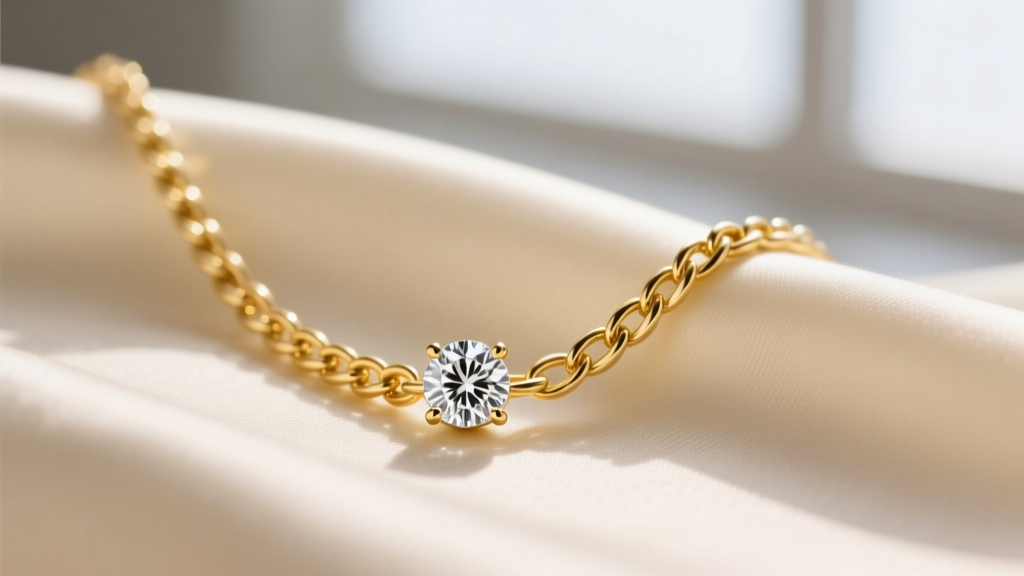
Navigating the 2026 Market for Delicate Diamond Pendants
In the realm of fine jewelry, the minimalist solitaire pendant remains a cornerstone of everyday wear. However, as we navigate the 2026 market, the economics of purchasing a small diamond necklace gold setting have shifted dramatically. With lab-grown diamond prices stabilizing at a fraction of their 2022 peaks, and natural gold prices reaching historic highs, consumers must completely recalibrate how they allocate their budgets. This guide strips away the marketing fluff to provide a metallurgical and gemological breakdown of what you are actually paying for when evaluating a small diamond necklace gold piece.
The Anatomy of a Sub-Carat Pendant
When dealing with diamonds in the 0.10 to 0.25 carat range (measuring roughly 3.0mm to 4.1mm in diameter), traditional grading rules change. The Gemological Institute of America (GIA) generally does not issue full grading reports for stones under 0.15 carats, relying instead on Dossier reports or vendor-specific guarantees. At this micro-scale, clarity grades like SI1 or SI2 are entirely acceptable. Inclusions that would be glaring in a 1.00 carat stone are physically impossible to resolve with the naked eye in a 3mm diamond. Therefore, redirect your budget away from VVS clarity and pour it into Cut quality.
Cut and Color Optimization
Cut is the sole driver of light return. A 0.15 carat diamond with an 'Excellent' or 'Ideal' cut will face up whiter and brighter than a 0.20 carat diamond with a 'Poor' cut, which suffers from light leakage (extinction) through the pavilion. For yellow gold settings, you can safely drop the color grade to J or K, as the warm reflections of the gold alloy will mask the faint yellow tint of the diamond. For white gold or platinum, stick to G or H color to maintain a crisp, colorless appearance against the rhodium-plated metal.
Gold Alloys: 14K vs. 18K for Delicate Chains
The chain is the most frequent point of catastrophic failure in delicate necklaces. According to the Federal Trade Commission (FTC) Jewelry Guides, 14K gold must contain exactly 58.5% pure gold, while 18K contains 75%. While 18K gold offers a richer, more saturated yellow hue and is hypoallergenic for those with nickel sensitivities, it is fundamentally softer. A 1.0mm 18K gold cable chain is highly susceptible to work-hardening and eventual snapping when subjected to the micro-tugs of daily wear. Conversely, 14K gold is alloyed with higher percentages of copper, silver, and zinc, granting it superior tensile strength. If your heart is set on an 18K gold pendant, ensure the chain is at least 1.2mm to 1.5mm in diameter, or opt for a box chain structure rather than a standard cable link.
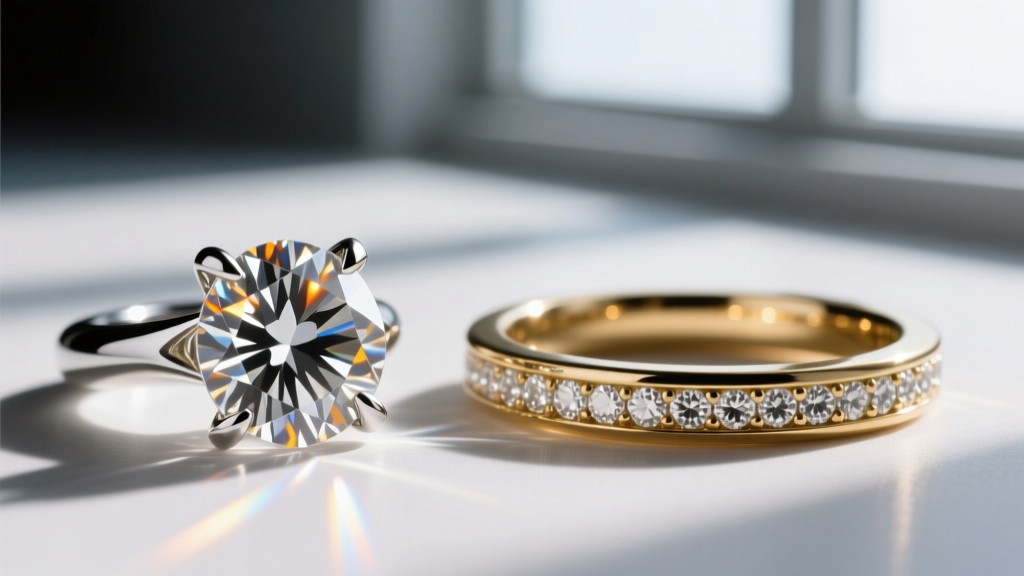
Chain Link Structures and Clasp Mechanics
Box chains, constructed from interlocking square links, distribute tension evenly across multiple contact points, making them roughly 30% more resistant to snapping than oval cable links of the exact same gram weight. Furthermore, pay strict attention to the clasp. The industry-standard 5mm spring ring clasp is a notorious failure point; the internal copper spring degrades over time, and the tiny soldered ring often splits. Upgrading to a solid 5mm lobster claw clasp adds roughly $25 to your upfront cost but increases the lifespan of the closure mechanism by a factor of five.
Setting Engineering: Protecting the Girdle
The setting that holds your small diamond dictates both its security and its perceived size. The classic three-prong or four-prong martini setting elevates the stone, allowing maximum ambient light to enter the pavilion. However, prongs require maintenance; they can catch on knitwear and slowly pull away from the girdle over 12 to 18 months of daily wear. A full bezel setting, where a continuous rim of gold encircles the diamond's girdle, sacrifices about 0.2mm of visible spread but offers near-indestructible protection. For active lifestyles or those who refuse to visit a jeweler for annual prong-tightening, the bezel is the undisputed champion of longevity.
Rhodium Plating and White Gold Maintenance
When selecting white gold for your pendant, understand that you are actually looking at a yellow gold alloy that has been electroplated with a microscopic layer of rhodium. This plating provides the stark, mirror-like white finish but is subject to friction wear. On a necklace chain, the constant metal-on-metal friction between the links will wear through the rhodium plating on the back of the neck within 8 to 14 months, revealing the warm, straw-yellow undertone of the 14K or 18K base metal. While this is a normal characteristic of white gold, it requires periodic re-plating (dipping) by a jeweler, which costs between $40 and $75 per session. If you want a naturally white metal that requires zero plating maintenance and offers superior hypoallergenic properties, consider upgrading your chain to 950 platinum, though this will increase your chain budget by approximately 40%.
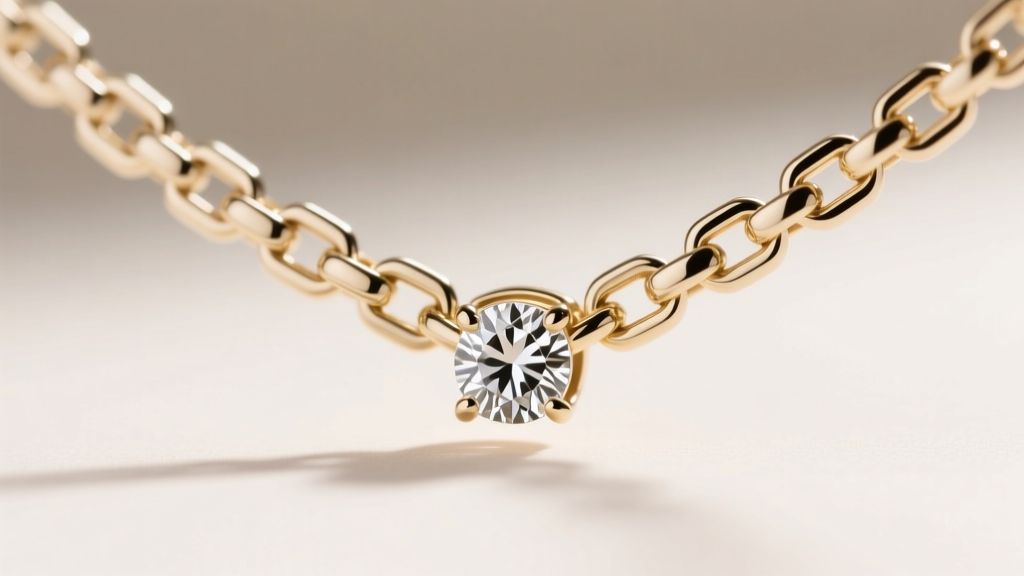
2026 Pricing Matrix: Lab-Grown vs. Natural
To understand where your money goes, review the current retail pricing matrix for a standard 0.25 carat solitaire pendant on a 16-inch chain.
| Component | Natural Option | Lab-Grown Option | Value Verdict |
|---|---|---|---|
| 0.25ct Diamond (G/VS2) | $450 | $65 | Lab-grown offers identical optics at 85% less cost. |
| 16" 14K Chain (1.2mm Box) | $130 | $130 | Gold weight dictates price; origin of diamond is irrelevant here. |
| Bezel Setting & Labor | $180 | $180 | CAD/CAM casting and hand-polishing labor remains constant. |
| Total Estimated Retail | $760 | $375 | Lab-grown allows budget reallocation to heavier gold. |
Final Budget Allocation Strategy
In 2026, the value proposition of lab-grown diamonds in the sub-half-carat category is undeniable. A natural 0.25ct G/VS2 diamond commands a premium due to mining scarcity, retailing around $450 for the stone alone. An identical lab-grown stone, created via Chemical Vapor Deposition (CVD), possesses the exact same carbon crystal lattice but costs between $50 and $80. Because small diamonds do not hold significant resale value regardless of their origin, the 'investment' argument for natural melee or sub-carat stones is largely a myth. The smartest budget strategy is to purchase a lab-grown center stone and reallocate the $385 savings toward a heavier, more durable 14K gold chain and a custom, hand-forged bezel setting that will outlast a lifetime.


