Small Ruby Necklace Trends 2026: Sizing, Origins & Styling
Discover 2026 trends for the small ruby necklace. Expert analysis on carat sizing, Mozambican vs. Burmese origins, chain pairings, and layering.

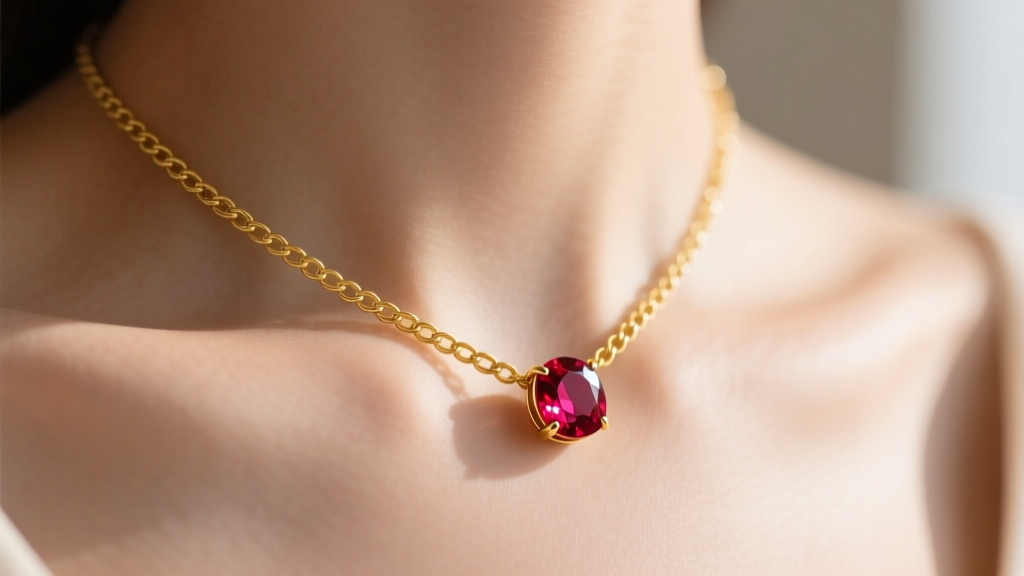
The landscape of fine jewelry in 2026 has decisively pivoted away from heavy maximalism, embracing a refined ethos of curated minimalism. At the forefront of this movement is the small ruby necklace. No longer relegated to vintage estate boxes or heavy cocktail rings, the micro-ruby has emerged as the ultimate everyday luxury staple. Its deep crimson hue offers a striking contrast against the skin, while its diminutive size ensures versatility across both casual and formal wardrobes. However, purchasing and styling a delicate corundum pendant requires a nuanced understanding of gemology, metallurgy, and spatial proportion.
In this comprehensive trend analysis, we dissect the anatomy of the perfect small ruby necklace, exploring origin characteristics, precise carat-to-millimeter conversions, and advanced layering frameworks that define contemporary neckline styling.
The Resurgence of the Micro-Gemstone
Why has the sub-half-carat ruby become the defining silhouette of 2026? The answer lies in the evolution of the 'quiet luxury' trend into what industry analysts now call 'intimate adornment.' Consumers are prioritizing pieces that sit flush against the collarbone, designed for 24/7 wear rather than occasional display. Rubies, ranking a formidable 9 on the Mohs scale of hardness, are exceptionally resistant to scratching and abrasion, making them vastly superior to softer red alternatives like garnet or spinel for daily-wear pendants.
Furthermore, advancements in precision lapidary cutting have allowed gem cutters to maximize light return in stones as small as 0.10 carats. A well-cut micro-ruby exhibits a vivid, saturated glow that draws the eye without overwhelming the wearer's natural features.
Decoding Ruby Origins for Delicate Pendants
When shopping for a small ruby necklace, the geographic origin of the stone heavily influences its color profile and price point. According to the Gemological Institute of America (GIA), the trace elements present in the geological formation dictate the stone's fluorescence and ultimate hue.
Mozambican vs. Burmese: The 2026 Market Reality
- Mozambican (Montepuez): Currently dominating the market for small, high-clarity rubies. These stones often possess a slightly purplish-red or pinkish-red undertone. They are highly prized for micro-pendants because they are frequently found with excellent transparency and require less aggressive heat treatment.
- Burmese (Myanmar): The legendary 'pigeon blood' rubies from Mogok command an astronomical premium. However, finding a genuine, unheated Burmese ruby under 0.50 carats is exceedingly rare. Most small Burmese stones on the market are heavily included or have undergone fracture filling.
- Thai/Cambodian: Historically known for dark, garnet-like rubies due to high iron content. While less common in today's delicate jewelry market, they offer a deep, moody crimson that pairs beautifully with 18k yellow gold.
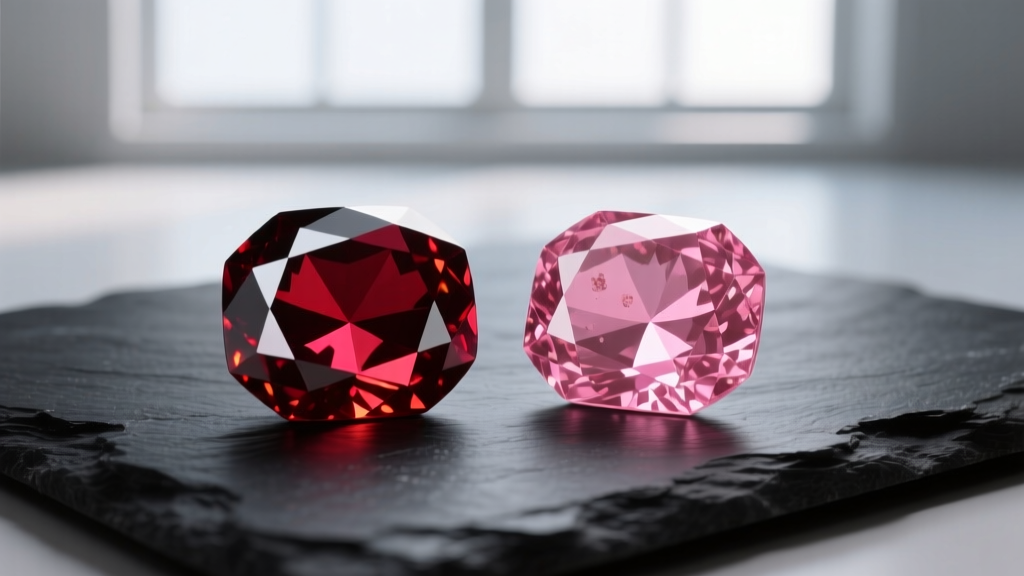
Expert Insight: Always demand a lab report for any ruby claimed to be 'unheated.' For small everyday pendants, a standard thermal heat treatment is completely acceptable, stable, and industry-standard. Avoid glass-filled or fracture-filled rubies entirely, as the filler can degrade with exposure to everyday cosmetics and perfumes.
The Carat-to-Millimeter Matrix: Sizing Your Stone
The term 'small' is highly subjective in gemology. To ensure your necklace achieves the desired visual impact on the decolletage, you must understand the relationship between carat weight and physical millimeter dimensions. A shallow-cut 0.25ct ruby might face up larger than a deeply cut 0.30ct stone, but it will lack the internal brilliance necessary for a captivating pendant.
| Carat Weight | Approx. Diameter (mm) | Visual Impact | Ideal Chain Gauge |
|---|---|---|---|
| 0.05 - 0.09 ct | 2.0 - 2.5 mm | Subtle 'freckle' effect; barely visible from a distance. | 0.6mm - 0.8mm |
| 0.10 - 0.18 ct | 2.8 - 3.5 mm | The sweet spot for minimalist, everyday layering. | 0.8mm - 1.0mm |
| 0.20 - 0.35 ct | 3.8 - 4.5 mm | Classic solitaire pendant size; holds its own on a bare neck. | 1.0mm - 1.2mm |
| 0.40 - 0.50 ct | 4.8 - 5.2 mm | Bold but refined; transitions easily into evening wear. | 1.2mm - 1.5mm |
Chain Gauge and Metal Pairings for Micro-Rubies
The chain you select is just as critical as the gemstone itself. A chain that is too thick will visually swallow a small ruby pendant, while a chain that is too thin risks breaking under the daily tension of wear.
Optimal Chain Styles
For pendants in the 0.10ct to 0.30ct range, the 0.9mm cable chain and the 1.1mm box chain are the undisputed champions of 2026. They offer sufficient tensile strength to support the gold setting (which often weighs more than the stone itself) while remaining delicate enough to slide invisibly through the pendant bail.
Crucial Warning: Avoid snake chains and herringbone chains for micro-pendants. These styles are notoriously prone to kinking, and their reflective, scaly surface textures compete with the light return of the ruby, creating visual clutter.
Metal Color Dynamics
- 18k Yellow Gold: Enhances the warmth of the ruby, particularly effective for Mozambican stones with slight pinkish undertones. It creates a vintage, romantic aesthetic.
- 14k or 18k Rose Gold: Creates a monochromatic, tonal look that blends seamlessly with the skin. This is the preferred choice for ultra-minimalist, 'barely there' styling.
- Platinum or White Gold: Provides maximum contrast, making the red saturation of the ruby appear deeper and more vivid. This pairing is highly favored in contemporary, architectural jewelry designs.
Advanced Layering Frameworks for 2026
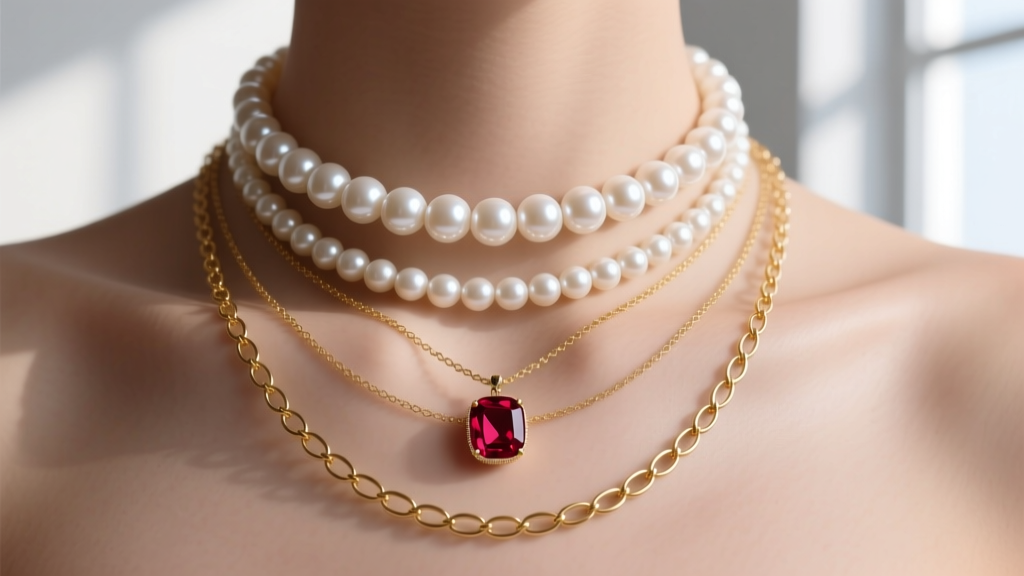
The single-pendant look remains timeless, but the prevailing trend in contemporary styling is the 'asymmetrical triad' layering method. According to trend forecasts highlighted by JCK Online, modern consumers are mixing organic textures with precise gemstone cuts to create highly personalized neckline narratives.
The Asymmetrical Triad Recipe
- The Anchor (14 to 15 inches): Start with a textured or organic base. A 14-inch freshwater pearl choker or a 15-inch oxidized silver bead chain provides a grounding element that sits high on the clavicle.
- The Focal Point (16 to 16.5 inches): This is where your small ruby necklace lives. A 16.5-inch 14k gold cable chain featuring a 3mm (0.15ct) bezel-set ruby drops perfectly into the hollow of the throat, drawing the eye directly to the center.
- The Elongator (18 to 20 inches): Finish with a longer, airy chain to elongate the neck. An 18-inch gold satellite chain (featuring tiny gold beads spaced every few inches) or a delicate 20-inch diamond-cut rope chain adds movement without competing with the ruby's color.
When executing this stack, ensure all chains are of varying link styles. Mixing a cable, a bead, and a satellite chain prevents the necklaces from tangling and creates distinct visual strata.
Investment and Pricing Realities
Understanding the pricing architecture of small rubies protects consumers from overpaying for branded markups or underpaying for treated, low-quality stones.
For a natural, heat-treated Mozambican ruby in the 0.15ct to 0.25ct range, set in a simple 14k gold bezel on a 16-inch chain, expect to pay between $450 and $850 from a reputable independent jeweler. If the stone is certified unheated with 'vivid red' saturation, that price can easily double.
Conversely, the market has seen an influx of lab-grown rubies (created via the Verneuil flame fusion or flux-growth methods). While chemically identical to natural corundum, these stones lack the geological rarity that drives investment value. A high-quality lab-grown small ruby necklace typically retails between $150 and $300, offering an excellent entry point for trend-focused buyers who prioritize size and color over natural origin.
Final Thoughts on Curated Minimalism
The small ruby necklace is far more than a fleeting trend; it is a masterclass in proportional elegance. By prioritizing precision cutting, selecting the appropriate chain gauge, and understanding the subtle nuances of geographic origin, you can secure a piece of jewelry that remains effortlessly relevant for decades. Whether worn as a solitary spark against the skin or integrated into a complex, multi-textured layering stack, the micro-ruby remains the definitive crimson accent of the modern jewelry wardrobe.


