Snake Necklace Buying Guide: Metals, Gauges & Care
Discover how to choose the perfect snake necklace in our expert buying guide. Learn about metal grades, gauge thicknesses, and how to prevent kinking.

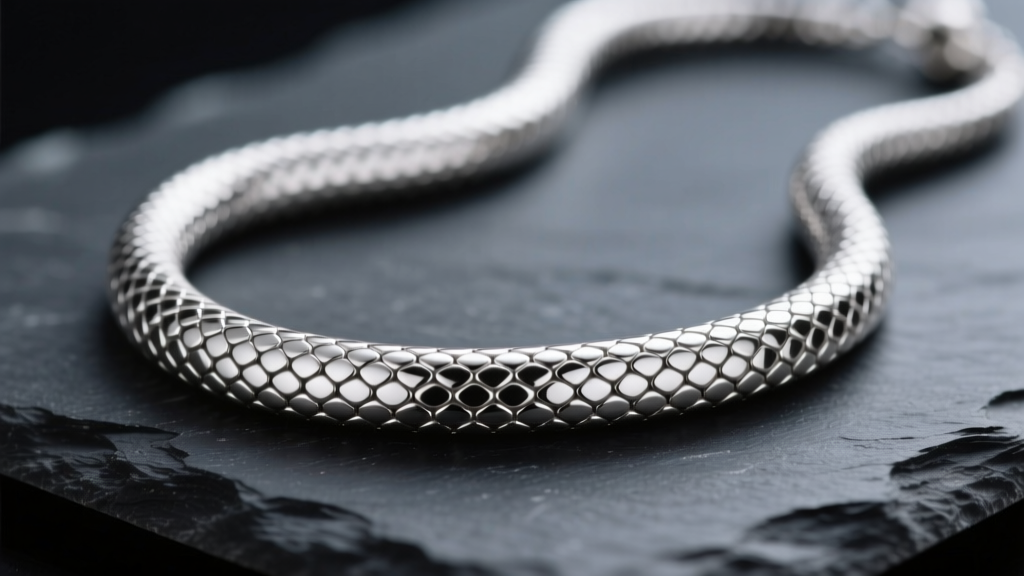
The snake necklace remains one of the most sophisticated and fluid chain styles in modern jewelry. Characterized by its seamless, tubular structure and liquid-metal drape, it offers a sleek alternative to traditional linked chains. However, its unique construction also introduces specific vulnerabilities that buyers must understand. This comprehensive 2026 buying guide breaks down the metallurgy, gauge mechanics, and structural realities of the snake chain, ensuring you invest in a piece that lasts.
The Anatomy of a Snake Chain
Unlike cable, curb, or rope chains that rely on distinct, interlocking oval or round links, a snake chain is constructed from slightly wavy, tightly interlocked metal rings. These rings are aligned to form a continuous, flexible tube with a smooth, scale-like surface. This manufacturing technique creates a chain with exceptional tensile strength when pulled linearly, but it lacks the lateral flexibility of a rope chain. The result is a necklace that drapes beautifully like a ribbon of mercury, making it an ideal canvas for both minimalist wear and heavy pendant suspension.
Material Grades & Durability Matrix
The longevity of your snake necklace is entirely dependent on its base metal. Because the interlocking rings experience constant micro-friction against one another, softer metals or thin platings will degrade rapidly. According to the Federal Trade Commission Jewelry Guides, understanding the exact composition of precious metals is vital for avoiding deceptive marketing terms like 'gold dipped' or 'silver tone'.
| Material | Composition | Durability & Friction Resistance | Average Price (18') |
|---|---|---|---|
| 316L Stainless Steel | Surgical Grade Steel | Exceptional. Tarnish-free, highly rigid. | $25 - $50 |
| Sterling Silver | 92.5% Ag, 7.5% Cu | High. Will tarnish, requires polishing. | $45 - $130 |
| Gold Vermeil | 925 Silver + 2.5µm Gold | Moderate. Plating wears at friction points. | $70 - $160 |
| Solid 14k Gold | 58.5% Au, Alloy Mix | Superior. Heirloom quality, no plating loss. | $400 - $900+ |
Expert Note: Avoid 'gold plated' brass snake chains. The friction of the interlocking rings will strip the microscopic gold layer within weeks, exposing the brass base which will oxidize and stain your skin green. Always verify the base metal is at least 925 sterling silver, as certified by The Silver Institute standards.
Gauge Thickness: Choosing the Right Profile
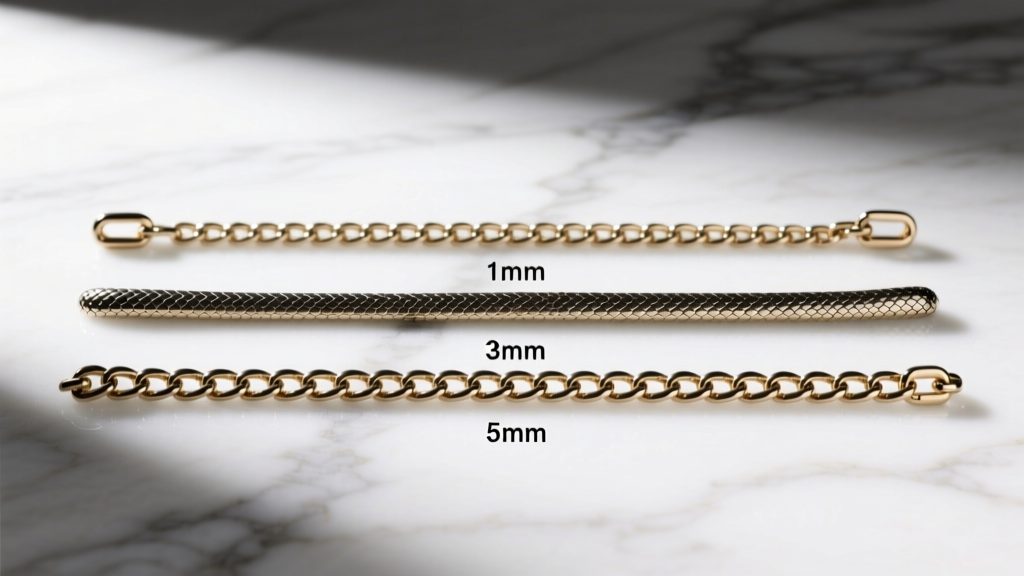
The gauge (thickness) of a snake necklace dictates not only its visual weight but also its structural integrity and pendant compatibility. Snake chains are generally categorized into three distinct tiers:
Delicate (1.0mm - 1.5mm)
These ultra-thin chains offer a barely-there, feminine aesthetic perfect for layering. However, they possess a very low threshold for lateral bending. They should never be paired with pendants weighing more than 3 grams, as the added swing weight will quickly compromise the interlocking rings.
Versatile (2.0mm - 3.5mm)
The sweet spot for everyday wear. A 2.5mm or 3.0mm snake chain provides enough internal density to support medium-weight pendants (up to 15 grams) while maintaining a fluid drape. This is the most recommended gauge for standard solitaire diamond or gemstone pendants.
Statement (4.0mm - 6.0mm+)
Thick snake chains act as standalone statement pieces. Due to the sheer volume of metal, they are semi-rigid and do not drape as fluidly as thinner versions. They are best worn alone or with oversized, heavy bales that can accommodate the thick tubular profile.
The Fatal Flaw: Understanding and Preventing Kinking
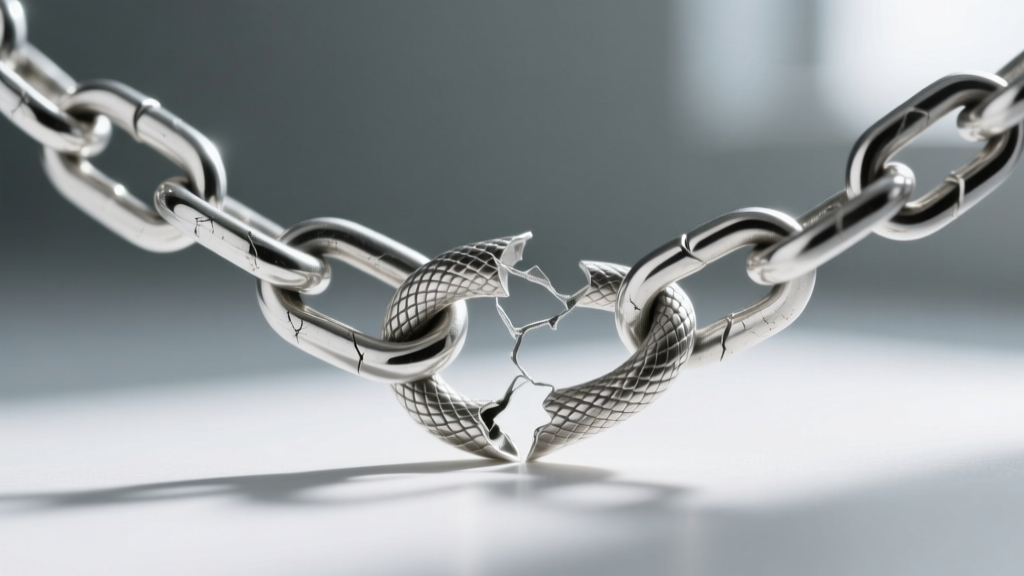
The single most important concept to grasp when buying a snake necklace is its susceptibility to kinking. Because the chain is essentially a flexible metal tube, bending it backward past its natural tensile threshold causes the interlocking rings to crush against one another.
'Once a snake chain kinks, the structural integrity of that specific section is permanently destroyed. The metal is work-hardened and weakened. A jeweler cannot simply 'bend it back'—the only repair is to cut out the kinked section and solder the chain back together, which ruins the seamless aesthetic.' — Master Bench Jeweler
Actionable Prevention Strategies
- Never Sleep in It: Tossing and turning creates unpredictable lateral pressure that easily exceeds the chain's bend radius.
- Proper Storage: Never throw a snake necklace into a jewelry box where it can tangle. Always hang it vertically on a jewelry stand or lay it perfectly flat in a soft-lined drawer.
- The Fingertip Test: When putting it on, ensure it doesn't catch on hair or clothing. Pulling a snagged snake chain is the leading cause of sudden kinking and snapping.
Clasp Mechanics & Security
The clasp on a snake chain is a critical failure point. Historically, manufacturers used barrel clasps (screw-together mechanisms) to maintain the seamless tubular look of the chain. However, barrel clasps are notorious for cross-threading and slowly unscrewing due to the natural movement of the body, leading to lost necklaces.
For maximum security in 2026, always opt for a snake necklace featuring a lobster claw clasp attached via a soldered jump ring. While it slightly interrupts the visual continuity of the tube at the nape of the neck, the mechanical security of a spring-loaded lobster clasp is vastly superior for daily wear.
Pendant Pairing: The Bale Sizing Rule
Pairing a pendant with a snake necklace requires specific attention to the pendant's bale (the loop that slides over the chain). Because snake chains are semi-rigid tubes rather than flexible links, a bale that is too tight will cause severe friction, wearing down both the chain and the pendant over time.
The 1.5x Rule: The inner diameter of the pendant bale must be at least 1.5 times the thickness of the snake chain. For example, if you are using a 3.0mm snake chain, the bail opening must be a minimum of 4.5mm. This allows the chain to glide smoothly without forcing the interlocking rings to compress and grind against the interior of the bail.
Final Verdict
A well-chosen snake necklace is a timeless, modern staple that elevates any jewelry collection. By prioritizing solid metals or heavy vermeil, selecting the correct gauge for your intended pendants, and strictly adhering to anti-kinking storage protocols, your snake chain will maintain its liquid-metal brilliance for decades. Avoid fast-fashion alloys, respect the chain's bending limits, and always verify the clasp mechanics before purchasing.


