How to Choose the Perfect Gold Anchor Necklace: A Buying Guide
Discover what to look for when buying a solid gold anchor necklace. Compare karats, chain styles, and clasps to find a durable, timeless nautical piece.

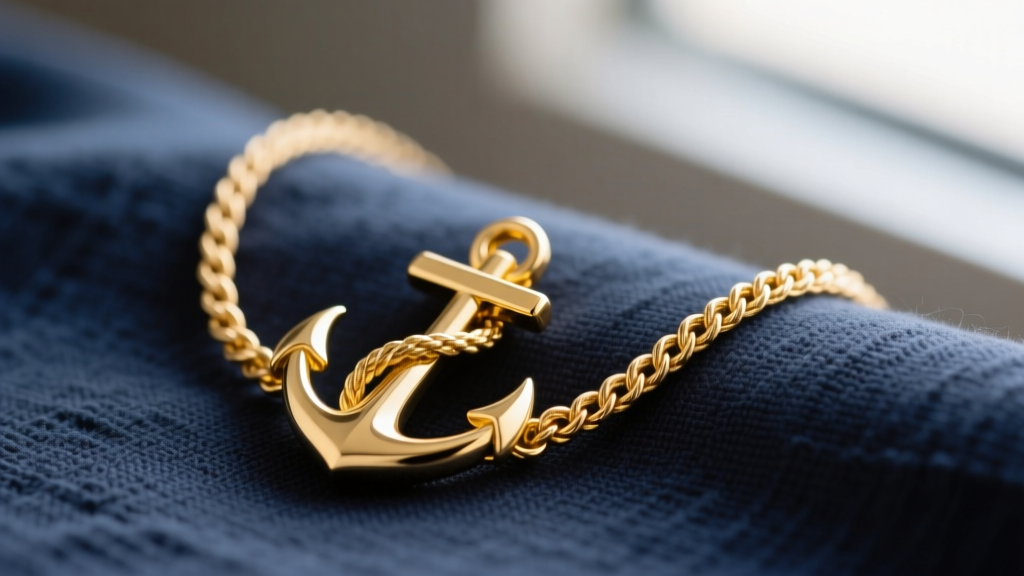
The anchor is one of the most enduring symbols in jewelry, representing hope, stability, and a deep connection to the sea. Whether you are buying for a sailor, a traveler, or simply someone who appreciates classic nautical motifs, a gold anchor necklace is a versatile staple. However, not all anchor pendants are created equal. The protruding flukes (the pointed ends) and the crossbar (the stock) make this specific shape highly susceptible to bending, snagging, and breakage if the metallurgy and construction are subpar.
This comprehensive buying guide cuts through the marketing fluff to help you evaluate gold purity, chain compatibility, and structural integrity, ensuring your investment lasts a lifetime.
Decoding Gold Purity: The Snag Factor
When shopping for a gold anchor necklace, the karat weight dictates both the color of the metal and its structural resilience. Because anchor pendants feature sharp, protruding angles, they are more likely to catch on heavy winter sweaters or seatbelts than a smooth, domed pendant.
14k Gold: The Sweet Spot for Nautical Jewelry
Comprising 58.5% pure gold alloyed with metals like copper, silver, and zinc, 14k gold offers the ideal balance of rich color and tensile strength. According to the Gemological Institute of America (GIA), the alloy metals in 14k gold significantly increase the hardness of the piece. If the fluke of your anchor catches on a door handle, a 14k pendant is far more likely to survive without permanently bending.
18k Gold: Luxurious but Vulnerable
At 75% pure gold, 18k offers a deeper, more buttery yellow hue that is highly prized in fine jewelry. However, it is noticeably softer. An 18k gold anchor necklace is best reserved for occasional wear or for those who work in environments where the pendant won't be subjected to physical impact or snagging hazards.
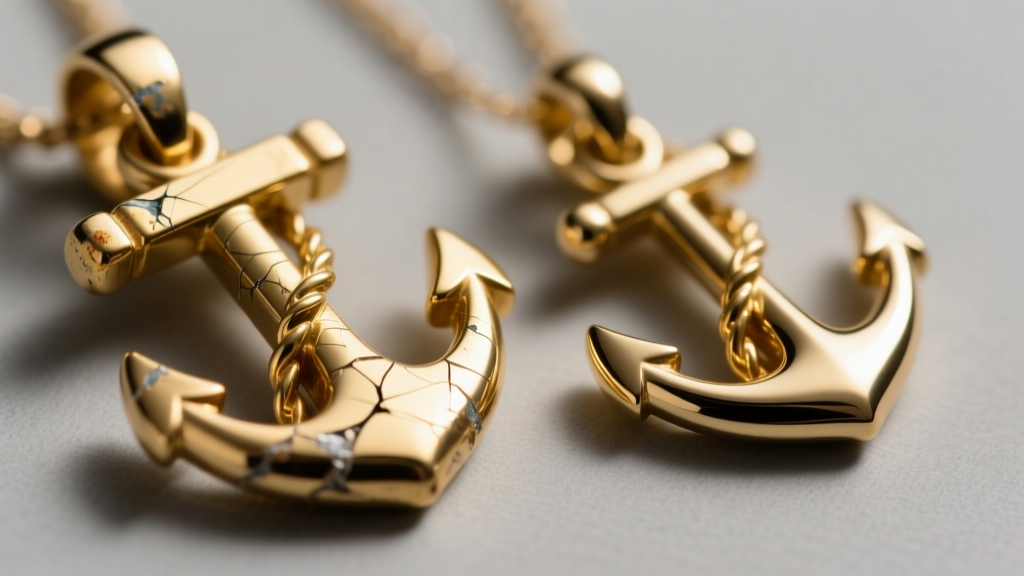
10k Gold: Budget-Friendly but Brittle
While 10k gold (41.7% pure) is highly resistant to scratching, it can be brittle and lacks the warm luster associated with fine nautical jewelry. It is also more prone to causing contact dermatitis in individuals with nickel or copper sensitivities due to the high alloy content.
Chain Selection: Matching the Link to the Motif
The chain you pair with your anchor pendant is just as critical as the pendant itself. A mismatched chain can cause excessive wear on the pendant's bail (the loop it hangs from) or detract from the maritime aesthetic. For everyday wear, aim for a chain gauge between 1.2mm and 1.8mm. Anything thinner risks snapping under the weight of a solid gold anchor; anything thicker will overpower a standard 15mm to 20mm pendant.
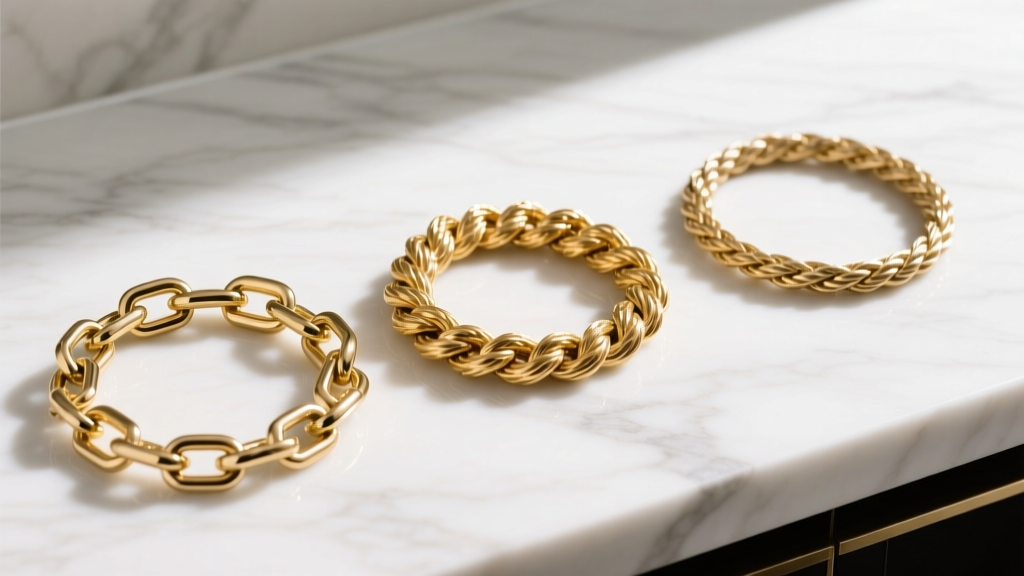
| Chain Style | Nautical Synergy | Durability & Snagging | Best Gauge |
|---|---|---|---|
| Rope Chain | High (mimics ship rigging) | Excellent tensile strength; can pull fine hair if not diamond-cut. | 1.5mm - 2.0mm |
| Mariner Link | Very High (classic nautical) | Strong, but the center bar can catch on knit fabrics. | 1.2mm - 1.8mm |
| Cable Chain | Moderate (traditional) | Very safe for clothing; moderate tensile strength. | 1.2mm - 1.5mm |
| Box Chain | Low (modern/geometric) | Highly durable, lays flat, zero snagging risk. | 1.0mm - 1.5mm |
Critical Hardware: Clasps, Bails, and Jump Rings
The failure points of any gold anchor necklace are almost always found in the hardware. When inspecting a piece, pay close attention to these three components:
- The Bail: Ensure the bail is solid, not hollow. A hollow bail will quickly wear through from the friction of the chain rubbing against it. Look for a bail with an internal diameter at least 0.5mm larger than your chain's thickness to allow for fluid movement.
- The Jump Ring: This is the small ring connecting the clasp to the chain. It must be soldered shut. If you can see a seam or gap in the jump ring, the chain will eventually slip through and you will lose your pendant.
- The Clasp: Avoid spring ring clasps for chains thicker than 1.2mm; they are difficult to operate and prone to internal spring failure. Opt for a lobster clasp, which features a robust internal mechanism and a secure closure.
Pricing Tiers: What Should You Actually Pay?
Understanding the pricing structure of solid gold jewelry prevents you from overpaying for brand names or underpaying for suspicious, potentially hollow pieces. Prices below are estimated for a standard 16mm to 20mm solid gold anchor pendant on an 18-inch chain in 2026.
Pro-Tip: Always check the gram weight. A reputable jeweler will list the exact gram weight of the gold. If a solid 14k gold anchor necklace is priced under $250, it is likely hollowed out (electroformed) or gold-plated over a base metal.
Tier 1: The Artisan / Independent Jeweler ($450 - $750)
At this price point, you are paying for solid 14k or 18k gold, precise laser welding or hand-soldering, and often a unique, hand-finished design. These pieces typically weigh between 4 to 8 grams total and offer heirloom-level durability.
Tier 2: The Commercial Fine Jewelry Brand ($250 - $450)
Mass-produced but authentic solid 10k or 14k gold. The anchors may be die-struck rather than cast, which actually increases the metal's density and strength. However, the chains included are often very lightweight (under 1.0mm) and may need to be upgraded.
Tier 3: The Suspicious Bargain (Under $150)
Unless you are buying a minimalist, ultra-thin 10k gold pendant weighing less than 1 gram, a price tag under $150 for a "solid gold" anchor necklace is a major red flag. It is likely gold vermeil (silver plated with gold) or gold-filled, which will eventually wear away, especially on the high-friction edges of the anchor flukes.
Red Flags and Verification
The Federal Trade Commission (FTC) strictly regulates gold markings in the United States. When your gold anchor necklace arrives, inspect the clasp or the back of the pendant bail for a hallmark. You should see 14K, 14KT, 585 (for 14k) or 18K, 750 (for 18k). If the piece is stamped with "1/20 14k GF" or "925" with a gold color, you have purchased gold-filled or gold-plated sterling silver, not solid gold.
Furthermore, run your fingernail lightly over the edges of the anchor. If you feel sharp, unfinished seams or a slight indentation on the back of the pendant, the piece was poorly cast or is hollow-backed. A high-quality anchor pendant should feel dense, smooth, and substantial in the palm of your hand.
Conclusion: Anchoring Your Investment
A gold anchor necklace is more than just a decorative accessory; it is a talisman of resilience. By prioritizing 14k gold for structural integrity, selecting a snag-resistant rope or cable chain in the 1.2mm to 1.8mm range, and verifying that all jump rings are properly soldered, you ensure that your nautical jewelry will weather any storm. Look past the marketing and focus on the gram weight, the hallmark, and the craftsmanship of the bail to secure a piece that will remain a steadfast part of your collection for decades.


