The Sommelier Necklace: Technical Guide to Tastevin Pendants
Explore the technical anatomy, metallurgy, and chain specifications of the traditional sommelier necklace and tastevin pendant for wine professionals.

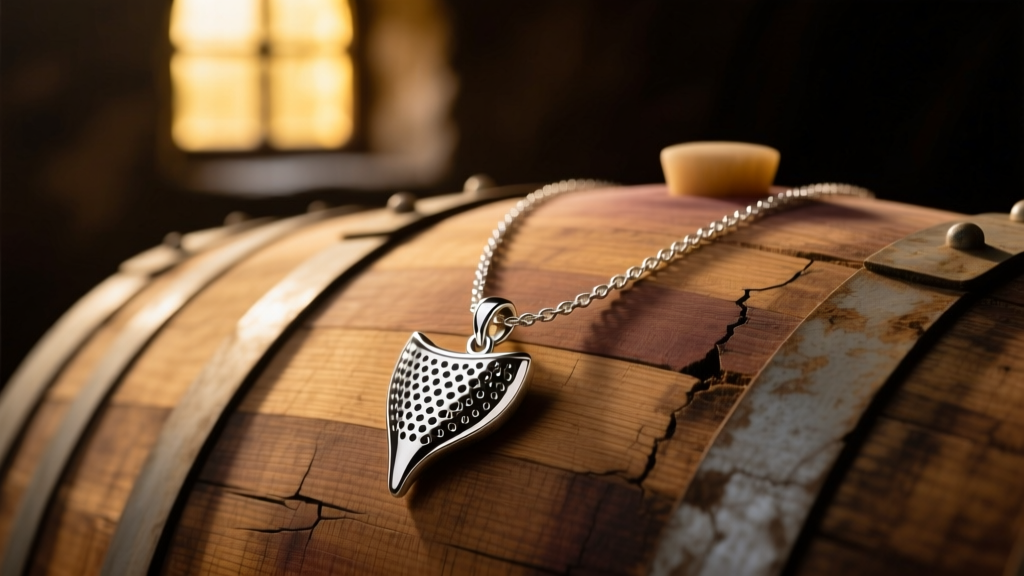
When discussing professional wine jewelry, the term sommelier necklace almost exclusively refers to a chain or ribbon suspending a tastevin—a shallow, dimpled silver cup historically used to evaluate wine in dimly lit cellars. While modern floor service in 2026 often relies on crystal glassware and LED lighting, the tastevin pendant remains a potent symbol of expertise, heritage, and technical mastery in the hospitality industry. For jewelry designers, collectors, and working sommeliers, understanding the precise metallurgy, ergonomic geometry, and chain engineering of a professional-grade sommelier necklace is critical. This guide bypasses superficial fashion trends to deliver a deep technical dive into the anatomy, material science, and functional mechanics of the authentic tastevin pendant.
The Anatomy of a True Sommelier Necklace: Beyond the Aesthetic
A genuine sommelier necklace is defined by its pendant: the tastevin. Originating in the Burgundy region of France, the traditional Bourgogne tastevin features a highly specific geometry designed to manipulate light and liquid. The interior of the cup is not smooth; it is engineered with a series of convex dimples (often called perles or cupules) on one side and concentric ridges on the other. According to historical archives on the tastevin, these dimples were originally designed to catch and scatter the faint light of a single candle in subterranean cellars, allowing the sommelier to accurately judge the wine's color, viscosity, and clarity.
The thumb rest, or handle, is typically flat and wide, often featuring a subtle lip to prevent the taster's fingers from obscuring the light passing through the liquid. The opposite side of the cup features a pouring lip. In contrast, the Bordeaux style of tastevin is slightly shallower, featuring a faceted interior rather than rounded dimples, and a central dome. However, the Burgundy style remains the overwhelming standard for the classic sommelier necklace pendant due to its superior light-scattering properties.
Metallurgy and Material Grades: What Touches the Wine
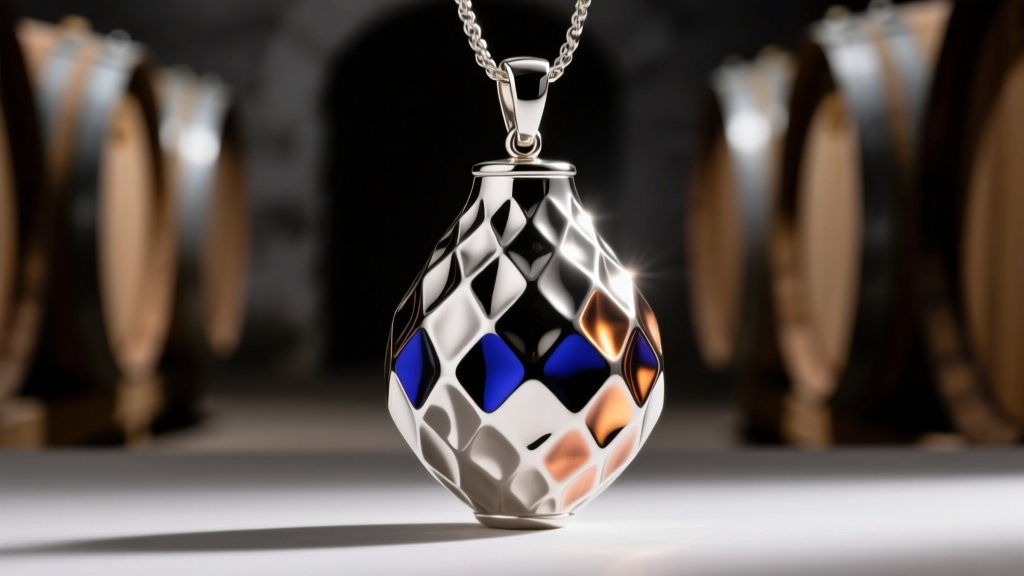
The material of the pendant is not merely an aesthetic choice; it is a matter of chemical reactivity. Wine is a highly acidic beverage, with a pH typically ranging from 2.9 to 3.9, driven by tartaric, malic, and citric acids. If a reactive metal is used, it will not only impart a harsh, metallic taint to the wine but can also undergo rapid oxidation or leaching.
Historically and practically, 925 Sterling Silver is the undisputed standard. Silver is relatively inert to wine acids and possesses the highest optical reflectivity of any precious metal, which is vital for color evaluation. However, as the Guild of Sommeliers notes regarding modern floor service dynamics, contemporary sommeliers who wear their necklaces daily in high-volume environments sometimes opt for advanced alternatives to mitigate the maintenance required for silver.
| Material Grade | Reactivity to Wine | Durability & Tarnish | Optical Reflectivity | Estimated Price Range |
|---|---|---|---|---|
| 925 Sterling Silver | Very Low (Inert) | Moderate (Requires polishing) | Excellent (95%+) | $150 - $450 |
| 316L Surgical Steel | Zero (Highly Inert) | High (Tarnish-free) | Good (60-70%) | $60 - $120 |
| Silver-Plated Brass | High (If scratched) | Low (Plating wears off) | Excellent (When new) | $30 - $80 |
| Grade 5 Titanium | Zero (Biocompatible) | Extreme (Scratch-resistant) | Poor (Matte finish) | $120 - $250 |
For professional certification exams governed by the Court of Master Sommeliers, candidates are strongly advised to use traditional 925 silver or high-polish 316L steel. Silver-plated brass is strictly discouraged; once the microscopic plating wears through from repeated polishing, the underlying copper and zinc will react violently with wine acids, ruining the tasting experience and potentially causing skin irritation.
The Chain Engineering: Gauge, Length, and Clasp Mechanics
The pendant is only half of the sommelier necklace equation. The chain must support a heavy metal cup (typically weighing between 45g and 85g) while allowing for rapid, one-handed deployment. A flimsy chain will snap under the dynamic load of a sommelier quickly lifting the cup to their mouth during a busy tasting flight.
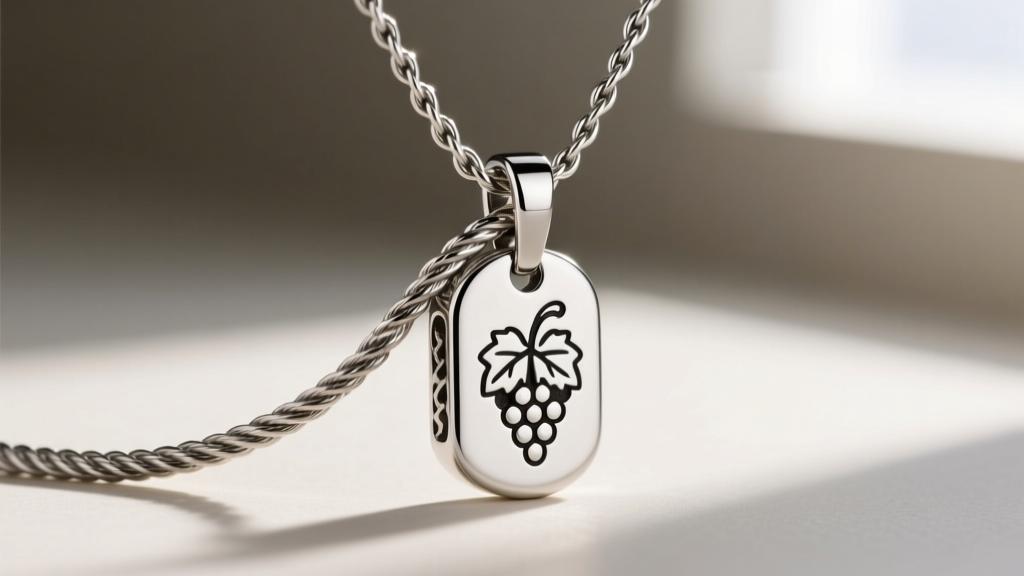
- Chain Style: The rope chain or the flat curb chain are the industry standards. Rope chains (specifically the diamond-cut variety) offer superior tensile strength and resist kinking, which is crucial when the necklace is repeatedly pulled over the head.
- Gauge and Thickness: A professional-grade chain should measure between 3.0mm and 4.5mm in thickness. Anything below 2.5mm risks deformation of the links under the pendant's weight.
- Length Specifications: The standard length is 24 to 28 inches. This specific drop ensures the tastevin rests precisely at the sternum or mid-chest. If the chain is too short (e.g., 18 inches), the cup rests on the collarbone, making it ergonomically awkward to lift to the mouth without spilling. If it is too long (30+ inches), it swings dangerously and can strike the table or glassware.
- Clasp Mechanics: A heavy-duty lobster clasp (minimum 15mm) paired with a reinforced 14-gauge jump ring is mandatory. Spring-ring clasps are entirely unsuitable for the weight of a solid silver tastevin and are a primary failure point in inferior necklaces.
Ergonomics and Usage: How the Pendant Functions in the Cellar
The sommelier necklace is a wearable tool, and its ergonomics dictate its utility. When evaluating a wine, the sommelier unclips or lifts the tastevin, holding it by the thumb rest. The cup is tilted at a 45-degree angle over a white surface or a light source. The wine is poured into the dimpled side to evaluate the core color and depth, and then swirled toward the ridged side to assess the rim variation and viscosity (the 'tears' or 'legs').
"The weight of a traditional silver tastevin provides necessary tactile feedback. When you hold a 60-gram silver cup, the kinetic dampening allows you to swirl a highly volatile aromatic wine without aggressive splashing, preserving the delicate esters for olfactory evaluation."
In 2026, while many sommeliers use the necklace primarily as a badge of office and a conversation starter with guests, the functional geometry remains unchanged. The thumb rest must be wide enough (at least 18mm) to distribute the weight of the liquid-filled cup across the distal phalanx of the thumb, preventing hand fatigue during marathon tasting sessions.
Buying Guide: Identifying Authentic Professional Grade Pieces
When sourcing a sommelier necklace for professional use or as a high-end gift, buyers must look past superficial branding and inspect the manufacturing quality. Use this technical checklist to verify authenticity and grade:
- Hallmark Verification: Look for the '925' stamp on the underside of the cup or the back of the thumb rest. Authentic French pieces may also feature the Minerva head hallmark, indicating state-assayed French silver.
- Seamless Construction: Run your finger along the interior rim of the cup. High-end tastevins are spun or stamped from a single sheet of silver and polished to a seamless finish. If you feel a soldered seam where the handle meets the cup, it is a lower-tier manufacturing method that can harbor bacteria and wine residue.
- Weight and Balance: A professional Bourgogne tastevin should weigh a minimum of 45 grams. Hold the necklace by the chain; the pendant should hang perfectly plumb. If the cup tilts forward or backward, the solder point for the jump ring is misaligned, which will cause the wine to pool unevenly during tasting.
- Dimple Depth: The convex dimples inside the cup should be pronounced. Shallow, poorly stamped dimples will fail to scatter light effectively, rendering the tool useless in low-light cellar environments.
Care and Maintenance of Silver Tastevin Pendants
Sterling silver is prone to tarnishing due to a chemical reaction with sulfur compounds in the air, forming silver sulfide. In a restaurant environment, exposure to sulfur-rich foods (like eggs or alliums) and certain cleaning chemicals can accelerate this process. To maintain the optical clarity required for wine evaluation, the sommelier necklace requires disciplined maintenance.
After every use, the tastevin must be rinsed with warm water and dried immediately with a microfiber cloth. Never wash a silver tastevin in a commercial dishwasher; the high heat and harsh alkaline detergents will permanently cloud the silver's finish. For polishing, use a dedicated jeweler's rouge cloth rather than liquid silver dips. Liquid dips strip away a microscopic layer of silver and can leave a chemical residue that will instantly taint the next wine poured into the cup. Store the necklace in an anti-tarnish flannel pouch, separated from other jewelry to prevent the heavy silver cup from scratching softer metals or gemstones.


