Sophie's Necklace Bridgerton: Material & Replica Guide
Discover the material properties of Sophie's necklace Bridgerton replicas. Compare sterling silver, plating, and Regency-era crystal alternatives.

The Lore and Legacy of Sophie's Keepsake Jewelry
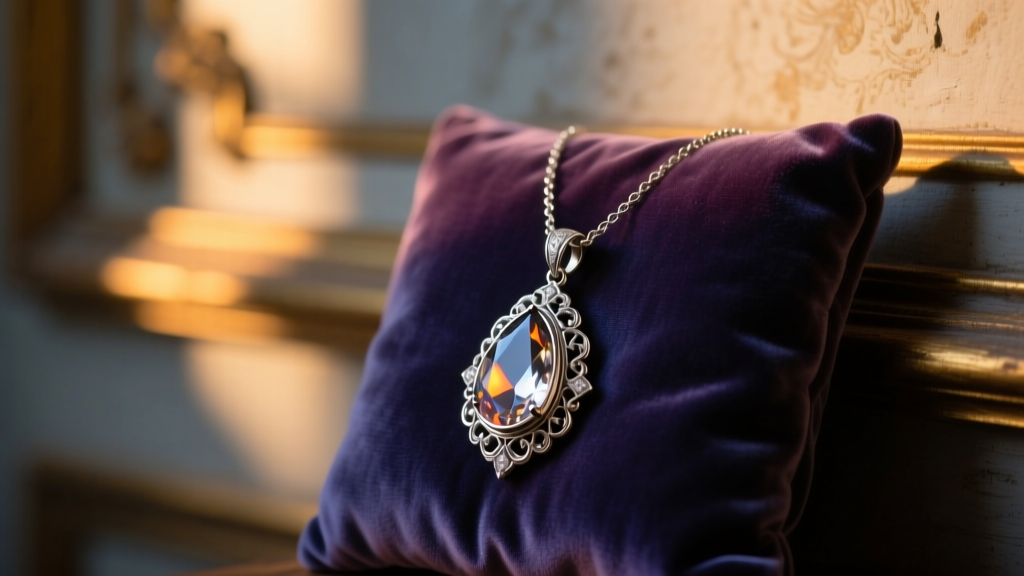
As anticipation reaches a fever pitch for the television adaptation of An Offer From a Gentleman, fans are intensely searching for sophie's necklace bridgerton replicas and official merchandise. Sophie Beckett, the Cinderella-esque heroine of Julia Quinn’s beloved third Bridgerton novel, is defined by her hidden nobility and the tragic loss of her mother. In both the literary canon and the broader Regency aesthetic, a solitary, cherished pendant—often silver and featuring a central crystal or paste jewel—serves as a powerful narrative anchor. It represents her true lineage, hidden beneath the soot and servitude of her stepmother’s cruelty.
However, translating a fictional or historically inspired Regency artifact into a modern, wearable piece of jewelry requires a deep understanding of metallurgy and gemology. The market in 2026 is flooded with screen-accurate replicas, fan-made interpretations, and mass-produced fast-fashion knockoffs. To invest in a piece that honors the Bridgerton legacy without turning your skin green or losing its luster after a single ball, you must look past the marketing and examine the material composition, plating thickness, and structural integrity of the piece.
Regency-Era Materials: The Historical Reality of Paste and Silver
To understand what a high-quality replica should emulate, we must first look at what a woman of Sophie’s precarious social standing would have actually worn in 1815. While the Bridgerton family flaunted real diamonds and gold, Sophie’s hidden keepsake would historically have been crafted from sterling silver and set with 'paste' jewels.
'Paste jewelry was not considered a cheap imitation in the Regency era; it was a highly respected art form. Lead glass, cut with meticulous precision, offered a brilliance that rivaled early diamond cuts, making it a staple for both the gentry and those of reduced circumstances.' — Victoria and Albert Museum
Historically, paste jewels were made from high-lead-content glass, which increased the refractive index, giving the stones a fiery sparkle. The settings were usually sterling silver or 'pinchbeck' (a copper-zinc alloy used to imitate gold). Modern replicas, however, rarely use lead glass due to toxicity concerns, nor do they use antique silver casting methods. Instead, the quality of a modern sophie's necklace bridgerton pendant hinges on the specific grade of silver and the type of synthetic stone utilized.
Base Metals: Sterling Silver vs. Plated Alloys
The most critical decision when purchasing a replica necklace is the base metal. The structural integrity and longevity of the pendant depend entirely on this choice.
925 Sterling Silver: The Gold Standard for Replicas
Premium replicas are cast in 925 sterling silver. This alloy consists of 92.5% pure silver and 7.5% copper. The copper is essential; pure silver (999) is far too malleable to hold the delicate prongs required for a Regency-style teardrop crystal. However, that same copper is what causes sterling silver to tarnish when exposed to sulfur and humidity. To combat this, high-end Bridgerton jewelry collaborations utilize rhodium plating.
Rhodium is a precious metal in the platinum family. A premium replica will feature a 'heavy flash' rhodium plating of at least 1.5 to 2.0 microns. This thickness ensures the bright, white-metal finish lasts for years of daily wear. Budget replicas, conversely, use a 'micro-plating' of less than 0.25 microns, which will wear through to the copper-rich silver beneath within weeks, leading to rapid oxidation and skin discoloration.
Zinc and Brass Alloys: The Fast-Fashion Trap
Many unauthorized, mass-produced replicas found on e-commerce marketplaces are cast from zinc alloy (often marketed as 'Tibetan silver' or 'antique silver') or brass. These base metals are heavily plated with a microscopic layer of silver or nickel. Once the plating fractures—a process accelerated by the natural acidity of human sweat—the underlying zinc or brass reacts with oxygen and moisture, resulting in a corrosive green patina that can ruin clothing and irritate the skin. For a piece meant to symbolize enduring love and hidden nobility, zinc alloys are a fundamental failure of material integrity.
Gemology: Cubic Zirconia vs. Modern Crystal
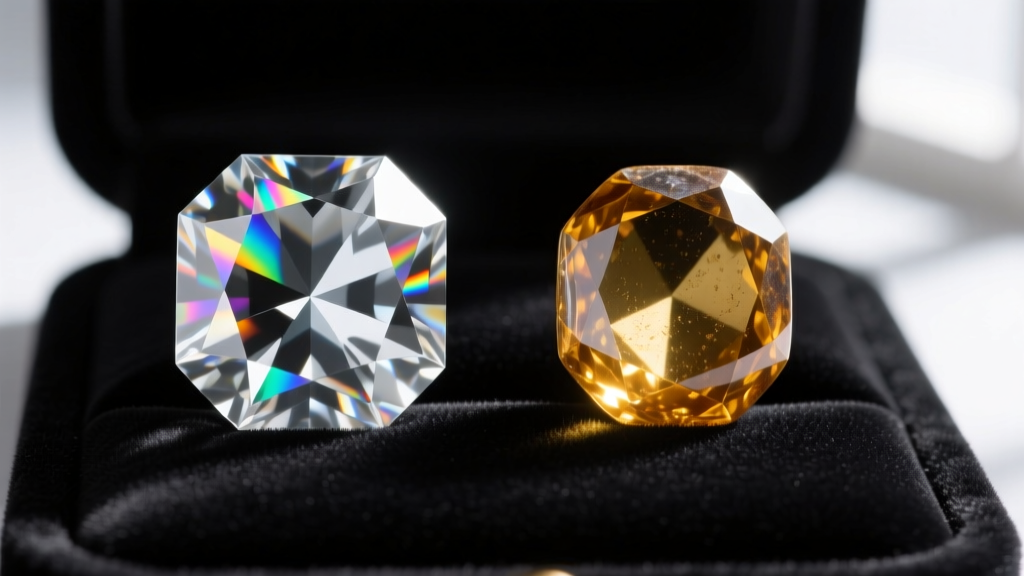
The centerpiece of Sophie's necklace is traditionally a brilliant, faceted stone. Because historical lead glass is obsolete in modern commercial jewelry, manufacturers rely on two primary alternatives: Cubic Zirconia (CZ) and precision-cut lead-free crystal (such as Swarovski or Preciosa).
According to the Gemological Institute of America (GIA), Cubic Zirconia is a synthetic crystalline substance that is optically flawless and remarkably hard. On the Mohs scale of mineral hardness, CZ ranks at an 8.5, making it highly resistant to the micro-scratches that occur when jewelry is stored in a box or brushed against clothing. Its high dispersion (0.058) gives it the 'fire' or rainbow flashes that mimic a brilliant-cut diamond.
Modern lead-free crystal, while beautiful and historically evocative of Regency paste, ranks much lower on the Mohs scale (around 5.5 to 6.0). Over time, crystal facets will abrade, dulling the stone's brilliance. Furthermore, crystal is usually foiled (backed with a reflective metallic coating) to enhance its sparkle. If the foil backing gets wet or is exposed to high humidity, it will oxidize and turn black, effectively killing the stone's light return. For a necklace meant to be worn frequently, a prong-set, unfoiled Cubic Zirconia is the vastly superior material choice.
Material & Structural Comparison Chart
| Material Feature | Premium Replica (Screen-Accurate) | Budget E-Commerce Knockoff |
|---|---|---|
| Base Metal | 925 Sterling Silver (Nickel-Free) | Zinc Alloy or Cast Brass |
| Plating | Rhodium (1.5 - 2.0 microns) | Silver-tone flash (Under 0.2 microns) |
| Center Stone | AAA-Grade Cubic Zirconia (Mohs 8.5) | Acrylic or Foiled Glass (Mohs 5.0) |
| Stone Setting | Hand-set Prongs or Bezel | Glued / Epoxy Resin |
| Expected Lifespan | Decades (with proper care) | 3 to 6 months of regular wear |
Hardware and Failure Modes: What to Inspect
A necklace is only as strong as its weakest mechanical link. When evaluating a sophie's necklace bridgerton pendant, you must inspect the hardware. The most common failure mode in budget jewelry is the jump ring—the small circular loop that connects the pendant to the chain.
In cheap manufacturing, jump rings are simply snipped from a wire coil, leaving a tiny gap. Over time, the friction of the chain sliding against this gap will cause the ring to twist open, and you will lose the pendant. High-quality replicas utilize soldered jump rings, where the gap is fused shut with a laser or torch, creating a continuous, unbreakable loop.
Additionally, examine the clasp. The delicate nature of Regency chains (often 1.2mm to 1.5mm cable or curb chains) requires a lightweight but secure clasp. While spring-ring clasps are historically accurate and lightweight, they are notorious for internal spring failure. A premium modern replica will often upgrade to a micro-lobster clasp, which offers superior tensile strength and is much easier to manipulate with one hand.
Authentication: Hallmarks and the Assay Process
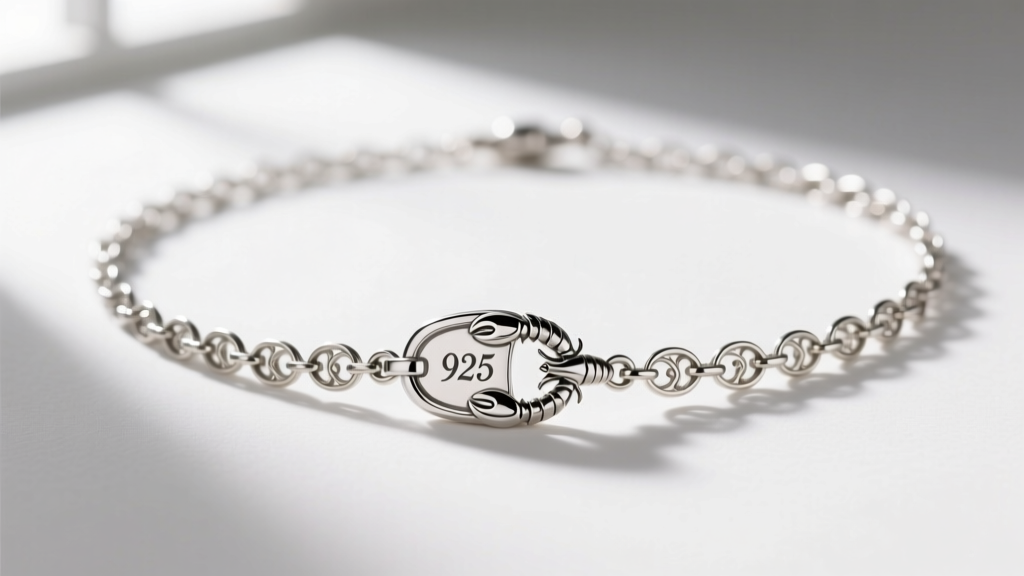
If you are investing in a high-end sterling silver replica, you must verify the hallmark. In the UK and Europe, the Assay Office mandates that any item sold as silver over 7.78 grams must be hallmarked. Even for lighter pieces, a reputable manufacturer will stamp '925' on the back of the pendant or the clasp tag.
Beware of stamps that read 'SP' (Silver Plated) or 'Tibetan Silver,' as these are not genuine sterling alloys. A true 925 stamp should be crisp, deeply engraved, and cleanly struck. If the stamp looks blurry or stamped over a rough casting line, it is likely a counterfeit mark applied to a base-metal casting.
Care and Maintenance for Silver and CZ Jewelry
Even the finest 925 sterling silver and rhodium-plated replicas require specific maintenance to preserve their Regency-era brilliance. To ensure your necklace survives the season and beyond, adhere to these strict material care protocols:
- Avoid Sulfur Exposure: Silver tarnishes primarily due to hydrogen sulfide in the air. Keep your necklace away from rubber bands, wool, and certain cosmetics that contain sulfur compounds.
- The 'Last On, First Off' Rule: Always put your necklace on after applying perfumes, hairsprays, and lotions. The alcohol and volatile organic compounds (VOCs) in cosmetics can degrade the rhodium plating and cloud the surface of a CZ stone.
- Ultrasonic Cleaning Warnings: While ultrasonic cleaners are excellent for removing sebum and dirt from CZ stones, they can be highly destructive if your replica features any foiled crystals or epoxy-set accent stones. The high-frequency vibrations will shatter the foil backing or shake the glue loose. Stick to a mild, phosphate-free dish soap and a soft baby toothbrush for safe cleaning.
- Anti-Tarnish Storage: Store the necklace in an airtight polyethylene bag alongside a 3M anti-tarnish strip. The strip will absorb ambient sulfur and moisture, keeping the underlying silver pristine even if the rhodium plating eventually wears thin.
Final Verdict on Sourcing Your Regency Piece
The search for the perfect sophie's necklace bridgerton piece is ultimately an exercise in material literacy. While the allure of a low-priced replica is strong, the metallurgical reality dictates that you will pay for the piece either at the register or through the frustration of a tarnished, broken chain three months later. By insisting on 925 sterling silver with substantial rhodium plating, prong-set Cubic Zirconia, and soldered hardware, you ensure that your tribute to Sophie Beckett’s enduring story is built to last far beyond the final credits of the season.


