Spike Necklace Material Guide: Steel, Silver, and Titanium Compared
Compare spike necklace materials like surgical steel, titanium, and sterling silver. Discover the best metal for durability, weight, and sensitive skin.

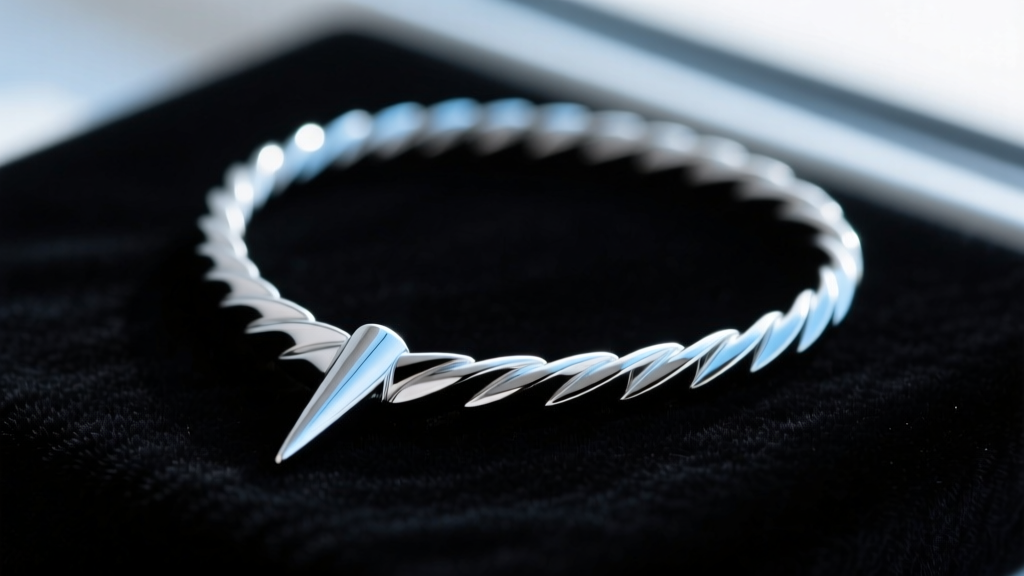
The Physics of Spikes: Why Material Dictates Longevity
When evaluating a spike necklace, most buyers focus purely on the aesthetic—the aggressive silhouette, the punk-rock heritage, or the high-fashion edge. However, from an engineering and metallurgical standpoint, a spike necklace is a dynamic load-bearing system. Unlike a flat pendant that rests flush against the sternum, spikes act as cantilevered weights. Every time you move, the spikes swing, creating pendulum-like kinetic energy that transfers shear stress directly to the chain links, jump rings, and clasp mechanisms.
Choosing the right material is not just about color preference; it is about managing density, tensile strength, and biocompatibility. A heavy metal might look imposing but will prematurely stretch your chain. A soft metal might scratch and lose its machined threads. In this comprehensive 2026 material comparison, we break down the exact metallurgical properties of the four most common spike necklace alloys to help you make an informed, long-term investment.
Metallurgical Breakdown: The Big Four Spike Materials
316L Surgical Stainless Steel (The Workhorse)
316L stainless steel is the undisputed heavyweight champion of alternative and streetwear jewelry. The 'L' stands for low carbon, which prevents carbide precipitation during welding, ensuring the structural integrity of the spike bases. More importantly, 316L contains 2-3% molybdenum, which drastically increases its resistance to pitting and crevice corrosion compared to standard 304 steel.
- Density: ~8.0 g/cm³ (Noticeably heavy on the neck)
- Vickers Hardness (HV): 150-190 HV (Highly scratch-resistant)
- Price Range: $35 - $95
The Caveat: While marketed as 'surgical,' standard jewelry-grade 316L still contains 10-14% nickel. According to the American Academy of Dermatology, nickel is the leading cause of allergic contact dermatitis. If you have a known nickel sensitivity, prolonged skin contact with the backplates of steel spikes will likely trigger a reaction.
Grade 5 Titanium (The Hypoallergenic Titan)
For those who demand the strength of steel without the weight or the allergens, Ti-6Al-4V (Grade 5 Titanium) is the ultimate upgrade. Originally developed for aerospace and medical implants, this alloy contains 6% aluminum and 4% vanadium, yielding a tensile strength that rivals high-carbon steels while being roughly 45% lighter.
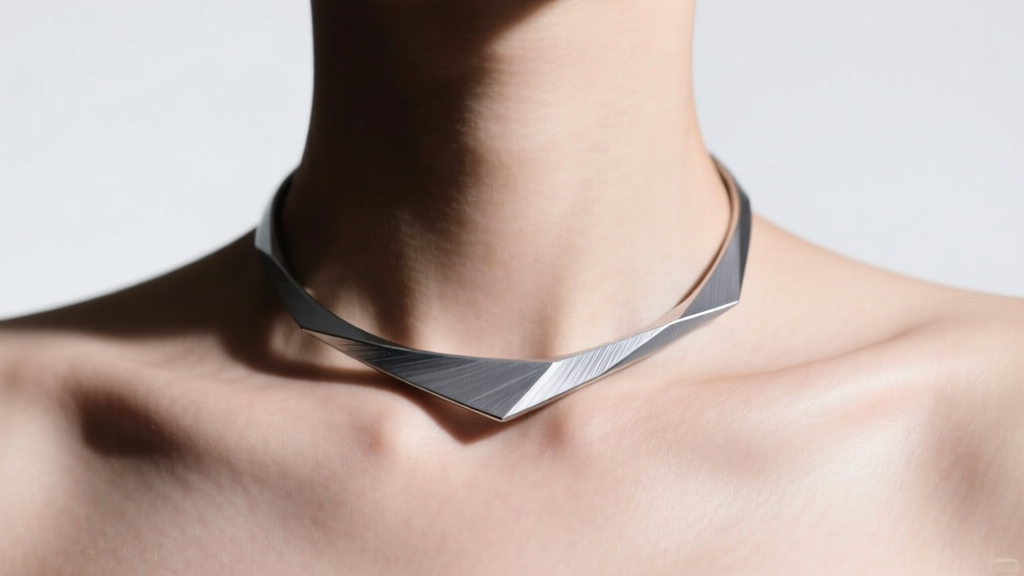
Titanium spikes will not fatigue your cervical spine during all-day wear, and the material is entirely biocompatible. Furthermore, titanium can be anodized to produce vibrant, permanent colors (like deep blues or purples) without using surface paints that chip over time. The primary drawback is the cost of machining; titanium destroys CNC cutting tools, making intricate spike threading significantly more expensive to manufacture.
.925 Sterling Silver (The Luxury Standard)
Sterling silver offers an unmatched, brilliant luster that darker metals cannot replicate. Composed of 92.5% pure silver and 7.5% copper, it is a precious metal that holds intrinsic value. However, pure silver is exceptionally soft, and even with the copper alloy, .925 silver maxes out at around 65-75 HV on the Vickers scale.
This means the threaded screw-on caps of silver spikes are highly susceptible to cross-threading and stripping if forced. Additionally, the copper content makes the alloy prone to oxidation (tarnish) when exposed to sulfur in the air and human sweat. As noted by the Gemological Institute of America (GIA), regular polishing is mandatory, though aggressive polishing will eventually wear down the sharp, machined points of the spikes.
Solid Brass and Bronze (The Patina Purists)
Brass (copper and zinc) and bronze (copper and tin) are favored in artisanal and heritage-style spike jewelry. These alloys offer a warm, golden hue that develops a rich, dark patina over time. They are dense, heavy, and relatively easy to cast, making them ideal for chunky, gothic, or biker-style spike designs. However, they require a protective clear coat or regular maintenance with brass polish to prevent the copper from reacting with skin acids, which causes the dreaded 'green skin' effect.
Head-to-Head Material Comparison Matrix
| Material | Density (g/cm³) | Hardness (HV) | Corrosion Resistance | Best For |
|---|---|---|---|---|
| 316L Steel | 8.00 | 150-190 | Excellent | Everyday streetwear, budget-conscious buyers |
| Grade 5 Titanium | 4.43 | 330-360 | Superior | Sensitive skin, large/heavy spike designs |
| .925 Silver | 10.36 | 65-75 | Poor (Tarnishes) | Luxury fashion, occasional wear, collectors |
| Solid Brass | 8.40 - 8.70 | 80-110 | Moderate (Patina) | Heritage aesthetics, biker fashion, patina lovers |
Failure Modes: How Spike Necklaces Break
Understanding how jewelry fails is the hallmark of a true collector. The most common point of failure in a spike necklace is not the spike itself, but the jump ring connecting the spike base to the chain.
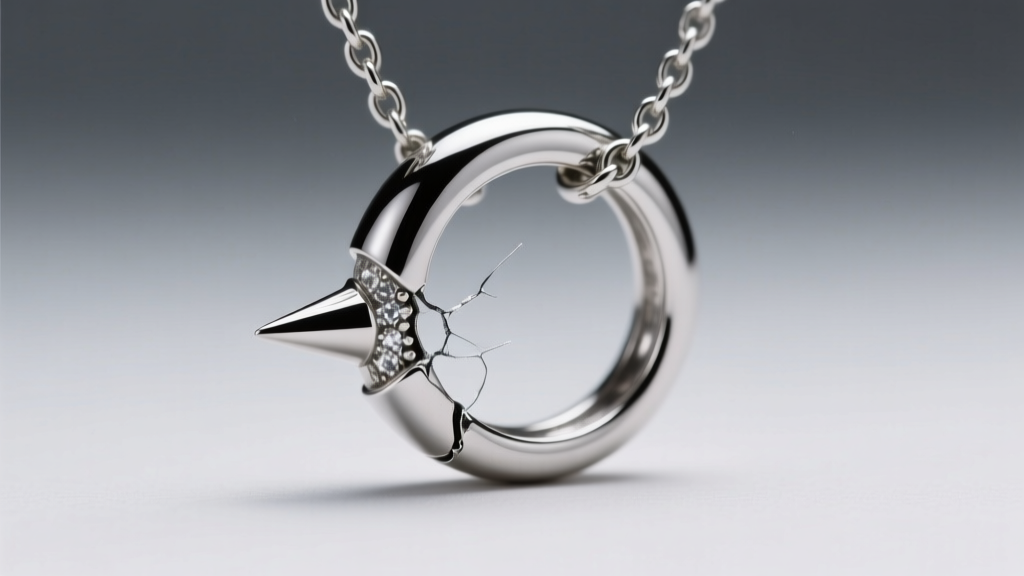
The Pendulum Shear Effect
Because spikes are elongated and heavy, they catch on clothing and swing wildly. This creates a lever effect that pries open standard split jump rings. If your spike necklace uses split jump rings (rings with a tiny slit), the dynamic loading will eventually twist the ring open, and you will lose a spike. Always insist on laser-welded or seamlessly soldered jump rings for the spike-to-chain connections.
Galvanic Corrosion in Mixed Metals
A major trend in 2026 is mixed-metal hardware—such as pairing a stainless steel chain with sterling silver spikes. If you sweat heavily, the saltwater acts as an electrolyte, creating a galvanic cell between the two dissimilar metals. The less 'noble' metal (usually the steel or the copper in the silver) will undergo accelerated galvanic corrosion, leading to pitting and structural weakening at the connection points.
Pro-Tip: If you must mix metals, ensure there is a physical barrier between them, such as a neoprene or silicone O-ring placed between the steel jump ring and the silver spike bail. This breaks the electrical circuit and prevents galvanic corrosion.
Matching the Metal to Your Lifestyle and Neckline
The material you choose should align with your wardrobe and daily activities. Here is a practical decision framework:
- For High-Collar and Layering (Turtlenecks, Hoodies): Choose Grade 5 Titanium. Its lighter weight prevents it from dragging down the fabric of your hoodie, and the matte grey finish provides a subtle, industrial contrast to heavy cottons and wools without catching on the fibers.
- For Open Necklines and Evening Wear: Choose .925 Sterling Silver. The high reflectivity of polished silver catches ambient light beautifully against bare skin. Opt for smaller, 1-inch cone spikes rather than massive 3-inch pyramids to maintain an elegant, high-fashion silhouette.
- For Active Lifestyles and Gym Wear: Choose 316L Stainless Steel or Titanium. Both can withstand sweat and moisture without degrading. However, be mindful that heavy steel spikes can become dangerous projectiles during high-impact movements like running or weightlifting; titanium is the safer, lighter alternative for active days.
Final Verdict: Which Spike Necklace Metal Should You Buy?
There is no single 'best' material; there is only the right material for your specific parameters. If you are on a budget and have no metal allergies, 316L stainless steel offers the best ratio of scratch resistance to price. If you are investing in a large, statement piece with 2-inch or longer spikes, the weight penalty of steel becomes unbearable, making Grade 5 Titanium an absolute necessity for comfort and chain longevity. Finally, if you view your jewelry as a luxury asset and are willing to commit to a monthly polishing routine, .925 Sterling Silver provides a prestige and brilliance that industrial metals simply cannot match.
By prioritizing metallurgical properties over fleeting visual trends, you ensure that your spike necklace remains a staple in your rotation for decades, surviving both the rigors of daily wear and the shifting tides of fashion.


