Evaluating Pearl Necklace Pics: How to Spot Fakes Before You Buy
Learn how to evaluate pearl necklace pics to spot fakes, check drill holes, and verify luster before buying online. Expert troubleshooting guide.

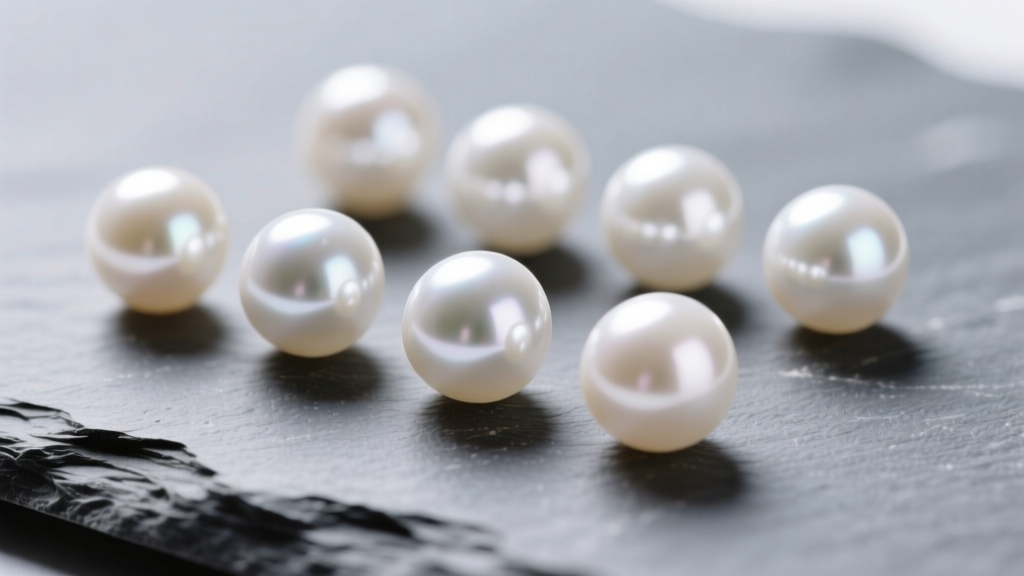
The Online Pearl Dilemma: Why Photos Can Deceive
The secondary jewelry market and boutique online storefronts are thriving in 2026, making it easier than ever to find vintage and contemporary pearl jewelry. However, this convenience comes with a significant risk: sophisticated counterfeits. High-end coated glass beads and advanced shell-bead composites can look remarkably convincing in standard product photography. When you are evaluating pearl necklace pics on platforms like Etsy, eBay, or Instagram, you are entirely reliant on the seller's camera skills and lighting choices. A well-lit, heavily filtered photo can make a $30 strand of painted glass look indistinguishable from a $3,000 strand of Hanadama Akoya pearls.
As a buyer, you must transition from a passive observer to an active visual investigator. Troubleshooting the authenticity of pearls through digital images requires a trained eye, an understanding of nacre formation, and knowledge of jewelry construction. Below is a comprehensive, expert-level guide to dissecting pearl necklace pics and identifying the subtle red flags that reveal a counterfeit.
4 Visual Troubleshooting Tests for Pearl Necklace Pics
When analyzing photos, do not just look at the overall aesthetic of the necklace. You must zoom in and pixel-peep specific structural elements. Here are the four critical tests to run on any set of pearl necklace pics before handing over your credit card information.
1. The Drill Hole Zoom-In (The Ultimate Giveaway)
The drill hole is the most reliable indicator of authenticity in macro photography. Genuine pearls are organic gemstones formed in layers of nacre. To prevent the delicate nacre from blowing out or chipping during the drilling process, gemologists drill real pearls from both sides until the holes meet in the middle. This results in a very clean, sharp, and relatively small hole, typically measuring between 0.8mm and 1.0mm in diameter.
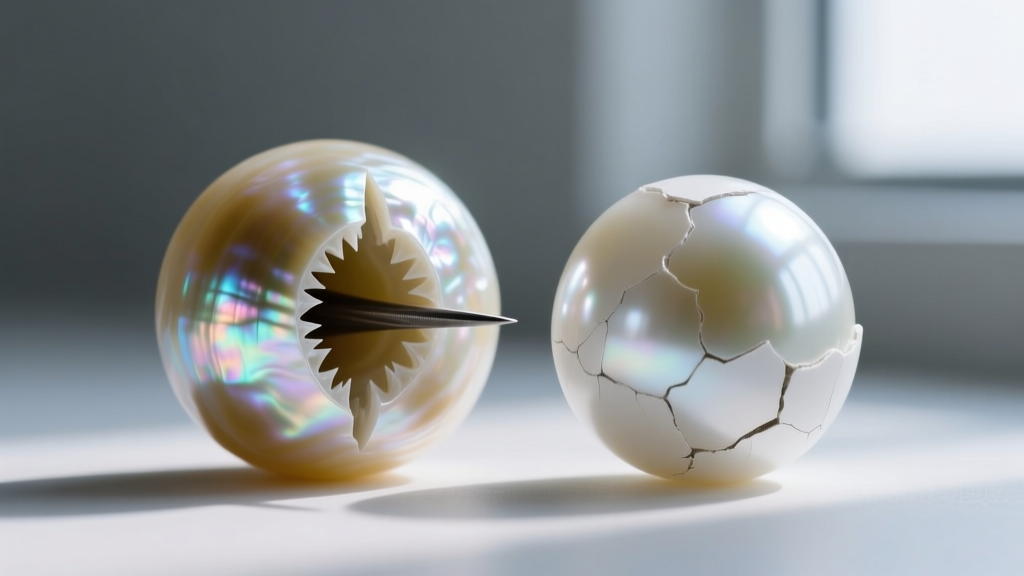
Conversely, fake pearls—whether plastic or glass-core—are often mass-produced and drilled straight through in a single pass. When examining pearl necklace pics, zoom in tightly on the drill holes. If you see the white "pearl" coating peeling, flaking, or chipping away from the edges of the hole, exposing a clear glass or dark plastic core underneath, you are looking at a fake. Furthermore, if the holes appear excessively wide, jagged, or melted (common in plastic beads), walk away.
2. Luster and Overtone Pixel Analysis
Luster is the measure of the quantity and quality of light reflected from a pearl's surface and its underlying nacre layers. According to the Gemological Institute of America (GIA), high-quality pearls possess a deep, mirror-like luster that appears to glow from within. Fakes, on the other hand, rely on surface coatings (like guanine essence or synthetic lacquers) to mimic this shine.
When troubleshooting pearl necklace pics, look closely at the highlights—the bright white spots where the light source hits the pearl. On a real pearl, the edges of the highlight will be sharp and crisp, and you will often see "orient" (a subtle, iridescent rainbow effect) or overtones (like a blush of pink or green) bleeding into the shadows. On a fake pearl, the highlight often looks flat, chalky, or overly uniform. If you zoom in on the surface of a fake pearl's highlight, you may even detect a stippled, sprayed-on texture characteristic of mass-manufactured coatings.
3. Surface Topography and Symmetry
There is an old gemological adage: "Real is never perfect." Because pearls are grown by living mollusks over several years, they are subject to environmental fluctuations, water temperature changes, and biological imperfections. Even the highest grades of pearls (such as AAA or Gem Grade) will exhibit microscopic surface characteristics—tiny ridges, bands, or pinpricks—when viewed under magnification.
If the pearl necklace pics display a strand of pearls that are mathematically perfectly round, completely devoid of any surface blemishes, and identical in every conceivable way, your troubleshooting alarms should sound. Unless the seller is asking for premium investment-grade pricing (typically $5,000+ for a matched strand of flawless South Sea pearls), absolute perfection is a massive red flag for glass or plastic beads.
4. Stringing, Knotting, and Clasp Hardware
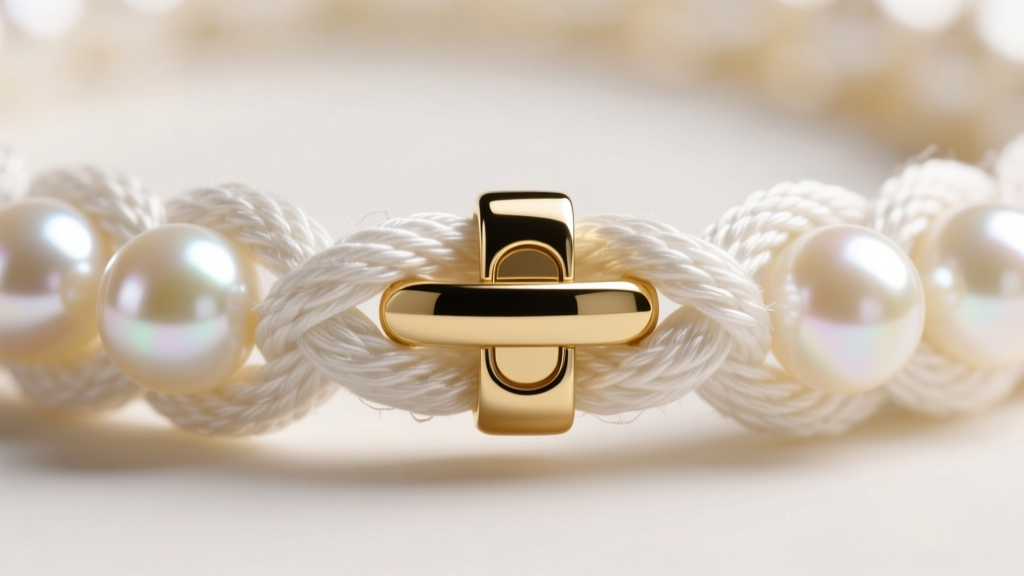
The construction of the necklace provides vital context about the pearls themselves. High-quality, genuine pearls are almost always strung on 100% silk thread and individually knotted. Knotting prevents the pearls from rubbing against one another (which would degrade the nacre) and ensures that if the strand breaks, you only lose one pearl. In high-resolution pearl necklace pics, inspect the spaces between the pearls. The knots should be tight, uniform, and sit flush against the bead. If the pearls are strung on wire, cheap nylon that looks like fishing line, or worse, strung with no knots at all, the pearls are likely costume jewelry.
Additionally, scrutinize the clasp. Genuine pearl strands are finished with solid 14k or 18k gold, or platinum clasps, often featuring a safety figure-8 catch. If the clasp looks like base metal, lacks a proper hallmark stamp, or uses a cheap lobster claw typically found on fashion jewelry, the pearls are almost certainly fake.
Quick-Reference Table: Spotting Fakes in Pearl Necklace Pics
Use this troubleshooting matrix to quickly cross-reference the visual data in the seller's photos against known gemological standards.
| Visual Cue | Genuine Pearl Indicator | Fake Pearl Red Flag |
|---|---|---|
| Drill Hole Edges | Sharp, clean, small (0.8mm-1.0mm), drilled from both sides. | Rounded, jagged, peeling coating, wide hole exposing glass/plastic. |
| Luster & Highlights | Deep, 3D glow, crisp highlight edges, visible overtones/orient. | Flat, chalky, painted look, stippled texture in the highlights. |
| Surface & Shape | Microscopic ridges, minor asymmetry, slight variations in shape. | Mathematically perfect spheres, flawless plastic-like surfaces. |
| Stringing Material | Individually knotted on silk or high-grade nylon, tight to the bead. | No knots, wire stringing, cheap nylon, large gaps between beads. |
| Clasp Hardware | Solid gold/platinum, hallmark stamps, safety catches. | Base metal, magnetic, cheap lobster claws, no stamps. |
When Pics Aren't Enough: Demanding the Right Angles
Sellers often use stock photos or heavily edited lifestyle shots that obscure the details you need to see. If you are serious about a piece, you must troubleshoot the listing by requesting specific photographic evidence. Do not be afraid to message the seller and ask for the following:
- The Macro Drill Hole Shot: Ask them to place the necklace on a dark, non-reflective surface and take a macro photo of the drill hole where the clasp meets the first pearl.
- The Clasp Hallmark Shot: Request a clear, well-lit photo of the inside of the clasp to verify the metal purity stamp (e.g., 14K, 585, 750).
- The Unfiltered Surface Shot: Ask for a photo taken in natural, indirect window light without any beauty filters or flash, which can wash out surface blemishes and artificially inflate luster.
According to the Pure Pearls Education Guide, reputable dealers will always have high-resolution, unedited macro photography available or will gladly provide it upon request. If a seller refuses to provide detailed pearl necklace pics or claims they "don't have a macro lens," consider it a major red flag and take your business elsewhere.
Pricing Reality Checks: Does the Math Add Up?
Visual troubleshooting must always be paired with a pricing reality check. The global pearl market has strict pricing tiers based on origin, size, and quality. In 2026, a 16-inch strand of 7.0mm AAA-grade Akoya pearls will reliably cost between $900 and $1,800 from a reputable dealer. High-quality South Sea or Tahitian pearls will easily command $3,000 to $10,000+.
Freshwater pearls are more affordable due to higher yields, but a well-matched, high-luster strand still costs between $150 and $500. If you are looking at pearl necklace pics that showcase seemingly flawless, highly lustrous, perfectly round 9mm pearls, and the listing price is $65, you are not looking at a bargain; you are looking at a coated glass bead. Use price as your ultimate troubleshooting filter. If the visual evidence suggests high quality but the price suggests a flea market, trust the price.
Final Verdict: Protecting Your Investment
Evaluating pearl necklace pics requires a shift in mindset. You must stop looking at the jewelry as a decorative accessory and start examining it as a biological and structural specimen. By focusing on the sharpness of the drill holes, the depth of the luster, the inevitability of surface imperfections, and the quality of the stringing and clasps, you can effectively filter out 95% of counterfeits before you ever click "Buy." Armed with these troubleshooting techniques, you can navigate the online jewelry market with confidence, ensuring that the pearls arriving at your door are as genuine as they appear on your screen.


