St Francis of Assisi Necklace: Metal Grades & Iconography
Master the technical details of a St Francis of Assisi necklace. Compare metal alloys, decode iconography, and engineer the perfect chain pairing.

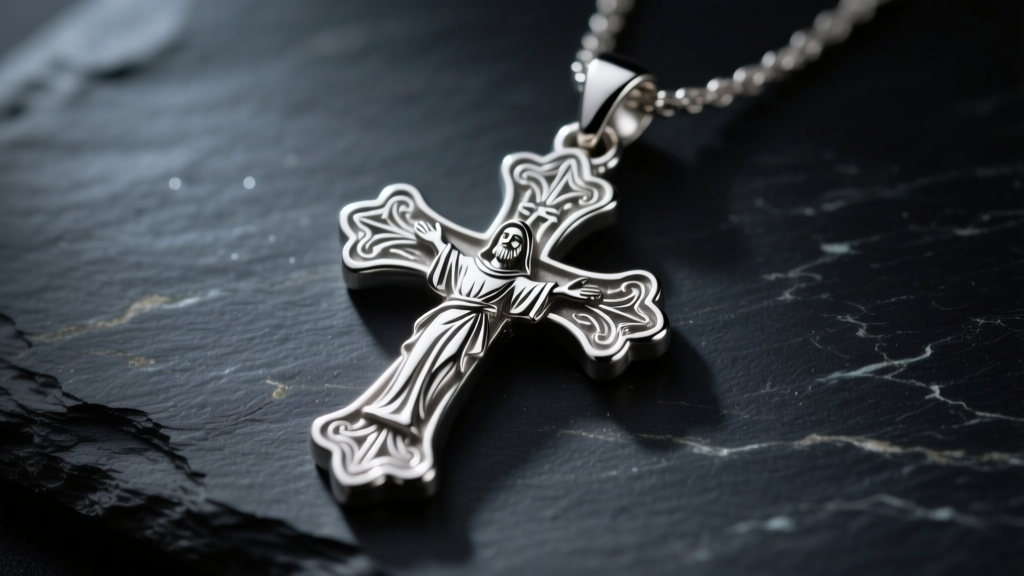
The Intersection of Faith and Metallurgy
When selecting a st francis of assisi necklace, most buyers focus solely on the spiritual significance of the patron saint of ecology and animals. However, from a master jeweler’s perspective, a religious medal is a complex piece of wearable sculpture. It requires precise metallurgical choices, accurate iconographic representation, and structural engineering to ensure the piece survives decades of daily wear against the skin. The harsh reality of jewelry mechanics dictates that a poorly cast medal or an improperly paired chain will result in broken bails, flattened relief details, and accelerated metal fatigue. This technical deep dive bypasses the usual sentimental fluff to examine the exact material sciences, casting methodologies, and structural tolerances required to engineer a flawless St. Francis pendant.
Iconographic Accuracy and Relief Engineering
The visual language of a St. Francis medal is governed by centuries of Franciscan tradition. There are three primary motifs utilized in high-end sacramental jewelry, each presenting unique challenges for the jewelry caster.
The Tau Cross vs. The San Damiano Crucifix
The Tau (or San Damiano) cross is the most universally recognized Franciscan symbol. In a high-quality pendant, the Tau should not be a flat, stamped piece of metal. It requires a bas-relief carving with a minimum depth of 1.2mm to capture the textured, wooden grain of the original San Damiano cross. Die-striking, a common mass-production technique, compresses the metal and limits relief depth to roughly 0.5mm, resulting in a flat, lifeless cross. Artisan pieces utilize lost-wax casting, allowing for deeper, more organic textures that catch the light and emphasize the wood-grain aesthetic.
The Wolf of Gubbio and Avian Motifs
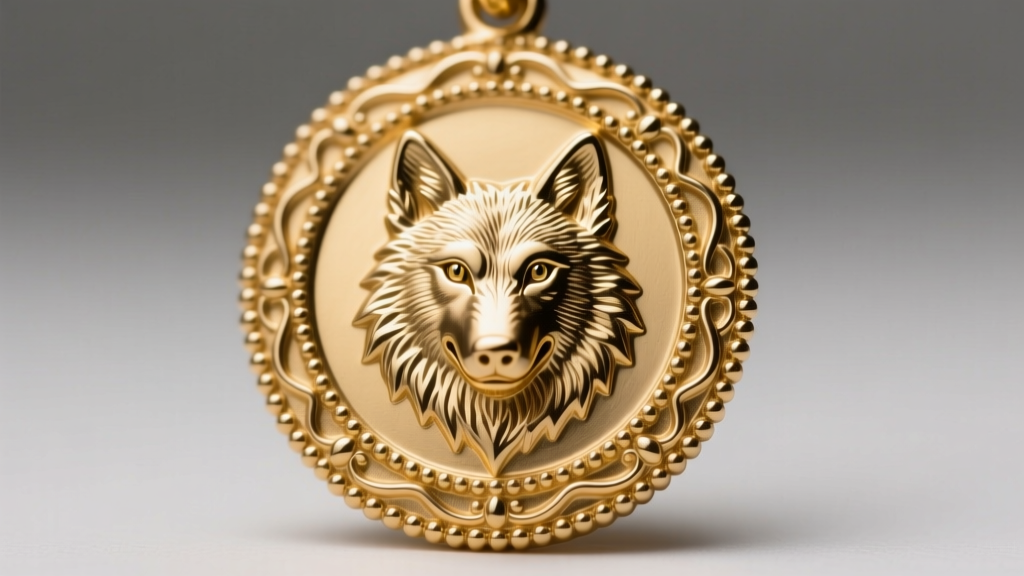
Medals depicting the Wolf of Gubbio or the birds from the Canticle of the Sun require extreme precision in high-relief casting. The facial features of the saint and the anatomical accuracy of the animals demand a master wax carver. If the relief depth exceeds 2.5mm on a standard 22mm medal, the piece becomes excessively heavy and prone to flipping. Jewelers must carefully calculate the Z-axis depth to balance visual prominence with ergonomic weight distribution.
Metallurgical Deep Dive: Choosing the Right Alloy
The environment a religious necklace endures is highly corrosive. Constant exposure to human sebum, sweat (which contains lactic acid and urea), and friction requires an alloy that balances hardness, skin reactivity, and detail retention. According to the GIA Gem Encyclopedia, understanding the exact composition of your chosen metal is critical for long-term wearability.
| Alloy Grade | Composition & Hardness (Vickers) | Patina & Oxidation Profile | Detail Retention | Estimated Price Range (25mm Blank) |
|---|---|---|---|---|
| .925 Sterling Silver | 92.5% Ag, 7.5% Cu. ~65-90 HV (Annealed) | Tarnishes due to copper content. Often rhodium-plated (0.2 microns) to prevent sulfur reactions. | Excellent. Soft enough to capture micro-textures in lost-wax casting. | $45 - $85 |
| 14k Yellow Gold | 58.5% Au, alloyed with Ag/Cu. ~130-160 HV | Highly inert. Will not tarnish, but can accumulate skin oils in deep crevices. | Superior. Hardness allows for sharp, crisp edges on the Tau cross. | $250 - $450 |
| Jeweler's Bronze | 90% Cu, 10% Sn. ~100-120 HV | Develops a rich, dark brown patina. Can cause green skin discoloration without a lacquer barrier. | Very Good. Mimics historical artifacts, ideal for rustic Franciscan aesthetics. | $30 - $60 |
| 316L Surgical Steel | Iron, Chromium, Nickel, Molybdenum. ~150-190 HV | Completely inert. Impervious to sweat, chlorine, and salt water. | Poor. Extreme hardness makes deep, intricate relief casting nearly impossible; usually CNC milled. | $15 - $35 |
For collectors seeking historical authenticity, bronze offers a beautiful, earthy aesthetic that aligns with St. Francis’s vow of poverty and connection to nature. However, as noted by the metallurgical experts at the Ganoksin Project, copper-heavy alloys like bronze will react with the acidic pH of human sweat, creating copper chloride (verdigris). To prevent this, a micro-crystalline wax barrier must be applied and reapplied every six months.
Chain Engineering: Matching Weight and Bail Dimensions
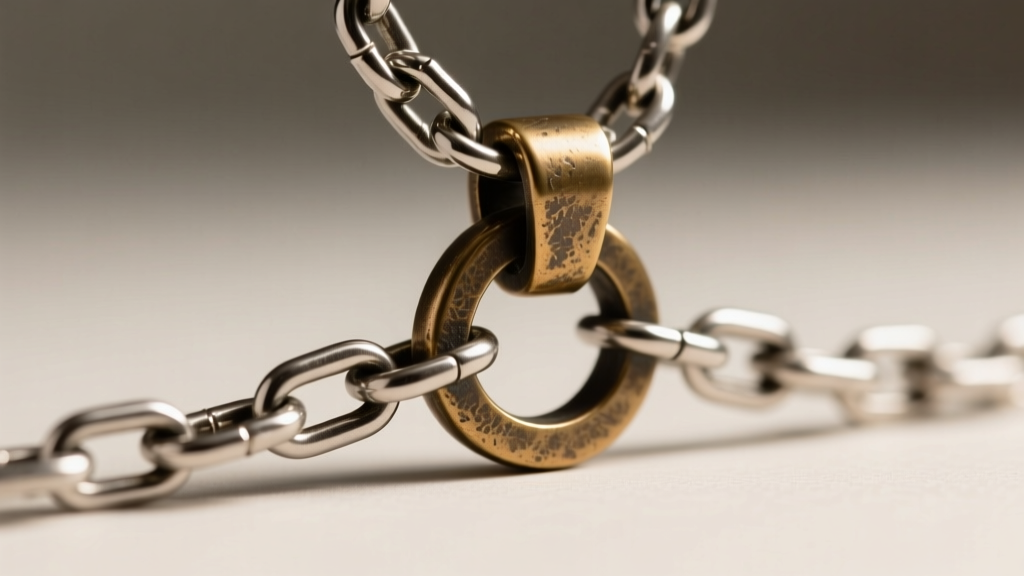
A frequent failure point in religious jewelry is the bail—the loop that connects the pendant to the chain. The physics of a st francis of assisi necklace requires a precise weight ratio to prevent the pendant from constantly flipping backward against the collarbone.
The 2:1 Weight Ratio Rule
To maintain the pendant's center of gravity against the sternum, the chain must weigh at least twice as much as the medal. A solid cast 25mm sterling silver St. Francis medal typically weighs between 7 and 9 grams. Therefore, you must select a chain that weighs a minimum of 14 to 18 grams. Lightweight, hollow-curb chains or delicate cable chains will fail this test, causing the necklace to shift uncomfortably and placing undue tensile stress on the bail solder joint.
Bail Clearance and Link Geometry
The inner diameter (ID) of the bail dictates the maximum outer width of the chain. A standard cast oval bail on a religious medal measures roughly 4mm x 6mm. This means your chain must have a maximum width of 3.5mm to thread smoothly without scraping the bail's interior walls.
- Figaro Chains (3mm): Excellent choice. The alternating link pattern provides high tensile strength and lays flat, preventing the heavy medal from twisting.
- Rope Chains (2.5mm): Good flexibility, but the twisted geometry can trap skin oils and require ultrasonic cleaning.
- Wheat Chains (2mm): Avoid. The woven, directional nature of wheat chains creates rigid stress points. When paired with a heavy, swinging pendant, the friction will eventually snap the woven links at the bail junction.
Patina Management and Crevicular Cleaning
High-relief St. Francis pendants feature deep undercuts in the saint's robes, the wolf's fur, or the woodgrain of the Tau cross. Master jewelers use a chemical process involving liver of sulfur (potassium sulfide) to intentionally oxidize these deep crevices, turning them black to create stark contrast against the polished high points. This technique, known as antiquing, is vital for iconographic readability.
Cleaning an antiqued medal requires strict protocols to avoid stripping this intentional oxidation:
- Never use liquid silver dips. These contain thiourea and hydrochloric acid, which will instantly strip the black oxidation from the crevices, leaving the medal looking flat and artificially white.
- Use a mild surfactant. A few drops of phosphate-free dish soap in lukewarm water, agitated with a soft-bristled baby toothbrush, will remove sebum and dead skin cells from the deep reliefs without disturbing the liver of sulfur patina.
- Polish only the high points. Use a treated jeweler's cloth (impregnated with micro-abrasives) and gently rub only the raised edges of the medal. This preserves the dark recesses and maintains the 3D topography of the casting.
Sourcing and Authenticity Markers
When investing in a high-grade sacramental necklace, provenance and manufacturing markers are essential. Mass-produced religious jewelry imported in bulk often lacks proper metal purity stamps or utilizes lead-bearing solder at the bail joint, which is a severe dermatological hazard.
Always inspect the reverse side of the medal or the interior of the bail for a quality stamp (e.g., .925, 14K, or a registered maker's mark). Furthermore, authentic Franciscan merchandise often adheres to the historical guidelines set forth by the order, ensuring the San Damiano cross is depicted with its distinct, slightly flared arms and the figure of Christ is rendered according to the specific 12th-century Umbrian iconography, rather than a generic corpus. For deeper historical context on the evolution of these symbols, Britannica's archives on the Franciscan order provide excellent foundational knowledge for collectors seeking theological accuracy in their jewelry.
Expert Takeaway: A truly exceptional St. Francis of Assisi necklace is not defined by its weight in gold or silver, but by the intentionality of its engineering. From the Vickers hardness of the alloy to the millimeter-precise clearance of the bail, every technical decision serves to protect and elevate the sacred iconography it bears.


