How to Stack Necklaces Without Tangling: A Care & Maintenance Guide
Learn how to stack necklaces without tangling. Expert care, cleaning, and maintenance tips for layered chains, clasps, and detangling knots.

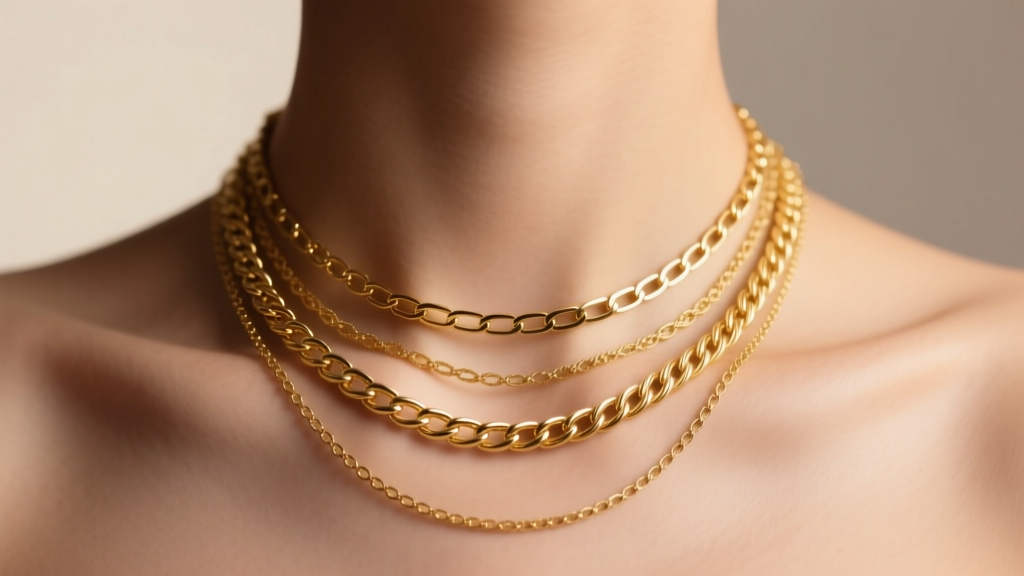
Layering jewelry is one of the most effective ways to elevate a personal style, but the physical reality of wearing multiple chains introduces a host of mechanical challenges. When learning how to stack necklaces, most style guides focus purely on aesthetics—mixing metals, balancing pendant weights, and choosing lengths. However, as jewelry specialists, we know that a beautifully curated stack is useless if it spends half its life in a knotted, tangled mess.
Maintaining a layered necklace stack requires an understanding of metallurgy, chain geometry, and friction dynamics. In this comprehensive care and maintenance guide, we break down the exact mechanics of preventing tangles, selecting the right chain weaves, safely detangling stubborn knots, and cleaning your layered sets without damaging delicate components.
The Physics of Layering: Why Stacked Necklaces Tangle
Before you can prevent tangling, you must understand why it happens. Necklace tangling is not merely bad luck; it is the result of three specific physical phenomena:
- Link Geometry and Friction: Chains with open, uniform links (like standard cable chains) act like a series of tiny hooks. When two identical cable chains rest against each other, the links easily slide into one another and lock due to body heat and movement.
- Electrostatic Attraction: Fine metal chains, particularly those made of lightweight alloys or thin-gauge gold, can build up a mild static charge through friction against clothing and skin, causing them to cling together.
- The Pendulum Effect: When pendants of similar weights are worn on chains of similar lengths, they swing in tandem. This synchronized movement forces the chains to wrap around one another, creating torsion knots that tighten with every step you take.
To combat these forces, your maintenance strategy must begin at the point of purchase. You must intentionally select chains that resist these physical traps.
Strategic Chain Selection for Tangle-Free Stacking
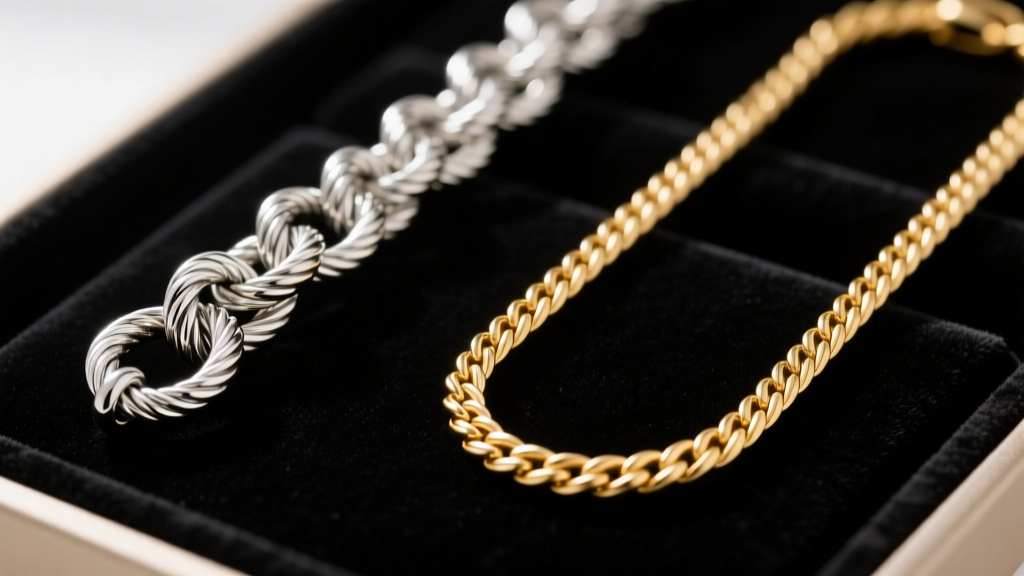
The most critical rule in necklace care is choosing weaves that naturally repel one another. A stack composed entirely of 18-gauge cable chains is a maintenance nightmare. Instead, you must vary the chain weave to disrupt the friction points.
| Chain Weave | Geometry Profile | Tangle Risk | Maintenance Notes |
|---|---|---|---|
| Cable | Uniform oval links | High | Prone to hooking; avoid stacking two cable chains together. |
| Box | Square, interlocking | Low | Smooth exterior prevents catching; excellent base layer. |
| Wheat | Braided, directional | Very Low | Highly resistant to tangling; ideal for heavy pendant stacks. |
| Snake | Tight, smooth tubes | Medium | Resists knotting but kinks easily if bent; store flat. |
| Figaro | Alternating long/short | Low | Varying link sizes prevent uniform interlocking with other chains. |
By pairing a smooth box chain (16 inches) with a textured wheat chain (18 inches) and a Figaro chain (20 inches), you create a physical barrier that makes it nearly impossible for the links to catch on one another.
The 2mm Thickness Rule and Clasp Mechanics
Beyond the weave, the thickness (or gauge) of the chain dictates its stacking viability. The golden rule of layering is the 2mm Thickness Variance. If your base layer is a delicate 1mm chain, your second layer should be at least 2.5mm to 3mm thick. When chains are too close in thickness, their links can physically slide inside one another. When there is a drastic size difference, the larger links simply glide over the smaller ones without catching.
Upgrading Your Clasps
Standard spring-ring clasps are the enemy of layered necklaces. They are difficult to operate with one hand and often catch on the fine links of adjacent chains. For a stack you intend to wear (and remove) daily, upgrade your top-layer chains to magnetic clasps or locking lobster clasps. Magnetic clasps, particularly those made from 14k gold or surgical-grade stainless steel, allow you to secure the entire stack at the back of your neck in one motion, eliminating the twisting that occurs when you fumble with multiple tiny spring rings.
Metallurgy Matters: Choosing the Right Gold for Stacking
Not all gold is created equal when it comes to the friction of stacking. Pure 24k gold has a Vickers hardness of roughly 25, making it incredibly soft. If you stack 24k gold chains, the constant friction will cause the links to wear down, thin out, and eventually snap. Furthermore, soft gold deforms easily, turning minor snags into permanent kinks.
For stacked necklaces, 14k gold is the superior choice. With a Vickers hardness ranging from 130 to 160 (depending on the alloy mix), 14k gold withstands the abrasive friction of daily layering. If you prefer the richer color of 18k gold (hardness ~120), ensure you are choosing a heavier gauge (16-gauge or thicker) to compensate for the slightly softer metal. According to the Gemological Institute of America (GIA), understanding your metal's durability is just as important as caring for the gemstones it holds, especially when pieces are subjected to the constant contact of a layered stack.
How to Safely Detangle a Layered Necklace Stack
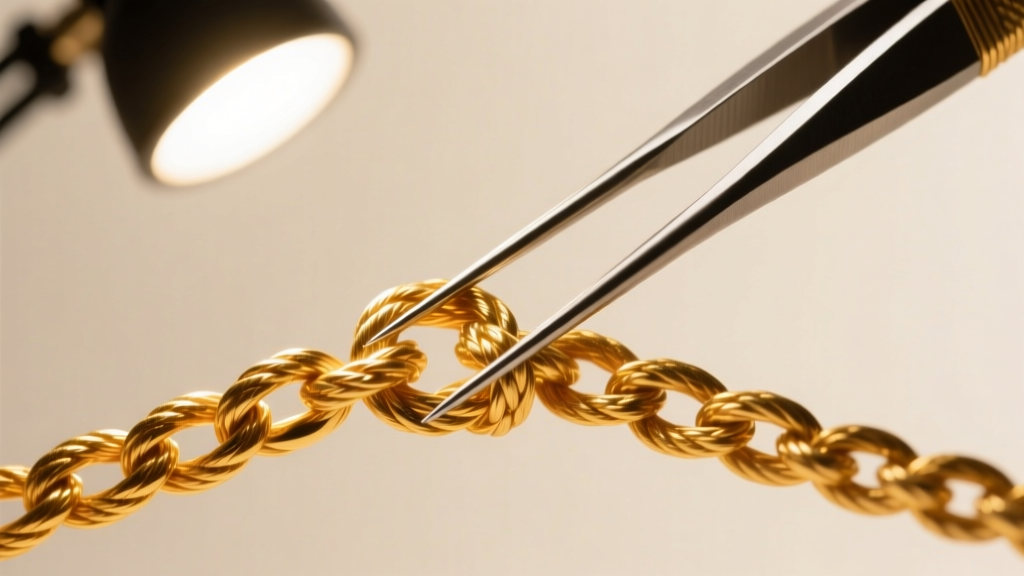
Even with perfect chain selection, environmental factors can cause tangles. When your stack inevitably knots, never pull the chains taut. Pulling causes 'work hardening,' a metallurgical process where the metal becomes brittle and snaps under tension.
The Powder and Needle Protocol
- Lubricate the Knot: Lay the tangled stack flat on a hard, non-porous surface (glass or marble). Do not use a towel, as the loops will catch on the fabric. Dust the knot generously with unscented baby powder or cornstarch. This eliminates the microscopic friction between the metal links.
- Select Your Tools: Use two size 10 or size 12 beading needles. These needles are thin enough to slip into microscopic gaps but stiff enough to push metal links apart without bending.
- Work from the Center Out: Insert the needles into the tightest center point of the knot. Gently wiggle them in opposite directions to loosen the tension. Once the center gives, use the needles to push the loops outward.
- Clean the Residue: Once detangled, use a soft-bristled baby toothbrush to sweep away the powder before it mixes with skin oils and creates a paste in the chain links.
Cleaning and Storing Your Stacked Necklaces
Cleaning a layered stack requires a nuanced approach, especially if your necklaces feature a mix of solid metals, porous gemstones, and delicate clasps.
The Ultrasonic Warning
While ultrasonic cleaners are fantastic for solid 14k gold box chains, they are highly destructive to many stones commonly used in pendant stacks. Opals, emeralds, turquoise, and pearls will fracture or lose their luster in an ultrasonic bath. If your stack includes pendants with these gems, you must clean them manually. The Jewelers of America recommends using a mild, phosphate-free dish soap and lukewarm water with a soft brush for mixed-material jewelry care.
Proper Storage to Preserve the Stack
How you store your necklaces dictates how much maintenance they will require the next morning. Never throw a layered stack into a jewelry box drawer. Instead, utilize one of these two methods:
- The Hanging Method: Hang the entire stack together on a wide, padded jewelry hook. The weight of the pendants will keep the chains pulled taut and separated.
- The Straw Trick for Travel: If you must pack your stack in a suitcase, unclasp the chains, thread one end of each chain through a thick plastic or silicone straw, and re-clasp it. This rigid casing makes it physically impossible for the chains to knot during transit.
Final Thoughts on Necklace Maintenance
A well-maintained necklace stack is a hallmark of intentional style. By respecting the physics of chain weaves, choosing the correct metal hardness, and employing safe detangling protocols, you ensure your layered pieces remain as flawless as the day you bought them.
Mastering how to stack necklaces is only half the battle; maintaining them with expert care ensures your curated layers will withstand the test of time, friction, and daily wear.


