What Is the Standard Chain Length for Necklace Styles? A Guide
Discover the standard chain length for necklace styles, from chokers to opera. Learn how to measure, choose the right fit, and layer like a pro.

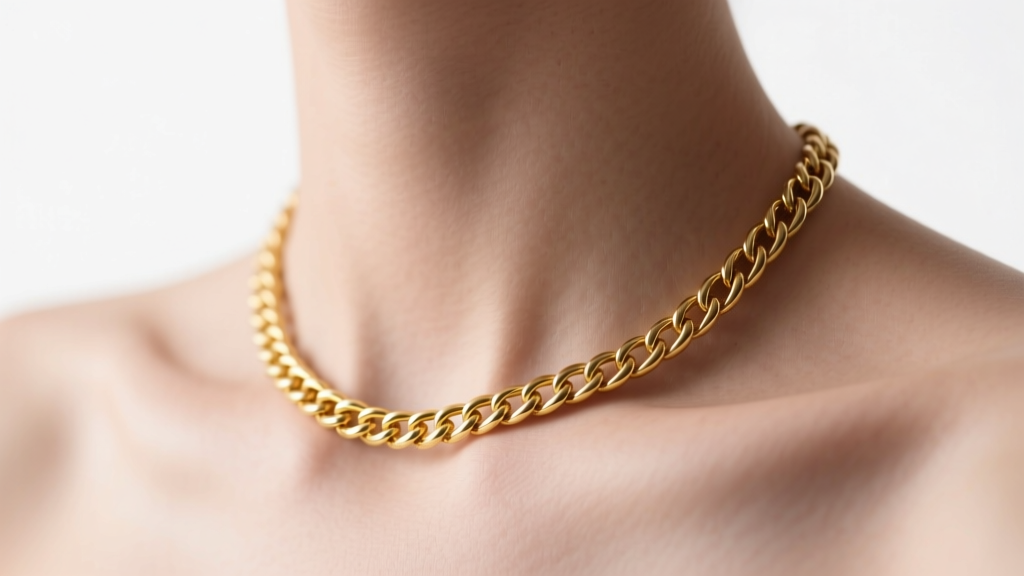
When building a jewelry collection, understanding the standard chain length for necklace styles is the foundational step that separates amateur purchases from curated, professional-looking stacks. While personal preference always plays a role, the jewelry industry relies on specific length benchmarks to ensure pendants sit correctly, chains drape elegantly, and layering looks intentional rather than tangled. Whether you are shopping for a delicate 14k gold cable chain or a heavy 316L stainless steel Cuban link, knowing exactly where a chain will fall on your body is critical.
In this comprehensive beginner-friendly guide, we will break down the industry standards for necklace lengths, explore the technical relationship between chain gauge and pendant weight, and provide actionable frameworks for measuring, matching, and layering your necklaces flawlessly.
Why Chain Length and Gauge Matter More Than You Think
Most beginners focus entirely on the pendant, treating the chain as an afterthought. However, the chain dictates the structural integrity and visual balance of the entire piece. According to the Gemological Institute of America (GIA), the proportion between the chain's thickness (gauge), its length, and the weight of the pendant is the most common point of failure in everyday jewelry wear.
If you pair a heavy 15-gram gemstone pendant with a standard 18-inch chain that is only 0.8mm thick (20-gauge), you risk two major issues: the chain will stretch and distort over time, and the bail (the loop connecting the pendant to the chain) will create friction that eventually saws through the metal links. For heavy pendants, you must scale up both the thickness and the length to distribute the weight properly across the back of the neck.
The Ultimate Chart: Standard Chain Length for Necklace Types
The term 'standard' usually refers to the 18-inch Princess length for women, and the 20 to 22-inch lengths for men. However, the industry recognizes five primary categories. Use this chart to determine exactly where your chain will rest.
| Length (Inches / cm) | Industry Name | Where It Falls | Best Chain Styles | Ideal Pendant Weight |
|---|---|---|---|---|
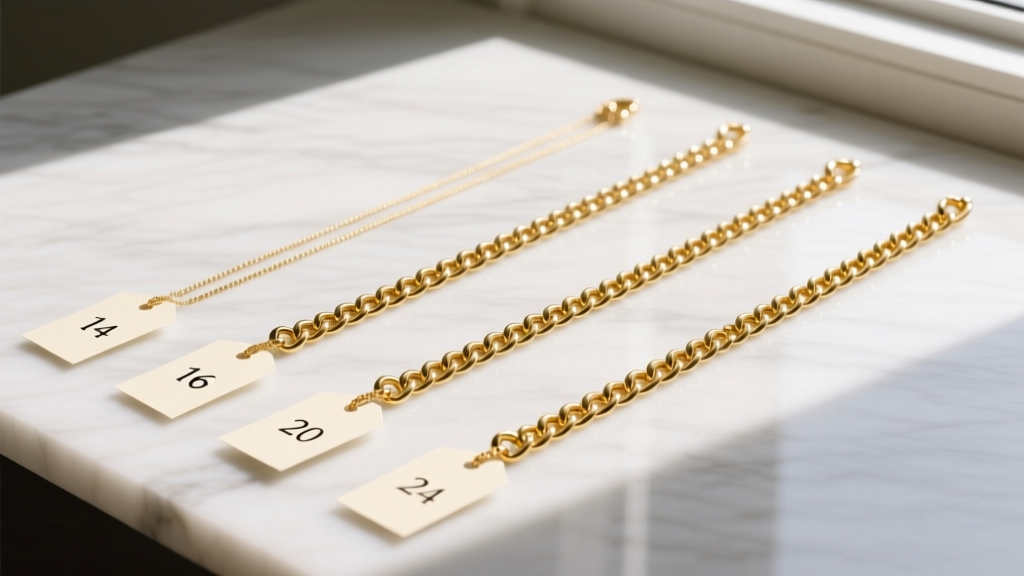
| 14' - 16' (35-40cm) | Collar / Choker | Tight around the base of the neck | Velvet, Snake, Herringbone | None or very light (<3g) |
| 18' (45cm) | Princess | Rests on the collarbone (The Baseline Standard) | Cable, Box, Rope, Rolo | Light to Medium (3g - 10g) |
| 20' - 22' (50-55cm) | Matinee | Falls just above the neckline / bust | Cuban, Figaro, Bead | Medium to Heavy (10g - 20g) |
| 24' - 28' (60-70cm) | Opera | Falls below the bust / sternum | Long Rope, Lariat, Chain | Heavy statement pieces |
| 30'+ (75cm+) | Rope / Lariat | Mid-torso, often wrapped or knotted | Endless Rope, Bead | N/A (usually worn alone) |
As noted by the Blue Nile Education Center, the 18-inch Princess length remains the most universally flattering and widely manufactured size, making it the default 'standard chain length for necklace' purchases when buying gifts without knowing the recipient's exact measurements.
How to Measure Your Neck for the Perfect Fit
Never guess your chain length based on t-shirt sizes. A 16-inch chain will look like a choker on someone with a 15-inch neck circumference, but it will sit loosely like a Princess chain on someone with a 13-inch neck. Here is the professional method for finding your ideal fit:
- Use a flexible tailor's tape measure. Wrap it around your neck exactly where you want the chain to sit.
- Apply the 'Two-Finger Rule'. Slide two fingers under the tape measure to ensure breathing room and comfort.
- Add 2 inches for standard drape. If your neck measures 14 inches, a 16-inch chain will be a snug choker, while an 18-inch chain will rest comfortably on your collarbones.
Adjusting for Body Type and Necklines
When selecting a chain, consider your typical wardrobe. If you frequently wear high-necked blouses or crew-neck sweaters, an 18-inch chain will be hidden or bunch up awkwardly. Opt for a 20-inch or 22-inch Matinee length to ensure the chain rests visibly below the fabric line. Conversely, for V-necks and scoop necks, the standard 18-inch length perfectly frames the exposed skin without dipping too low into the garment.
Layering 101: Combining Multiple Chain Lengths
Layering is an art form that relies entirely on mathematical spacing. The most common beginner mistake is wearing two chains that are only 1 inch apart (e.g., a 16-inch and a 17-inch), which guarantees they will twist, knot, and scratch each other.
- The 2-Inch Gap Rule: Always maintain at least a 2-inch difference between layered necklaces. A classic, foolproof stack is 14' (choker) + 16' (collarbone) + 18' (Princess with pendant).
- Vary the Textures: Pair a smooth Herringbone choker with a textured Rope chain and a delicate Cable chain. Different link structures catch light differently and slide past one another without interlocking.
- Clasp Management: Spring-ring clasps are notorious for catching on hair and other chains. When building a stack, look for chains equipped with flat lobster clasps or magnetic neodymium clasps, which sit flush against the skin and reduce tangling by up to 80%.

Common Beginner Mistakes and Failure Modes
To protect your investment, avoid these frequent structural errors when buying and wearing chains:
1. Ignoring the Bail-to-Chain Ratio
If your pendant has a narrow bail (the hole the chain passes through), do not force a thick 3mm Cuban chain through it. Conversely, if the bail is wide and heavy, a thin 0.9mm Box chain will bend and eventually snap under the kinetic stress of daily movement. Match the chain thickness to the inner diameter of the bail.
2. Buying Plated Chains for Daily Wear
For chains that sit directly against the skin (especially 14-inch and 16-inch chokers), sweat and friction will strip gold-plated or vermeil chains within months. For daily-wear standard lengths, invest in solid 14k gold, platinum, or hypoallergenic 316L surgical stainless steel. If you must buy plated, ensure the base metal is brass or sterling silver, not copper, which oxidizes and turns the skin green.
3. The 'Catch and Pull' Hazard
Longer chains (24 inches and above) are highly susceptible to catching on door handles, car seats, and bag straps. If you wear Opera-length chains, always inspect the jump rings (the small circular links connecting the clasp) every six months. Ensure they are soldered shut; unsoldered jump rings will pull open under tension, resulting in the loss of the chain and pendant.
Pro Tip: To test if your chain's jump rings are secure, gently try to twist the ring open with your fingernails. If it yields easily, take it to a jeweler to have the rings laser-soldered shut for a permanent, worry-free fix.
Mastering the standard chain length for necklace styling is about understanding the intersection of anatomy, metallurgy, and aesthetics. By respecting the 2-inch layering rule, matching your gauge to your pendant's weight, and choosing the right length for your neckline, you will build a versatile, durable, and effortlessly elegant jewelry collection.


