Star Necklaces: A Complete Metal & Material Comparison Guide
Discover the best metals for star necklaces. Compare durability, pricing, and properties of gold, silver, titanium, and enamel inlays.

The Anatomy of a Star Necklace: Why Material Matters
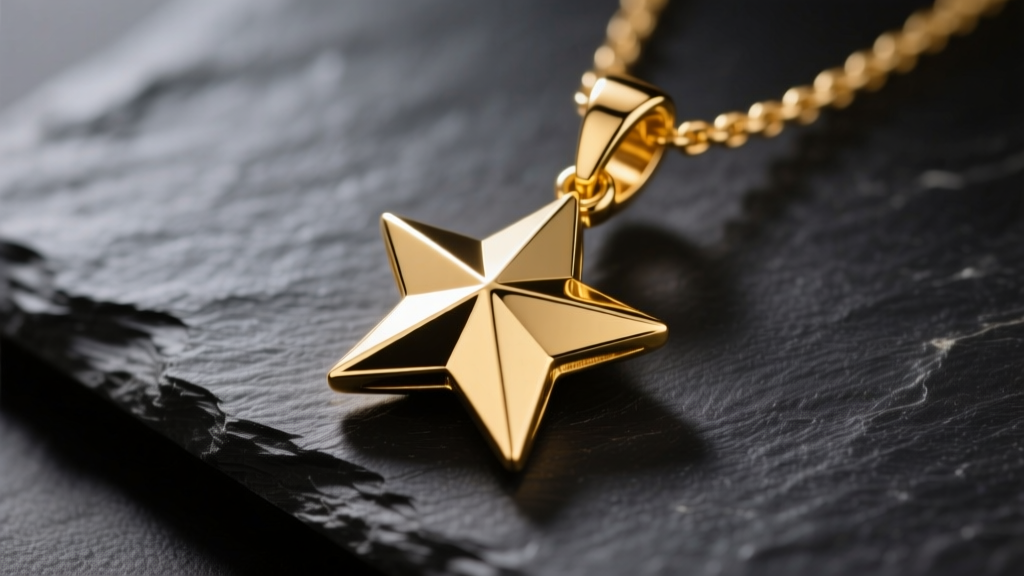
When selecting celestial jewelry, the material dictates not only the aesthetic but the structural integrity of the piece. Star necklaces, characterized by their sharp points, delicate centers, and frequent use of gemstone inlays, present unique metallurgical challenges. A five-pointed star pendant stamped from thin sheet metal will easily bend at the tips if the alloy lacks sufficient tensile strength. Conversely, a heavy cast star requires a robust chain gauge to prevent clasp failure. Understanding the properties of precious metals, alternative alloys, and decorative inlays is essential for choosing a star necklace that withstands daily wear while maintaining its brilliant luster.
Precious Metals: Gold, Silver, and Platinum
The foundation of most fine star necklaces lies in precious metals. Each offers a distinct balance of hardness, color, and maintenance requirements.
Sterling Silver (925) vs. Argentium
Standard sterling silver is an alloy of 92.5% pure silver and 7.5% copper. While the copper provides necessary hardness, it is also responsible for tarnishing when exposed to sulfur and moisture. For a star pendant with intricate milgrain detailing or deep crevices, polishing tarnish can be tedious. Enter Argentium silver (typically 93.5% or 96% silver). By replacing a portion of the copper with germanium, Argentium forms a transparent, self-healing oxide layer that dramatically slows tarnish. According to the Gemological Institute of America (GIA), silver alloys require careful consideration for daily wear due to their relatively low Mohs hardness (2.5-3). For star necklaces, ensure the pendant is stamped from at least 18-gauge (1.02mm) sheet metal to prevent the points from warping upon impact.
Gold Karats: 10k, 14k, and 18k
Gold remains the premier choice for celestial motifs, but the karat weight drastically alters the pendant's durability. Pure 24k gold is far too soft for the sharp extremities of a star motif.
- 10k Gold (41.7% pure): Highly durable and scratch-resistant, but lacks the rich, warm luster associated with fine jewelry. Best for budget-friendly, high-impact daily wear.
- 14k Gold (58.5% pure): The industry standard. It offers an optimal balance of rich color and structural rigidity. A 14k gold star pendant will hold crisp, sharp edges over decades of wear.
- 18k Gold (75% pure): Prized for its deep, saturated yellow hue. However, it is noticeably softer. If you choose an 18k star necklace, opt for a cast design with slightly rounded, reinforced points rather than razor-sharp stamped edges.
Note on White Gold: White gold star necklaces are alloyed with palladium or nickel and plated with rhodium. Over time, the high-relief points of the star will experience friction, wearing away the rhodium and revealing the slightly yellowish underlying alloy. Plan for re-plating every 1-2 years.
Alternative & Hypoallergenic Metals
For those with metal sensitivities or those seeking oversized statement pieces without the prohibitive weight and cost of solid gold, alternative metals are highly effective.
Titanium and Surgical Steel
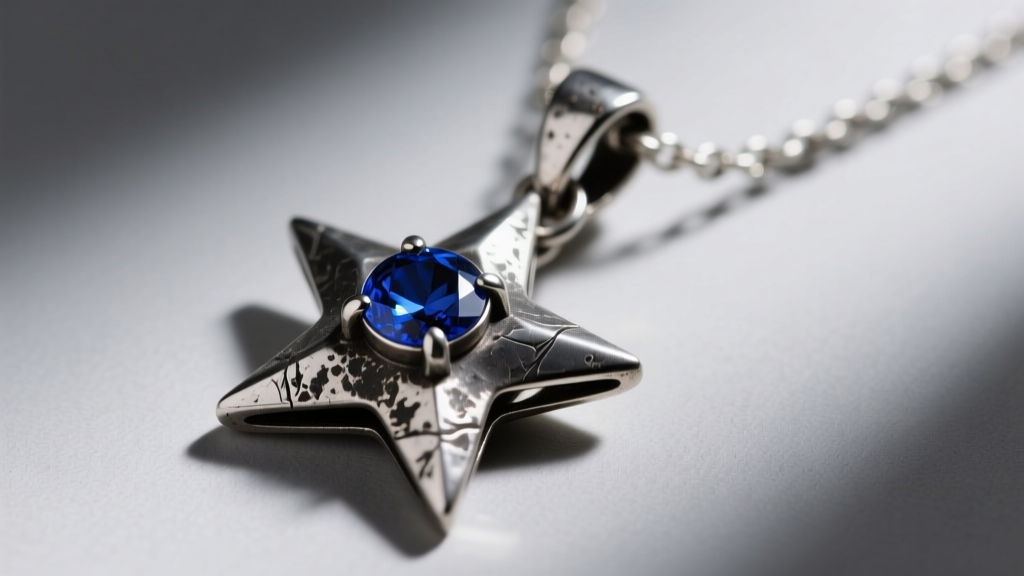
Grade 5 Titanium (Ti-6Al-4V) is exceptionally strong, lightweight, and 100% hypoallergenic. A large, 40mm solid titanium star pendant will weigh a fraction of its gold counterpart, preventing neck strain and chain fatigue. However, titanium cannot be easily soldered or resized by traditional jewelers. If a prong holding a center gemstone loosens, repair options are limited. 316L Surgical Stainless Steel is another hypoallergenic option that takes a brilliant mirror polish, though it is heavier than titanium and can feel cold against the skin.
Gemstone and Enamel Inlays in Star Motifs
The center of a star necklace often features a focal point. While bezel-set diamonds or sapphires are secure, enamel inlays require specific material knowledge.
Expert Insight: Avoid 'cold enamel' (epoxy resin) for daily-wear star pendants. UV exposure will cause the resin to yellow and degrade within 3-5 years. Instead, seek out vitreous enamel, which is glass fused to metal at high temperatures. It will retain its vibrant, opaque color indefinitely, provided it is not subjected to hard, direct impacts that could shatter the glass.
Comprehensive Material Comparison Chart
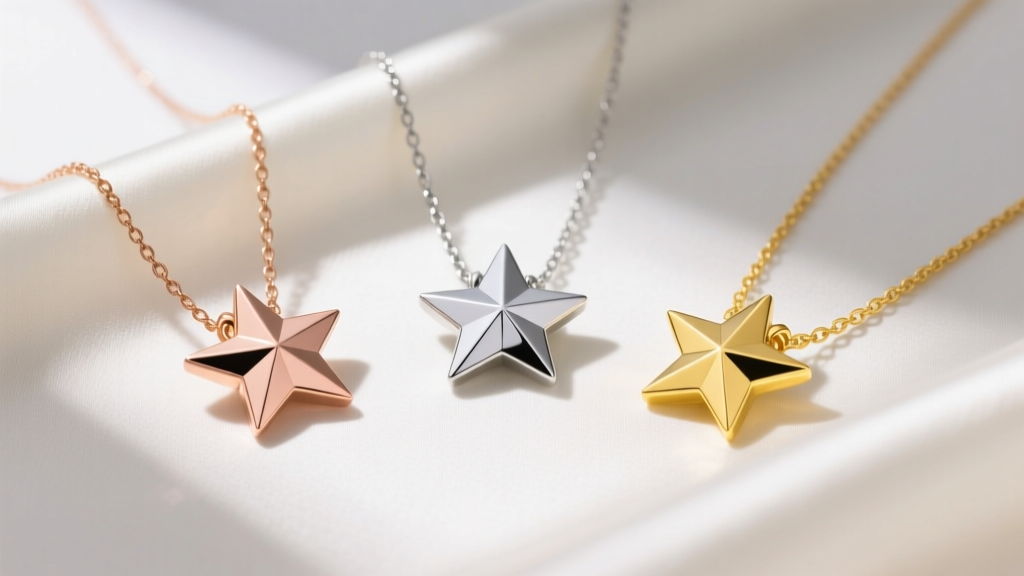
Use the following data table to compare the physical properties and market positioning of common materials used in star necklaces.
| Material | Hardness & Durability | Tarnish / Corrosion | Estimated Price Range (Standard 15mm Pendant) | Best Use Case |
|---|---|---|---|---|
| Sterling Silver (925) | Soft (Mohs 2.5-3), bends if thin | High (requires regular polishing) | $40 - $120 | Everyday layering, budget-conscious buyers |
| Argentium Silver | Soft but highly resilient | Very Low (germanium oxide layer) | $70 - $180 | Intricate star designs with hard-to-reach crevices |
| 14k Yellow Gold | Moderate-Hard, holds sharp edges | None (will not tarnish) | $250 - $600+ | Lifetime heirloom pieces, crisp geometric stars |
| 18k Yellow Gold | Softer, prone to micro-scratches | None | $400 - $900+ | Luxury pendants with rounded, polished points |
| Grade 5 Titanium | Extremely Hard, lightweight | None (highly corrosion resistant) | $80 - $200 | Oversized statement stars, sensitive skin |
Chain Gauge and Clasp Considerations
The material of the pendant must be matched with an appropriate chain gauge. A common failure mode in celestial jewelry is the chain snapping at the jump ring due to a mismatch in weight distribution.
- Lightweight Stamped Stars (Under 2 grams): Pair with a 0.8mm to 1.0mm cable or box chain. A standard 5x9mm spring ring clasp is sufficient.
- Solid Cast Stars (3 to 8 grams): Require a 1.2mm to 1.5mm rope, curb, or Figaro chain to support the weight without stretching. Always use a 6x10mm or 7x12mm lobster clasp for secure closure.
- Jump Ring Integrity: Ensure the jump ring connecting the star bail to the chain is soldered closed, or at least features a heavy gauge (18-gauge or thicker) to prevent it from pulling apart under the pendulum motion of the star pendant.
For further reading on precious metal quality factors and alloy compositions, the GIA Gold Guide provides an exhaustive breakdown of how trace metals affect the color and durability of fine jewelry. Additionally, industry suppliers like Rio Grande Jewelry Supply offer technical data sheets on the exact Vickers hardness of various casting grains used in pendant manufacturing.
Final Verdict: Choosing Your Star Necklace
Selecting the right material for your star necklace depends entirely on your lifestyle and design preferences. For sharp, modern, geometric star motifs that require crisp edges, 14k gold is the undisputed champion, offering the perfect synthesis of hardness and eternal luster. If you prefer a vintage, celestial aesthetic with intricate engraving, Argentium silver provides the necessary detail resolution without the high maintenance of traditional sterling. Finally, for bold, oversized astrological statements that won't weigh down your neck, Grade 5 Titanium offers a modern, hypoallergenic alternative that defies conventional jewelry norms. Always prioritize chain gauge compatibility and secure clasp mechanisms to ensure your celestial piece remains safely around your neck for years to come.


