Buying a Star of David and Cross Necklace: Expert Guide
Discover what to look for when buying a star of David and cross necklace. Expert tips on metals, chain styles, and interfaith jewelry craftsmanship.

The Significance of Interfaith and Messianic Jewelry
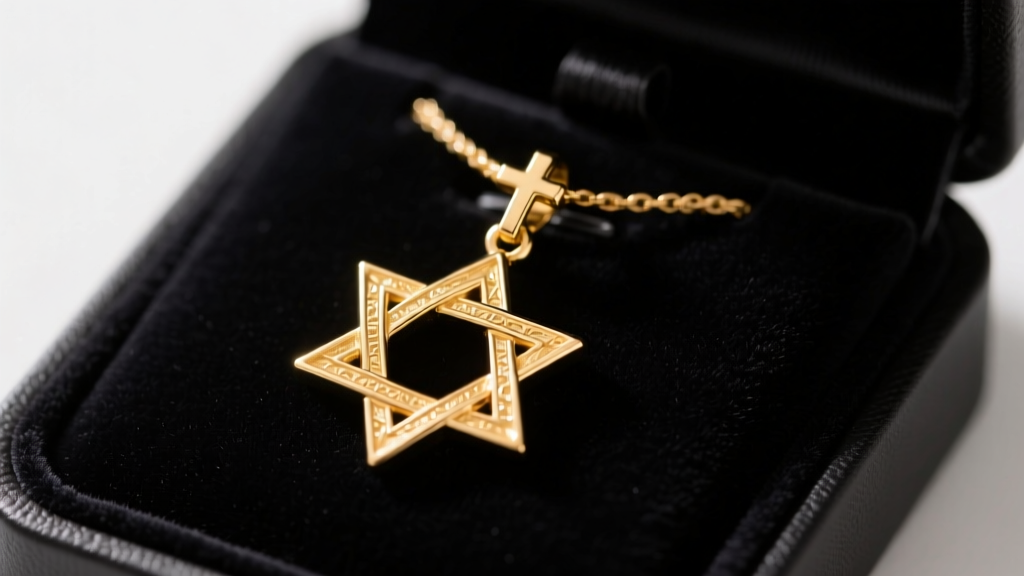
The decision to wear a star of David and cross necklace is deeply personal, often symbolizing interfaith marriage, Messianic Judaism, or a profound solidarity between Christian and Jewish heritages. Unlike standard religious pendants, dual-symbol jewelry requires a careful balance of geometric proportions. The hexagram (Star of David) and the Latin or Jerusalem cross must be integrated seamlessly without one symbol visually overpowering the other. As a senior jewelry appraiser, I frequently see poorly designed interfaith pendants where the symbols are merely glued or poorly soldered together, leading to structural failure. This comprehensive buying guide will walk you through the exact metallurgical standards, construction techniques, and chain mechanics you need to evaluate before making a purchase.
Material Breakdown: Choosing the Right Metal Grade
The longevity of your necklace depends entirely on the base metal and its alloy composition. According to the Gemological Institute of America (GIA), understanding gold karatage and silver treatments is critical for daily-wear jewelry. A star of David and cross pendant features multiple intersecting angles and thin points, which are highly susceptible to bending or snapping if cast in low-quality alloys.
| Metal Grade | Durability & Tensile Strength | Tarnish Resistance | Estimated Price Range (Pendant) |
|---|---|---|---|
| Sterling Silver (925) | Moderate; prone to bending at thin points | Low; requires rhodium plating | $40 - $120 |
| 10k Gold (417) | High; very hard due to alloy content | High; may cause nickel allergies | $150 - $250 |
| 14k Gold (585) | Excellent; ideal balance of purity and strength | Very High | $250 - $600 |
| 18k Gold (750) | Moderate; softer, requires thicker casting | Extremely High | $600 - $1,200+ |
| Platinum (950) | Superior; dense and highly durable | Impervious to tarnish | $900 - $2,000+ |
Expert Warning on White Gold: If you prefer a silver-colored metal but want the durability of gold, be cautious with standard 14k white gold. It is frequently alloyed with nickel to achieve a white hue, which triggers contact dermatitis in approximately 10% of the population. Always request palladium-alloyed white gold or opt for platinum if you have sensitive skin.
Pendant Construction: Cast vs. Soldered Designs
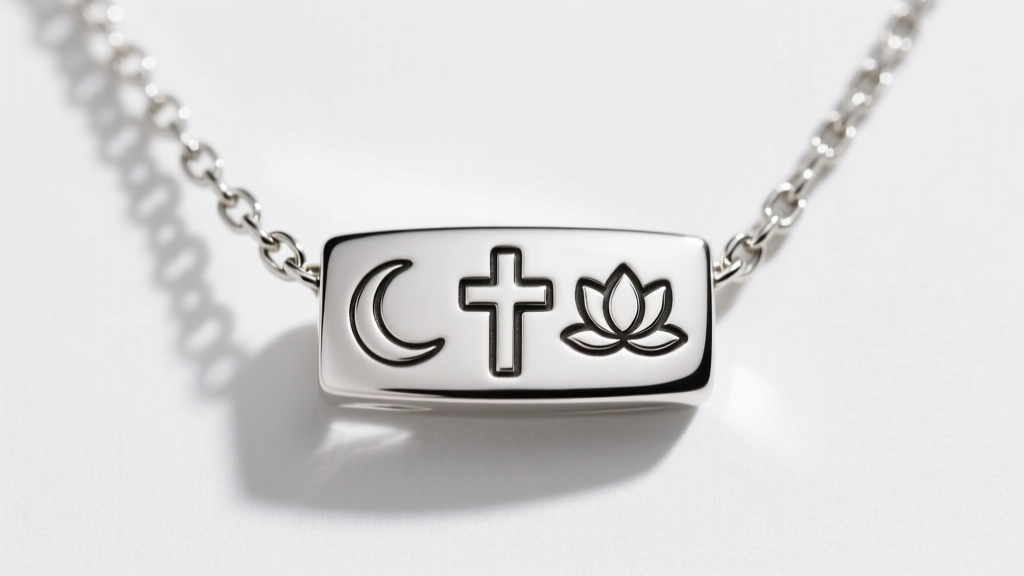
How the star of David and cross necklace is manufactured dictates its structural integrity. There are two primary methods used in modern jewelry production:
1. Lost-Wax Casting (Single-Piece)
The superior method for interfaith pendants. A 3D CAD model is created where the cross weaves through or sits perfectly flush within the Star of David. This model is printed in wax, encased in investment plaster, and burned out, leaving a mold into which molten metal is injected. The result is a single, continuous piece of metal with no weak joints.
2. Die-Striking and Soldering (Multi-Piece)
Mass-market manufacturers often stamp the Star of David and the cross from flat sheets of metal separately, then solder them together. You can identify this by looking at the back of the pendant; if you see a visible seam line or excess solder pooling at the intersection points, it is a multi-piece build. These solder joints are primary failure points. Over time, exposure to sweat, chlorine, and friction can cause a "cold solder joint" to degrade, resulting in the cross snapping off the hexagram.
Bail Engineering and Jump Ring Security
The bail is the loop that connects the pendant to the chain. For a dual-symbol pendant, which often weighs between 4 and 9 grams, a flimsy bail will quickly wear through. Avoid "hidden bails" that rely on thin, glued-in tubes. Instead, look for a cast-in-place solid bail or a laser-welded jump ring. Traditional torch soldering can leave porous spots in the jump ring, whereas laser welding fuses the metal at a molecular level without heating the surrounding delicate points of the star or cross. Furthermore, ensure the jump ring is at least 1.2mm in wire thickness to prevent it from pulling open under the pendant's pendulum-like swinging motion.

Chain Selection: Matching the Pendant Weight
A common mistake buyers make is pairing a heavy, intricate star of David and cross necklace with a weak, lightweight chain. The chain must support the pendant's mass without kinking. Here is a breakdown of chain styles based on tensile strength:
- Box Chain (1.2mm - 1.5mm): The geometric, square links of a box chain visually complement the sharp angles of the Star of David. It offers excellent tensile strength and resists kinking, making it the top recommendation for pendants weighing up to 8 grams.
- Rolo Chain (1.5mm - 2.0mm): Featuring uniform, round interlocking links, the rolo chain is incredibly robust. It is best suited for heavier, solid 14k gold pendants that exceed 8 grams.
- Cable Chain (0.9mm - 1.2mm): While classic, standard oval cable chains are structurally weak. The oval links can easily stretch and snap if caught on clothing. Only use a cable chain if it is heavily soldered or if the pendant is a lightweight, hollow-backed silver piece under 3 grams.
Clasp Mechanics: Never rely on a spring-ring clasp for a valuable interfaith pendant. The internal springs rust and fail. Always upgrade to a cast lobster claw clasp or, for chains over 2.0mm, a secure box clasp with a figure-eight safety latch.
Sizing and Proportion Guidelines
Proportion is vital for dual-symbol jewelry. If the pendant is too small, the intricate intersection of the cross and the star becomes a blurred, unrecognizable blob. If it is too large, it becomes a costume piece rather than a meaningful daily talisman.
- 15mm - 18mm Width: Ideal for women's daily wear or men seeking a subtle, minimalist look. Best paired with an 18-inch chain resting on the collarbone.
- 20mm - 25mm Width: The sweet spot for most buyers. This size allows the negative space between the cross and the star to remain distinct and legible. Pairs perfectly with a 20-inch chain.
- 30mm+ Width: Statement pieces. These require a much thicker chain (2.5mm+) to avoid a top-heavy, unbalanced appearance on the neck.
Pricing Tiers and Ethical Sourcing
When shopping for a star of David and cross necklace, pricing is a strong indicator of manufacturing origin and material authenticity. The Federal Trade Commission (FTC) Jewelry Guides strictly regulate how metals must be stamped and advertised, so always verify the hallmark (e.g., 14K, 585, 925) on the back of the bail.
Budget Tier ($30 - $90): Typically sterling silver or gold-plated brass. These are often die-struck and soldered. Expect the plating to wear off within 6 to 12 months of daily wear, revealing the base metal beneath.
Mid-Tier ($200 - $500): Solid 10k or 14k gold, lost-wax cast. This is the most reliable category for heirloom-quality jewelry that will last decades without losing its structural integrity or color.
Premium Tier ($800+): 18k gold or platinum, often featuring custom CAD designs, hand-engraved milgrain detailing, or ethically sourced diamond accents set into the points of the star. Many premium buyers also request that the gold be certified recycled or fair-mined to align with the ethical and spiritual values the necklace represents.
Jeweler's Insight: "When examining a dual-faith pendant, always run your fingernail over the intersection where the cross meets the star. It should feel completely smooth. Any catching, ridges, or porous textures indicate poor casting or rushed finishing work that will eventually trap dirt and degrade the metal."
By prioritizing single-piece casting, appropriate metal alloys, and structurally sound chain pairings, you can ensure your interfaith necklace remains a resilient and beautiful symbol for generations.


