Star of David Necklace Meaning & Ultimate Buying Guide
Explore the Star of David necklace meaning and learn how to choose the right metal, chain gauge, and pendant size for everyday wear.


The Core Star of David Necklace Meaning and Symbolism
The Star of David, known in Hebrew as the Magen David (Shield of David), is one of the most universally recognized symbols of Jewish identity, faith, and heritage. When translated into jewelry, a Star of David necklace transcends mere ornamentation; it serves as a deeply personal talisman and a public declaration of cultural pride. But before investing in a piece meant to last a lifetime, understanding the Star of David necklace meaning is crucial for selecting a design that resonates with your personal beliefs.
Geometrically, the hexagram consists of two interlocking equilateral triangles. According to historians and theologians at My Jewish Learning, the upward-pointing triangle represents the divine or the spiritual realm reaching down, while the downward-pointing triangle symbolizes humanity and the earthly realm reaching up. Together, they represent the inseparable bond between God and mankind. In Kabbalistic traditions, the six points plus the center space are sometimes associated with the seven lower sefirot (divine attributes). When buying a pendant, many wearers look for artisan designs that subtly emphasize this interlocking geometry, perhaps through two-tone metals or beveled edges that cast distinct shadows, honoring the duality of the symbol.
Material Selection: Matching Metal to Meaning and Lifestyle
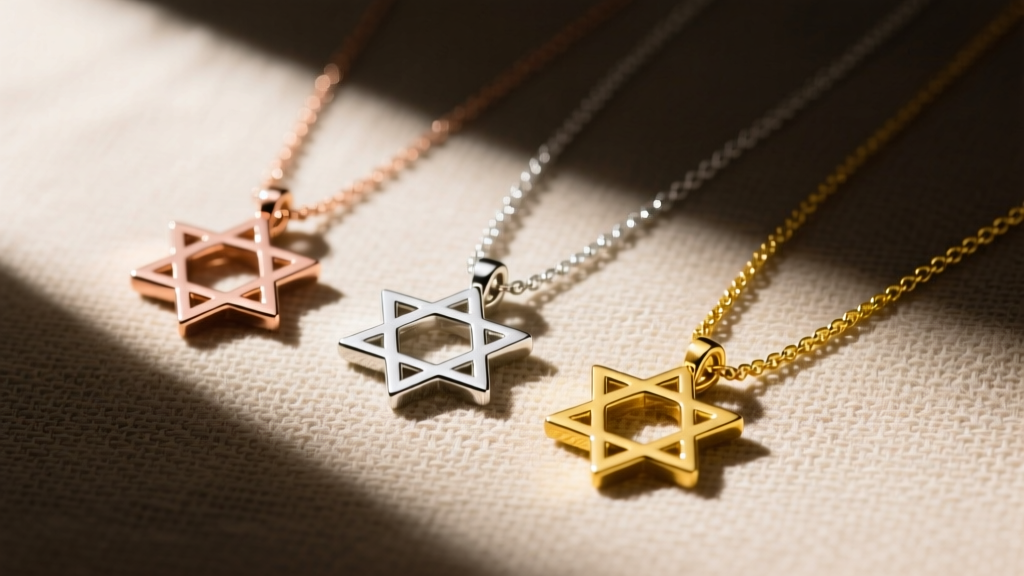
The metal you choose dictates not only the aesthetic and price of the necklace but also its longevity and how it interacts with your skin. Because the Magen David is often worn daily as a protective amulet, durability is paramount. The Gemological Institute of America (GIA) notes that pure 24k gold is far too soft for everyday pendants, making alloys the standard for fine jewelry.
| Metal Type | Purity / Stamp | Durability & Wear | Price Range (USD) | Best For |
|---|---|---|---|---|
| 925 Sterling Silver | 92.5% Silver | Prone to sulfur tarnish; requires polishing | $40 - $150 | Budget-friendly, casual wear, teens |
| 14k Yellow/White Gold | 58.5% Gold (585) | Highly durable, scratch-resistant, ideal for daily wear | $250 - $800 | Everyday amulets, active lifestyles |
| 18k Yellow/Rose Gold | 75% Gold (750) | Rich color, softer, may scratch if worn during sports | $600 - $1,500+ | Heirloom pieces, special occasions |
| Platinum | 95% Platinum (950) | Extremely dense, hypoallergenic, develops a patina | $1,200 - $3,000+ | Hypoallergenic needs, luxury buyers |
For active individuals who never take their necklace off, 14k gold is the undisputed champion. If you opt for sterling silver, ensure it is rhodium-plated to delay tarnishing, especially if you live in a humid climate or frequently swim in chlorinated pools.
Chain Styles, Gauges, and Bail Mechanics
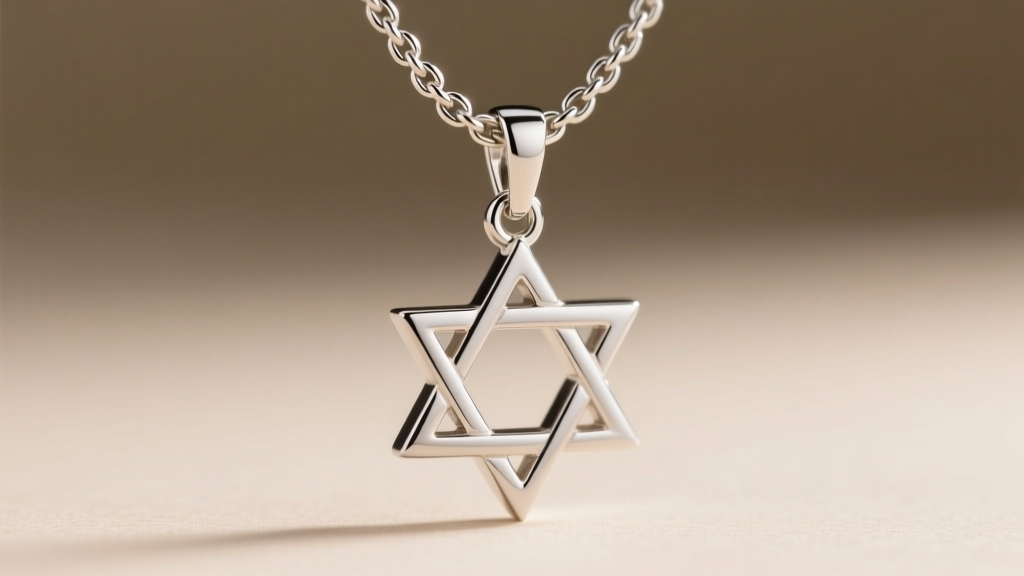
A pendant is only as secure as the chain and bail that hold it. The bail is the loop at the top of the Star of David through which the chain passes. For a sleek, modern look, seek out pendants with a hidden bail or a slide bail integrated into the back of the upper triangle. This allows the chain to pass directly through the metal, making the hexagram appear as though it is floating on the neckline.
When selecting the chain, avoid gauges thinner than 1.2mm if your pendant is solid gold and weighs more than 3 grams. A 1.0mm chain will eventually snap under the pendulum stress of a heavy pendant. The optimal choice is a 1.5mm to 2.0mm Italian box chain or a rope chain. Box chains offer a geometric, structured look that complements the straight lines of the Star of David, while rope chains add a vintage, textured contrast. Always insist on a lobster clasp rather than a spring-ring clasp; lobster clasps are significantly more secure and easier to fasten with one hand.
Pendant Proportions: Sizing the Hexagram
Sizing is highly subjective and depends on whether the necklace is meant to be a subtle layering piece or a bold statement. Dimensions are measured across the widest point of the hexagram (usually tip-to-tip horizontally).
- 10mm - 14mm (Minimalist): Ideal for layering with longer chains or Hamsa pendants. Sits delicately on the collarbone. Popular in rose gold for a feminine, understated aesthetic.
- 16mm - 22mm (Standard Everyday): The most versatile size. Easily readable from a conversational distance but small enough to tuck under a t-shirt or wear with a business-casual blouse.
- 25mm - 35mm+ (Statement): Traditionally favored in men's jewelry or as a bold, retro fashion piece. Often features diamond-cut beveling or onyx inlays to add visual weight and contrast.
Gemstone Accents: Diamonds, Turquoise, and Enamel
While the classic cut-out or solid metal hexagram is timeless, gemstone accents can personalize the Star of David necklace meaning. Diamond pavé along the outer edges or tracing just one of the interlocking triangles adds brilliance and elevates the piece to fine jewelry status. For a more earthy, culturally rooted aesthetic, look for designs featuring Eilat stone (a unique mix of turquoise, malachite, and chrysocolla mined in Israel) or jerusalem stone.
If you are buying a piece with turquoise or opal inlays, be aware that these are porous stones. They require a bezel setting rather than prongs to protect the edges from chipping. Enamel work, particularly in cobalt blue or stark white, is another excellent option for adding color without the high price tag of gemstones, though you must ensure the jeweler uses guilloché or vitreous enamel rather than cheap epoxy resin, which will yellow and crack within a year.
Authenticity, Hallmarks, and Ethical Sourcing
The market is saturated with mass-produced, dropshipped jewelry that lacks soul and structural integrity. When investing in a piece that carries such profound spiritual weight, provenance matters. Look for independent Israeli artisans, graduates of the Bezalel Academy of Arts and Design, or established heritage jewelers who specialize in Judaica.
Always verify the hallmark. A legitimate piece will be stamped with 925, 14K, 585, 18K, or 750 on the back of the pendant or on the clasp of the chain. If you are purchasing vintage or antique Star of David necklaces, request documentation of the piece's origin, particularly to ensure it was not sourced from conflict regions or looted during historical persecutions. Ethical sourcing extends to the diamonds used in pavé settings; always ask the retailer for Kimberley Process certification.
Care and Maintenance for Heirloom Longevity
To ensure your Magen David necklace can be passed down as an heirloom, proper maintenance is required. Body oils, lotions, and environmental pollutants will quickly dull the sharp angles of the star.
- Weekly Cleaning: Soak the necklace in a bowl of warm water with a few drops of mild, phosphate-free dish soap for 15 minutes. Gently scrub the crevices where the triangles interlock using a soft-bristled baby toothbrush.
- Ultrasonic Cleaners: These are excellent for plain gold or platinum chains and solid metal pendants. However, never use an ultrasonic cleaner if your Star of David features turquoise, emeralds, opals, or enamel, as the high-frequency vibrations will shatter or strip these delicate materials.
- Storage: Store the necklace flat or hung on a jewelry tree. Tossing it into a drawer will cause the chain to tangle and the sharp points of the star to scratch adjacent jewelry or the pendant itself.
By understanding the deep Star of David necklace meaning and applying these rigorous buying standards, you will secure a piece of jewelry that is not only structurally enduring but spiritually resonant for generations to come.


