Decoding the Stephen Dweck Necklace: Metals & Gemstones
Explore the technical anatomy of a Stephen Dweck necklace, from raw semi-precious gemstone settings to bronze metallurgy and weight distribution.

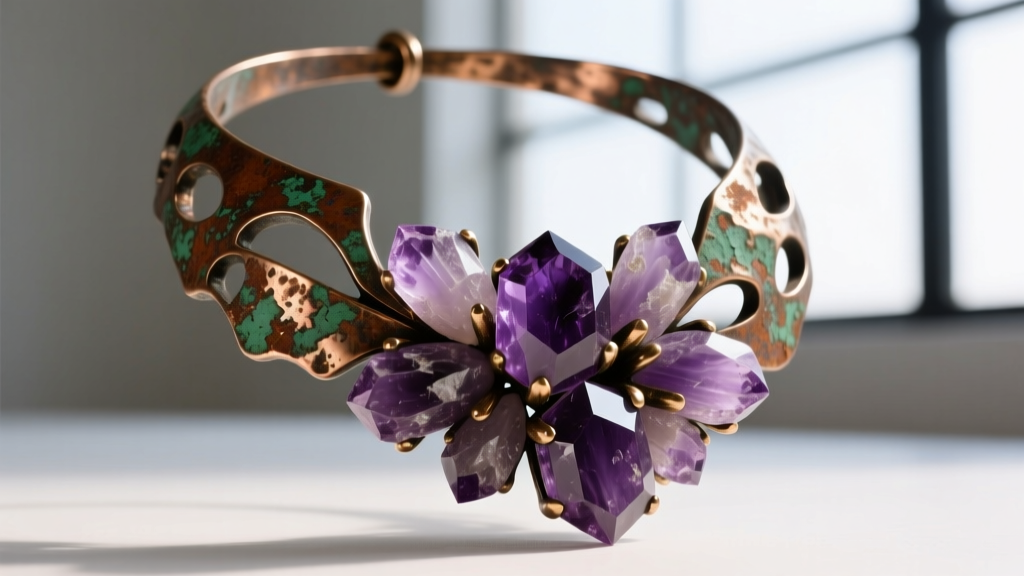
When collectors and jewelry historians discuss the "Romance of the Earth" aesthetic, they are invariably referring to the sculptural, deeply organic creations of Stephen Dweck. A signature Stephen Dweck necklace is not merely an accessory; it is a masterclass in mixed-media metallurgy, unconventional lapidary work, and structural engineering. Unlike traditional fine jewelry that relies on the brilliant cut of diamonds and the high polish of platinum, Dweck’s work celebrates the raw, the uncut, and the ancient. In this expert deep dive, we deconstruct the technical anatomy of a Stephen Dweck necklace, examining the specific alloys, stone-setting matrices, and ergonomic frameworks that make these heavy statement pieces both wearable and enduring.
The Metallurgical Foundation: Bronze, Brass, and Vermeil
To achieve the sprawling, vine-like architectures and heavy, bark-textured motifs characteristic of his work, Dweck frequently bypasses solid gold in favor of specialized base metals. The primary alloy utilized in his foundational metalwork is jeweler’s bronze—a high-quality brass variant typically composed of 90% copper and 10% tin, occasionally alloyed with trace amounts of zinc to improve molten fluidity during the casting process.
Lost-Wax Casting and Organic Patination
The intricate branches, scarab motifs, and floral armatures are born through cire perdue (lost-wax casting). Artisans carve the original designs in wax, which are then invested in a plaster-like ceramic shell. Once the wax is melted out, molten bronze is poured into the cavity. This method captures microscopic organic textures that stamping or CNC milling simply cannot replicate. Post-casting, the bronze undergoes a controlled oxidation process. By applying liver of sulfur or specialized cupric nitrate solutions, artisans force a dark, antique patina into the crevices of the metalwork. The high points are then hand-polished, creating a striking chiaroscuro effect that mimics aged wood or oxidized silver.
For pieces requiring a golden hue without the prohibitive weight and cost of solid 18k gold, Dweck employs heavy gold vermeil or thick gold plating over brass. As of 2026, high-end vermeil standards dictate a minimum of 2.5 microns of 18k or 22k gold over a sterling silver or highly polished brass base, ensuring the piece withstands decades of wear without the base metal bleeding through the high-friction contact points.
Lapidary Techniques: Setting Raw and Carved Semi-Precious Stones
The true technical triumph of a Stephen Dweck necklace lies in its lapidary integration. Dweck is famous for utilizing uncut quartz, raw turquoise, carved agates, and druzy clusters. Setting a raw, uncalibrated stone presents a massive structural challenge: you cannot use standard prong tension, as the uneven pressure points will exploit the stone’s natural cleavage planes, causing it to fracture.
The Matrix and Shadow Bezel Method
To secure irregular gemstones, Dweck’s atelier employs a combination of "shadow bezels" and flexible adhesive matrices. A shadow bezel is a raised metal wall that follows the general topography of the stone without gripping it tightly. The stone is then seated into a bed of archival-grade, flexible jeweler's epoxy. This matrix absorbs kinetic shock and thermal expansion, cradling the stone's natural undulations securely.
| Stone Type | Mohs Hardness | Primary Setting Method | Vulnerability & Failure Mode |
|---|---|---|---|
| Raw Amethyst / Quartz | 7.0 | Shadow Bezel with Epoxy Matrix | Thermal shock; internal fracture from prong tension. |
| Carved Turquoise | 5.0 - 6.0 | Flush Bezel with Resin Backing | Porous absorption of oils; structural cracking if dropped. |
| Druzy Agate Clusters | 6.5 - 7.0 | Plied Bezel Wall (Folded Edge) | Delamination of the crystal druse from the host rock matrix. |
| Mother of Pearl | 2.5 - 4.5 | Inlay with Epoxy Adhesion | Surface scratching; acid erosion from skin pH and perfumes. |
By avoiding rigid mechanical tension, the atelier ensures that the raw, unpolished beauty of the earth's minerals remains intact, a philosophy deeply aligned with the brand's core design ethos.
Ergonomics and Weight Distribution in Statement Pieces
A substantial Stephen Dweck collar or bib necklace can easily weigh between 180 and 320 grams. For context, a standard diamond tennis necklace weighs roughly 25 grams. Suspending half a pound of bronze and raw geode material around the cervical spine requires rigorous ergonomic engineering to prevent the necklace from pulling backward, choking the wearer, or snapping the chain links under dynamic load.
Articulation and Gauge Sizing
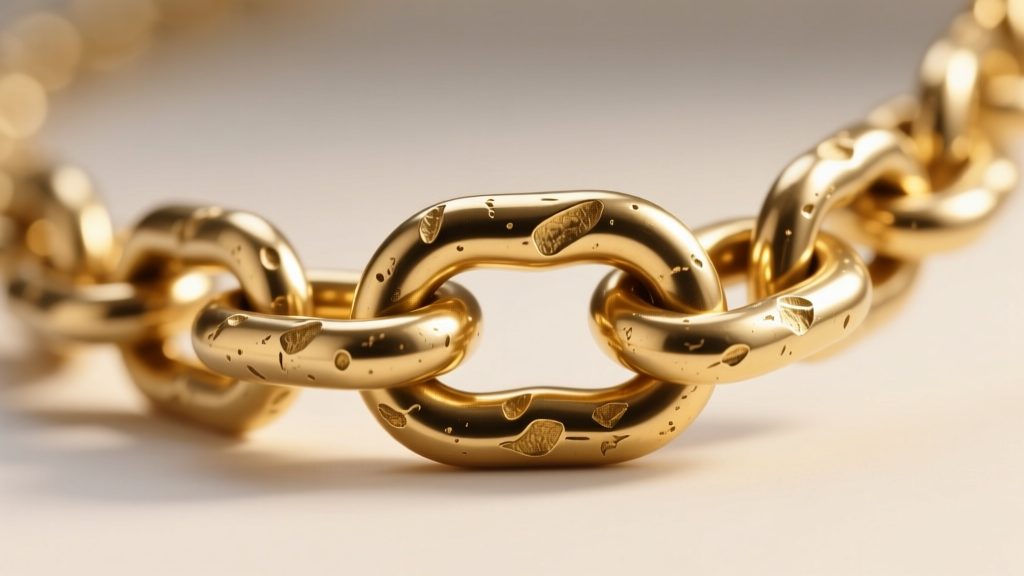
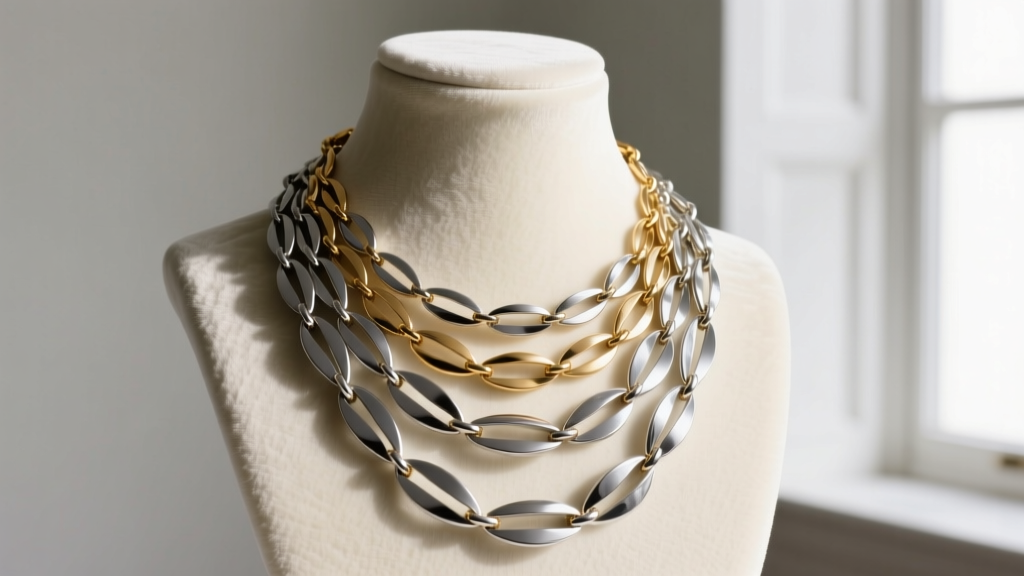
To manage this mass, the metalwork is heavily articulated. Instead of rigid collars, the necklaces are constructed using hundreds of 12-gauge to 14-gauge oval jump rings. These rings are soldered shut to prevent them from pulling apart under the sheer gravitational load. The articulation allows the piece to behave almost like chainmail, draping fluidly over the clavicle and sternum, distributing the weight across a broader surface area of the upper chest rather than concentrating it on the nape of the neck.
Furthermore, the clasps on these heavy pieces are not mere afterthoughts; they act as counterbalances. A heavy, sculptural bronze toggle or a large carved-stone slide clasp is positioned at the nape to offset the front-heavy mass of the gemstone bib, keeping the necklace centered on the body. According to ergonomic jewelry standards, maintaining this fulcrum balance is critical for preventing chronic neck strain during extended wear.
Entomological Jewelry: Preserving the Jewel Beetle
One of the most fascinating and technically demanding materials in Dweck’s repertoire is the iridescent wing casing of the Sternocera aequisignata, commonly known as the jewel beetle. The elytra (wing casings) of these beetles possess a metallic, emerald-green iridescence caused by structural coloration—microscopic layers of chitin that refract light.
Chitin Stabilization and Archival Backing
Chitin is an organic polymer that is highly susceptible to desiccation, UV degradation, and humidity fluctuations. If left untreated, a beetle wing will become brittle and shatter when the necklace flexes against the body. To counteract this, the wings undergo a meticulous stabilization process. They are carefully cleaned and backed with a flexible, UV-inhibiting archival resin. This resin acts as a shock absorber and a moisture barrier, locking the structural color in place and allowing the organic material to withstand the rigors of being worn as a statement pendant.
"Working with organic and entomological materials requires a conservationist's mindset. You are not just setting a stone; you are preserving a fragile biological structure against the elements and the friction of human movement."
Conservation and Care Protocols for Porous Materials
The technical brilliance of a Stephen Dweck necklace demands an equally rigorous care protocol. The very materials that give these pieces their earthy romance—raw turquoise, unpolished coral, and mother-of-pearl—are highly porous and chemically reactive. The Gemological Institute of America (GIA) strictly warns against the use of ultrasonic cleaners or steamers for any porous or fracture-filled gemstones.
- Chemical Avoidance: Never expose raw turquoise or malachite to cosmetics, perfumes, or hairspray. The copper content in malachite can react with acids, and turquoise will absorb oils, permanently altering its color matrix.
- Mechanical Cleaning: Use only a dry, ultra-soft microfiber cloth or a natural-bristle makeup brush to dislodge dust from the deep crevices of the lost-wax bronze metalwork.
- Storage Environment: Store heavy pieces flat in a climate-controlled environment. Hanging a 300-gram necklace on a standard hook will eventually warp the articulated jump rings and stretch the silk or leather cord matrices.
Understanding the metallurgy, the lapidary constraints, and the organic preservation techniques behind a Stephen Dweck necklace elevates the appreciation of the piece from mere fashion to wearable, structural art. It is a testament to what happens when ancient earth materials are met with uncompromising modern engineering.


