Authenticating and Styling a Genuine Silver Jade Necklace
Discover how to evaluate a silver jade necklace. Compare Grade A jadeite and nephrite, understand sterling silver settings, and avoid treated fakes.

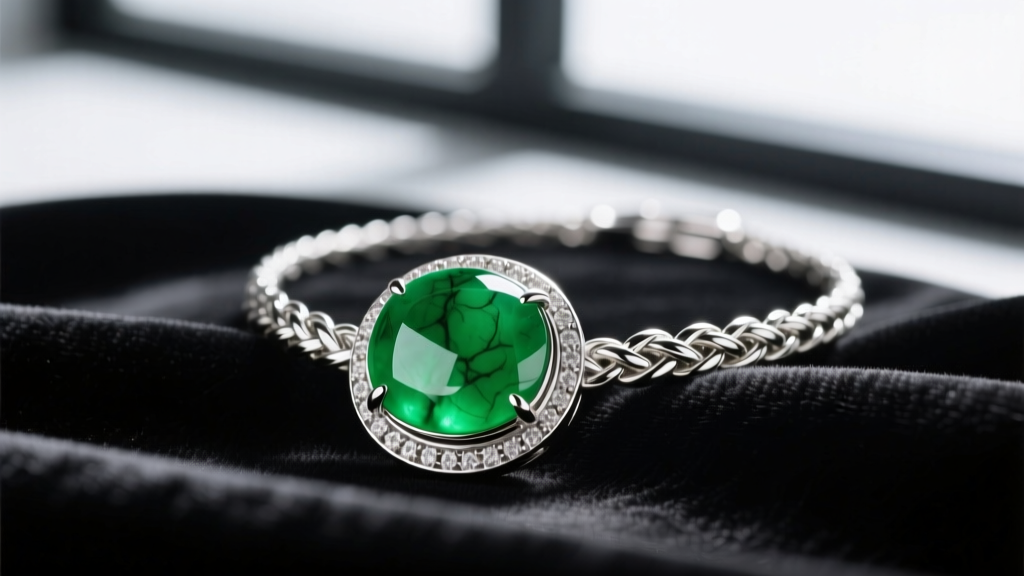
The Intersection of Sterling Silver and Jade
The silver jade necklace remains a cornerstone of both Eastern heritage jewelry and contemporary Western minimalist styling. However, as we navigate the 2026 market, the proliferation of treated gemstones and misleading metal hallmarks requires buyers to approach this classic pairing with a gemological mindset. A true silver jade necklace is not merely a decorative accessory; it is a complex marriage of organic silicate minerals and precious metal alloys. Understanding the material properties of both the stone and the setting is critical to ensuring longevity, value retention, and aesthetic brilliance.
Unlike gold, which is chemically inert, silver is highly reactive. Similarly, jade is not a single mineral but a term encompassing two distinct silicate structures with vastly different physical properties. This guide deconstructs the material science behind the silver jade necklace, providing a rigorous framework for authentication, setting evaluation, and long-term care.
Decoding Jade: Nephrite vs. Jadeite
When evaluating a silver jade necklace, the first material variable to identify is the type of jade. According to the Gemological Institute of America (GIA), 'jade' is a generic term that applies to two distinct minerals: nephrite and jadeite. Their chemical compositions and structural differences dictate their value, durability, and how they interact with silver settings.
Nephrite: The Fibrous Toughness
Nephrite is a calcium and magnesium-rich amphibole mineral. Its defining characteristic is its interlocking fibrous structure, which grants it exceptional toughness—meaning it is highly resistant to breaking or chipping upon impact. However, nephrite is relatively soft, registering between 6.0 and 6.5 on the Mohs hardness scale. It typically appears in opaque, muted tones such as spinach green, mutton fat white, or deep black. In a silver necklace, nephrite is often carved into intricate, deep-relief pendants because its toughness allows for fine detailing without fracturing.
Jadeite: The Vitreous Brilliance
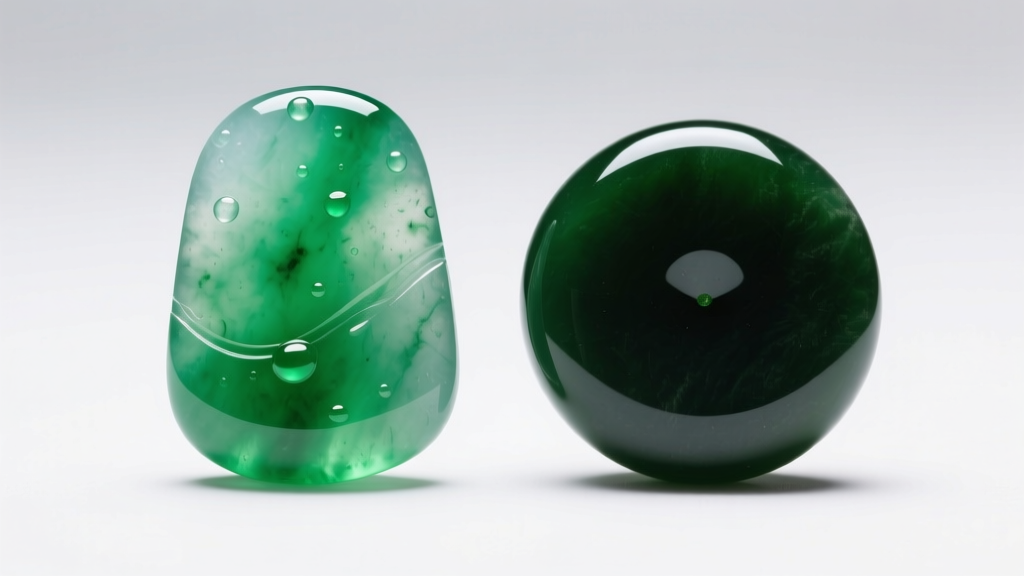
Jadeite is a sodium and aluminum-rich pyroxene. It possesses a granular, interlocking crystalline structure that allows for higher translucency and a glass-like (vitreous) luster when polished. Jadeite is slightly harder (6.5 to 7.0 on the Mohs scale) but less tough than nephrite, making it more prone to chipping at the edges if struck against a hard surface. Imperial green and lavender jadeite are the most sought-after varieties. Because of its superior optical properties, high-grade jadeite is almost exclusively cut into smooth, uncarved cabochons to maximize light return.
The A-B-C Grading System
Material authenticity hinges on the universal A-B-C grading system. When purchasing a silver jade necklace, you must verify that the stone is Grade A.
- Grade A (Natural): Completely untreated jade, aside from standard wax polishing. The internal crystal structure is intact, and the color is natural. This is the only grade that holds investment value.
- Grade B (Bleached and Polymer-Impregnated): Jade that has been soaked in hydrochloric acid to remove brown or yellow impurities, then vacuum-impregnated with polymer resin to restore structural integrity. Over time, the resin yellows and degrades, ruining the stone's appearance.
- Grade C (Dyed): Jade that has been artificially colored using chemical dyes. The dye concentrates in the microscopic fractures of the stone, which can be easily spotted under a 10x jeweler's loupe as 'spidery' networks of color.
Silver Alloys: Why 925 Sterling is the Standard
The metal matrix holding the jade is just as critical as the stone itself. Pure silver (999 fine silver) is too malleable for jewelry; a pure silver prong would easily bend, releasing the jade cabochon. Therefore, alloying is necessary to increase the Vickers hardness of the metal.
| Silver Alloy | Purity | Composition | Vickers Hardness (HV) | Best Use in Jade Necklaces |
|---|---|---|---|---|
| Fine Silver | 99.9% | 99.9% Ag | ~25 HV | Decorative wire wrapping (not recommended for secure settings) |
| Sterling Silver | 92.5% | 92.5% Ag, 7.5% Cu | ~65 HV | Standard bezels, chains, and cast pendant frames |
| Argentium Silver | 93.5% / 96.0% | Ag, Cu, Germanium | ~90 HV | High-end, tarnish-resistant settings for investment-grade jadeite |
As noted in the GIA Silver Guide, the 7.5% copper in standard 925 sterling silver is what causes tarnishing when exposed to sulfur compounds in the air. For a silver jade necklace, Argentium silver is an increasingly popular 2026 alternative. The addition of germanium creates a transparent, self-healing oxide layer that drastically slows tarnish, reducing the need for aggressive chemical polishing that could inadvertently damage the jade.
Material Synergy: How Silver Settings Protect Jade
The physical synergy between the metal and the stone dictates the necklace's lifespan. Jade, particularly jadeite, has poor cleavage but can easily chip at the girdle (the outer edge) if subjected to localized pressure.
Bezel vs. Prong Settings
For a silver jade necklace, a full bezel setting is the metallurgical gold standard. A bezel involves a continuous rim of 925 silver that wraps entirely around the perimeter of the jade cabochon. This protects the vulnerable girdle from lateral impacts. The silver must be annealed (heated and cooled) to ensure it is soft enough to be burnished tightly against the stone without exerting excessive compressive force, which could cause internal stress fractures in the jade.
Conversely, prong settings should be avoided for jade. Prongs concentrate stress on four to six microscopic points along the stone's edge. Because jade lacks the uniform hardness of a diamond or sapphire, the pressure of silver prongs can easily cause micro-chipping over time, especially if the necklace is worn daily.
Identifying Treated Fakes and Silver Plating Pitfalls
The market is saturated with deceptive composites. When inspecting a silver jade necklace, look for these specific material failure modes and red flags:
- The 'Resin Flash' Test: Inspect the back of the jade cabochon. If the stone is set in a closed-back silver bezel, it may be hiding a hollowed-out back filled with resin or green glass to simulate translucency. Always demand an open-back setting for high-value jadeite.
- Silver Plating over Base Metals: Many cheap necklaces use brass or nickel-silver (which contains zero actual silver) plated with a microscopic layer of pure silver. Once the plating wears off at the clasp or bail, the underlying copper alloys will react with skin acidity, leaving a green residue. Look for the '925' stamp, but verify it with a precious metal verifier or XRF tester if the price seems suspiciously low.
- Rhodium Plating Concealment: While rhodium plating over sterling silver prevents tarnish, unscrupulous sellers sometimes use thick rhodium layers to hide poor soldering joints or porosity in cast silver settings.
Care and Maintenance: Combating Tarnish and Porosity
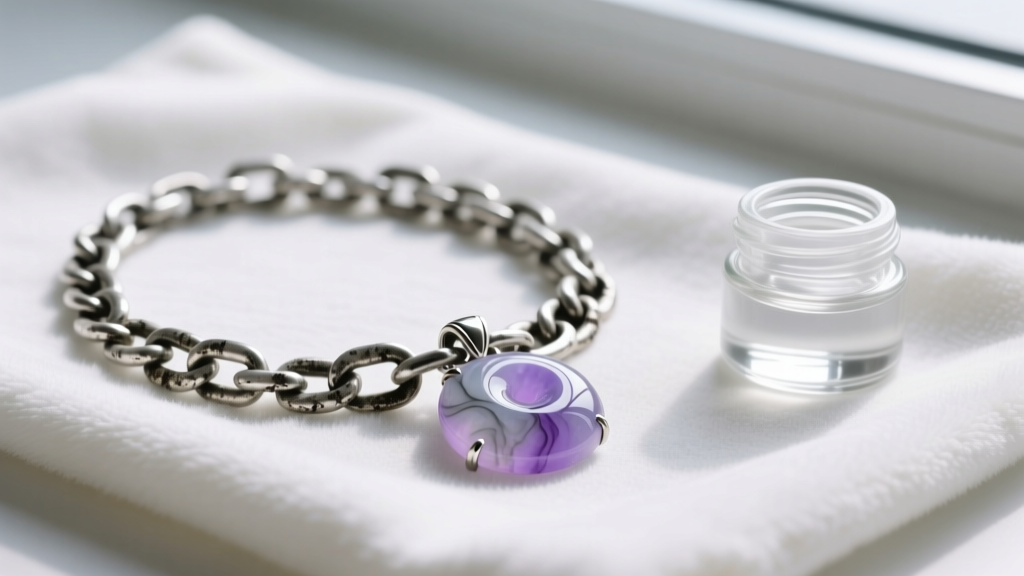
Caring for a silver jade necklace requires navigating the conflicting chemical needs of its two primary materials. Silver requires oxidation removal, while jade is sensitive to harsh chemicals and extreme heat.
Never use ultrasonic cleaners on a silver jade necklace. While Grade A jadeite can technically withstand ultrasonic vibrations, any microscopic internal fractures will be exacerbated. More importantly, if the jade is Grade B or C, the ultrasonic waves and heat will shatter the polymer resin bonds, turning the stone cloudy and brittle.
Avoid commercial silver dip solutions. These solutions contain thiourea and strong acids that can strip the natural wax polish off the jade's surface, leaving it dull and porous. Instead, use the electrochemical aluminum foil method: line a glass bowl with aluminum foil, add boiling water, a tablespoon of baking soda, and a pinch of salt. Submerge only the silver chain (keeping the jade pendant out of the water if possible, or limiting its exposure to a few seconds). The sulfur transfers from the silver to the aluminum, safely removing tarnish without chemical abrasives.
Pricing Framework: What to Pay in 2026
Understanding the material properties allows you to accurately assess the pricing of a silver jade necklace. The value is heavily skewed toward the gemstone, with the silver acting primarily as a functional and aesthetic mount.
- Grade A Jadeite in 925 Silver: Expect to pay between $250 and $1,500+ depending on the translucency, color saturation (e.g., Imperial Green), and the craftsmanship of the bezel. High-translucency 'icy' jadeite commands a premium.
- Grade A Nephrite in 925 Silver: Typically ranges from $80 to $300. Hetian (mutton fat) white nephrite with high density and an oily luster will sit at the top of this bracket.
- Grade B/C Treated Jade in Silver: Priced between $15 and $50. These are purely decorative, possess zero resale value, and the materials will degrade within 3 to 5 years of regular wear.
Ultimately, a genuine silver jade necklace is an exercise in material harmony. By prioritizing Grade A untreated silicates, demanding secure bezel settings in verified 925 or Argentium silver, and adhering to non-destructive cleaning protocols, you ensure that the piece remains a durable, radiant staple in your jewelry collection for decades to come.


