Ultimate Care Guide for Your Black Stainless Steel Cross Necklace
Learn expert cleaning and maintenance tips to protect the PVD coating on your black stainless steel cross necklace and keep it looking brand new.


When you invest in a black stainless steel cross necklace, you are not just buying a piece of jewelry; you are acquiring a modern marvel of metallurgical engineering. The striking, dark aesthetic of black steel has made it a staple in contemporary and gothic fashion, offering a sleek alternative to traditional precious metals. However, maintaining that flawless, midnight-black finish requires a specific approach. Unlike solid gold or sterling silver, black stainless steel relies on a highly specialized surface treatment that, while incredibly durable, is not entirely invincible.
As we move through 2026, jewelry manufacturing techniques have evolved, but the fundamental rules of caring for coated metals remain the same. Improper cleaning methods can strip the dark finish, expose the raw steel underneath, and ruin the visual integrity of your cross pendant. This comprehensive guide will walk you through the exact science, tools, and techniques required to clean, maintain, and protect your black stainless steel cross necklace for years to come.
The Metallurgy of Black Stainless Steel: PVD vs. Plating
To properly care for your necklace, you must first understand what makes it black. High-quality black stainless steel jewelry is crafted from a 316L surgical stainless steel base. This specific alloy contains molybdenum, which drastically increases its resistance to corrosion, chlorides, and everyday wear. However, 316L steel is naturally silver in color.
To achieve the black hue, manufacturers use a process called Physical Vapor Deposition (PVD). During PVD, the steel cross is placed in a vacuum chamber where materials like Zirconium Nitride (ZrN) or Titanium Nitride (TiN) are vaporized and bonded to the steel at a molecular level. This creates a coating that is significantly harder than the base metal and highly resistant to tarnishing.
Expert Insight: PVD is not a 'plating' or a 'paint.' It is a molecular bond. While electroplated black jewelry will rub off within months, a true PVD black stainless steel cross necklace can last a decade or more if shielded from harsh chemical abrasives and extreme friction.
Step-by-Step Cleaning Routine for PVD Steel
Cleaning your black steel cross necklace should be a gentle, deliberate process. The goal is to remove sebum, dead skin cells, and environmental dust without introducing micro-abrasions to the PVD layer. Here is the exact protocol used by jewelry conservators.
The Supplies You Actually Need
Before you begin, gather the correct materials. Using the wrong tools is the leading cause of PVD degradation.
- Distilled Water: Never use tap water. Municipal water contains chlorine and hard minerals that can leave microscopic deposits on the dark finish.
- pH-Neutral Dish Soap: Avoid soaps with added degreasers, citrus extracts, or heavy fragrances. A basic, clear, pH-neutral liquid dish soap is ideal.
- Microfiber Cloth: You need a high-density, lint-free microfiber cloth (at least 300 GSM). Paper towels and cotton t-shirts contain wood fibers that can scratch the ZrN coating.
- Soft-Bristled Brush (Optional): A brand-new, ultra-soft baby toothbrush can be used to gently agitate dirt trapped in the crevices of the cross design.
The Washing Technique
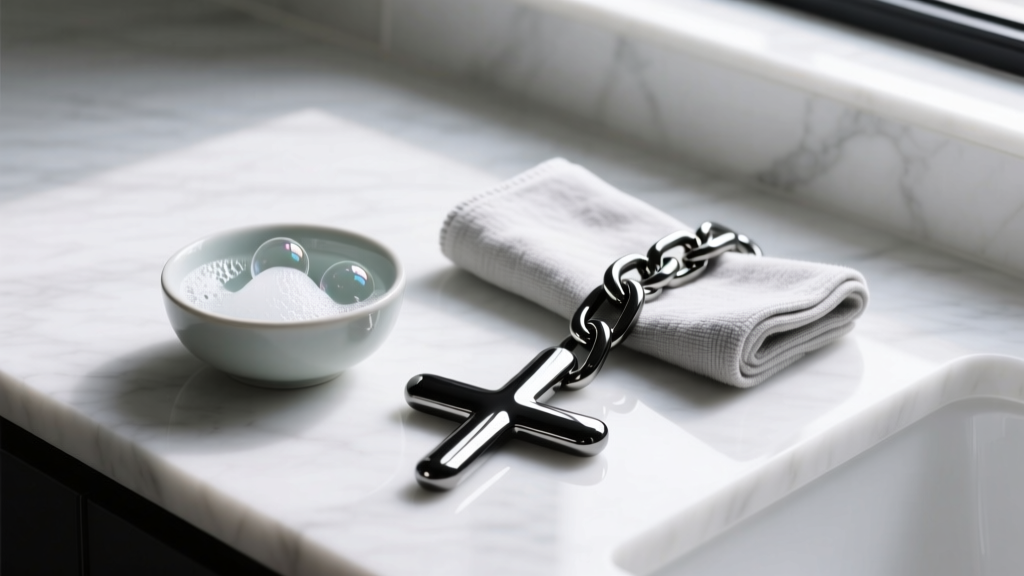
Follow these precise steps to safely clean your pendant and chain:
- Prepare the Solution: In a small glass bowl, mix one cup of room-temperature distilled water with two to three drops of your pH-neutral dish soap. Stir gently to avoid creating excessive suds.
- Soak Briefly: Submerge your black stainless steel cross necklace in the solution for exactly 3 to 5 minutes. This loosens body oils and cosmetics without stressing the molecular bond of the PVD layer. Do not exceed 10 minutes.
- Agitate Gently: If your cross pendant features intricate engravings or textured edges, use the ultra-soft baby toothbrush to lightly sweep away debris. Use zero downward pressure; let the bristles do the work.
- The Distilled Rinse: Remove the necklace and rinse it thoroughly under a gentle stream of distilled water to wash away any soap residue.
- Pat Dry: Immediately lay the necklace on your clean microfiber cloth and gently pat it dry. Avoid rubbing the chain vigorously, as dragging dust particles across the wet steel can cause micro-scratches.
Crucial Maintenance Mistakes to Avoid
Because black stainless steel is marketed as 'tarnish-free' and 'waterproof,' many owners mistakenly believe it is indestructible. While it won't oxidize or turn your skin green, the PVD coating can be compromised by specific environmental factors. Below is a breakdown of common maintenance errors and their consequences.
| Action | Why It Damages the PVD Coating | Safe Alternative | Risk Level |
|---|---|---|---|
| Using Ultrasonic Cleaners | The high-frequency cavitation bubbles can literally blast microscopic pits into the PVD layer, causing it to flake. | Manual soaking and soft-bristle brushing. | Extreme |
| Swimming in Chlorinated Pools | Chlorine is a highly reactive halogen that can chemically degrade the Zirconium Nitride surface over time. | Remove the necklace before entering pools or hot tubs. | High |
| Applying Silver Polish | Silver polishes contain harsh abrasives (like calcium carbonate) designed to strip tarnish, which will sand off the black finish. | Use only pH-neutral soap and distilled water. | Extreme |
| Storing in the Bathroom | Constant fluctuations in heat and high humidity from showers can degrade the steel's surface integrity over years. | Store in a dry bedroom drawer or jewelry box. | Medium |
Proper Storage Techniques for Longevity
How you store your black stainless steel cross necklace when you aren't wearing it is just as critical as how you clean it. The primary enemy of stored jewelry is friction and moisture. When a necklace is tossed into a communal jewelry box, the steel links can rub against each other or against harder gemstones, gradually wearing down the black PVD coating on the high-contact points.
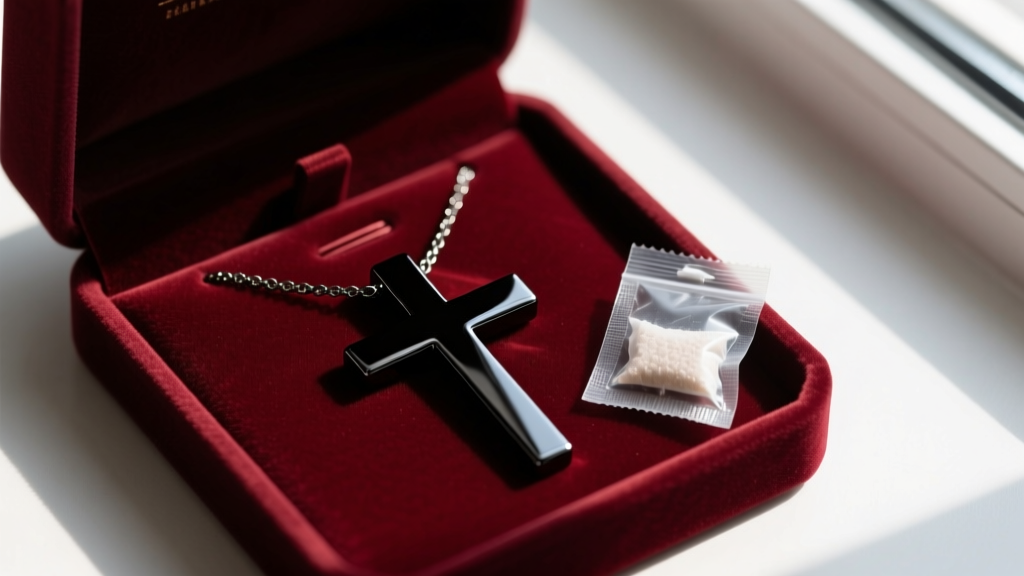
To prevent this, adopt the following storage protocol:
- Individual Pouches: Always store your black steel necklace in its own soft flannel or microfiber pouch. This prevents cross-contamination with other metals and stops the chain from tangling and scratching the pendant.
- Moisture Control: Place a small silica gel packet inside your jewelry box or storage drawer. Even though 316L steel is highly rust-resistant, controlling ambient humidity preserves the optical clarity and shine of the black finish.
- Lay Flat or Hang: If possible, hang the necklace on a velvet-lined hook. If laying it flat, ensure the chain is unclasped and laid out in a gentle curve to prevent stress on the jump rings and the clasp mechanism.
Can You Restore a Faded Black Steel Cross?
Despite your best efforts, years of daily wear, friction from clothing, and exposure to natural skin acids will eventually cause the PVD coating on the high-friction areas (like the bail and the chain links) to thin out, revealing the silver 316L steel underneath.
Unlike rhodium-plated white gold or oxidized silver, you cannot simply 're-dip' or polish a PVD black stainless steel cross necklace at home. The PVD process requires industrial vacuum chambers and temperatures that cannot be replicated with consumer chemicals. If your necklace has faded, you have two options:
- Professional Re-coating: Some specialized jewelry manufacturers and industrial coating facilities offer PVD re-coating services. They will chemically strip the remaining black layer, polish the raw 316L steel, and re-apply a fresh ZrN coating. This typically costs between $40 and $90, depending on the intricacy of the cross pendant.
- Embrace the Patina: Many wearers appreciate the 'distressed' look of fading black steel, where the silver edges contrast beautifully with the dark center of the cross, highlighting the physical geometry of the piece.
Final Thoughts
A black stainless steel cross necklace is a resilient, modern accessory that bridges the gap between industrial durability and high-end fashion. By abandoning harsh chemicals, avoiding ultrasonic vibrations, and committing to a gentle, distilled-water cleaning routine, you ensure that the PVD coating remains intact. Treat your jewelry with the respect its metallurgy demands, and your black steel cross will remain a striking, flawless centerpiece of your wardrobe for a lifetime.


